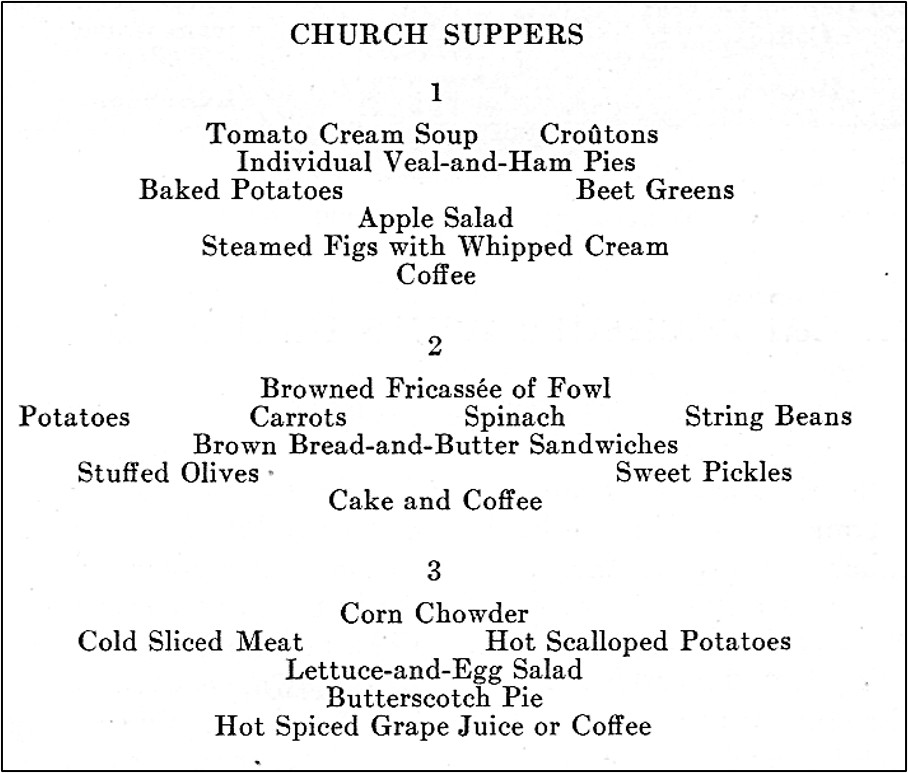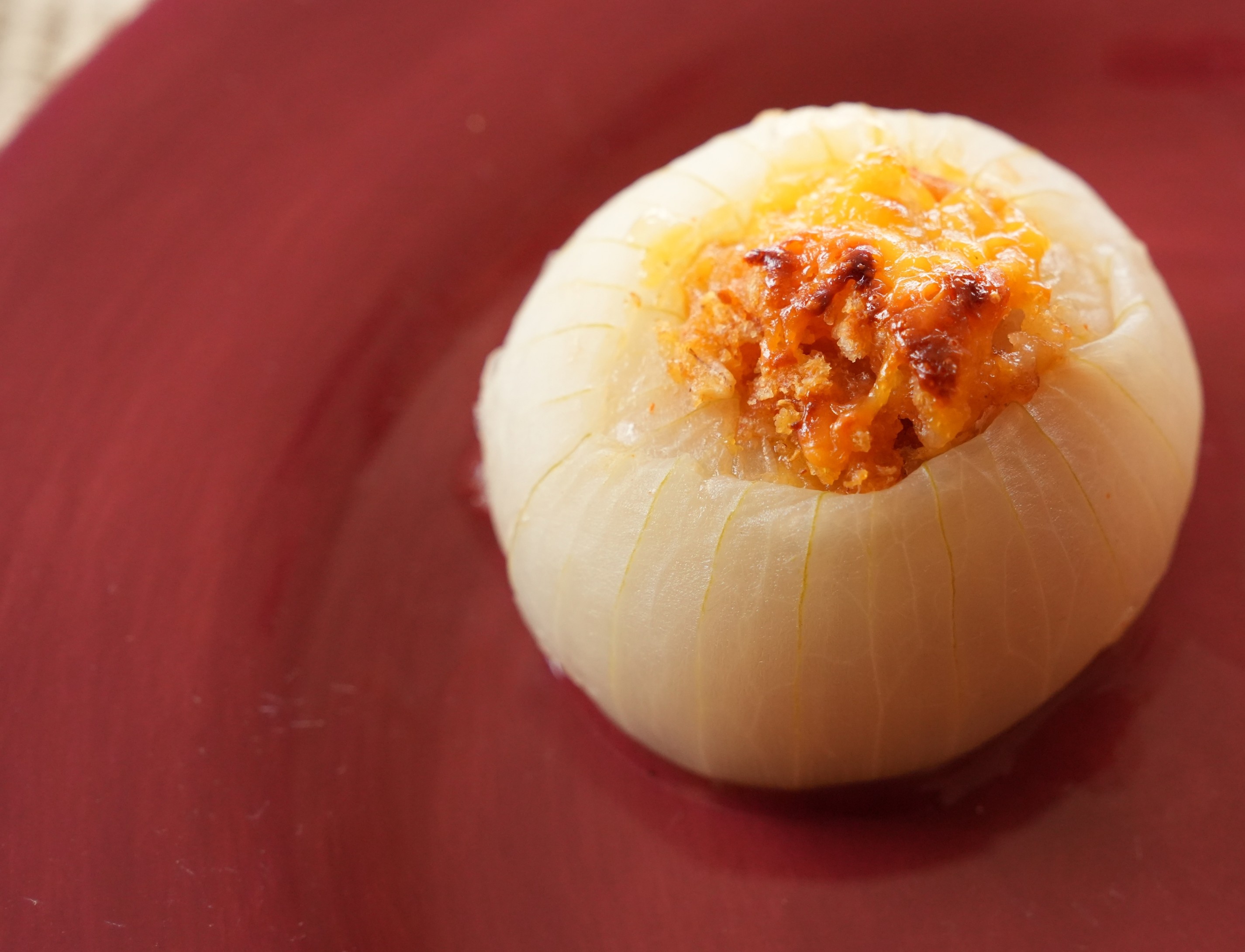
Onions are seldom the main attraction when making a vegetable side dish. I use lots of onions, but I generally use them as an ingredient in other dishes. That’s too bad. There are some lovely onion recipes, including a 1925 recipe for Stuffed Baked Onions that I recently came across.
The Stuffed Baked Onions were tasty. They are stuffed with a delightful savory bread crumb and cheese filling.
Here’s the original recipe:
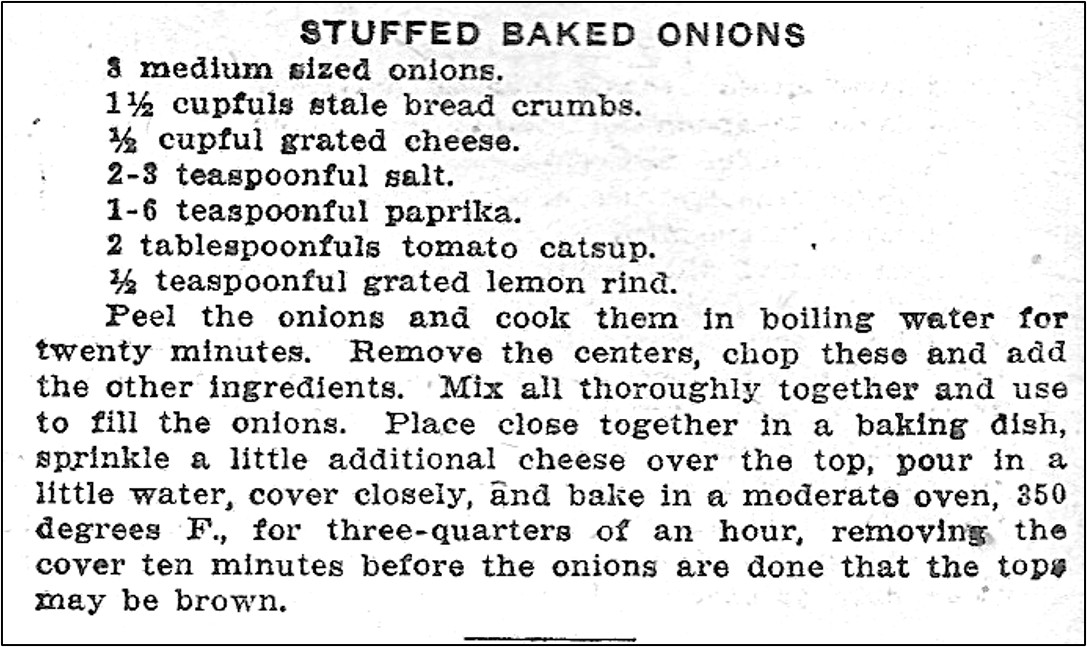
I found it somewhat difficult to remove the inside of the onions after they were boiled. I have seen other Stuffed Onion recipes that call for removing the inside prior to boiling with a spoon or melon ball scoop. I think that the inside probably could be removed either before or after boiling.
Only a small amount of stuffing is needed to fill 3 medium onions. This recipe makes a lot more stuffing than is needed. I divided the stuffing ingredients by half when I updated the recipe (except for the paprika which I reduced from 1/6 teaspoon to 1/8 teaspoon.)
Here’s the recipe updated for modern cooks:
Stuffed Baked Onions
3 medium onions (They should be fairly flat so they sit evenly when stuffed.)
3/4 cup bread crumbs
1/4 cup grated cheese + 1 tablespoon grated cheese (I used cheddar cheese.)
1/3 teaspoon salt
1/8 teaspoon paprika
1 tablespoon ketchup
1/4 teaspoon grated lemon peel
water
Preheat oven to 350◦ F. Trim the onions and remove the outer peels. Put the onions in a saucepan, cover with water, and bring to a boil, then reduce heat and simmer for 20 minutes. Remove from the heat and drain. Remove the insides of the onions using a knife, spoon, or melon ball scoop. Leave 2-3 outer layers. If the bottom of the onions are inadvertently removed, take an inner onion piece and lay it in the onion across the bottom. Reserve the onion scraps. Set aside.
Chop half of the onion scraps. (The other half of the scraps could be refrigerated and saved for use in another recipe.) In a bowl mix the chopped onion scraps, bread crumbs, 1/4 cup grated cheese, salt, paprika, ketchup and lemon peel. Then stuff the onions with the mixture. Garnish with the 1 tablespoons of grated cheese. Pour a little water into the baking dish (about 1/8 inch). Cover the baking dish and put into the oven. Bake for 35 minutes. Remove the cover from the baking dish, and bake for 10 additional minutes to lightly brown the tops of the stuffed onions. Remove from oven.
 Sometimes a recipe calls for just the egg whites, and I end up with a couple extra egg yolks that I’m never quite sure how to use. I probably shouldn’t admit it, but sometimes I just toss the extra yolks. However, eggs are now so expensive that I want to keep them and use them in a day or two when making scrambled eggs or some other dish. I was pleased to come across directions for keeping egg yolks in a hundred-year-old cookbook:
 When caring for a sick child it is important to keep them hydrated and well-nourished. Often a child will eat little while complaining that nothing tastes good. An article on serving food to sick children in the January, 1925 issue of American Cookery began: