
I love to browse through old community cookbooks. Sometimes the recipes have unusual names that intrigue me. This is one of those times. A 1923 cookbook published by the General Welfare Guild of the Beaver Valley General Hospital in New Brighton, Pennsylvania had a recipe for “A Homely Way to Cook Potatoes.” Can potatoes be “homely?”
The recipe called for putting potatoes, onion, parsley and seasonings in a saucepan with water, and then boiling the mixture. The recipe was easy to make. The potatoes reminded me of old-fashioned parsley potatoes. And, the homely potatoes (dare I say it?) were attractive.
Here’s the original recipe:
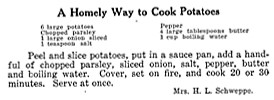
I’m not exactly sure how much “4 large tablespoon butter” is, so I used four tablespoons of butter. It also did not seem like boiling water needed to be used in this recipe. I just used cold water. I’m sure that it took a little longer to heat, but that was okay with me.
Here’s the recipe updated for modern cooks:
A Homely Way to Make Potatoes
6 large potatoes, peeled and sliced
1/4 cup chopped parsley
1 large onion, sliced
1 teaspoon salt
dash pepper
4 tablespoons butter
1 cup water
Put all ingredients in a large saucepan. Bring to a boil using high heat; then reduce heat and simmer until the potatoes are tender (approximately 15-20 minutes). Remove from heat and drain. Serve immediately.

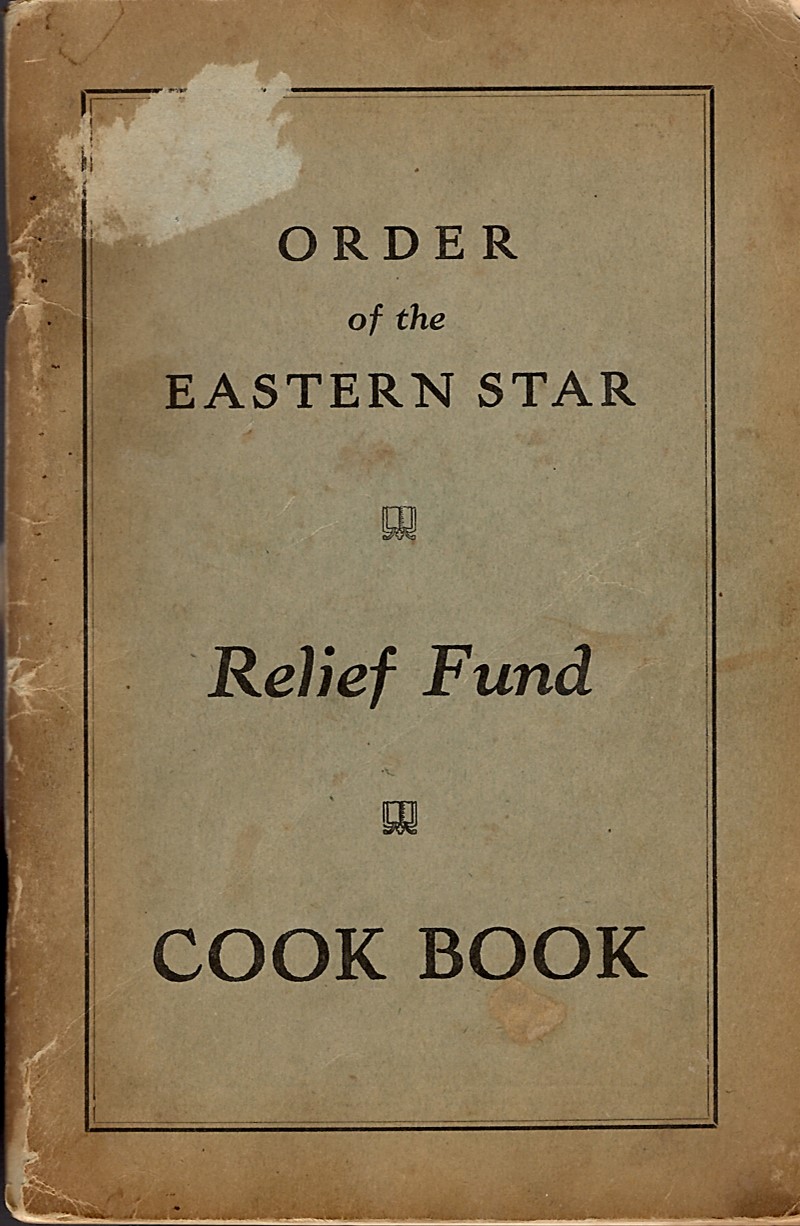 The Order of the Eastern Star Relief Fund Cook Book was “compiled and arranged by Minnie Grace Kenyon, Past Grand Matron,Michigan Grand Chapter, Order of the Easter Star.” The cookbook does not mention the purpose of the relief fund, so I don’t know why they were raising money by publishing a cookbook.
 The General Welfare Guild Cook Book was compiled by a special committee of the General Welfare Guild of the Beaver Valley General Hospital, New Brighton, Pennsylvania. The preface to the book says:
 We always hear about the Roaring 20’s, but here is how a hundred-year-old magazine said that New Year’s Eve should be celebrated: