16-year-old Helena Muffly wrote exactly 100 years ago today:
Monday, May 8, 1911: Toiled away at the washer this morning. This afternoon I went over to Stout’s. My first experience in telephoning. The voice at the other end of the wire sounded rather squeaky. I telephoned to Besse. Ma was so rejoiced to get her teeth back again, which she had sent off on a vacation of one week.
Her middle-aged granddaughter’s comments 100 years later:
In yesterday’s entry Grandma went to see her friend Carrie Stout’s new telephone—but apparently was too nervous to try the new technology that day. But she went back the next day—and felt braver and called her married sister Besse.
Both Carrie and Besse lived on the road between McEwensville and Watsontown. Apparently the phone wires went between the two towns; and people living on the main road were able to get phone service before those living on the side roads.
I mentioned this diary entry to my husband Bill and he made several comments about phones, so I asked him to be a guest blogger:
It is amazing how far phones have come from exotic box of wires that squeak out a voice, to a constant presence in our lives that are semi-permanently attached us. Phones are now ‘personal communication devices’ that are increasingly hard to distinguish from normal computers. You’ll soon walk into your office, plug your phone into a cradle and keyboard on your desk, and type away on your phone to do your regular computer work.
Phone, circa 1911Phone, circa 2008 (When we get a smart phone, I'll update the picture!)
My favorite telephone memory is from the late 1970s. I was living in an isolated community on Andros Island in the Bahamas, working on an agricultural development project. There was only one phone in the town at the time. It was in an old-fashioned phone booth in front of the telephone company office in the center of town. Phone calls to the U.S. cost around $10 at the time. I paid my $10 to the clerk, and knowing that she was probably listening in on the call, I went out to the phone booth and called Sheryl’s parents to ‘ask for her hand in marriage’, as they say.
Bill Lazarus
False teeth
Grandma’s mother was only 49 years old—yet she already had false teeth. From the diary entry it sounds like she’d probably had them for awhile since they’d apparently needed some sort of repairs. This was an era before fluoridation and people probably didn’t take as good of care of their teeth as they do now.
When I read the entries about Grandma’s toothache (April 11, April 15, April 18), and how she was in pain for almost a month before she tried to visit a dentist on May 6 (and how she failed to get the tooth filled then)—it makes me wonder at what age Grandma herself got false teeth.
16-year-old Helena Muffly wrote exactly 100 years ago today:
Monday, May 1, 1911:
The month of May has come today
With many a happy pleasure.
With it, she brings the flowers of spring,
In full many a boundless measure.
Started to make a dress today. Want to get it finished this week, if I can. There was an awful heavy shower here this evening. It hailed some too but it soon cleared off and everything looked so fresh and beautiful.
Her middle-aged granddaughter’s comments 100 years later:
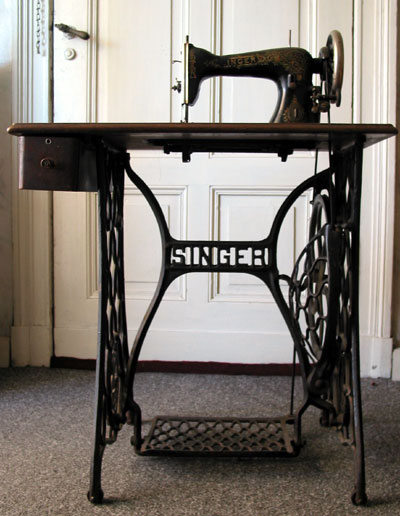
I loved to explore Grandma’s attic when I was a child, and remember that she had an old treadle sewing machine in her attic. Instead of using electricity, the machine was operated by moving your feet up and down.
I wonder if the sewing machine in the attic was the same one that she used to make the dress in 1911.
I can remember begging to be allowed to explore the attic. Off to the side of Grandma’s kitchen at the spot where the kitchen merged with the hall, there was a door that led to the attic stairs.
Grandma would open the door, and lead my cousins and me up the hardwood stairs. The stairs led to a huge sun lit room. (My memory is that it was always sunny whenever I was in the attic.)
At each end of the room were large casement windows. The ceiling sloped nearly to the floor along the sides. Grandma’s bungalow was really a 1 ½ story house, and I think that the attic was designed so that it potentially could be converted into bedrooms, so it had beautiful hardwood floors.
There were rows of wooden shelves in the attic filled with boxes, dishes, knickknacks, and other miscellaneous treasures. Amongst all the stored items sat the sewing machine. My memory is that Grandma actually used the treadle sewing machine, and that torn pairs of my grandfather’s overalls lay by the machine waiting to be patched. But my memory is very foggy on this—and maybe there really were no torn overalls–and the treadle sewing machine was no longer used and merely stored in the attic.
16-year-old Helena Muffly wrote exactly 100 years ago today:
Friday, April 28, 1911: Besse came out this morning to help with the kitchen. It seems we were working at it all day and I guess we were. Carrie Stout was over this evening. She brought Ma some flower seeds. Ruth and I went part of the way home with her.
Recent photo of the spot about half way between the Muffly farm and the Stout one. When Grandma and her sister Ruth walked their friend Carrie part way home, they might have turned around about here.
Her middle-aged granddaughter’s comments 100 years later:
A hundred years ago people commonly saved seeds in the fall to plant the following spring. Friends and neighbors often shared seeds with one another.
According to a book published in 1911 called The Practical Flower Garden:
One of the greatest pleasures to the gardener is in raising flowers, both perennials and annuals, from seed; and especially is it interesting to gather and sow the seeds saved from her own finest plants.
I always mark the plants whose seeds I wish to save by tying white strings about the stems when in full bloom as a sign to all that the blossom must not be cut . . . . [I keep] a box containing little pieces, about eight inches long and an inch wide, of white muslin, black cambric, pink cambric and turkey-red. I tie black upon the plants that are to be cast out in the autumn; scarlet upon the very bright red phloxes; a pink and white string upon all those of pink and white varieties; and a single white piece upon the choice white phloxes, and also upon all plants whose seeds I wish to save.
The seeds, after maturing, are gathered when dry, put into boxes, each of which is carefully labeled, and then sown either in August or the following spring.
Helena Rutherford Ely in The Practical Flower Garden (1911)
Recent photo of house where Grandma grew up. I wonder if Grandma once planted seeds in the same flower beds.The diary entry discusses friends and neighbors sharing saved seeds, but in 1911 people could also buy flower seeds. This ad is from the April 1911 issue of Farm Journal.
Since the teen-ager who became my grandmother didn’t write a diary entry again today, I’ll continue sharing memories of Grandma in her later years.
Yesterday cousin Stu wrote, “I remember Thanksgivings at her house, with her getting up in the small hours to start the turkey, and the kids (at least, the younger ones) at the round table in Grandpa’s study.”
Stu’s memory jogged memories that I have of eating at the round table. I guess this might not be exactly the right time of year to discuss Thanksgiving memories, but Easter memories bring back memories of other holidays, so here’s a Thanksgiving memory–
After their children were grown Grandma and Grandpa Swartz built a small brick bungalow on my uncle’s farm. It had a large kitchen—and at Thanksgiving Grandma brought extra tables into the room to make a long table that extended from one end of the kitchen to the other.
But the table wasn’t large enough to hold all of Grandma’s children, their spouses, and the grandchildren—so another table was set up in the den. Grandchildren old enough to eat without adult assistance—yet not old enough to sit nicely at the adult table—were relegated to the table in the den.
I really wanted to be big enough to eat with the adults like some of my older cousins, but was always assigned to the den.
Aunts periodically rotated dishes between the kitchen and the den. But after the exchange was made, the DOOR WOULD BE SHUT. . . AND, THEN some of my more imaginative cousins would come up with all sorts of great ideas.
I remember one year we all crammed into a closet in the den to see how many people would fit. One cousin stayed outside, slammed the door shut—and held the rest of us captive in the dark. We screamed—and maybe an adult came from the kitchen to see what was the problem—though I have no memory of any adults coming to our rescue and think that we remained imprisoned in the stuffy darkness until my cousin tired of holding the door.
Then one year, one of my younger cousins—who in previous years had occupied a high chair in the kitchen— was deemed old enough to move to the den, and I was deemed mature enough to move to the kitchen.
I felt so grown up—but, good grief, the conversation around that long table in the kitchen was so boring. When I heard distant screams emanating from the den I longed for the good old days.
Sunday, April 23, 1911: Missing entry (Diary resumes on April 28.)
Her middle-aged granddaughter’s comments 100 years later:
Since again today there is no diary entry, and since I’ve been trying to understand how the teen in the diary evolved into the grandmother I remember, I’ll share an Easter memory of her (The 23rd wasn’t Easter a hundred years ago.)–
In 1966 my grandfather—Grandma’s husband—died a few day before Easter. Grandma was 71-years-old at the time. That year on Easter afternoon my parents, aunts, and uncles grimly gathered in Grandma’s brick bungalow and sat around her kitchen table writing thank you notes.
My cousins and I were banished from the kitchen and spent the afternoon chasing each other around Grandma’s yard. Around the trees—up and down the porch stairs— running, running and more running. I was 10-years-old that spring and the movement felt really good after all the days of mourning.
Fast forward one year to 1967—
I can remember family Easter egg hunts at my house that began in 1967 and continued for probably another 8 or 10 Easters. Prior to my grandfather’s death I think that my family typically spent the day with extended family on my mother’s side of the family. But the year following his death, my parents began hosting an annual Easter egg hunt that drew relatives from both sides of the family.
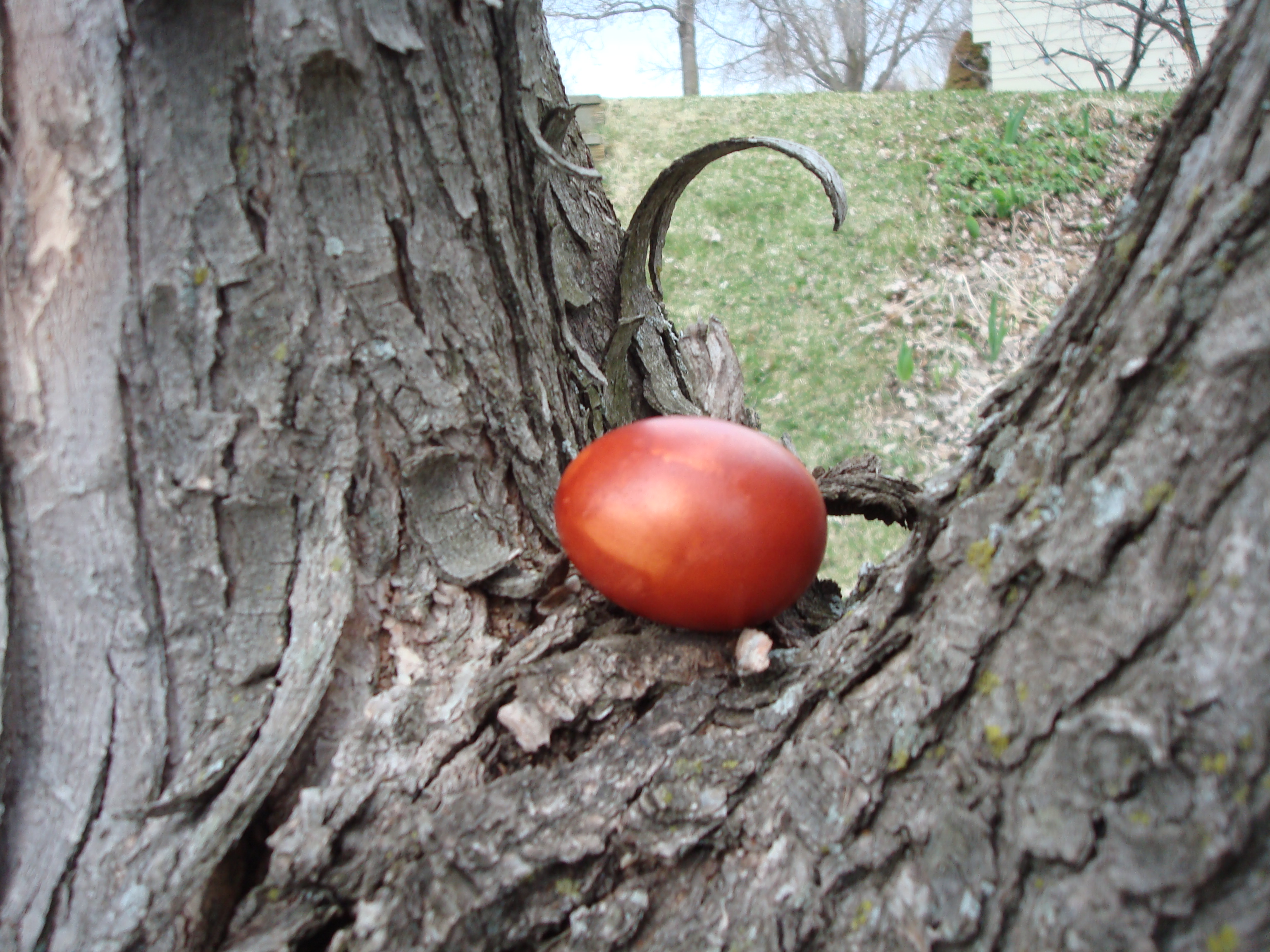
I colored and hid two or three hundred eggs in our expansive yard each year. Children and adults paired up to hunt the eggs. Whenever a kid found an egg they were required to run back to their adult partner and give that person the egg before dashing off to search for another egg.
I can’t specifically remember Grandma at those Easter egg hunts—but each year one of her grandchildren would have been her partner. Other adults might have shouted encouragement to their youthful partners—Grandma won’t have.
Instead I picture Grandma’s eyes gleaming each time her grandchild partner dashed toward her carrying an egg—and that she probably secretly hoped her team would end up with the most eggs (but she won’t have outwardly shown disappointment if her team didn’t win).
16-year-old Helena Muffly wrote exactly 100 years ago today:
Sunday, April 17, 1911: I got a supply of novelettes this morning. Will have something to do now during my leisure hours. Ruth and I expected company this afternoon, but they didn’t come. Gathered some dandelions.
Her middle-aged granddaughter’s comments 100 years later:
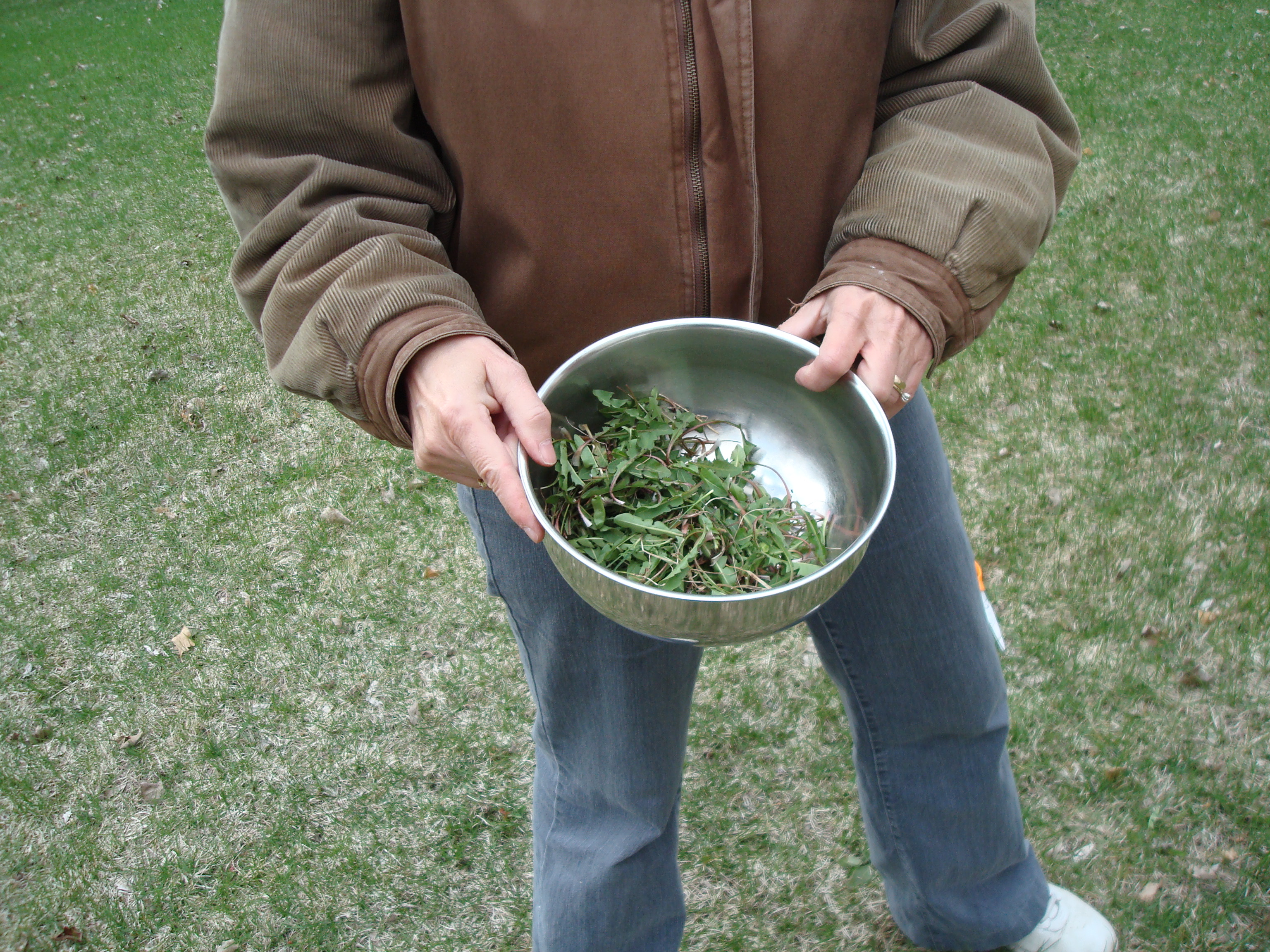
This is the third time in less than 8 days that Grandma gathered dandelions (see the April 10 and 13 posts). In today’s world it is easy to get most any fresh fruit or vegetable we desire whenever we want them throughout the year, and it is difficult to imagine how excited people once were when dandelions and other bitter greens became available in the spring. Throughout the winter months the family would have been eating vegetable that had been stored since the previous fall (potatoes, squash, parsnips, etc.). These greens were the first new fresh vegetables since the previous fall.
—–
Husband Bill said that I’d been talking about how awesome dandelions were all week—and that I should make myself useful and help dig the dandelions out of the yard. We spent some quality time together, enjoyed a spring day, had dandelion for dinner, and the yard looks great!
16-year-old Helena Muffly wrote exactly 100 years ago today:
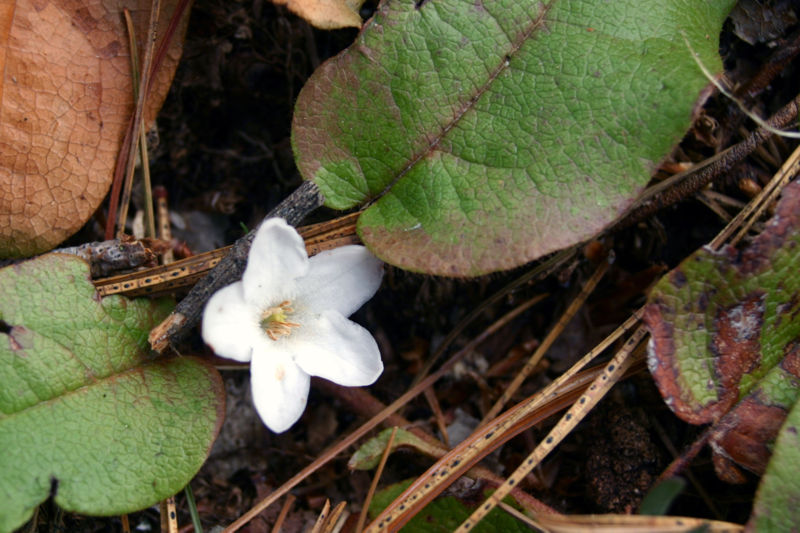
Saturday, April 15, 1911: Besse was out this afternoon. We three kids went for arbutus and I got some this time. Still have a toothache.
Trailing Arbutus (Mayflower)
Her middle-aged granddaughter’s comments 100 years later:
It sounds like a fun day for three sisters—Grandma, Ruth and their married sister Besse. The trailing arbutus must have just started blooming since Grandma had been unable to find any two days earlier.
Trailing arbutus are also called mayflowers. I found a description online about what it was like to pick them:
I have such crisp memories of picking wild mayflowers with my brother. Scrounging around on the sun-splashed forest floor, moving decaying leaves with our bare hands to find a delicately scented flower smaller than a dime.
Trailing arbutus are not easy to find; their flowers tend to hide under the leaves. It takes quite a few flowers to make even a small bunch, but they were worth it.