16-year-old Helena Muffly wrote exactly 100 years ago today:
Saturday, August 5, 1911: Am still driving my swift steeds, but it isn’t for very long. One thing I am glad of is that it isn’t dusty a bit, but will soon be.
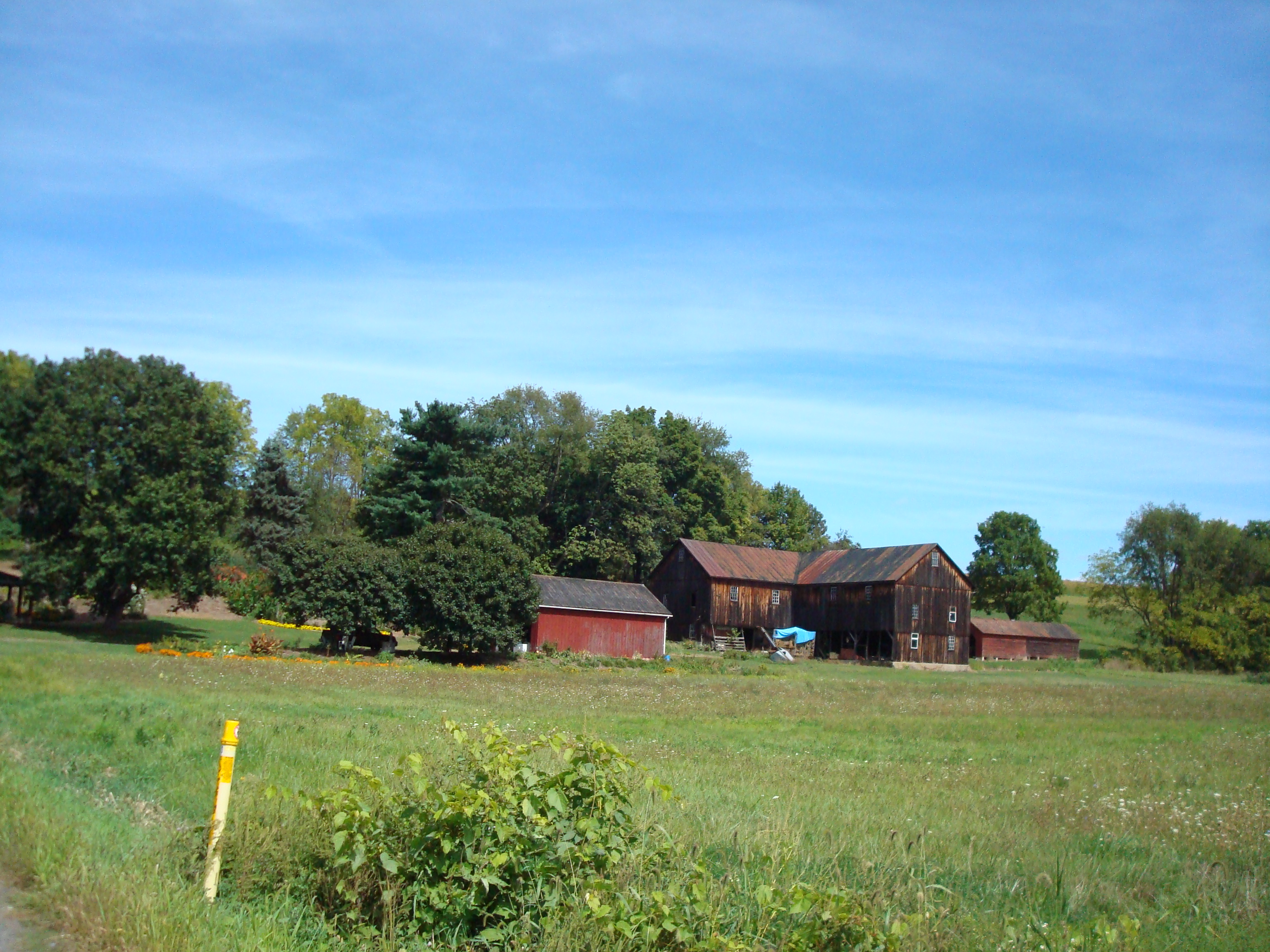
Is this the field where Grandma drove the horses?
Her middle-aged granddaughter’s comments 100 years later:
Grandma was probably leading horses that were hitched to a roller that leveled plowed earth in preparation for planting winter wheat seeds.
Grandma mentioned that she was learning to drive horses in the August 2 diary entry (see that posting for a photo of a horse-drawn roller).
I think that Grandma was being sarcastic when she called the horses “swift steeds.” In the previous diary entry she said that the horses were not fun to drive because they were old and slow.
Friday, August 4, 1911: Went to Watsontown this afternoon to finish that errand, which I had made on Monday. I had to walk in the rain going in and in the sun coming out.
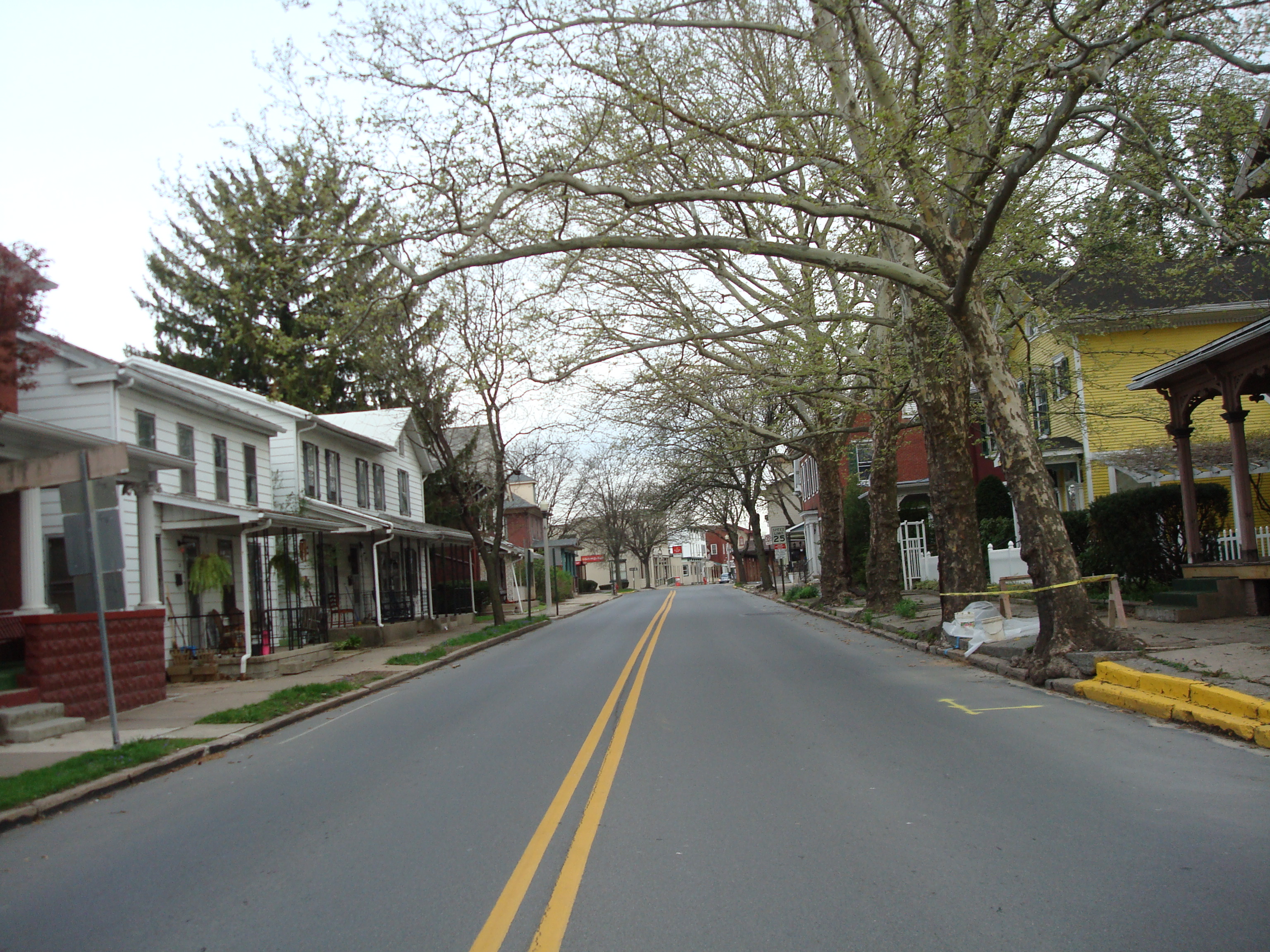
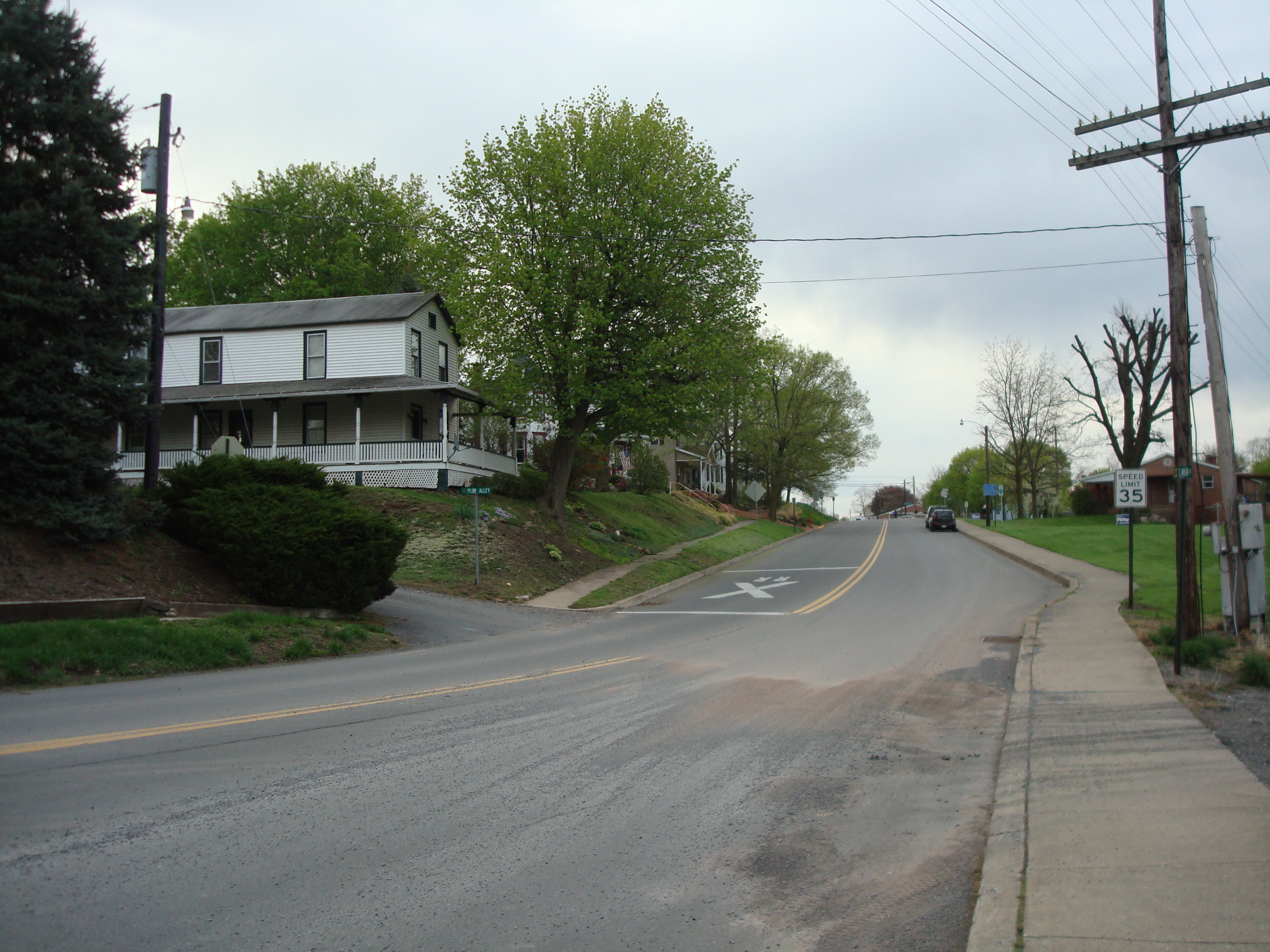
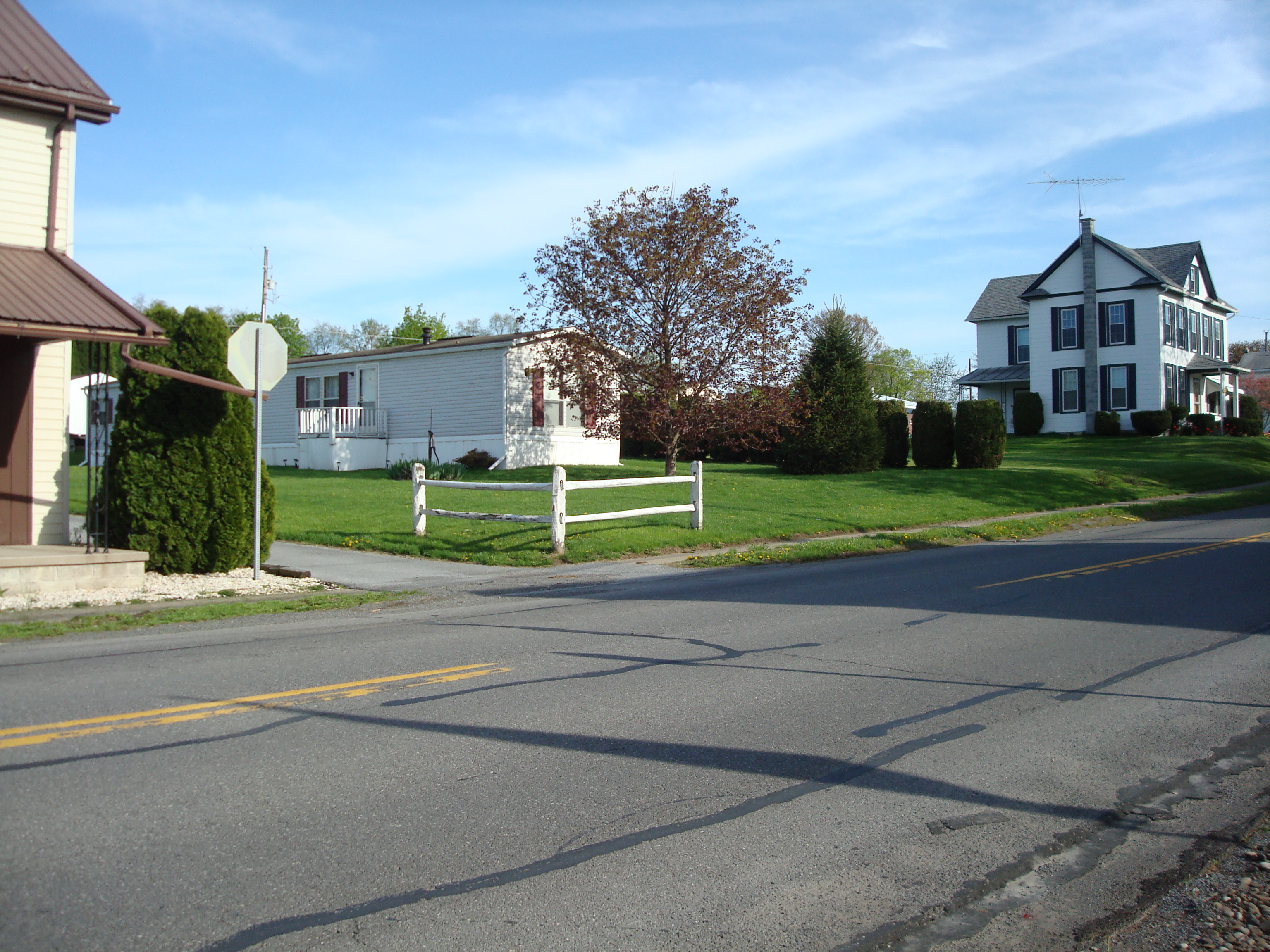
Recent view of the homes that Grandma would have walked by as she entered Watsontown. (Wish it had been raining when I took this photo so it would better match the diary entry.)And, the view as she left Watsontown. (Wish it had been sunny when I took the photo!)
Her middle-aged granddaughter’s comments 100 years later:
This entry makes little sense to me. I can’t figure out what type of errand might require two trips to town. Earlier in the week I’d thought that Grandma probably went shopping Now I don’t know.
16-year-old Helena Muffly wrote exactly 100 years ago today:
Tuesday, August 1, 1911:
Summer’s passing onward, August’s here at hand.
Everybody’s busy, don’t you understand!
Summer’s passing onward, soon it will be o’er,
And these summer days will come again no more.
I went over to Stout’s this evening on purpose to give her a present, for today is her birthday. I mean Miss Carrie (of course). I am pretty much cooled off now having got so terrible mad at the cows and the supper dishes this evening.
Me standing on the bridge that Grandma would have crossed when she walked over to Carrie Stout's house. (The bridge appears to be really old--I wonder if this is the exact bridge that Grandma crossed or if it was replaced years ago.)
Her middle-aged granddaughter’s comments 100 years later:
Grandma included a poem on the first day of each month. Every month I’m intrigued by the poems—some of them are a little better than others—and I continue to wonder whether Grandma copied the monthly poems from a source or whether she wrote them herself.
Poems were more popular a hundred years ago than they are now. Back then students were required to regularly memorize poetry in school —and there were resource books filled with poetry. Women’s magazine also often contained poetry.
Carrie’s Birthday
What did Grandma give her friend Carrie Stout for her birthday? Back in March for Grandma’s birthday, Carrie gave her a “dainty white apron” that Grandma’s mother called “only a patch” so I assume this gift was of similar value.
Terrible Mad
It sounds like Grandma had a rough day—Did she get kicked by a cow? . and break a dish when doing the supper dishes? .. . or maybe a cow kicked a bucket of milk over? . . . or did the cows again escape from the pasture and get into the corn field? (Grandma needed to chase them out of the corn on July 10 and July 25.)
16-year-old Helena Muffly wrote exactly 100 years ago today:
Sunday, July 30, 1911: Went to Sunday school this afternoon. Was the only one present in our class, even our teacher wasn’t there. Mr. and Mrs. Chas. Seibert were here this afternoon. Saw him today.
The McEwensville Baptist Church building is long gone, but it once was in this area of McEwensville.
Her middle-aged granddaughter’s comments 100 years later:
Whew, it doesn’t sound like there was much of a Sunday School class—no teacher and one student. Did Grandma attend another class with people in a different age group or did she just go home?
I wonder how many students were in the class on a typical week. Two Sunday’s ago Grandma had also written that she was the only student in her class.
Every Sunday since Grandma began keeping the diary in January she has said that she went to Sunday School. She must have generally found Sunday School to be meaningful—and I guess these summer Sunday’s were exceptions.
I have no idea who Mr. and Mrs. Charles Seibert were.
I think that “him” refers to a guy Grandma liked. The previous day she’d written that she’d had quite a good time at a festival in McEwensville and that “He was there. B.”
I think that this entry was referring to the same guy.
I wish that Grandma had used the complete names of guys she liked—but instead she always used initials or pronouns.
I guess that Grandma worried that her mother or sister Ruth would read the diary—though I’d think that they would have known who B. referred to–so initials seem unnecessary. But to the teen-ager writing the diary it probably felt safer to not refer to guys by name.
16-year-old Helena Muffly wrote exactly 100 years ago today:
Saturday, July 29, 1911: Carrie and I went to a festival up at McEwensville this evening. I had quite a good time. He was there. B.
Her middle-aged granddaughter’s comments 100 years later:
I especially enjoy posting the diary entries when there are parallels between events a hundred years ago and now.
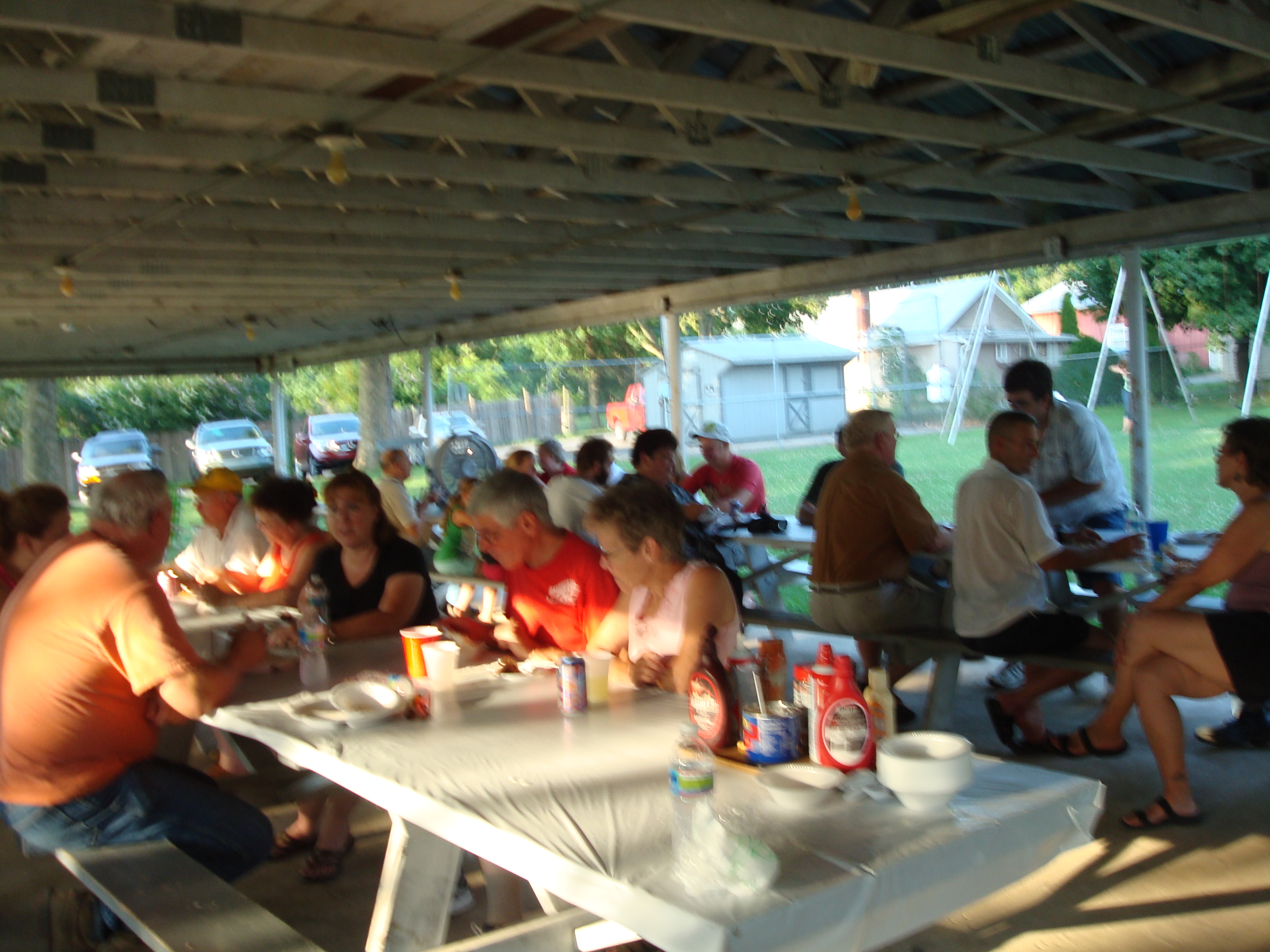
Grandma and her friend Carrie Stout had quite a good time at the festival in McEwensville a hundred years ago. Last Friday I had quite a good time at the annual McEwensville community picnic.
2011 McEwensville Annual Picnic
I was in central Pennsylvania and my husband and I went to McEwensville to take photos to illustrate this blog. The car thermometer said it was 102. When I got out of the car, I immediately wilted and was soaked in sweat.
A woman I’d never met came out of a house and invited me to the annual community picnic later in the day. (Until she invited me I had no clue that McEwensville had an annual picnic–let alone that it was on a day when I was in town.)
My husband and I went and had a great time. Electric fans dissipated some of the heat–and there was great food and lots of wonderful conversation. We met many wonderful new people and renewed old connections.
I think that Grandma and I would have agreed on at least one thing—McEwensville is a fun place!!
16-year-old Helena Muffly wrote exactly 100 years ago today:
Friday, July 28, 1911:I woke up this morning with a very sick feeling, and do not feel very extra now. I do not experience such feelings very often being such a good and healthy girl. Anyway it was a good thing I guess that I hadn’t intended to go to that picnic. I ate a pinch for breakfast and nothing for supper.
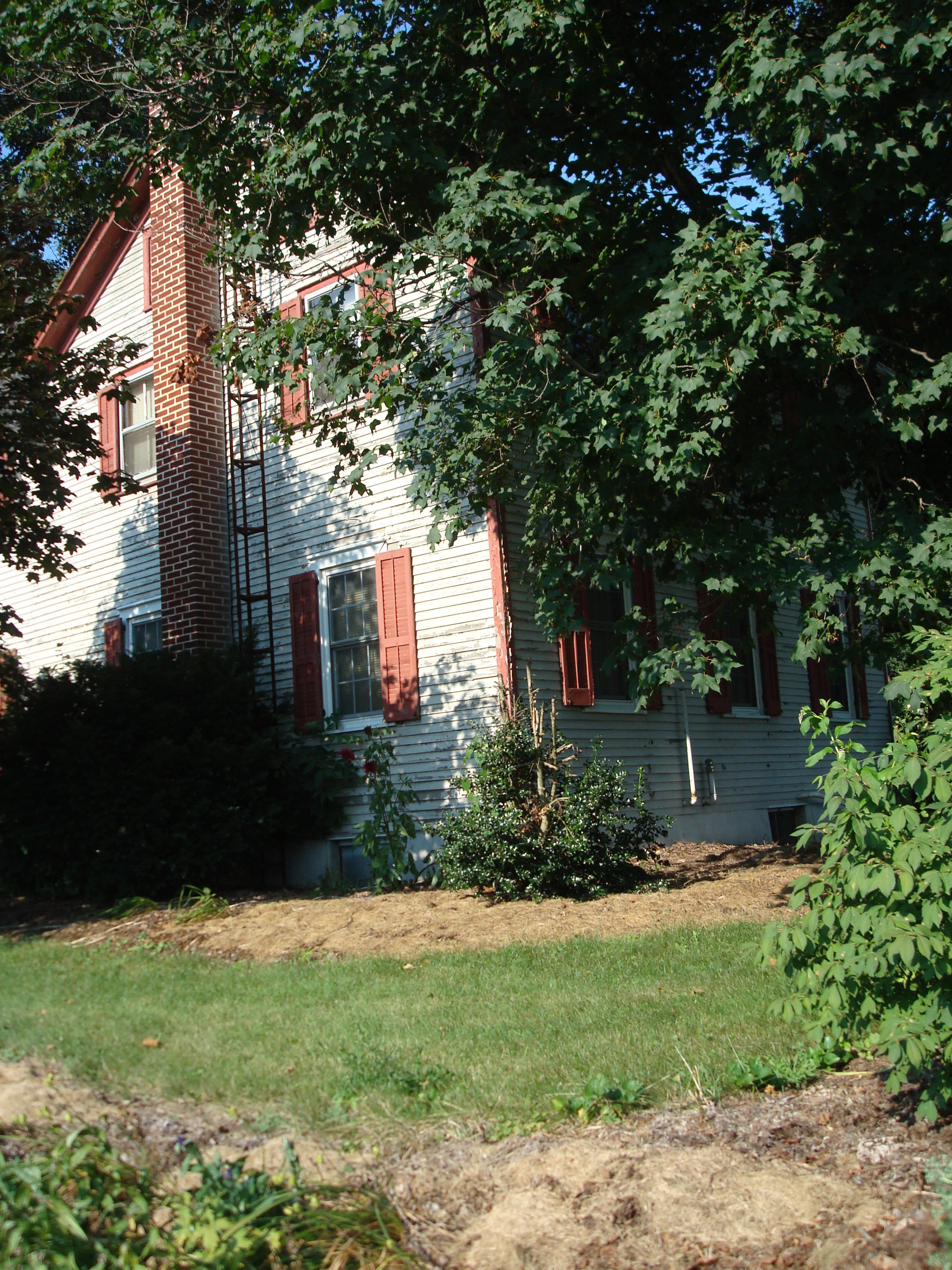
A hundred years ago today Grandma sat in this house while her sister was at a picnic.
Her middle-aged granddaughter’s comments 100 years later:
It seems like the picnic was a major social event—yet Grandma didn’t go. On the 26th she wrote that she wasn’t going because something had intervened; and on the 27th she again mentioned that she didn’t think that she’d go to the picnic, but that her sister Ruth was going.
On the previous two days I’ve pondered various possible reasons why she decided not to go—maybe she was grounded . . . or maybe she was jealous that a guy she liked was going with another girl . . . or . . .
We’ll never know why Grandma decided not to go—but the bottom line was that she didn’t feel well on the day of the picnic.
I wonder if Grandma was really sick a hundred years ago today—or if she just made herself ill because she somehow managed to get herself very upset about the picnic.
16-year-old Helena Muffly wrote exactly 100 years ago today:
Thursday, July 27, 1911: Went with Ruthie up to Oakes. Ruth and Rachel are having such an awful time a planning to go so many places almost at once. Ruth expects to go to the picnic, but I don’t think I will.
Her middle-aged granddaughter’s comments 100 years later:
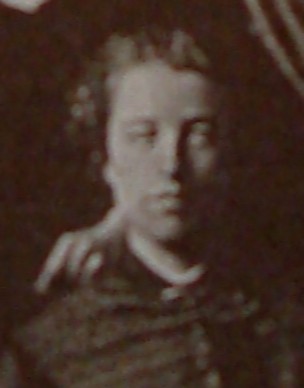
Ruth Muffly
Grandma also mentioned the upcoming picnic in the previous day’s diary entry and that she probably won’t go because “something unforeseen intervened.”
This entry suggests that Grandma could go if she chose to do so. Yesterday I’d thought that perhaps she’d been grounded by her parents.
Now I think that she is upset about something and just doesn’t want to go. Did she discover that some guy that she thought was cute was going with another girl? . . .or . . .
Rachel Oakes
It sounds like Grandma’s sister Ruth and her friend Rachel Oakes are involved in lots of things. I wonder what the dilemmas were—Were several events occurring at the same time? . . .Were they trying to figure out who would (and who would not) be at various events . ..Or guessing which events the cool guys would be at? . . . Or were they trying to figure out what to wear or which foods to take? . . . Or maybe Ruth and Rachel didn’t want a younger sister tagging along to the picnic—Grandma was 16; Ruth was 18 or 19— and said something nasty.
Whew, there can be so many considerations when one is a teen. . . (In other words, some things never change.)