Another 1911 Christmas Gift Idea: Make a Handbag

16-year-old Helena Muffly wrote exactly 100 years ago today: 

Monday, December 11, 1911: Nothing much to write about.

Her middle-aged granddaughter’s comments 100 years later:

Since Grandma didn’t write much today, I’ll share some more photos of Christmas gift ideas from the 1911 issue of Ladies Home Journal.

“Girl’s handy bag for school. It is crocheted of mercerized thread and lined with heavy green linen.”

(An aside—I love this bag. I had one that looked almost like it when I was in junior high. I think that a great aunt made it for me—though I can’t remember with certainty which one.

“A Japanese silk handkerchief was used to make this pretty bag. The handles are embroidery hoops.”

1911 Advertisements for Christmas Gifts

16-year-old Helena Muffly wrote exactly 100 years ago today: 

Wednesday, December 6, 1911: Have my part of the dialogue well under way. You may think I’m smart, but I haven’t much to say. I’m commencing to get streaks of thinking what I’ll buy for Xmas presents. My pocketbook is limited so I’ll have to make a careful list beforehand.

Maybe Grandma thought about buying bracelets for her sisters. (Ad Source: A portion of a Merry Mason Company  advertisement in The Youth’s Companion, December 7, 1911)

Her middle-aged granddaughter’s comments 100 years later:

Grandma was memorizing a dialogue for a school “entertainment” that was to be held before the Christmas break.

Let’s see—Grandma probably needed to buy gifts for at least seven people: her mother, her father, her sister Ruth, her little brother Jimmie, her married sister Besse, her brother-in-law Curt, and her best friend Carrie Stout.  Whew, I can see how that it could be expensive.

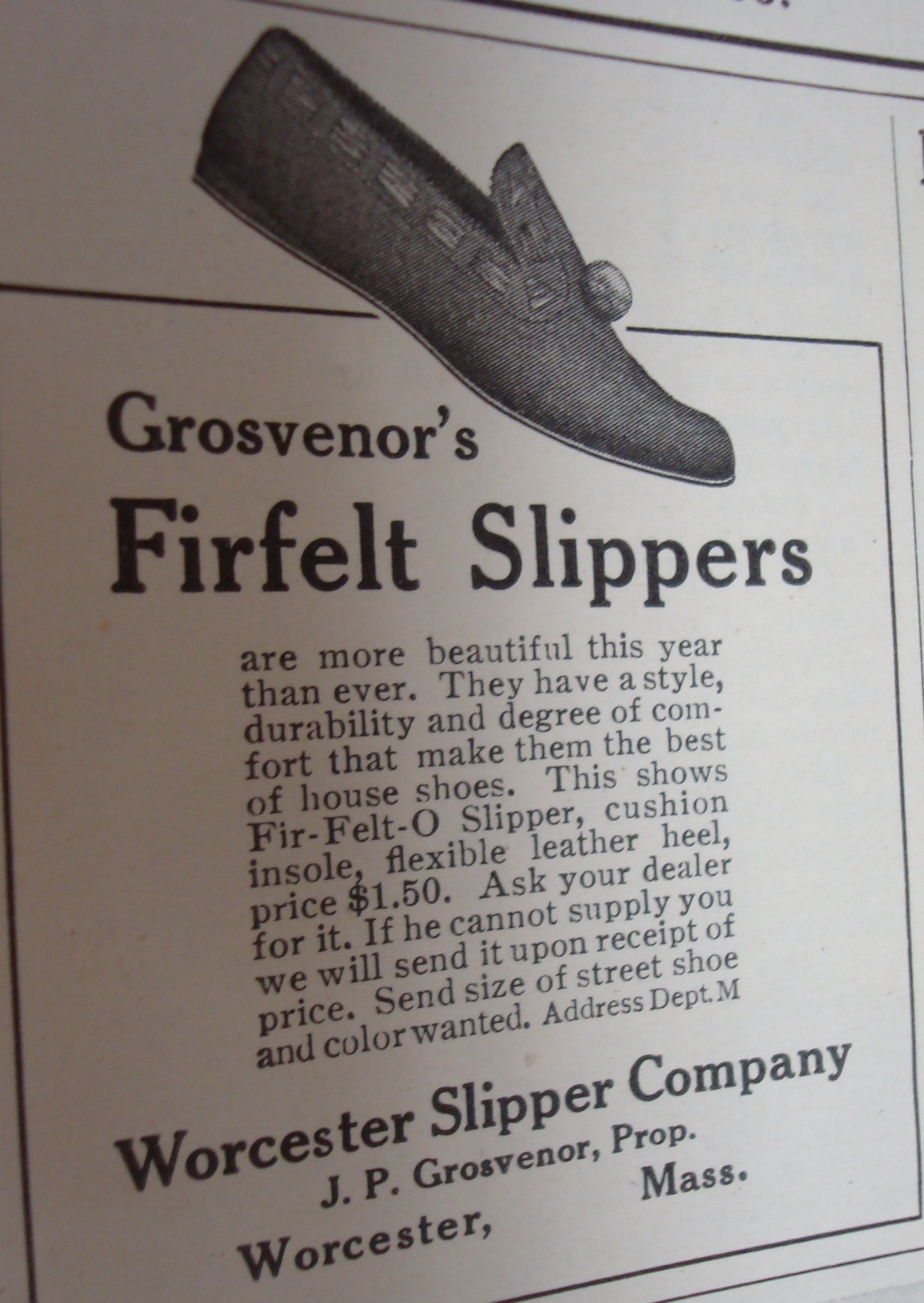
How about slippers for brother-in-law Curt? (Ad source: Ladies Home Journal, December, 1911)

In many ways the young woman who wrote the diary seems very different from the elderly grandmother that I remember—but this is one place where I can really recognize my grandmother. She always worried about money and I can picture her carefully planning what she would purchase before she went shopping.

And, maybe a glass candle holder for Mother? (Ad source: Ladies Home Journal, December, 1911)

Hundred-Year-Old Pictures of Embroidered Collars and Jabots

16-year-old Helena Muffly wrote exactly 100 years ago today: 

Thursday, November 30, 1911: Today is Thanksgiving. We didn’t have such a terrible sumptuous repast either. I would have liked to have had a piece of a turkey gobbler and a dish of ice cream, but we were far from that. I sat at home all day doing miscellaneous jobs which I didn’t relish any too well. Rufus went up to McEwensville this afternoon, to get some of her ever-increasing finery made which she is going to glow in at the institute. One is a piece of embroidery which I presented to her last Christmas but as she at that time was too poor to buy the material to finish it and most too indolent to make it even if she had it. It has lain unmolested till today. There! I’ve filled up the remainder of this page.

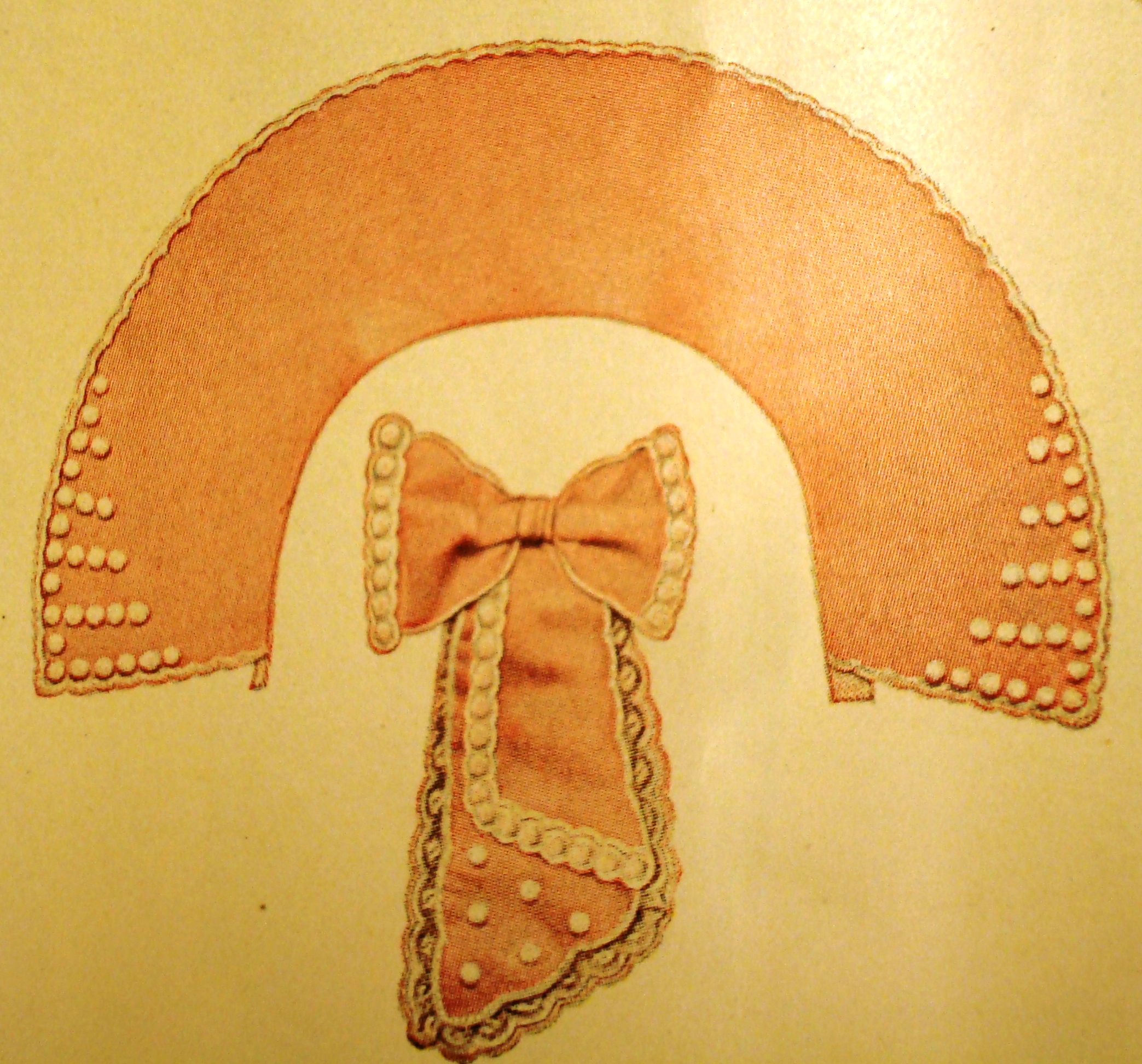
Embroidered collar and jobot. Source of photos: Ladies Home Journal (October, 1911)

Her middle-aged granddaughter’s comments 100 years later:

In this entry Grandma refers to her sister Ruth as Rufus. Ruth was a teacher at a nearby one-room school house and was probably preparing to attend a teachers’ institute (professional development meeting) in a nearby town.

Grandma may have given Ruth an embroidered collar and jabot.

Thanksgiving in 1911

Today Thanksgiving is never this late in November. A hundred years ago it was held on the last Thursday in the month. And, in 1911, the very last day of the month was a Thursday.

In 1939 President Franklin Roosevelt made Thanksgiving the fourth Thursday in the month by proclamation. Federal regulations enacted in 1941 made the change permanent. A very late Thanksgiving shortened the Christmas shopping season—and the change to the fourth Thursday was seen as a way to provide an economic boost to the economy.

Repast

Grandma used the term repast in her diary entry. It is an archaic word for a feast.

Fireworks Dangerous! Regulations Needed

16-year-old Helena Muffly wrote exactly 100 years ago today: 

Tuesday, July 4, 1911: The fourth of July is almost over and I have barely given it a thought. That shows that I am not given to celebration on this day having nothing to shoot up in the air. A good reason.

Her middle-aged granddaughter’s comments 100 years later:

A hundred years ago the national media was highlighting the dangers of fireworks. The following is an excerpt of an article in the Ladies Home Journal.

The Killing of Children: 131 More Little Ones Added to the Fearful List

A FOREWORD: The figures given here can be accepted as authoritative. They are figures collated by “The Journal of the American Medical Association” of Chicago from returns sent to it by health officers, hospital superintendents, physicians, and other reliable sources in every part of the country.

The Editor of The Ladies Home Journal

One hundred and thirty-one children were killed either by fireworks or as the result of fireworks in the celebration of the last Fourth of July. This is a lower total than we have had since 1903, due to the rapidly growing feeling among the sensible part of the American people for a radical change of celebrating the day.

Wherever common-sense has ruled and fireworks have been actually and entirely forbidden the results were certainly splendid.

Trenton, New Jersey, for instance, prohibited all fireworks for the first time last year. Not a child was killed nor an injury reported. The year before 58 injuries were reported and 1 killed.

Cleveland, Ohio, where fireworks have been prohibited for two years, had only 1 injury last year, 4 the year before, while 93 were injured and 12 were killed the previous year when fireworks were permitted. . . .

The third city in America, Philadelphia, leads all the cities of the country with the blackest record for 1910: 409 children were killed or maimed in Philadelphia last Fourth of July. A creditable record the the city that is supposed to be the cradle of American liberty and patriotism! A conscientious effort made by a score of the leading citizens of Philadelphia last year to enact a prohibitive fireworks ordinance was met by the comment from the Mayor that he could see no reason why children should not be allowed their fireworks and their fun. “Their fun”! And this in the face of the fact that , during the short period of only four Fourths of July, THERE HAVE BEEN KILLED AND MAIMED IN PHILADELPHIA ALONE ONE THOUSNAD SIX HUNDRED AND THIRTEEN CHILDREN

A humane record in order that children may have “their fun”! Just how long the people of Philadelphia will permit their city to show the blackest Fourth of July record of any city it is difficult to say.

There are other cities too, whose people sadly need an awakening on this barbarous Fourth of July  method of celebration. Pittsburg, Pennsylvania, for example, is co-equal with New York in presenting the largest number of children killed. . . .

There is but one way for a city to stop this fearful increasing roll of little ones killed and maimed each year. The responsibility clearly rests with city governments, since the employment of death-dealing methods of celebration is subject to their regulation. It is, therefore, up to the city governments to decide whether or not the maiming of thousands, the agonizing deaths from lockjaw, and the burning to death of little children by fire from fireworks are to be continued. And that a prohibitory ordinance is the only effective and permanent method is shown by the results in Baltimore, Washington, Cleveland, and Trenton.

But the people of every community must ask for such an ordinance and insist that it shall be passed. And now, before we get too close to another Fourth of July, is the time to act.

Ladies Home Journal (March 1, 1911)

Mothers Day

16-year-old Helena Muffly wrote exactly 100 years ago today: 

Sunday, May 14, 1911:   Went to Sunday school this morning. I went over to Stout’s this afternoon. Carrie and I were going to take a walk and visit some other girls. Just as I expected we didn’t do. What a shame.

 Her middle-aged granddaughter’s comments 100 years later:

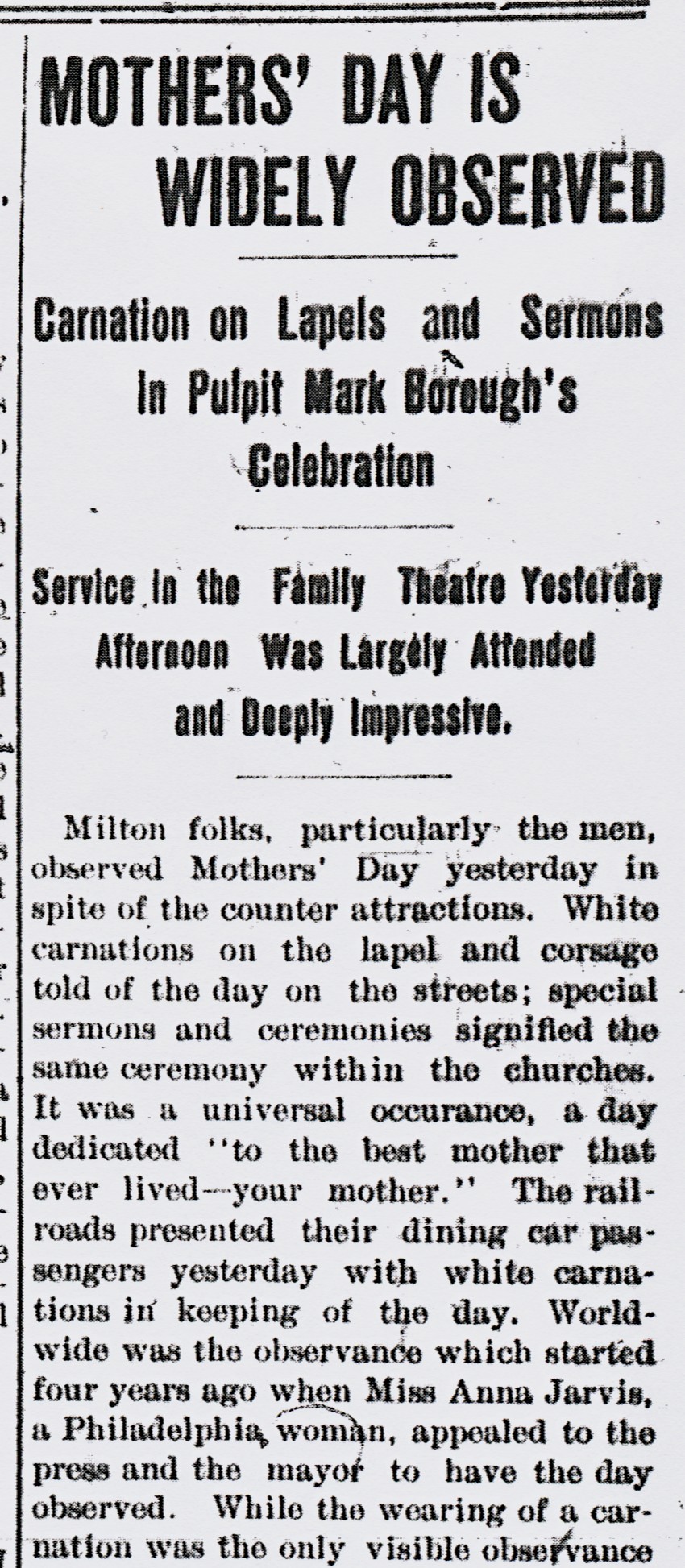
Article in Milton Evening Standard, May 15, 1911

This date was Mothers Day a hundred years ago. I wonder if the Muffly family celebrated it. The holiday had been founded only four years previously—yet people in central Pennsylvania apparently were aware of Mothers Day since there was an article about it in the May 13, 1911 issue of the Milton Evening Standard.

The article discussed how people should wear a white flower if their mother was deceased; and a colored flower if their mother was living. I wonder if anyone still does that. I know that the white and colored flower tradition lasted at least until the 1960s.

When I was a child I can remember going out into the garden before church on Mothers Day to pick a colored flower that I’d pin on my dress.

When I’d get to church most of the other women and girls would be wearing flowers (as well as a few men wearing boutonnieres). I can remember sitting in the pew during the church service and being surprised how many of the adults wore white flowers.

Easter and Goldenrod Eggs

16-year-old Helena Muffly wrote exactly 100 years ago today: 

Sunday, April 16, 1911:  Easter Sunday, no chocolate eggs were in evidence. I went to Sunday school this morning. Went over to Stout’s this afternoon. Miss Carrie wasn’t at home though, having gone away to spend Easter.

 Her middle-aged granddaughter’s comments 100 years later:

It sounds like Grandma’s family didn’t celebrate Easter in 1911—though other families in the area apparently participated in extended family gatherings since Grandma’s friend Carries had gone away to spend Easter.

Grandma’s maternal grandparents lived in Turbotville, and her mother, Phoebe Derr Muffly, had 7 siblings—many of whom lived within 15 miles of the Muffly farm. It is somewhat surprising that the extended family didn’t gather to celebrate Easter.

—–

I had lots of fun experimenting with dying eggs using onion skins two days ago—now I have lots of hard-boiled eggs that need to be used.

Goldenrod Eggs are an old-fashioned traditional Easter food.

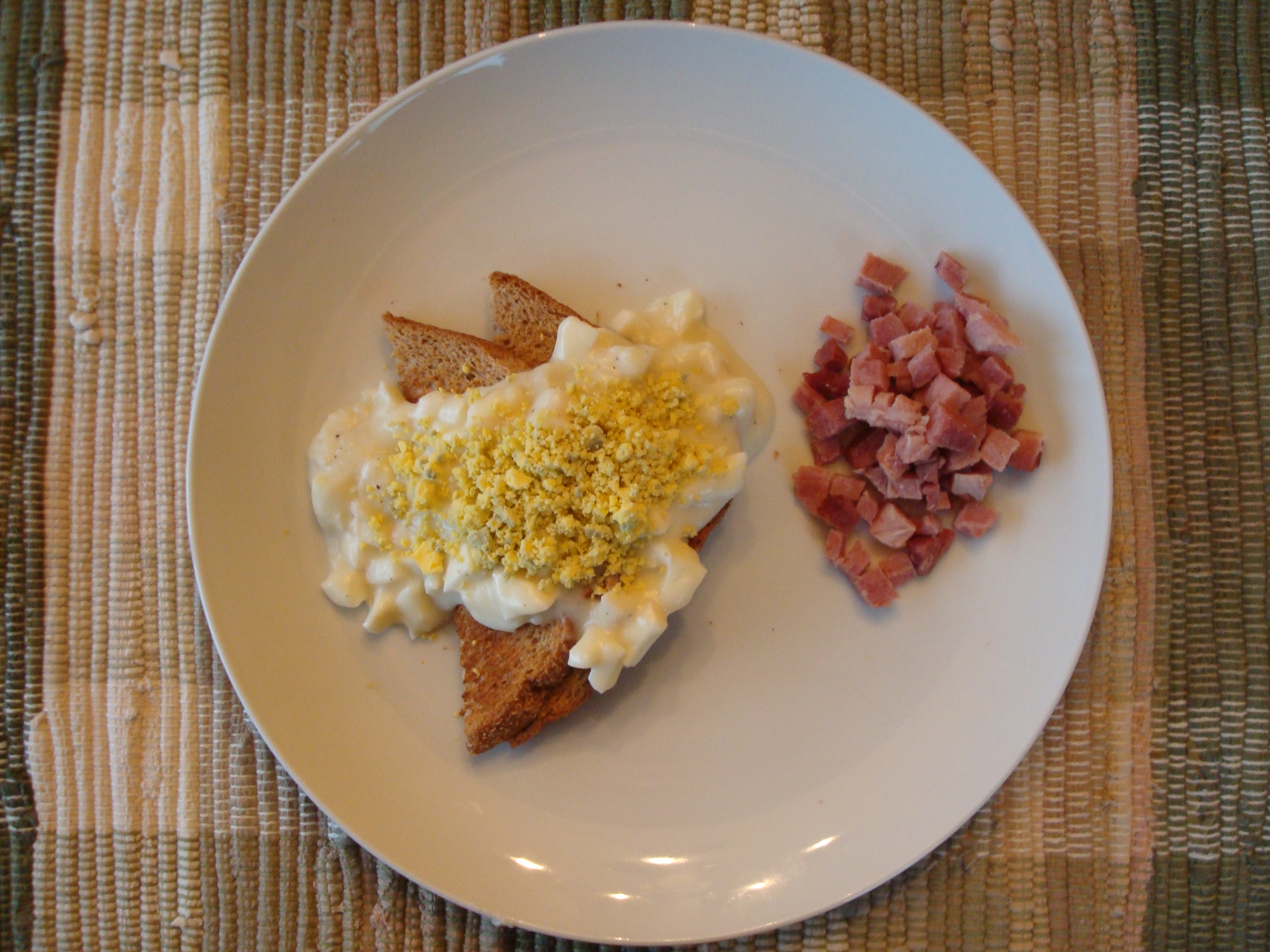
Goldenrod Eggs with Chopped Ham

Goldenrod Eggs

6 slices buttered toast

6 hard-cooked eggs

2 cups white sauce*

1/4  teaspoon salt

few grains cayenne

1/8 teaspoon pepper

Remove shells from eggs; chop whites finely; add to White Sauce. Press yolks through a sieve and add seasonings. Pour White Sauce over toast arranged on a platter, and garnish with yolks of eggs.

This dish may be very attractively arranged by placing spoonfuls of finely chopped ham around the toast.

*White Sauce

4 tablespoons butter

4 tablespoons flour

2 cups milk

1/4 teaspoon salt

few grains cayenne

1/4 teaspoon pepper

Melt butter, add flour, seasonings and liquid. Stir until the boiling point is reached. Boil two minutes, beating constantly.

Lowney’s Cook Book (1907)

Coloring Easter Eggs with Onion Skins

16-year-old Helena Muffly wrote exactly 100 years ago today:

Friday, April 14, 1911: I spent most of my time indoors today for the weather was decidedly dreary and ugly. Had a time hiding pop corn this afternoon from Jimmie and Mother.

Her middle-aged granddaughter’s comments 100 years later:

Grandma seems focused on hiding pop corn from her 6-year-old brother Jimmie and her mother. Why?? Was there a shortage of pop corn? Had Grandma popped it—and she wanted to enjoy it herself? . . . .

A hundred years ago on this date it would have been Good Friday. I wonder if the family was making any preparations for Easter. The April 1, 1911 issue of Ladies Home Journal provided suggestions for dyeing Easter eggs:

Easter Egg Dye

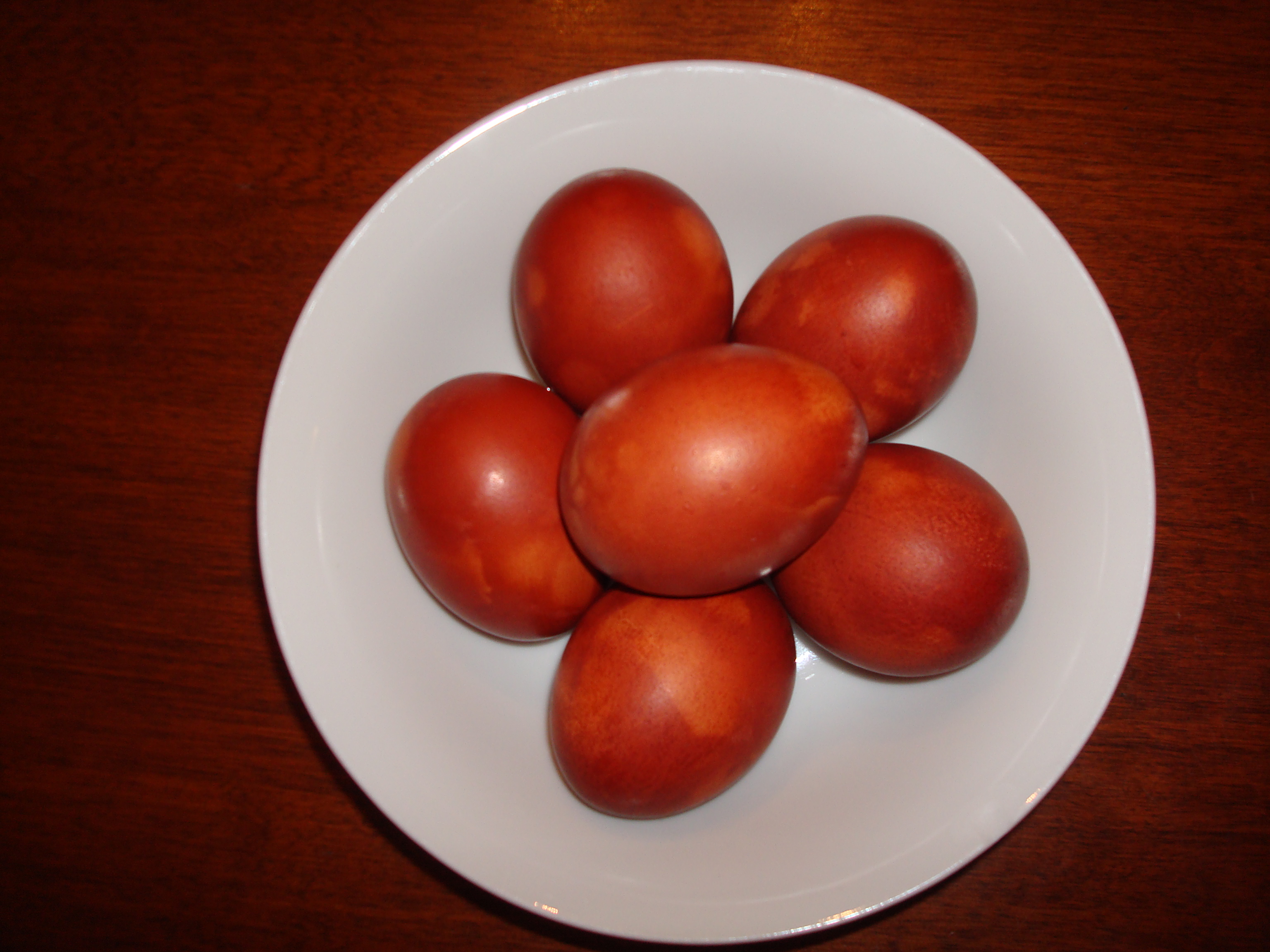
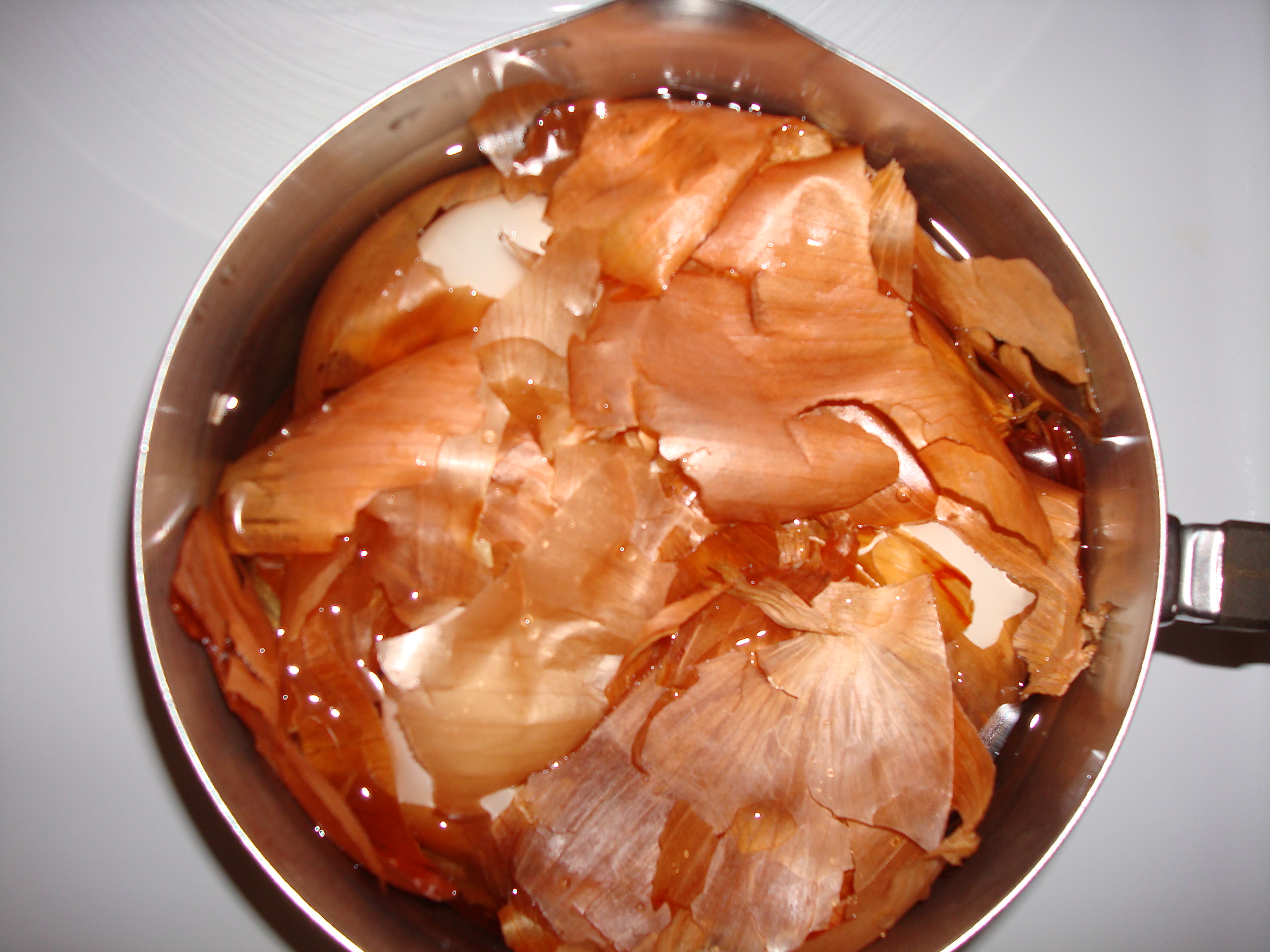
A harmless dye for Easter eggs is made by boiling the eggs with onion skins. Put the eggs on to boil in cold water, with enough onion skins to cover them. Boil till the eggs are hard. They will come out in pretty shades of brown and red. Polish them with a soft flannel cloth. Two cupfuls of onion skins will color eight or ten eggs.

I used white eggs and the outer skins from yellow onions to test these directions. The eggs were easy to color–and the dyed eggs are a pretty reddish-brown. I’m amazed how the skins of yellow onions produce a dye that is so red.