16-year-old Helena Muffly wrote exactly 100 years ago today:
Saturday, December 30, 1911: I came to grief today. Had a knock down and drag out. Am ashamed to launch into details. Suffice to say it was my own fault and nobody dies. Picked out some walnut pits for my candy. Ruthie made it because she said she would. I haven’t as yet tried the experiment, and don’t know how. Will be glad when this long vacation is over.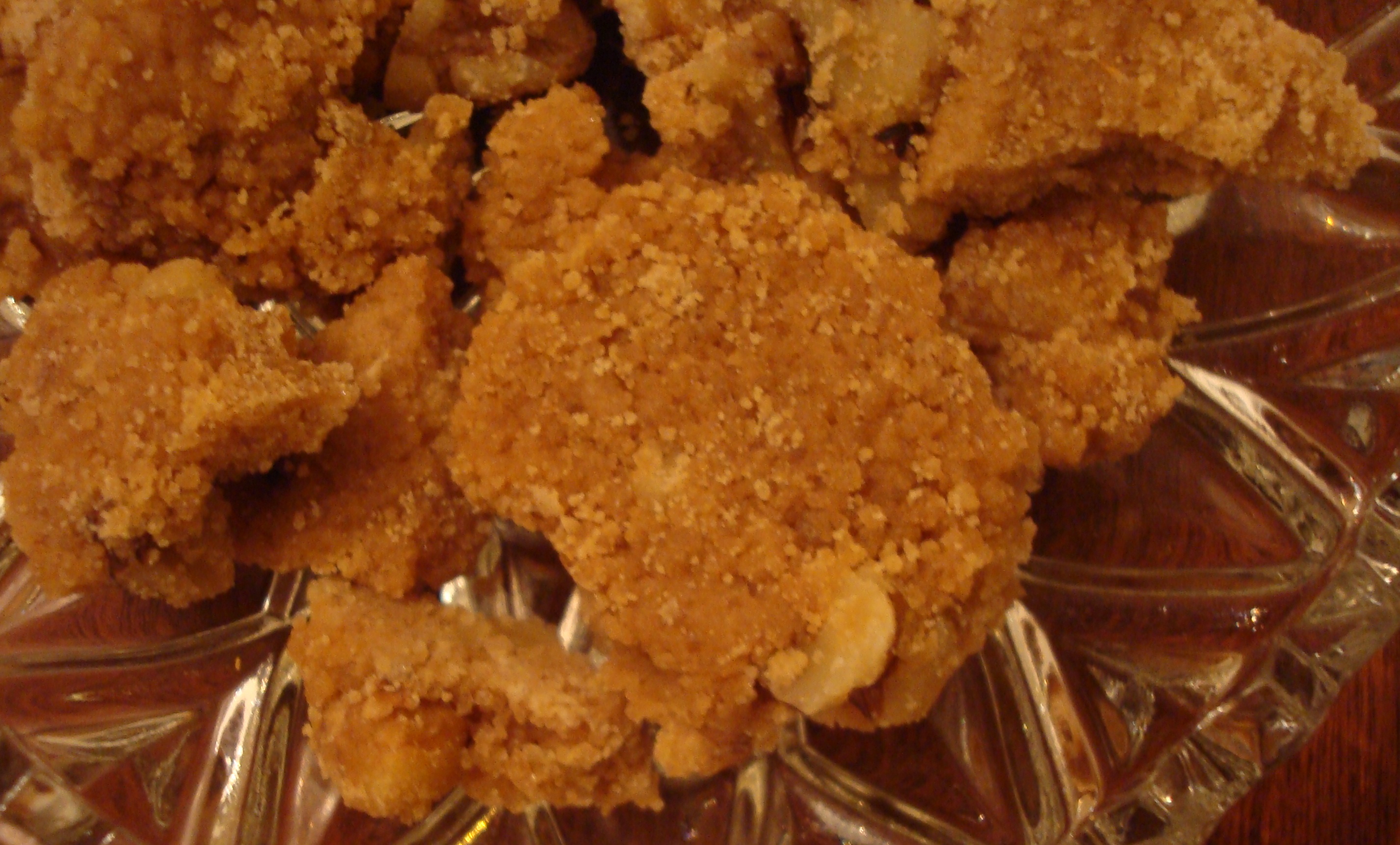
Her middle-aged granddaughter’s comments 100 years later:
Whew ,sounds like some fight. Was it with her six-year-old brother Jimmie? Grandma mentioned on the 26th that she and Jimmie were turning into “fight cats.” And, on the 27th she wrote that Jimmie was making things lively with a switch that he made from a lower branch of the Christmas tree.
Or maybe the fight was with her older sister Ruth. On November 27 Grandma wrote that her sister had pummeled her.
Making Candy
Grandma frequently mentioned made candy in the diary—and I’ve enjoyed replicating old-time candy recipes.
Grandma had her sister Ruth to help ensure that candy “experiments” were successes–I’ve been on my own and have occasionally failed. Coffee Candy was one such failure.
I found the recipe for Coffee Candy in a 1907* central Pennsylvania cookbook called the Lycoming Valley Cook Book. It was compiled by the Ladies of Trout Run M.E. Church .
Coffee Candy
Boil together, without stirring, until thick enough to spin a thread, one-half cup strong coffee and two cups sugar. Remove the pan from stove and place in a dish of cold water. Beat rapidly until it creams. Stir in a cup of chopped nut meats, pour into a flat tin and cut into squares.
I cooked the candy until it formed threads at the soft crack stage (270-290 degrees). I didn’t stir while cooking—though I did dip a spoon into the pan several times to get a little of the boiling syrup to test what stage it was at.
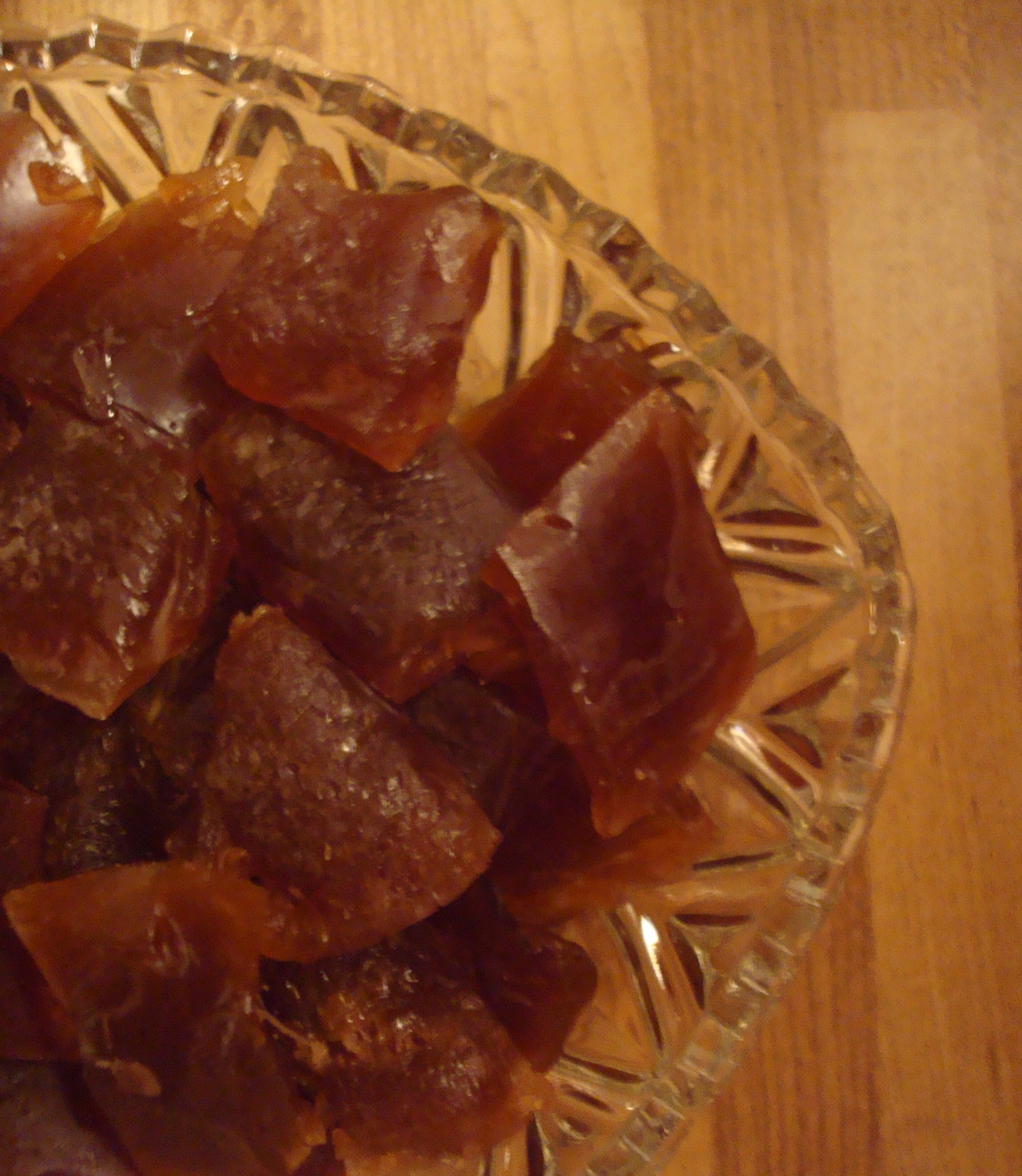
After I removed the mixture from the heat and put it in a dish of cold water I beat it. Large coffee-flavored granules formed rather than a creamy candy.
I stirred nuts into the granular mix, and firmly pressed into a buttered pan. The candy didn’t want to stick together very well when I pressed it into the pan, but I hoped for the best.
However, when I tried to cut the candy, it crumbled into small pieces. The Coffee Candy looked terrible, but the candy still had a very nice taste—and I enjoyed eating it.
I must have cooked the candy too long (or maybe not long enough) . . .or maybe dipping the spoon into the boiling syrup to test it caused the boiling sugar to crystallize . . or . . ??
Next year I’ll have to experiment a little with this recipe and try to figure out what I did wrong.
Other old-time candy recipes that I’ve more successfully made include:
Two old fudge recipes (including one that calls for molasses)
* I got the recipe out of a 1992 reprint of the 1907 book. Kwik-Kopy Printing, Williamsport PA published the reprint.