Old-fashioned Braised Carrots

Braised Carrots in Serving DishSome old rules of thumb and beliefs about nutrition are true. For example, my mother always told me to eat carrots so that I could see better at night. She was right. It’s true that carrots contain lots of Vitamin A which may make it easier to see in the dark.

Carrots are also a good source of Vitamin C and Vitamin K; and, they are high in fiber, and low in calories.

The bottom line is that carrots are a very nutritious vegetable. But, except for nibbling on the occasional raw carrot, I seldom eat them. So when I came across a hundred-year-old recipe for Braised Carrots, I decided that it was time to try a carrot recipe.

The Braised Carrots, when made using beef broth, taste and have a texture similar to carrots in a beef stew. It makes a nice vegetable side dish. The carrots are cut lengthwise into long strips which makes for a nice, somewhat unique, presentation.

Here’s the original recipe:
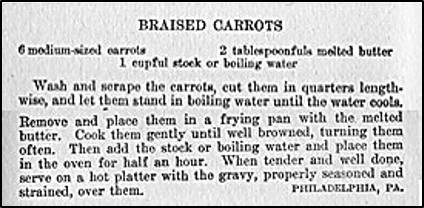
Recipe for Braised Carrots
Good Housekeeping’s Book of Recipes and Household Discoveries (1920)

Here’s the recipe updated for modern cooks:

Braised Carrots

  • Servings: 3 - 4
  • Difficulty: moderate
  • Print

water

6 carrots

2 tablespoons butter

1 cup stock or water (I used beef broth.)

Fill a Dutch oven half full with water. Put on stove and bring to a boil using high heat.

In the meantime, wash and peel (or scrape) the carrots; then quarter lengthwise. Put carrots in the boiling water and cover. Remove from heat. Let sit until the water has cooled (about 45 minutes). Drain.

Preheat oven to 375° F. In the meantime, on the top of the stove, melt butter in an oven-proof skillet using medium heat. Gently put carrots in the skillet and cook for about 10 minutes. May be gently turned once or twice. (The carrots were difficult to turn without breaking, and they didn’t really seem to need to be turned, so I did not turn most of them. They did not brown, but became more tender). Add stock or water, and put in oven for a half hour. Remove from oven, and put in serving dish. Spoon some of the liquid over the carrots.
http://www.ahundredyearsago.com

"Modern" Pound Cake Recipe

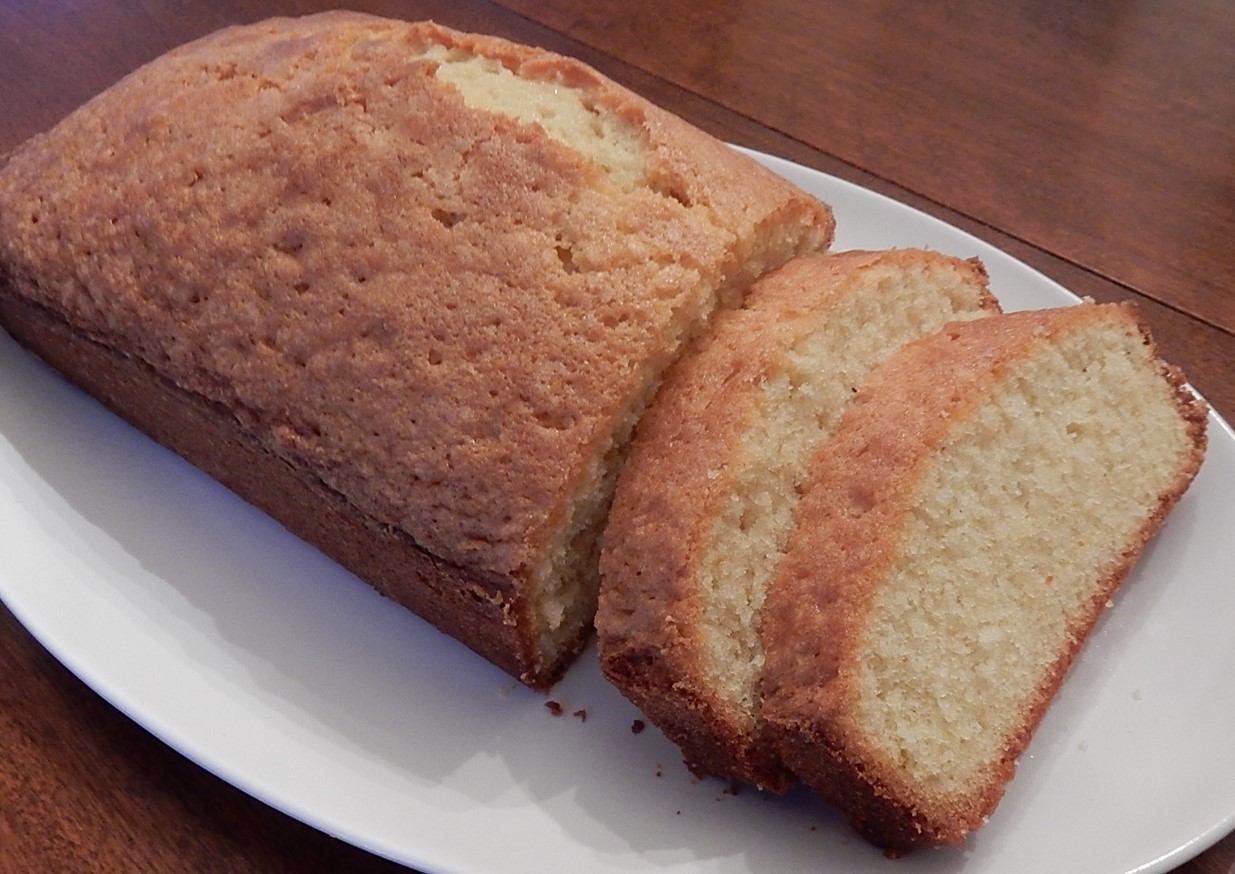
sliced pound cake on plate

Old-time pound cake recipes often called one pound each of flour, sugar, butter, and eggs. However, a 1920 promotional cookbook for Snowdrift shortening contained a recipe for “Modern” Pound Cake that called for Snowdrift instead of butter; and didn’t call for equal proportions of the other ingredients.

Recipe for Modern Pound Cake
Source: A New Snowdrift Cook Book (1920)

The recipe may not be a traditional pound cake recipe – though the use of shortening doesn’t exactly seem modern either – but, in any case, “Modern” Pound Cake turned out wonderfully. The cake is moist and rich, with a  hint of lemon.

Here’s the recipe updated for modern cooks:

Modern Pound Cake

  • Servings: 6 - 8
  • Difficulty: easy
  • Print

1 cup sugar

2/3 cup shortening

4 eggs

1/2 teaspoon vanilla extract

1/2 teaspoon lemon extract

1 tablespoon milk

1/2 teaspoon baking powder

1/3 teaspoon salt

1/4 teaspoon mace (optional)

1 1/3 cups all-purpose flour

Preheat oven to 350°  F. Grease and flour a loaf pan.  Put sugar and shortening in a mixing bowl; beat until combined. Then beat in the eggs, one at a time. Add the vanilla and lemon extracts, milk, baking powder, salt, and (if desired) mace; beat until combined. Add flour and beat until well blended.  Pour into prepared pan.

Bake 45 to 50 minutes, or until wooden pick inserted in center comes out clean.

http://www.ahundredyearsago.com

Old-fashioned Individual Chicken Shortcakes (Chicken & Biscuits)

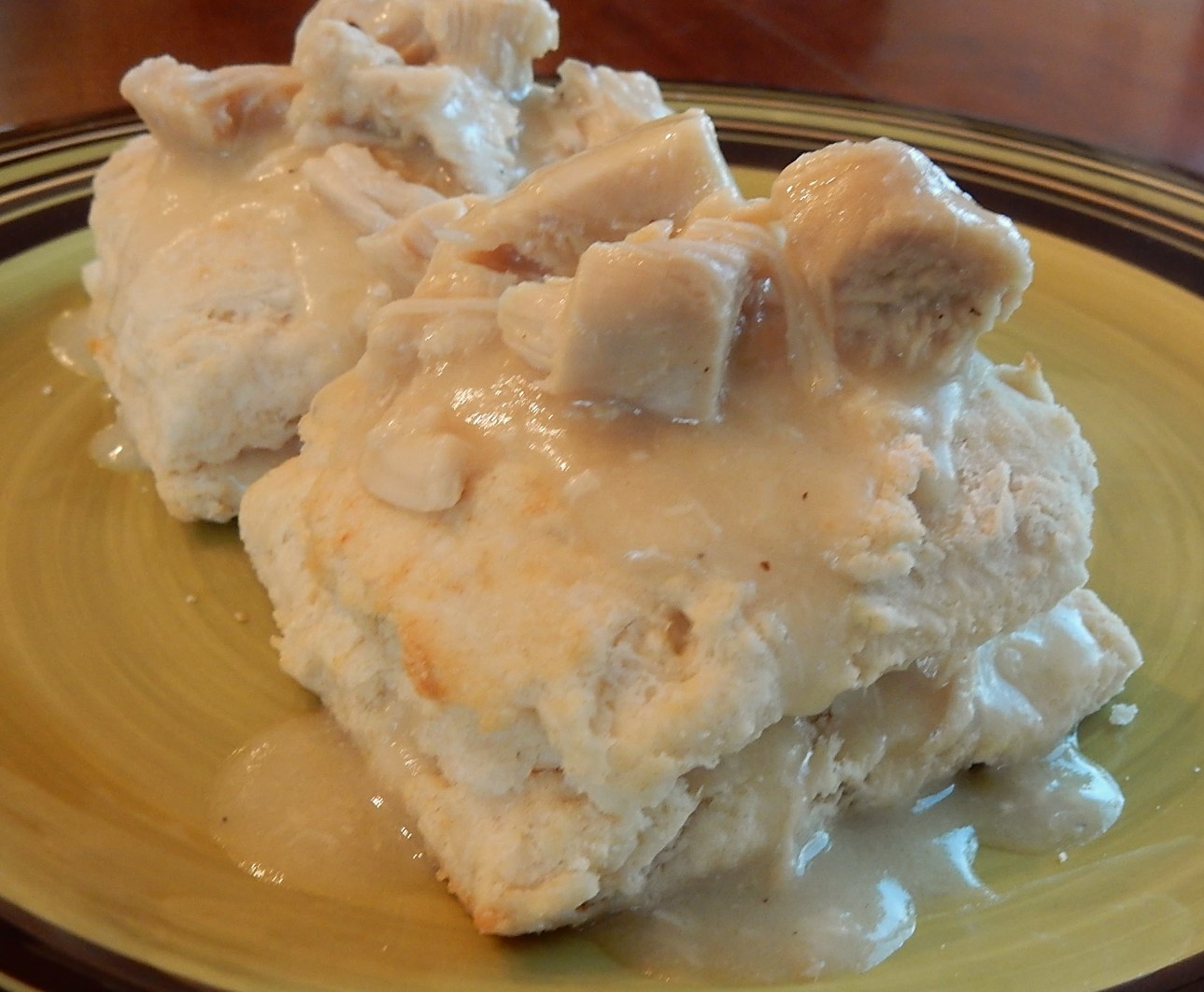
Two Individual Chicken Shortcakes on PlateWith all that is happening in the world, I’m in the mood for homey and comforting foods. So when I came across a hundred-year-old recipe for Individual Chicken Shortcakes, I had to give it a try. This is really a recipe for old-fashioned Chicken and Biscuits. Whatever it is called, this dish hit the spot. The biscuits were flaky, and the chunky chicken gravy was warm and hearty.

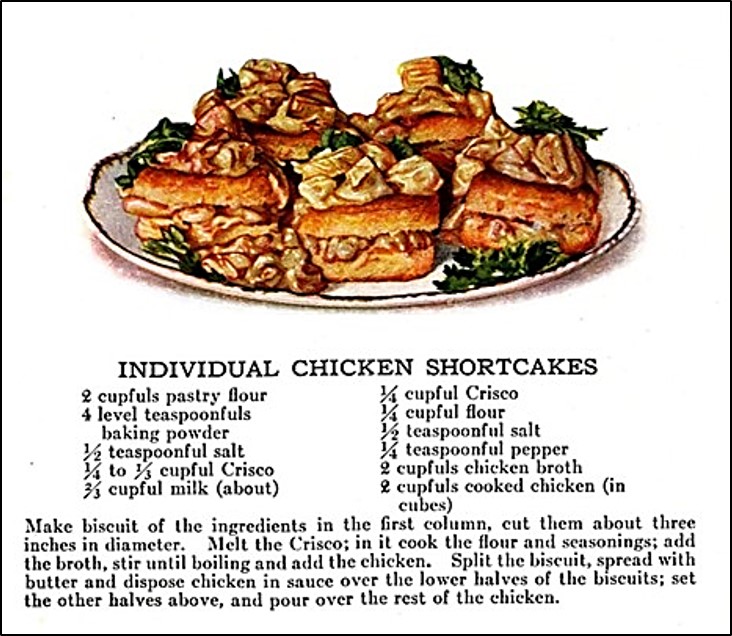
Here is the original recipe:

individual chicken shortcakes on plate
Source: Balanced Daily Diet by Janet McKenzie HIll (1920)

When I updated the recipe, I used butter instead of shortening when making the chicken gravy.

Here is the recipe updated for modern cooks:

Individual Chicken Shortcake (Chicken & Biscuits)

  • Servings: 5-6 Shortcakes
  • Difficulty: moderate
  • Print

Biscuits

2 cups pastry flour (all-purpose flour also works if pastry flour is not available)

4 teaspoons baking powder

1/2 teaspoon salt

1/4 cup shortening

approximately 2/3 cup milk

butter, if desired (use when assembling)

Chicken Gravy

1/4 cup butter

1/4 cup all-purpose flour

1/2 teaspoon salt

1/4 teaspoon pepper

2 cups chicken broth

2 cups cooked chicken (coarsely chopped into approximately 1/2-inch cubes)

To Make Biscuits: Preheat oven to 450° F.  Combine flour, baking powder, and salt in a mixing bowl. Cut in shortening. Add most of the milk and mix using a fork until dough starts to cling together. Add more milk if needed. Roll dough on a prepared floured surface into a rectangle 1/2-inch thick. Cut into 3-inch squares. Place squares on a baking sheet. Bake for approximately 10 -15 minutes (or until lightly browned).

To Make Chicken Mixture: Using medium heat, melt butter; then stir in the flour, salt, and pepper. Gradually, add chicken broth while stirring constantly. Continue stirring until it thickens. Add the chicken, and stir to combine.

To Assemble: Split the biscuits, and butter, if desired. Put 1-2 heaping tablespoons of the chicken mixture on the bottom half of each biscuit. Put other half on top, and spoon another 1-2 heaping tablespoons of the chicken mixture on top. Serve.

http://www.ahundredyearsago.com

Old-fashioned Cinnamon Toast

slice of cinnamon toast on plateWhen I recently was browsing through a hundred-year-old cookbook, and came across a recipe for Cinnamon Toast, memories came flooding back. I have warm, fuzzy memories of eating Cinnamon Toast, as well as fun memories of making Cinnamon Toast that bring to mind people I hadn’t thought of in years.

When I was a child, Cinnamon Toast was the perfect after-school snack. Open the door, take off coat, put a couple slices of bread in the toaster, and toast. Then spread with butter, sprinkle with cinnamon and sugar, and voila – a delightful, sweet treat.

I also remember how my mother always made Cinnamon Toast when I didn’t feel well, and how it always made a miserable day seem a just little bit better. Similarly, I always made it for my children when they were ill, and not hungry for the usual foods. And, I’ve noticed that, as adults, they make Cinnamon Toast for themselves when they are sick.

When I make Cinnamon Toast, no recipe is needed. It is so simple to make. But seeing the hundred-year-old recipe for Cinnamon Toast reminded of another day, many years ago when I did make Cinnamon Toast using a recipe.

It was my first day in junior high, and I was feeling very grown up going from one class to another. Then I was brought back to earth when I got to home economics, and the teacher said, “Today we are going to learn how to make Cinnamon Toast.” And, she actually gave us a recipe. My friends and I tried to suppress giggles. A few of the more daring girls (only girls took home economics back then; the boys took shop) whispered, “This is stupid. Doesn’t everyone know how to make Cinnamon Toast? Does she think we’re little kids?”

But the bottom line is – recipe or no recipe – Cinnamon Toast is the ultimate comfort food.

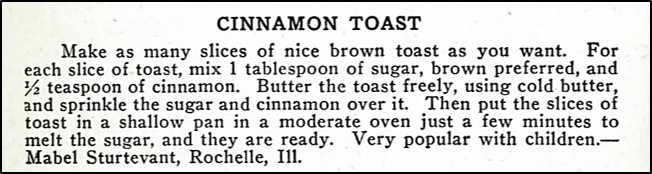
Here’s the original recipe:

Cinnamon Toast Recipe
Source; The Cook Book of Left-Overs (1920) compiled by the More Nurses in Training Movement

The hundred-year-old recipe calls for brown sugar, while I typically use white. Either type of sugar works. When brown sugar is used, the Cinnamon Toast has a slight hint of caramel.

And, here is the recipe updated for modern cooks:

Cinnamon Toast

  • Servings: 1 serving
  • Difficulty: easy
  • Print

1 tablespoon brown sugar

1/2 teaspoon cinnamon

1 slice bread

butter

Put the brown sugar and cinnamon in a small bowl; stir until mixed. Set aside.

Toast bread then spread with butter. Sprinkle with the sugar and cinnamon mixture. (Save any extra of the sugar and cinnamon mixture to use on another piece of toast.)

If desired, melt the sugar mixture on the toast – Preheat oven to 350° F. Place the toast on a baking sheet or in a shallow baking dish, and put in the oven for 1-3 minutes or until the sugar is melted; remove from oven and serve immediately.

http://www.ahundredyearsago.com

Old-fashioned Cocoa Cookies (Chocolate Cut-out Cookies)

coffee mug and cookies on napkin

I recently came across a hundred-year-old recipe for Cocoa Cookies that I just had to try. This recipe was actually a cut-out cookie recipe. The cookies had a crispy exterior with a softer, cake-like interior, and just the right amount of sweetness. They are lovely with coffee (or milk).

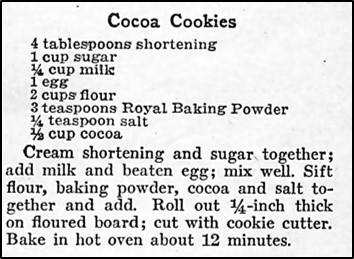
Here is the original recipe:

recipe for cocoa cookies
Source: New Royal Cook Book (1920), published by Royal Baking Powder Co.

When I followed the recipe, the cookie dough was extremely dry and crumbly, so I added a second egg to make the dough a better consistency for rolling.

And, here’s the recipe updated for modern cooks:

Cocoa Cookies (Chocolate Cut-out Cookies

  • Servings: approx. 40
  • Difficulty: moderate
  • Print

1/4 cup butter or shortening (I used butter.)

1 cup sugar

1/4 cup milk

2 large eggs

3 teaspoons baking powder

1/4 teaspoon salt

1/2 cup cocoa

2 cups flour

Preheat oven to 400° F. Cream butter (or shortening) and sugar; then stir in milk and eggs.  Add the baking powder, salt, and cocoa; stir until combined. Add the flour and stir until well mixed. Roll out to 1/4 inch thick; then cut into shapes. Place on greased baking sheets. Bake 9-12 minutes or until lightly browned.

http://www.ahundredyearsago.com

Hundred-year-old Recipe for French Onion Soup

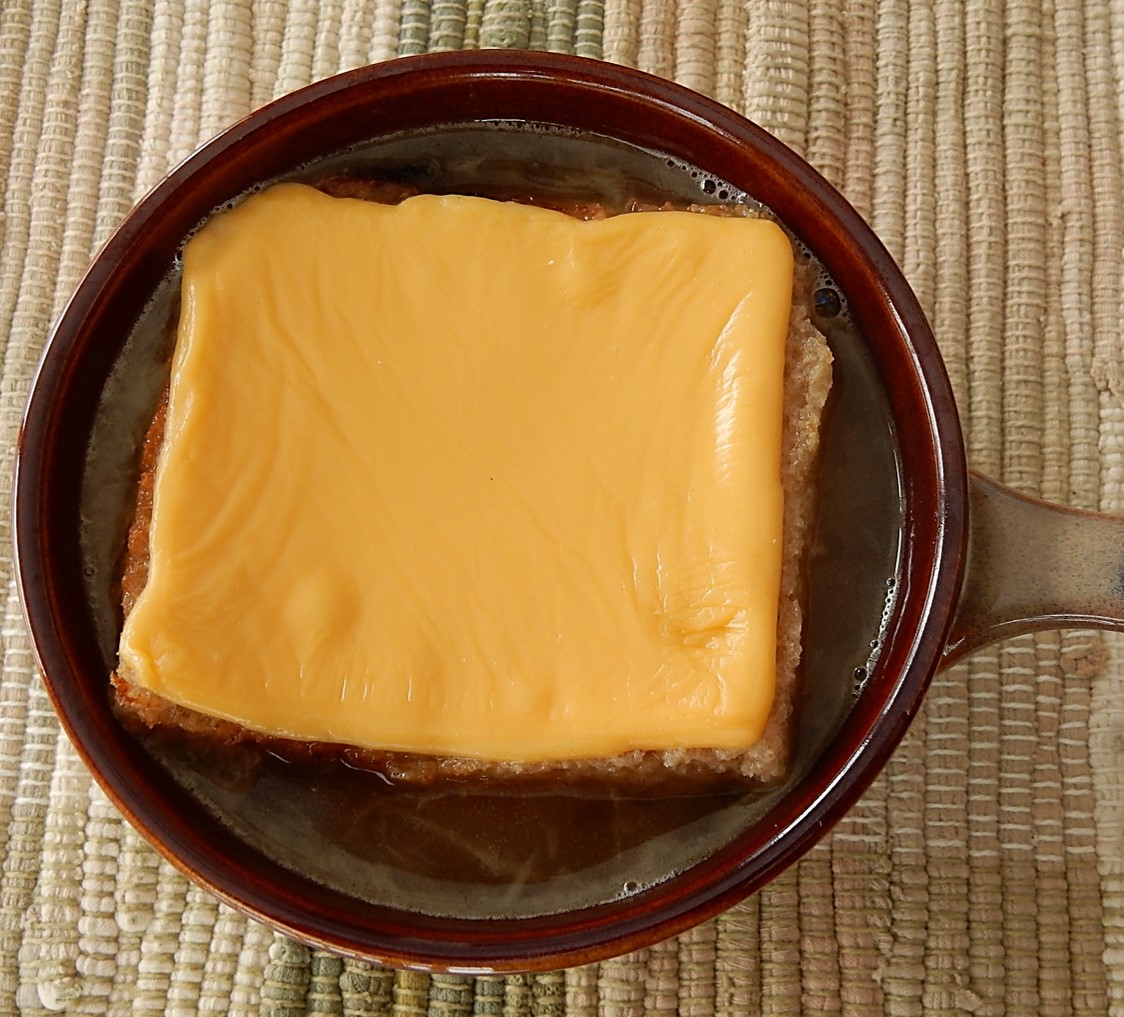
bowl of French Onion Soup with toast and cheese on top

French Onion Soup topped with toast and Swiss or Gruyere cheese is my favorite “restaurant soup,” so I was intrigued when I saw a recipe for French Onion Soup in a hundred-year-old cookbook. I could immediately tell the old recipe wasn’t exactly like a modern one because the soup was topped with toast and American cheese.

I have a somewhat negative stereotype of American cheese (and it just isn’t the same as Swiss or Gruyere cheese), so my expectations weren’t very high for this recipe. But I was pleasantly surprised. The resulting soup tasted similar to modern French onion soups–and the melted American cheese was yummy (and not the least bit jarring) when immersed in the soup. My husband even said that he liked how the cheese was “less stringy” than the cheese on the typical French Onion Soup.

Here’s the original recipe:

Recipe for French Onion Soup
Source: A New Snowdrift Cook Book (1920) by Mrs. Ida C. Bailey Allen

Old cookbooks often just use the generic term “cheese.” This is the first time I’ve seen a hundred-year-old recipe explicitly call for American cheese. According to Serious Eats, James Kraft patented a method for making process American cheese in 1916, and it apparently was widely available by 1920.

This recipe is from a promotional cookbook for Snowdrift published by The Southern Cotton Oil Trading Company. Snowdrift was a shortening made from cottonseed oil. When I made the recipe, I substituted butter for the Snowdrift.

And, here is the recipe updated for modern cooks:

French Onion Soup

  • Servings: 3-4
  • Difficulty: moderate
  • Print

3 tablespoons butter

6 medium-sized onions, thinly sliced

1 quart soup stock (I used beef broth.)

1 slice of bread for each bowl of soup

1 slice American cheese for each bowl of soup (Use 2 slices per bowl if the slices are thin.)

Melt butter in a Dutch oven or stock pot, then add onion slices. Using medium heat sauté until the onions have softened and caramelized while stirring occasionally. It will take approximately 45 minutes for the onions to caramelize. Add the soup stock, and bring to a simmer.

In the meantime, lightly toast bread. Cut toast into squares small enough to fit the soup bowls; then cut the American cheese into squares slightly smaller than the toast. Top the toast with the squares of American cheese. Put under the boiler until the cheese melts (about 1 minute); remove from oven.

To serve: Ladle soup into bowls, and top with the toast squares/melted cheese.

Old-fashioned Fried Parsnips

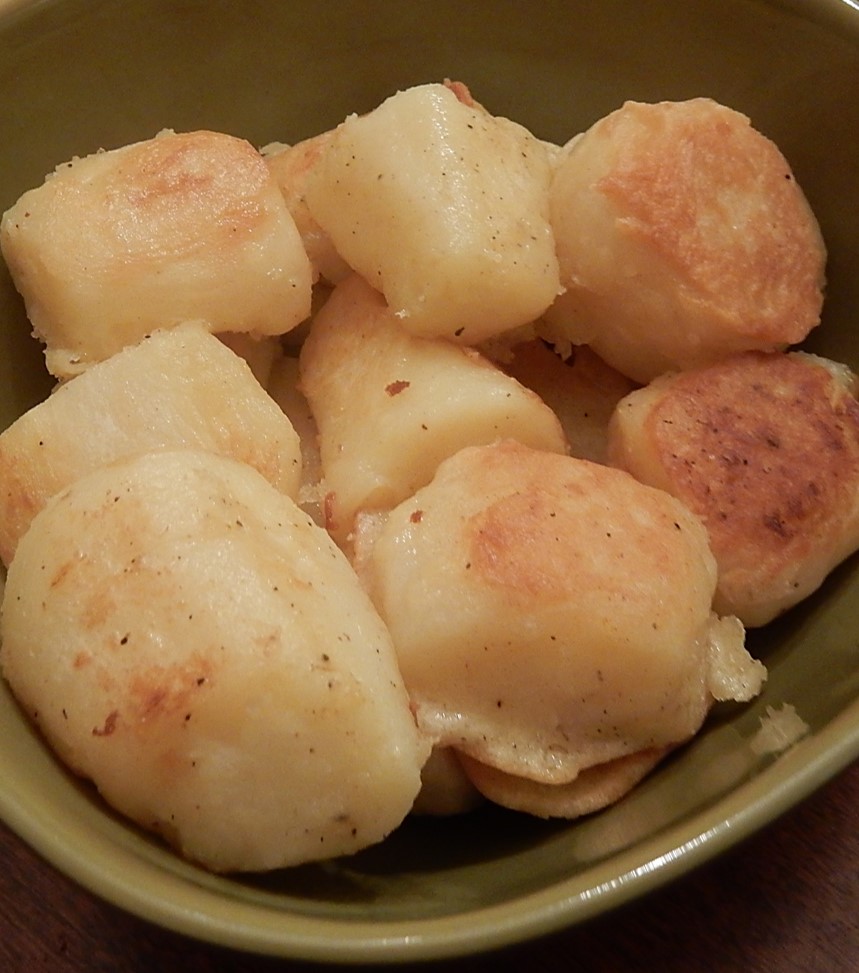
fried parsnips in bowl

When I recently saw a hundred-year-old recipe for Fried Parsnips, I decided to give it a try. As winter begins to wind down, I’m enjoying some of the less common vegetables.

The parsnips are cut into large chunks. After they are cooked, each piece is dipped into a batter and then fried. The Fried Parsnips had a delightful earthy, sweetness which was accentuated by the crispy coating.

Here is the original recipe:

Recipe for Fried Parsnips
Balanced Daily Diet (1920) by Janet McKenzie Hill

I could not figure why the cooked parsnips were supposed to stand in the butter for half an hour, or why the batter was to sit for half an hour – so I didn’t include extended wait times when I updated the recipe.

I also substituted butter for some of the Crisco, and any shortening or lard works for frying.

Here is the recipe updated for modern cooks:

Fried Parsnips

  • Servings: 3-4
  • Difficulty: moderate
  • Print

2 pounds parsnips (6 – 8 medium parsnips)

1 egg

1/2 cup milk

3/4 cup flour

1/4 teaspoon salt

salt and pepper

2 tablespoons butter

shortening or lard

Peel parsnips and cut into 2 1/2 inch chunks. Place in a saucepan and cover with water. Bring to a boil using high heat, then reduce heat and simmer until tender (approximately 20 – 25 minutes). Drain.

While the parsnips are cooking, make the batter. In a mixing bowl place the egg, milk, flour and 1/4 teaspoons salt. Beat until smooth; set aside.

Melt butter in skillet, then add cooked parsnips. Sprinkle with salt and pepper, then gently roll in the melted butter. Remove parsnip pieces from the skillet, then add enough shortening or lard to the skillet so that there is 1/2 inch of shortening once it is melted.

Dip each piece of parsnip in the batter to coat, remove from batter, let any excess batter drip off, then put the batter-coated parsnips pieces into the hot fat. Cook until lightly browned on the bottom, then gently roll several times to brown other sides. When browned, remove parsnip pieces from the skillet with a fork. Drain on paper towels, then serve.

http://www.ahundredyearsago.com