Who Carved the Turkey in 1925? . . . and in 2025?

Table and plates with roasted turkey
Source: Ladies Home Journal (November, 1925)

Many things have changed over the past hundred years, while other things have remained the same. Who carved the Thanksgiving turkey in 1925 and who carves it now?

A hundred years ago, the hostess cooked the turkey, while her husband, the host, generally carved it. According to an article in the November, 1925 issue of Ladies Home Journal:

The platter serving the royal turkey should be placed in front of the host.  .  . The hot dinner plates are placed in two piles in front of the carver. To make room for the carving the host very quietly moves his water and cider glasses and salad plate to one side.

. . . Thus the hostess is left free after she has placed the platters of turkey and vegetables to see that everyone’s desires are cared for.

The belief that the host carved the turkey was reaffirmed by the iconic 1943 cover of Saturday Evening Post that showed an older woman wearing an apron setting a huge turkey in front of  an older man with carving cutlery laid out in front of him. Later there were movies such as the 1989 classic, National Lampoon’s Christmas Vacation where host Clark Griswold carves the turkey, which reinforced the concept that the host carved the turkey at holiday gatherings.

Families, however, sometimes developed their own family traditions. In our household, my husband and I jointly carve the turkey in the kitchen before bringing the sliced turkey to the table. More recently our children and children-in-laws sometimes help with the carving.

The author of a recent Today post wrote:

With gender no longer a determinant in who should wield the carving cutlery, my suggested descending pecking order is as follows:

  • The one with the sharpest skills
  • The one who craves the honors
  • The one who did the cooking

And if all else fails? The adult victor of the previous year’s wishbone contest.

Old-Fashioned Giblet Gravy

Giblet Gravy in gravy boat

A hundred years ago when cooks were making turkey or chicken gravy, they often added chopped giblets (gizzard, liver, heart, neck) to the gravy. I always assumed that they added the giblets because they were frugal and did not want to waste anything, but after making Giblet Gravy using 1925 directions, I now realize that my assumptions were not totally accurate. Those cooks, so many years ago, may have been frugal, but they also knew that the giblets added lovely, complex flavors and textures to the gravy while making it rich and savory.

Over the years, when selecting recipes to make, I skipped over Giblet Gravy recipes. I had bad memories of the Giblet Gravy my mother and grandmother made when I was a child (though I’m not sure that I ever actually ate any of it), and I had little interest in trying a hundred-year-old recipe for Giblet Gravy. But this year, I came across a 1925 Thanksgiving menu in an old issue of Ladies Home Journal that listed Giblet Gravy as one of the foods on the menu, so I finally decided that it was time to give it a try. And, I am glad that I did. This classic gravy is a delightful comfort food that is lovely on mashed potatoes, slices of turkey, and stuffing.

The directions for making Giblet Gravy were somewhat scattered in a 1925 cookbook that I have, but here are the original directions for cooking giblets and making the gravy:

Recipe for Giblet Gravy
Source: The Home Makers’ Cooking School Cook Book (1925)

Today, the giblets typically packaged with a turkey or chicken include the gizzard, liver, heart, and neck. The membrane with the “grist” generally has already been removed from the gizzard, so that does not need to be removed. The old recipe also mentions the bladder – but I did not include it when I updated the recipe. I also did not include the wing tips or the claws in the updated list of ingredients.

Here’s the recipe updated for modern cooks:

Giblet Gravy

  • Servings: 8 - 10
  • Difficulty: moderate
  • Print

giblets from one turkey or chicken (gizzard, heart, liver, neck)

water

liquid and drippings from pan that the turkey or chicken was cooked in

4 tablespoons flour

salt and pepper

Step 1. The giblets can be cooked while the turkey or chicken is roasting. Put the giblets in a saucepan and cover with cold water. Put on the stove and bring to a boil using high heat, then reduce heat and simmer until tender (about 1 – 2 hours). Additional water can be added during cooking if needed to keep the giblets covered during cooking. Remove from heat and take the giblets out of the broth. Reserve the giblet broth. When the giblets are cool enough to handle, remove the meat from the neck and any gristle from the gizzards, then chop the cooked giblets.

Step 2. When the turkey or chicken is removed from the oven, pour the liquid and pan drippings from the roasting pan into a bowl. Scrape the bottom of the pan to get all the drippings. Let it settle and cool a little, then skim 4 tablespoons of fat off the top of the liquid. (Any additional fat can be skimmed off the top of the broth and discarded.)

Step 3. Combine the broth and drippings from the turkey or chicken with the broth from cooking the giblets.

Step 4. Put the 4 tablespoons of fat in a saucepan. Heat using medium heat, and stir in the flour. Gradually add 2 cups of the combined turkey and chicken broth/drippings, while stirring constantly.

Step 5. Bring to a boil while continuing to stir constantly. If the gravy is too thick add additional broth. If the gravy is still too thick, and additional liquid is needed, add water until the gravy is the desired consistency. (If the gravy is lumpy, strain, then return to pan.)

Step 6.  Stir in the chopped giblets, then continue heating until the gravy again boils.

Step 7. Season to taste with salt and pepper, then remove from heat and serve.

http://www.ahundredyearsago.com

Old-Fashioned Orange Bread and Muffins (Orange Marmalade Bread/Muffins)

It’s fun to bring treats to meetings and gatherings with friends. I enjoy making new “old” recipes, and attendees are captive audiences for testing the foods I make. One day last week I needed to make snacks for a coffee group in the morning, and for the November meeting of the garden club in the evening. I found a hundred-year-old recipe for Orange Bread that sounded very flexible. The recipe said that the bread could be baked in a round pan (and implicitly it suggested that the bread could also be baked in the typical rectangular pans), and that the bread mixture could be put in muffin pans. It called for using orange marmalade to provide the sweetness and the orange flavor.

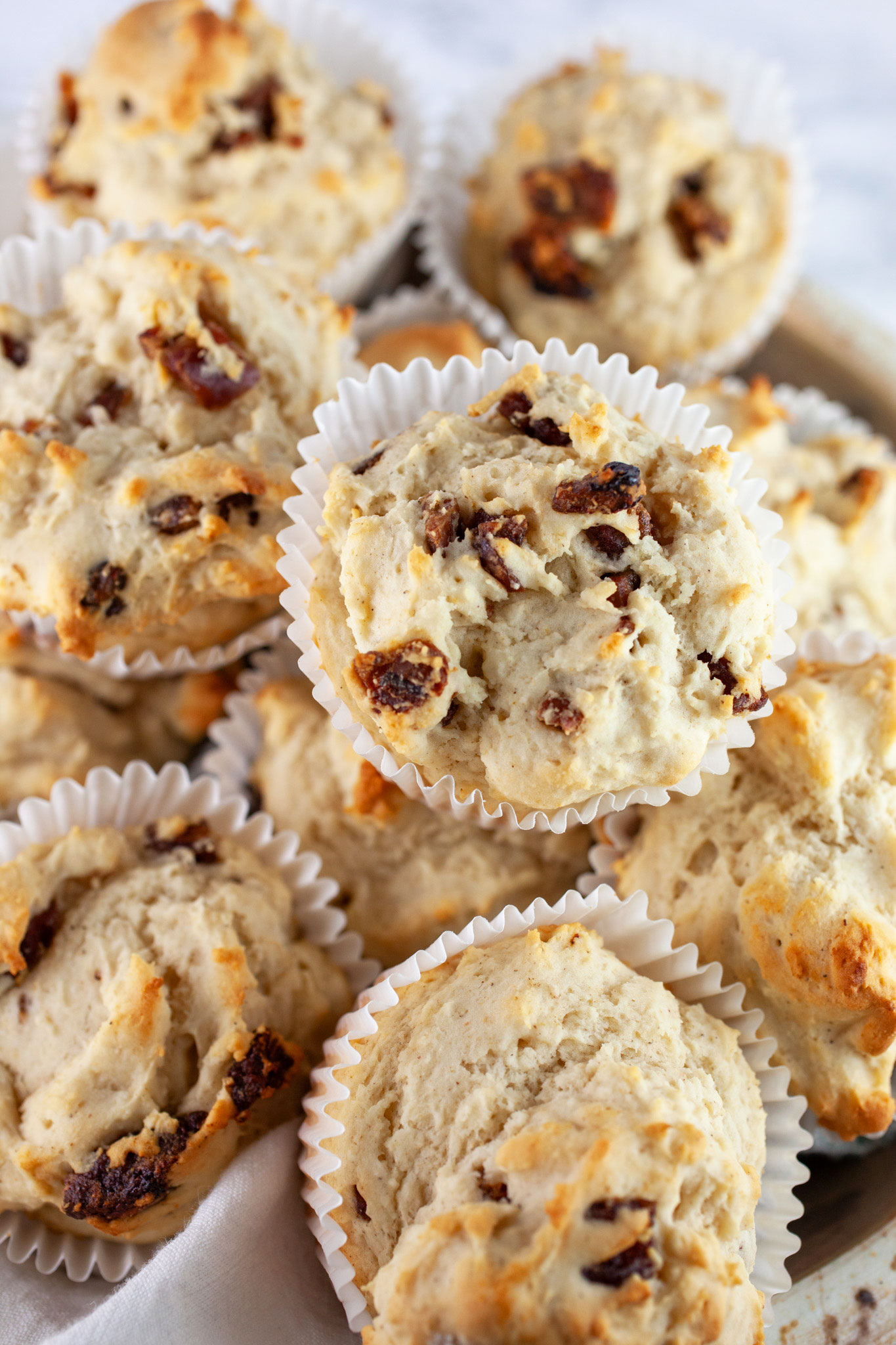
I made this recipe three times. Once to see how Orange Bread turned out (it was excellent); and, two more times to get enough bread and muffins for the coffee group and garden club meeting. Since the recipe said it could be made in a variety of ways, I made a round loaf, small rectangular loaves, regular-sized muffins, and small muffins.Orange Bread on plate

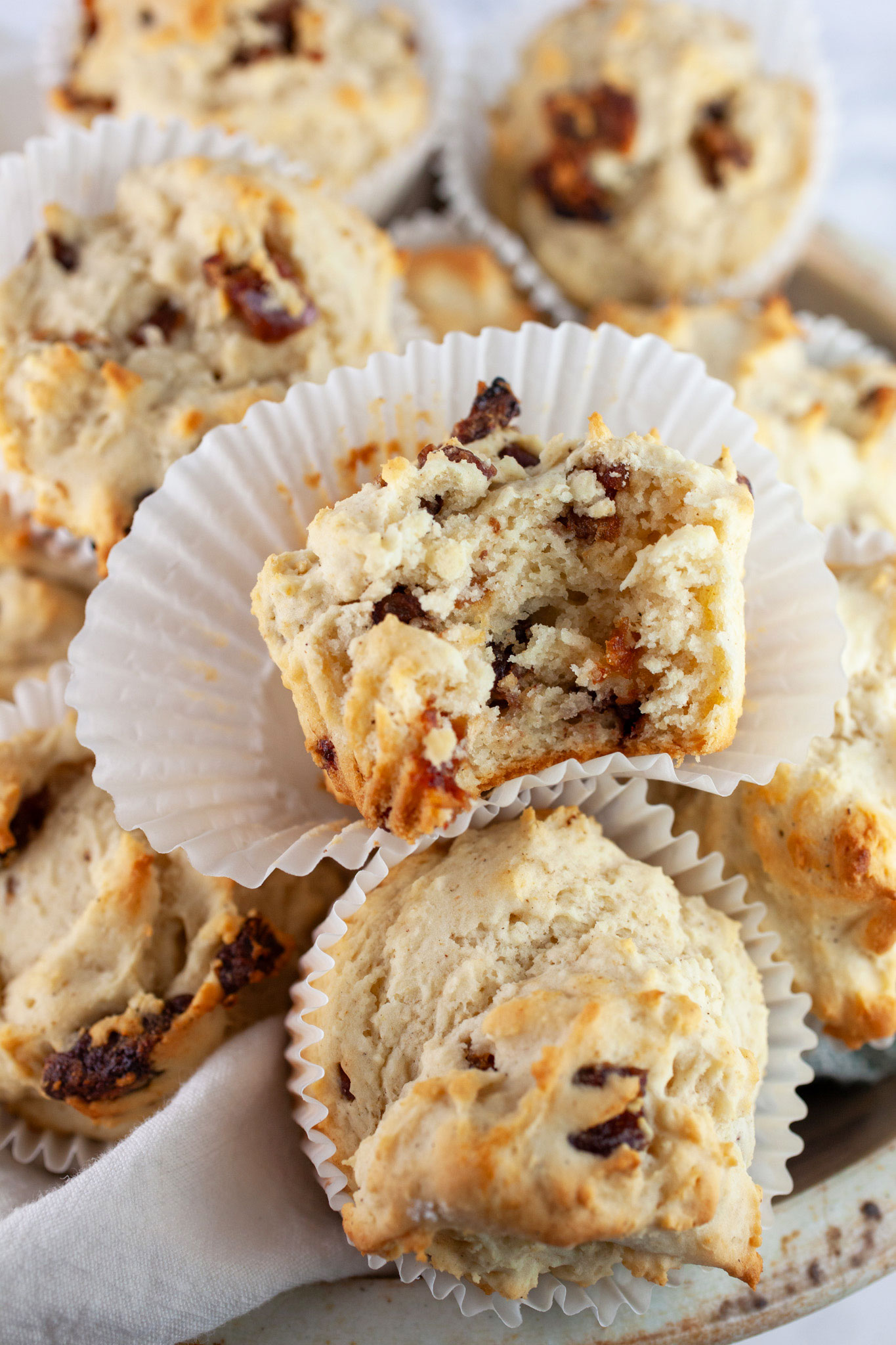
The Orange Bread and Muffins were easy to make. The muffins had a slightly denser texture than the bread. They all had a lovely, sunny citrus flavor. The bread (or in one case, muffins) went quickly at the events, and I received lots of compliments.

My husband and I are having some other friends over to the house for coffee next week. I may make the Orange Bread or Muffins again for them (or I may flip through my hundred-year-old cookbooks a little more and find a different recipe to try for them).

Here’s the original recipe:

Recipe for Orange Bread/Muffins
Source: Diamond Jubilee Recipes compiled by The Sisters of St. Joseph, St. Paul, MN

I used butter for the fat in this recipe. The recipe calls for 4 tablespoons of melted fat. That is the equivalent of 1/4 cup, so I updated the recipe to say 1/4 cup since it is easier to measure.

The bread and muffins are tasty when they are made following the original recipe directions, but are a little less sweet than many modern quick breads. When I updated the recipe, I included an option of adding 1/4 cup sugar. With added sugar, the degree of sweetness is similar to many modern quick bread recipes.

Here’s the recipe updated for modern cooks:

Orange Bread/Muffins (Orange Marmalade Bread/Muffins

  • Difficulty: moderate
  • Print

This recipe makes 1 large loaf, 3 small loaves, approximately 12 regular muffins, or approximately 36 mini-muffins.

3 cups bread flour

4 1/2 teaspoons baking powder

1 teaspoon salt

1 egg

1 1/2 cups milk

1/4 cup sugar (optional)

1/4 cup melted butter

3/4 cup orange marmalade

Step 1. Preheat oven to 350° F.

Step 2. Sift the flour, baking powder, and salt into a mixing bowl.

Step 3. In another bowl, beat the egg and stir in the milk.

Step 4. Slowly add the milk and egg mixture to the flour mixture. Add about a quarter of the liquid at a time, and stir between each addition of liquid.

Step 5. If desired, stir in the sugar. Then stir in the melted butter, and finally stir in the orange marmalade.

Step 6. Put into prepared bread pans or muffin tins. Bake a large bread loaf for approximately 40 minutes, small loaves for approximately 30 minutes, and muffins for 15 – 20 minutes, or until lightly browned and a wooden pick comes out clean.

http://www.ahundredyearsago.com

Old-Fashioned Sweet Potatoes with Pineapple

Whew, the year is flying by. It is already November and it will soon be Thanksgiving. I’m starting to plan my Thanksgiving meal, which, of course, will include sweet potatoes. This year, I don’t want to make Candied Sweet Potatoes (boring) or Sweet Potatoes with Marshmallows on top (too sweet); yet, to give a nod to tradition (and to keep my guests happy), a little brown sugar on the sweet potatoes would be good. With all these thoughts swirling through my head, my next step was to flip through hundred-year-old cookbooks to look for a promising sweet potato recipe.

And, I found a winner. Sweet Potatoes with Pineapple is easy to make, tasty, and makes a lovely presentation. Sweet potatoes are halved lengthwise, topped with half of a pineapple slice, and then smothered with a brown sugar and cinnamon sauce.

The Sweet Potatoes with Pineapple have the familiar rich caramel of brown sugar with an additional hint of cinnamon. The warm cinnamon notes balance nicely with the sunny pineapple and the earthy sweet potato.

This recipe made the cut and goes on my Thanksgiving menu.

Here is the original recipe:

Recipe for Sweet Potatos with Pineapple
Source: Cookbook compiled by the Women of the Country Club Christian Church, Kansas City, Missouri (1925)

sweet potatoes with pineappleHere is the recipe updated for modern cooks:

Sweet Potatoes with Pineapple

  • Servings: 6 - 12
  • Difficulty: moderate
  • Print

Note: The number of sweet potatoes used in this recipe is somewhat flexible. The size of the sweet potatoes and how many fit in the dish should be considered. Relatively small, uniform sweet potatoes that are not particularly long work well with this recipe.

4 – 6 medium sweet potatoes

4 – 6 slices of canned pineapple

1 teaspoon salt

Water

Sauce

2 tablespoons butter

2 cups brown sugar

¾ cup water

1/8 teaspoon cinnamon

1/8 teaspoon salt

Step 1. Peel the sweet potatoes, then cut lengthwise. Put the cut sweet potatoes in a Dutch oven or large saucepan; cover with water and add 1 teaspoon salt. Bring to a boil using high heat, then reduce heat and simmer until the sweet potatoes have just softened (about 30 minutes). Remove from heat and drain. (Do not overcook. The sweet potatoes should still maintain their shape and not be extremely soft.)

Step 2. Preheat oven to 350° F. Arrange the cooked sweet potato halves in a flat baking dish. (I used a 7 X 11 inch baking dish, though there is sufficient sauce to use a 9 X 13 inch dish, if desired). The sweet potato halves should be placed close to each other in the baking dish with the rounded side down. If the sweet potatoes are not level (or if some are higher than others), use a knife to trim off a small portion of the rounded side.

Step 3. Put half of a pineapple slice on top of each sweet potato half.

Step 4. In the meantime, make the sauce. Put the butter in a saucepan, then melt using low heat. Add the brown sugar, ¾ cup water, cinnamon, and 1/8 teaspoon salt; stir to combine. Increase heat to medium and bring to a boil, then reduce heat and gently simmer for 10 minutes (or until the sauce begins to thicken); stir occasionally.

Step 5. Pour the sauce over the sweet potatoes and pineapple. Put in the oven, and cook until hot and bubbly (20 – 30 minutes). If the top of the sweet potatoes and pineapple looks dry midway through the cooking time, baste using a spoon to put a little of the syrup over them.

Step 6. Remove from oven and serve.

www.ahundredyearsago.com


“A Hundred Years Ago” Featured by WordPress

WordPress recently featured A Hundred Years Ago in its list of 11 Delicious Food Blog Examples (And How to Follow Their Lead).  It is #3 on the list. I’m very humbled and honored that this blog was included. There are lots of incredible food blogs on WordPress sites.

According to WordPress, A Hundred Years Ago was selected as an example because the posts:

  • Make something old new again: Part of what makes A Hundred Years Ago so successful is that it archives and digitizes recipes and cookbooks that are likely not online elsewhere. An archival focus can help your blog stand out in this highly digitized space and guide content creation.
  • Keep a content schedule: Posting on a regular cadence can help keep your audience engaged and keep you accountable. For example, in addition to a weekly recipe every Sunday, Sheryl posts more general musings about food from the early 1900s each Thursday.

Old-Fashioned Pink Chiffon Pie (Cranberry Chiffon Pie)

Many fruits are available year round, but some fruits are available only for a few weeks each year. Cranberries are one of those fruits. I crave them for months, and am excited when they finally begin to appear in the produce aisle at the store. This fall, I saw them for the first time last week. I immediately began searching through my hundred-year-old cookbooks for cranberry recipes.

I found a recipe for Pink Chiffon Pie which is made using cranberries, and decided to give it a try.

The Pink Chiffon Pie was smooth and silky with the sweetness of the sugar in the filling nicely balancing the tart cranberries. It was tasty and looked lovely; however, if you decide to make this pie, be sure to set aside sufficient time. It is a relatively complicated recipe.

Here’s the original recipe:

Recipe for Pink Chiffon Pie (Cranberry Chiffon Pie)
Source: Diamond Jubilee Recipes (1925) compiled by the Sisters of Saint Joseph, St. Paul, MN

When I selected this recipe, it looked easy – not very many ingredients and directions that, based on a quick scan, sounded straight forward. Then I started making the recipe and discovered that it was more challenging than I anticipated.

I had lots of questions. How large is the pie shell/pan? The amounts called for in the recipe seemed fairly small – so it probably was for a 7 or 8-inch pie. I decided to make a 9-inch pie, so I doubled all ingredients. The recipe called for a baked pie shell – so I needed to make and pre-bake a pie shell prior to beginning this recipe.

I was also was not sure whether the recipe called for 1 cup of raw cranberries or for 1 cup of cranberries that had previously been cooked. I decided to assume that it meant raw cranberries. That decision led to my next question.  How much water should be added to the cranberries prior to cooking? I decided to go with 1/3 cup of water.

Once the cranberries were cooked, I tried to strain them, I was able to press relatively little liquid through the strainer, so I used a Foley mill to more thoroughly strain and mash the cooked cranberries. A food processor could also be used to puree the cranberries.

It was tricky cooking the egg-rich chiffon so that the pie filling was smooth, and the egg did not separate out while cooking. It is important to cook the filling until it barely begins to bubble. And, it is vital to not rush cooking the filling, and to stir it vigorously and constantly to prevent the filling on the bottom of the pan from scorching.

I skipped garnishing the pie with confectioners’ sugar, and instead served it with whipped cream.

Here’s the recipe updated for modern cooks:

Pink Chiffon Pie (Cranberry Chiffon Pie)

  • Servings: 6 - 8
  • Difficulty: somewhat challenging
  • Print

1 baked 9-inch pie shell

2 cups cranberries

1/3 cup water

8 egg yolks  + 4 egg whites

4 tablespoons butter

1 cup sugar + 1 cup sugar

confections’ sugar, if desired

whipped cream, if desired

Wash cranberries, then put them in a saucepan and add the water. Bring to a boil using medium heat, then reduce heat and simmer until all of the cranberries have softened and burst (about 8-10 minutes). Remove from the heat and press through a strainer. (I used a Foley mill.)

Put the egg yolks in a mixing bowl and beat until smooth, then add 1 cup of sugar and beat. Add the pureed cranberries and continue beating. Put mixture in a saucepan; add butter. Heat, using medium heat, until the cranberry mixture gets very thick; stir constantly. Remove from heat when the mixture is barely beginning to bubble.

In a mixing bowl, beat the egg whites until stiff peaks form. Then add a small amount of the hot cranberry mixture, while beating continuously. (Be sure to add only a small amount of the cranberry mixture and beat it in immediately to prevent the egg whites from cooking.) Continue adding small amounts of the cranberry mixture while continuing to beat.

After all the cranberry mixture has been incorporated into the egg whites, return the mixture to the saucepan. Using medium heat, cook until the mixture barely begins to boil; stir constantly and vigorously. (This mixture will easily scorch on the bottom of the pan. It is vital to stir continuously and vigorously with the spoon while regularly scraping the bottom of the pan. A double boiler could be used to reduce the possibility of scorching the mixture.) Remove from heat and spoon the cranberry chiffon filling into the previously baked pie shell.

If desired, lightly sprinkle confections’ sugar on the pie to garnish. Refrigerate until the pie is cold (at least 2 hours).

If desired, serve pie with whipped cream.

http://www.ahundredyearsago.com

Hundred-Year-Old Recipes That Use Left-Over Candy

Oh Henry! Advertisement
Source: Ladies Home Journal (October, 1925)

Candy, candy everywhere. I love Halloween, and buy lots of candy for Halloweeners. I eat a little of it (well, maybe a lot, if not many kids come to the door). While browsing through hundred-year-old magazines this fall, I saw this advertisement for Oh Henry! candy. It even included recipes for ice cream sauce and sandwich cookies that called for using Oh Henry! as the main ingredient. I immediately planned to buy a bag of Oh Henry!

A few days later, I was disappointed to discover that Oh Henry! candy is no longer available in the U.S.

I still wanted to make the recipes in the advertisement. Baby Ruth is a similar chocolate nougat candy with peanuts, so I bought a bag of snack-size Baby Ruth, and substituted it for Oh Henry! in the recipes. (Other chocolate nougat candies such as Snickers would also work.)

The ice cream sauce was made by melting the candy and stirring in a little milk. The sauce was delightful when spooned over ice cream. It was chocolaty and contained lots of peanuts.

The sandwich cookies were made by putting thin slices of the candy between two vanilla wafer cookies, and then heating until the candy melted. The old recipe says to serve the cookie sandwiches hot, but they were also tasty after they cooled.

Here are the recipes updated for modern cooks:

Chocolate Nougat Candy Ice Cream Sauce

  • Servings: 2 - 3
  • Difficulty: easy
  • Print
ice cream with topping in dish

4 snack-size bars of Baby Ruth candy (or other similar chocolate nougat candy)

1 – 3 teaspoons milk

Chop the candy into small pieces. Put chopped candy into a microwaveable bowl, then cover. Microwave for 30 seconds. Stir and add a small amount of milk while continuing to stir. Continue adding small amounts of milk until the sauce is the desired consistency. Reheat in microwave for a few seconds; then, while still warm, spoon over ice cream and serve.

http://www.ahundredyearsago.com

Chocolate Nougat Candy Sandwich Cookies

  • Servings: approximately 12 cookies
  • Difficulty: easy
  • Print

Chocolate Nougat Candy Filled Cookies

3 snack-size bars of Baby Ruth candy (or other similar chocolate nougat candy)

24 vanilla wafer cookies

Thinly slice the candy. (Each bar can be sliced into 8 pieces.) Put two slices of candy side by side on top of half of the wafer cookies. (If the wafers are very small, use less candy.) Put the remaining wafers on top of the candy. Put the cookie sandwiches on a microwaveable dish; cover and microwave for 30 seconds. If the candy filling is not melted, microwave a few additional seconds.

http://www.ahundredyearsago.com