So many companies and products come and go within the course of just a few years, so I’m always amazed when I find an advertisement in a hundred-year-old magazine for a food that is still available. According to Wikipedia, in the early 1900’s, Richard Hellmann owned a delicatessen in New York City. He made a tasty mayonnaise that he served with the deli foods. It was so popular that he began selling it to other stores, and in 1913 built a factory to produce Hellmann’s Blue Ribbon Mayonnaise. The company has been sold several times, but Hellmann’s Mayonnaise (now available in several varieties) is still around.
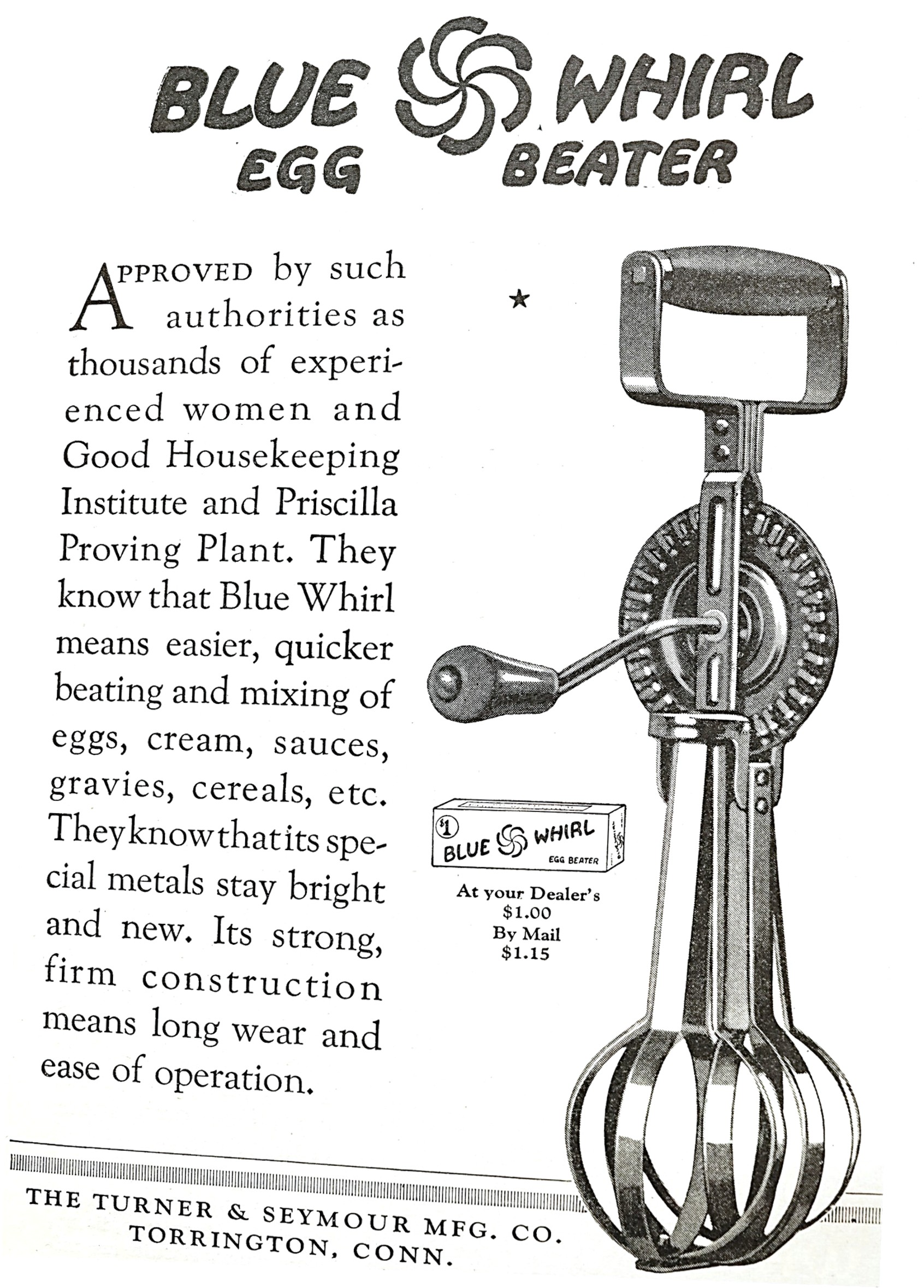
Until I saw this advertisement for Blue Whirl Egg Beaters in a hundred-year-old magazine I’d forgotten all about hand-crank beaters. I think that I once owned one, but have no idea where it is. I haven’t used it in years. The last time I used it was when my children were small and I didn’t trust them to use my electric beaters.
Does anyone still use classic hand-crank beaters? I did a quick online search and hand-crank beaters are still available, but the comments made it sound like they are difficult to find in stores and generally must be purchased online.
According to Home Grail, a commercial-sized electric mixer was invented in 1914, and home stand mixers were starting to become available in the 1920s; however, a hundred years ago, hand-cranked beaters were still the norm.
Whisks are another tool that can be used to beat eggs and do other tasks that a hand-crank beater might do. According to Wikipedia, whisks have been around for hundreds of years. The earliest ones were just bundles of twigs that were used to beat foods. Wikipedia noted that whisks were not very popular in the early 20th century and that cooks generally preferred beaters, but that they again became popular after Julia Child used them when she appeared on television.
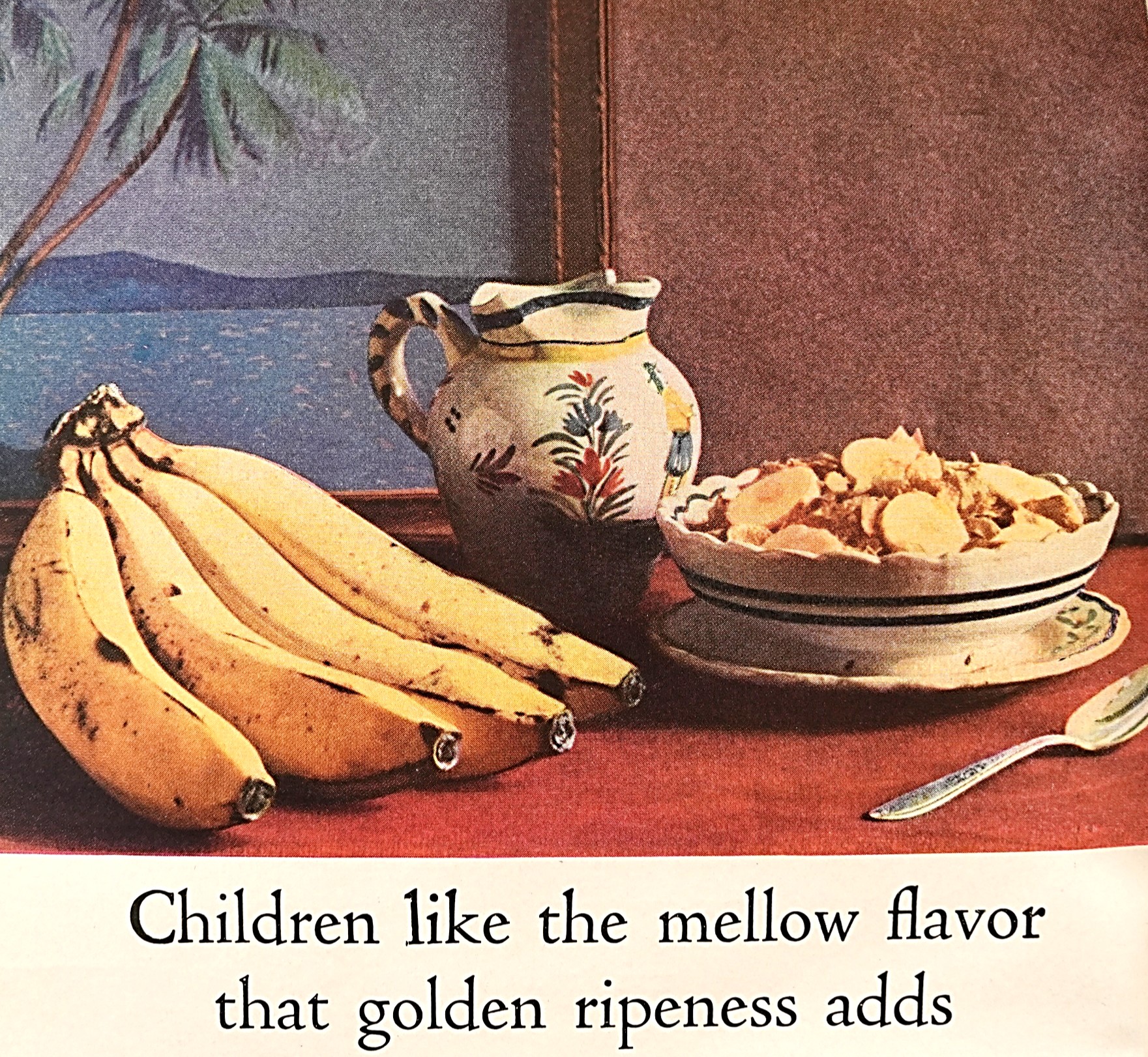
Source: An advertisement for Unifruitco Bananas (Fruit Dispatch Company), Good Housekeeping (April, 1926)
Bananas are tasty, inexpensive, nutritious, and easy to eat. They are wonderful in smoothies, and delightful sliced on top of cereal or oatmeal. They also are tasty in banana breads and muffins. Mashed bananas are one of the first solid foods that babies typically eat, and they are equally popular with older children and adults of all ages.
According to the Cleveland Clinic, bananas are sometimes called “nature’s perfect snack.” They are a higher fiber food, and contain lots of vitamins and minerals. They are especially known for being a good source of potassium, which can help reduce blood pressure.
Bananas have been popular in the United States since the latter part of the 1800s. As people became aware of germs, they liked how the peel kept the banana clean until it was ready to be eaten.
By the early 1900’s, large quantities of bananas were imported into the United States from Latin America and the Caribbean. The Fruit Dispatch Company had an advertisement for Unifruitco bananas in the April, 1926 issue of Good Housekeeping. The Fruit Dispatch Company was a selling agency for the United Fruit Company back then. (United Fruit Company is now Chiquita Brands International.) Here are some excepts from the 1926 advertisement:
Offer a child a ripe banana, and see eager eyes light up with the joy of anticipated goodness. Children find an appetite allure in ripe bananas – and do you know what it is? It is sugar – mellow sweetness in its most easily digested form.
Bananas are rich in carbohydrates – the energy-building food values so necessary for children, and so good for everyone. In bananas that are fully ripe, this valuable food element is present in the form of fruit sugars, nature’s most easily digested and most wholesome form of sweetness. . .
Buy them in advance of use and let them ripen at home. . . When all green is gone from the tip, and the yellow skin has turned to a mellow gold, flecked with brown, then a banana is fully ripe and most delicious. . .
The choicest bananas you can find are Unifruitco Bananas. They are grown and harvested down in the tropics, under the most modern methods of cultivation. They come north in specially constructed ships. The Fruit Dispatch Company, Importers of Unifruitco Bananas, distributes them all over the country to wholesalers and jobbers, who keep this fruit in banana rooms until your dealer wants them.
Good Housekeeping (April, 1926)
Both a hundred years ago and now, there was recognition that bananas contain more sugar when fully ripe than when they are greener. The old advertisement recommended eating completely ripe bananas that were a “mellow gold, flecked with brown.” Today people who are concerned about maintaining a steady blood sugar often prefer greener bananas that contain more starch. According to the Cleveland Clinic article:
Green bananas can contain less than half the amount of sugar than ripe ones.
For those concerned about blood sugar levels with more yellow bananas, pairing the fruit with a protein source (such as a handful of nuts or a cheese stick) can help better regulate the increase.
Candy, candy everywhere. I love Halloween, and buy lots of candy for Halloweeners. I eat a little of it (well, maybe a lot, if not many kids come to the door). While browsing through hundred-year-old magazines this fall, I saw this advertisement for Oh Henry! candy. It even included recipes for ice cream sauce and sandwich cookies that called for using Oh Henry! as the main ingredient. I immediately planned to buy a bag of Oh Henry!
A few days later, I was disappointed to discover that Oh Henry! candy is no longer available in the U.S.
I still wanted to make the recipes in the advertisement. Baby Ruth is a similar chocolate nougat candy with peanuts, so I bought a bag of snack-size Baby Ruth, and substituted it for Oh Henry! in the recipes. (Other chocolate nougat candies such as Snickers would also work.)
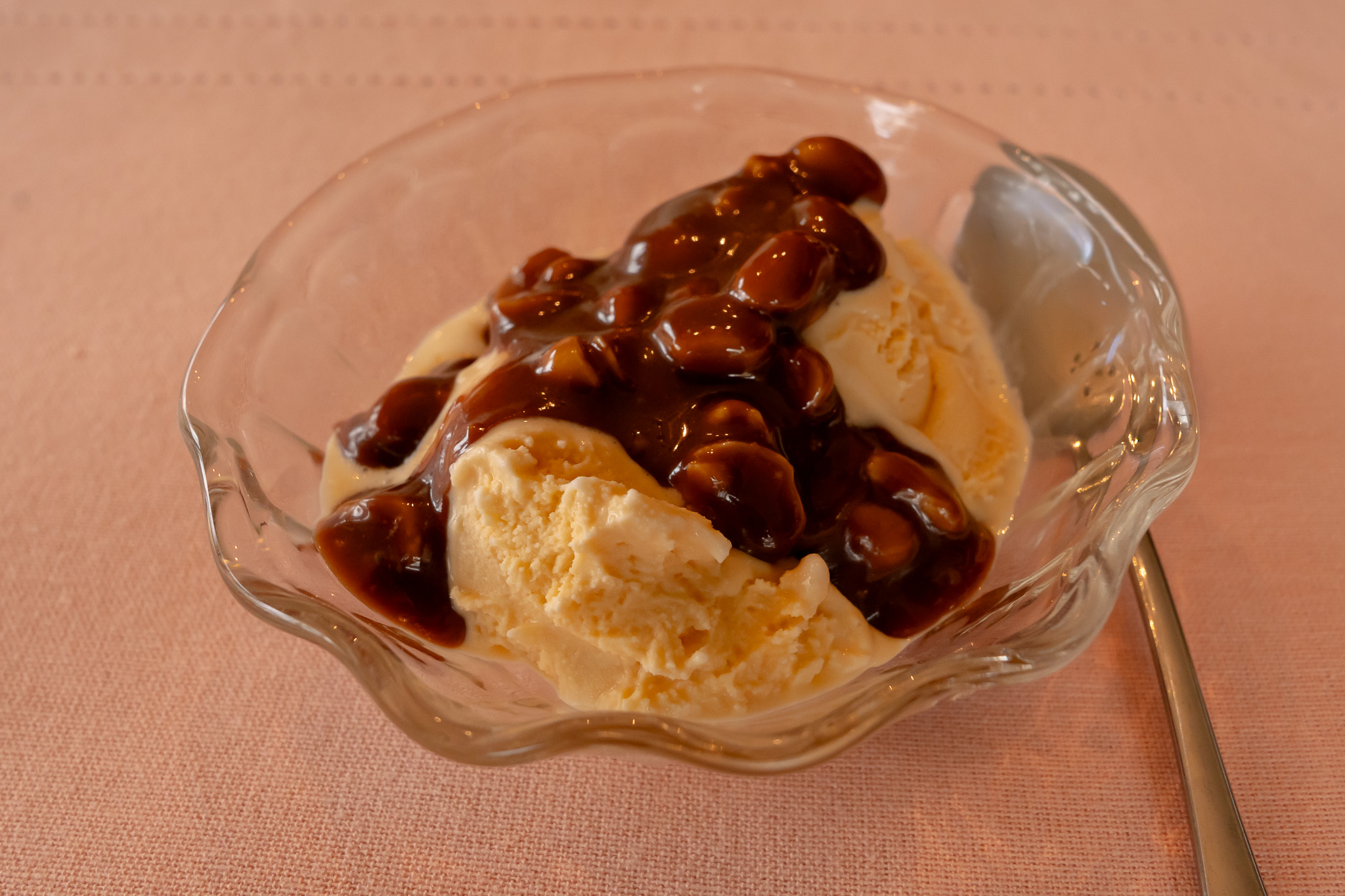
The ice cream sauce was made by melting the candy and stirring in a little milk. The sauce was delightful when spooned over ice cream. It was chocolaty and contained lots of peanuts.
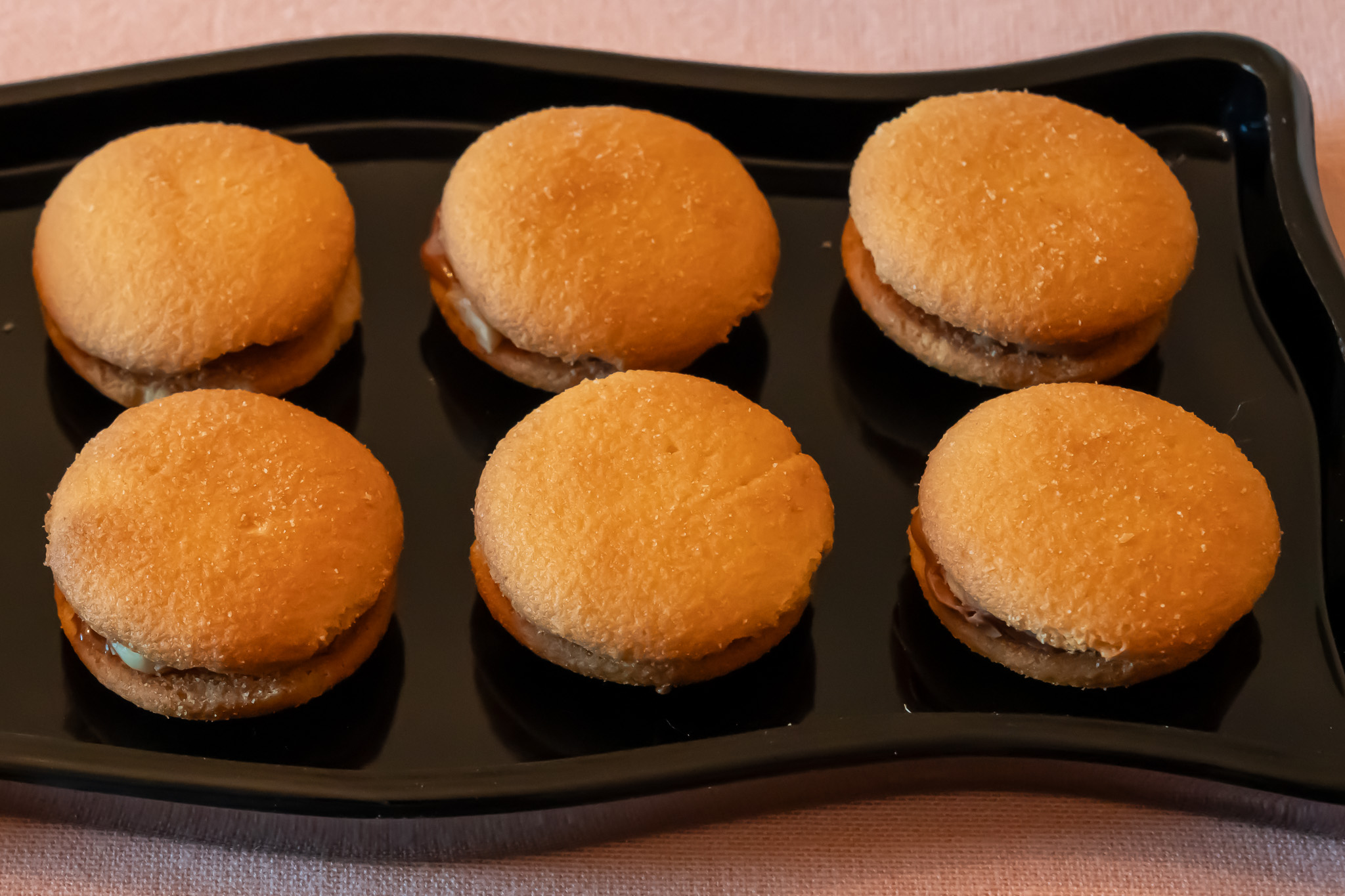
The sandwich cookies were made by putting thin slices of the candy between two vanilla wafer cookies, and then heating until the candy melted. The old recipe says to serve the cookie sandwiches hot, but they were also tasty after they cooled.
4 snack-size bars of Baby Ruth candy (or other similar chocolate nougat candy)
1 – 3 teaspoons milk
Chop the candy into small pieces. Put chopped candy into a microwaveable bowl, then cover. Microwave for 30 seconds. Stir and add a small amount of milk while continuing to stir. Continue adding small amounts of milk until the sauce is the desired consistency. Reheat in microwave for a few seconds; then, while still warm, spoon over ice cream and serve.
3 snack-size bars of Baby Ruth candy (or other similar chocolate nougat candy)
24 vanilla wafer cookies
Thinly slice the candy. (Each bar can be sliced into 8 pieces.) Put two slices of candy side by side on top of half of the wafer cookies. (If the wafers are very small, use less candy.) Put the remaining wafers on top of the candy. Put the cookie sandwiches on a microwaveable dish; cover and microwave for 30 seconds. If the candy filling is not melted, microwave a few additional seconds.
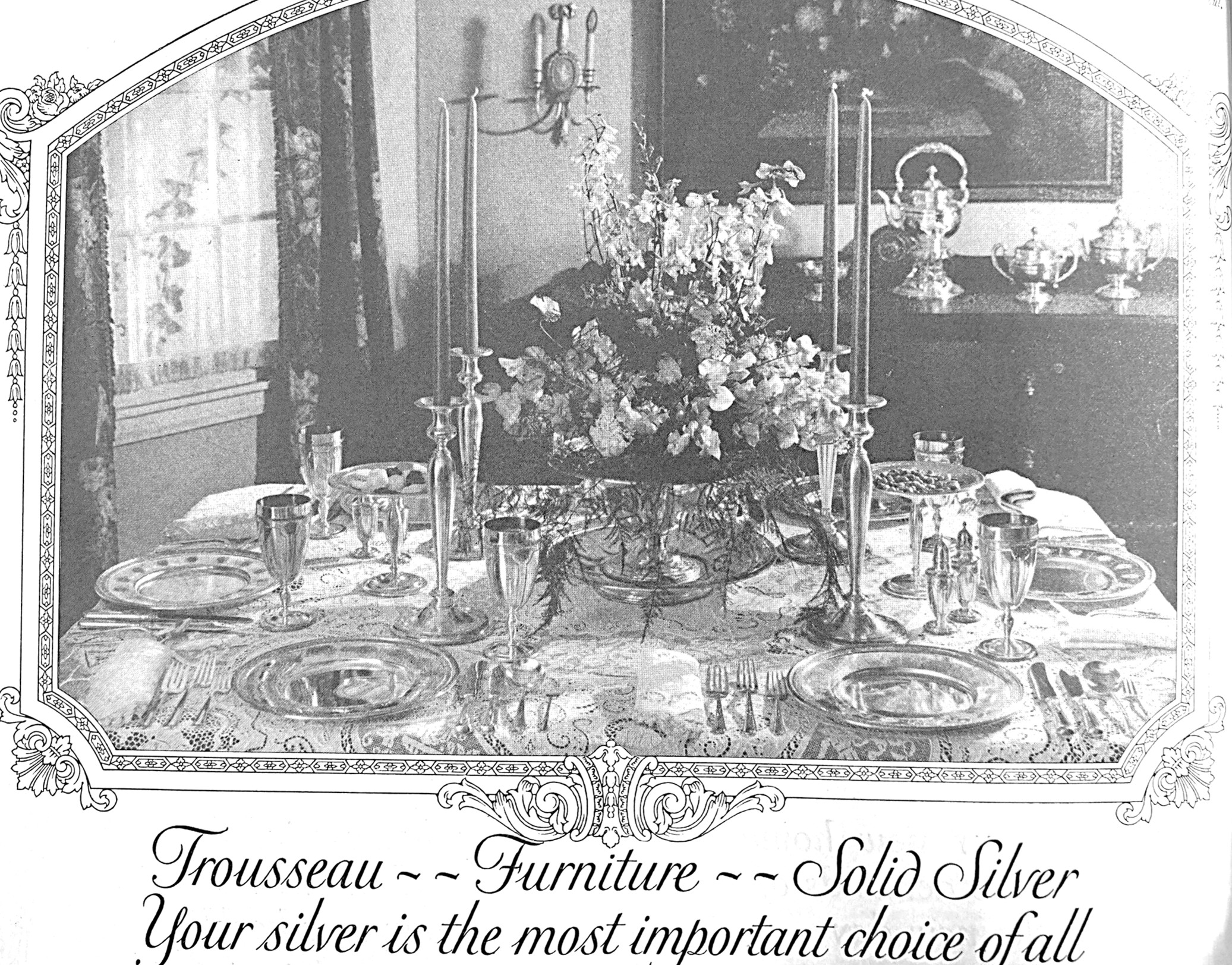
A hundred-years ago, sterling silver flatware was considered a desirable luxury item, and it was frequently given as a wedding gift. Couples often listed their silver pattern on their wedding registry. They hoped several wedding guests would choose to purchase a place setting or two as a gift, and that they would end up with a full set of the flatware plus some serving pieces.
The September, 1925 issue of Ladies Home Journal had a very wordy two-page advertisement for Towle solid (sterling) silver. Here are some excerpts:
Your lovely trousseau, with its charming gowns and dainty little frocks, its film underthings, and bright stockings, has its few bright months of glory.
And, the furniture and hangings for your new home, however you may lavish care upon them, will inevitably wear out after a few years.
But, your wedding silver – your very own solid silver – you will have that always. So its choice becomes the very most important of all choices because you will want to be as proud of your pattern in twenty years as on your wedding day.
What a fascinating privilege this choice is. What a joyous occasion, when you set out to the jeweler’s.
—
Watch how proudly the jeweler shows it to you. He knows TOWLE Silver!
—
TOWLE patterns are permanent
By starting with TOWLE silver, you can make sure of perfect silver harmony, for relatives and friends will undoubtedly want to match your chosen pattern with such charming and useful pieces as sauce and salad-dressing bowls, plates for jellies, candies, sandwiches, cake, fruit, desserts, etc., candle-sticks, trays or a coffee and tea service. They will be glad to know which TOWLE pattern you have selected, and your jeweler can show them a fascinating variety.
Furthermore, in the future, as you need additions to your set, you will always find that matching it is a simple matter, for TOWLE patterns are as nearly permanent as anything in this life can be.
A dollar in 1925 is worth about $18.58 today. This suggests that cooks who successfully completed the Cooking for Profit course might make a salary of $1,858 a week and profits of $185,800 a year in today’s dollars. Sound good to me. Sign me up for the course.
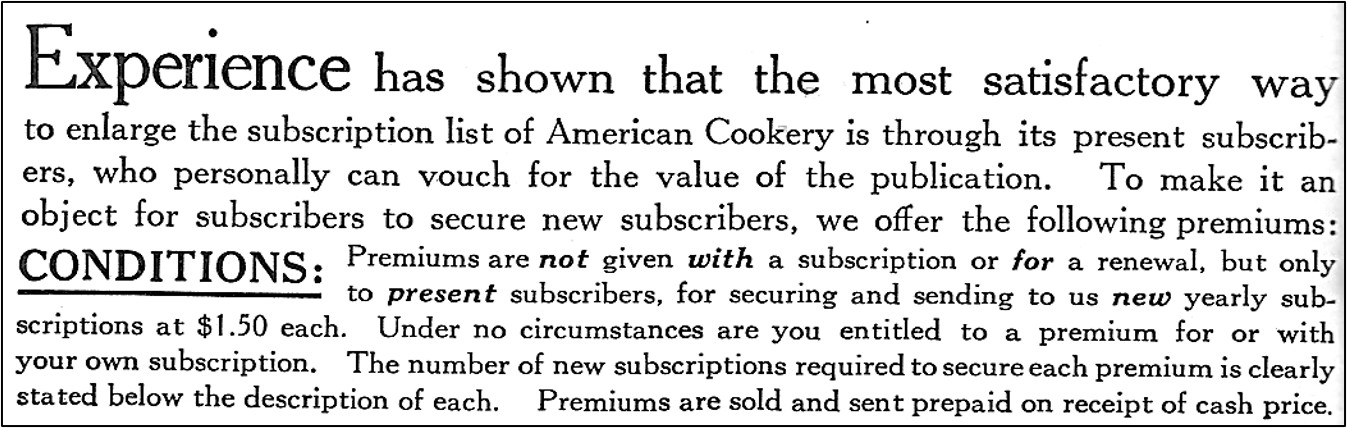
A hundred years ago, American Cookery magazine encouraged readers to get their friends to subscribe to the magazine. The magazine offered premiums for securing new subscribers.
Source: American Cookery (May, 1925)
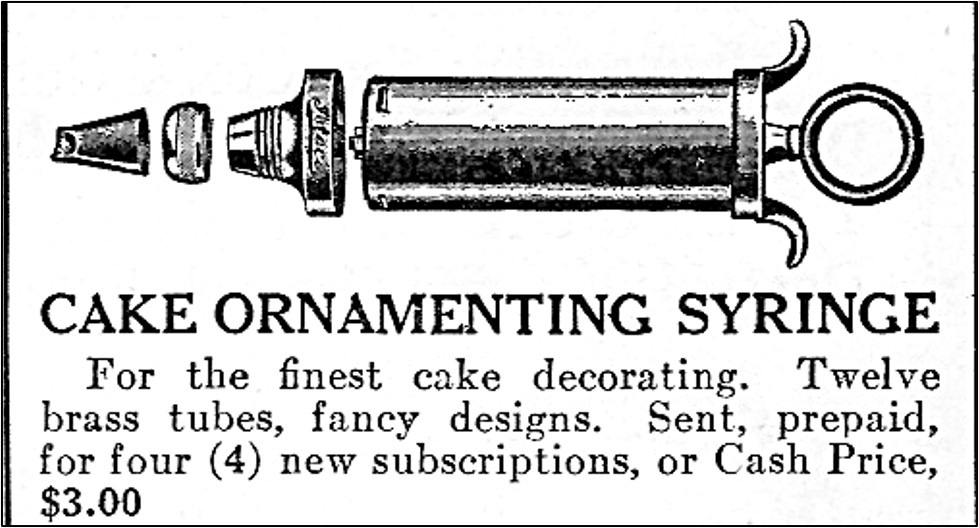
A premium offered in the May, 1925 issue for getting four new subscribers was a cake ornamenting syringe.
Maybe cooks a hundred years ago considered this a wonderful gift; but, in my opinion, the premium doesn’t seem like a very large reward for all the effort that would be involved in getting four people to subscribe to the magazine.
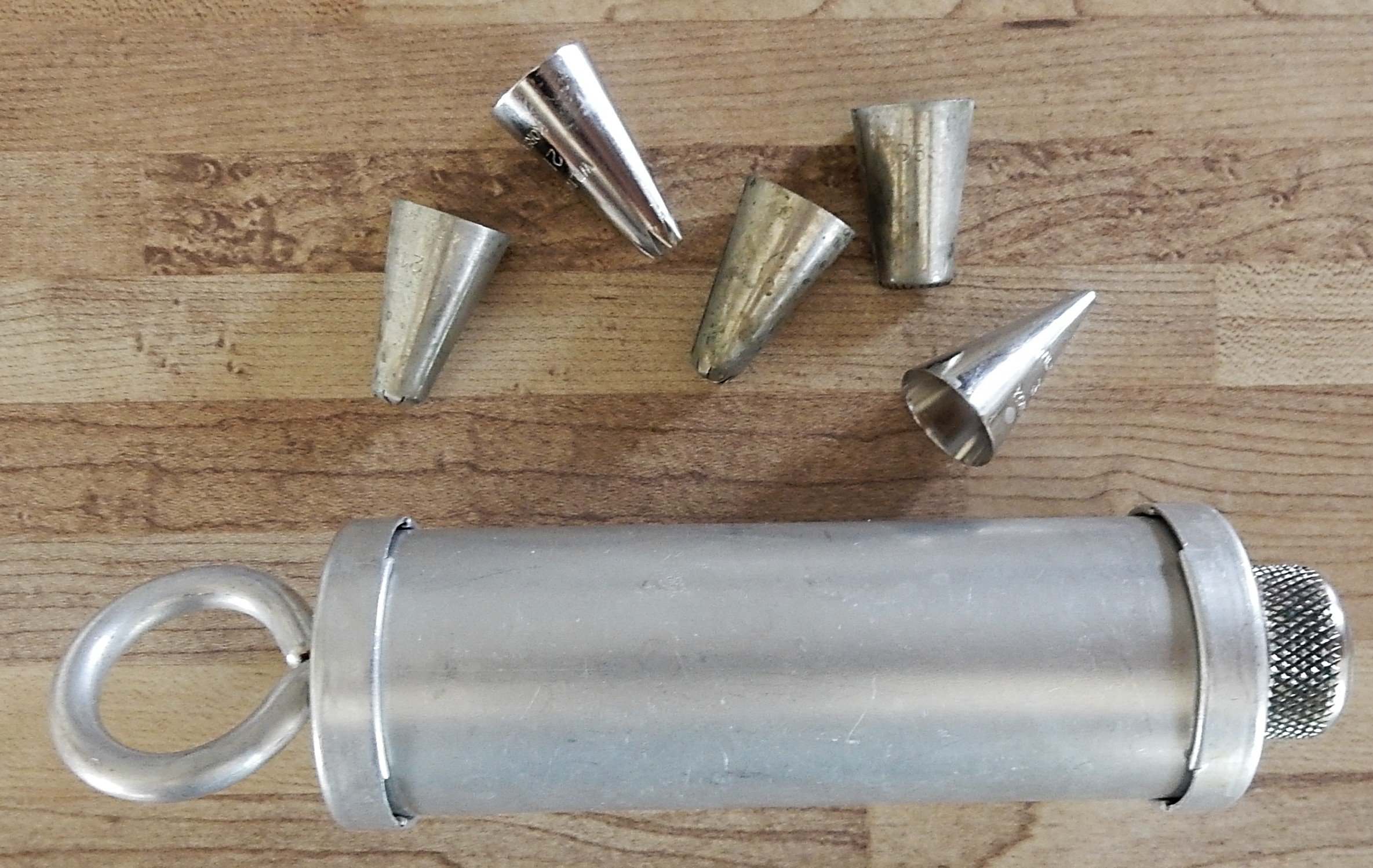
When I saw the cake decorating syringe, I immediately thought of a very similar one that I have – though I’ve always called it a “cake decorator.”
My cake ornamenting syringe once was my mother’s, and she had it for as long as I can remember. I’m now wondering if it is older than I thought, and if my mother got it from her mother.
The decorating tips for my syringe are a little beat up, but it still works great. I used it frequently to decorate cakes when my children lived at home, and I still occasionally use it to pipe frosting, whipped cream, or other similar foods. It brings back wonderful memories of the various themed birthday cakes we made over the years. There was a spaceman cake, a teddy bear cake, and a clown cake, as well as the lamb cake we made every Easter.