Butter is sooo hard when I first take it out of the refrigerator. It’s impossible to spread. Also, I never seem to think about setting it out ahead of time to soften when I want use it in recipes. I could be imagining it, but I think that cold butter is harder today than in the past.
In any case, I was pleased to find a hundred-year-old tip for softening butter:
When butter is too hard to spread easily, turn a heated bowl upside down over the butter dish for a few minutes. This will thoroughly soften the butter without melting it.
Cookbook (Published by the Bethany Shrine Patrol No. 1, Rochester NY, 1923)
One of my hundred-year-old cookbooks has a recipe for chicken souffle, and I had some left-over chicken so decided to give it a try. The Chicken Souffle was lovely. The recipe called for chopped onions, thyme, and parsley, and they added a nice flavor to the dish.
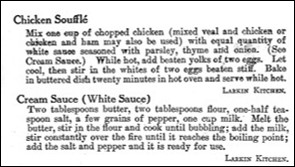
Here’s the original recipe:
Source: Larkin Housevives’ Cook Book (1923)
The old cookbook does not give an oven temperature for baking the souffle. When I made this recipe, I baked it at 350° F. The recipe says that this needs to bake for only 20 minutes, but it took close to 40 minutes for it to set and ligthtly brown when I made it. Maybe the author used a higher temperature.
Melt the butter in a sauce pan, and stir in chopped onions. Sauté for several minutes until the onions are transparent. Stir in the flour, salt, pepper, thyme, and parsley. Gradually, add the milk while stirring constantly. Continue stirring until the white sauce thickens. Remove from heat.
In another bowl, beat egg yolks until smooth. Add a tablespoon of the hot sauce to the beaten egg yolk and stir quickly. Repeat with another tablespoon of the sauce. Then add the egg mixture to the sauce and quickly stir. (This helps keep the egg yolks from cooking when they are stirred into the sauce). Add the chopped chicken and stir again. Allow the mixture to cool. (I put it in the refrigerator for a few minutes.)
In the meantime, preheat oven to 350° F. Put the egg whites in a mixing bowl and beat until peaks form. Then fold the beaten egg whites into the chicken mixture. Put in a 1-quart baking dish. Place in oven and bake until the souffle is lightly browned (about 30-40 minutes). Remove from oven and immediately serve.
Until I read a reader’s request in a hundred-year-old magazine, I never thought about whether muffins should have a flat top:
Tell me why my muffins are flat on top?
Here’s the response:
Muffins Flat on Top
We could no be hired to tell you how to make muffins that are not flat on top, because the test of the perfect muffin is a flat top. It is like cake, it should be flat as the floor on top, and if it is not there is something wrong with either the making or the baking. To be sure, we often have hummocky muffins and hummocky cake served to us in places where they ought to know better – and they even taste good, yet we eat them with inward grief. We congratulate you that you have achieved that by-no-means easy or common task, the flat-topped muffin. Long may you continue to make them and no other kind.
American Cookery (June/July, 1923)
I’ve made various types of muffins a half dozen times across the years for this blog. I clicked through those posts and was appalled to discover that my muffins do not have flat tops.
Oh dear, I make hummocky muffins. Maybe the person who responded was writing about English muffins, but somehow I think not. When you make muffins, do they have a flat top?
When I did this post I also learned a new word. “Hummocky” means a rounded mound of earth, knoll or a pile of ice, ridge.
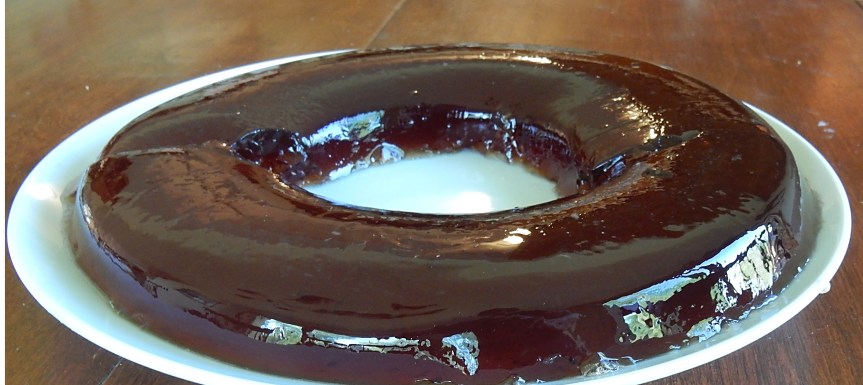
Memorial Day means cook-outs, and picnics, and family reunions. And, in the good old days, there often was one (or more) gelatin salads at those events. So I decided to make a hundred-year-old recipe for Grape Gelatin. It was made using unflavored gelatin, grape juice, lemon juice, and sugar.
The gelatin had a rich grape flavor, and was sweet, yet a little tart . The flavor was much more authentic and complex than modern packaged grape gelatin. One possible downside – modern grape gelatin is a more intense purple, though the color looks artificial.
Here’s the original recipe:
General Welfare Guild Cook Book (Beaver Valley General Hospital, New Brighton, PA, 1923)
Hmm. . . Is this a recipe for a grape “fruit salad” or a recipe for “grapefruit” salad”? When I made the recipe I was in a hurry and quickly read it. I interpreted the recipe as a recipe for grape “fruit salad”, but as I reread it, I think that I probably misinterpreted the recipe. Oops! In any case, the grape gelatin I made turned well.
I’m not sure how much gelatin was in a box of gelatin a hundred years ago. I used 2 packets of gelatin, since this recipe calls for 4 cups of liquid, and each packet now contains enough gelatin for 2 cups of liquid.
I molded the gelatin, but it would also work well in a dish.
Put 1 cup cold water in a bowl. Sprinkle the gelatin on top of the water, and let soak for 10 minutes.
Put 1 cup water in a saucepan. Bring to a boil. Add the gelatin that has been soaked in water. Bring back to a boil while stirring constantly. Remove from heat and stir in the grape juice, lemon juice, and sugar. Stir until the sugar is dissolved. If needed, strain; then pour into a 5-cup mold. Refrigerate until firm.
To serve: Quickly dip the mold in hot water, then unmold onto serving plate.
Source: Order of the Eastern Star Relief Fund Cook Book (1923) published by Michigan Grand Chapter Order of the Eastern Star
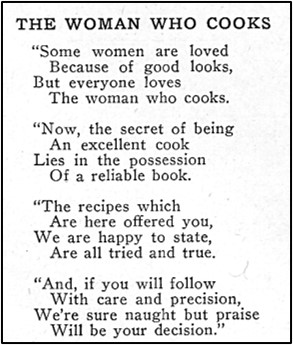
Often old organization and community cookbooks contain poems that describe cooking or foods. The poems sometimes are very dated, but they provide clues about what it was like to live years ago. For example, a 1923 Michigan Order of the Eastern Star cookbook had a poem near the beginning of the book which says that women who follow the recipes in the cookbook would be successful cooks and get lots of praise for their cooking.
It’s the time of year for rhubarb, and I’m enjoying various rhubarb dishes and desserts – Stewed Rhubarb, Rhubarb Pie, Baked Rhubarb with Orange, but I’m always looking for new recipes, so I was pleased to see a recipe for Rhubarb Tapioca Pudding in a hundred-year-old cookbook.
Rhubarb Tapioca Pudding is made using pearl tapioca which required soaking overnight, so this isn’t a quick recipe, but it turned out well. The tapioca is cooked until it is almost done, and then rhubarb pieces are stirred in. After I stirred the rhubarb pieces into the tapioca, I did not stir any more but cooked for another half hour or so using low heat. The result was tender rhubarb pieces embedded in the tapioca that maintained their shape. The old recipe suggested serving this with thin cream, so I served with half and half – though it would also be good with milk.
The Rhubarb Tapioca Pudding had an old-fashioned goodness. It had a nice balance of sweetness and tartness.
Here’s the original recipe:
Source: The Boston Cooking School Cook Book (1923)
The Rhubarb Tapioca Pudding was plenty sweet for me, so I did not add any additional sugar when I served it.
Cover tapioca with water and soak overnight. Drain. Put tapioca and salt in a large saucepan with a heavy bottom (or use a double boiler if you have one), then add boiling water. Heat with medium heat until bubbles begin to form at side of pan, but it is not yet boiling; cover and reduce heat to very low. Cook until the water is absorbed (about 45 minutes to an hour).
In the meantime put rhubarb and sugar in a bowl. Stir to coat rhubarb with sugar.
Stir in the rhubarb pieces coated with sugar, and increase heat to medium for 1 minute. Cover and reduce to heat to very low. Cook until the rhubarb is tender and the tapioca translucent (about 1/2 hour).
Can be served hot or cold. Serve with half and half or milk.

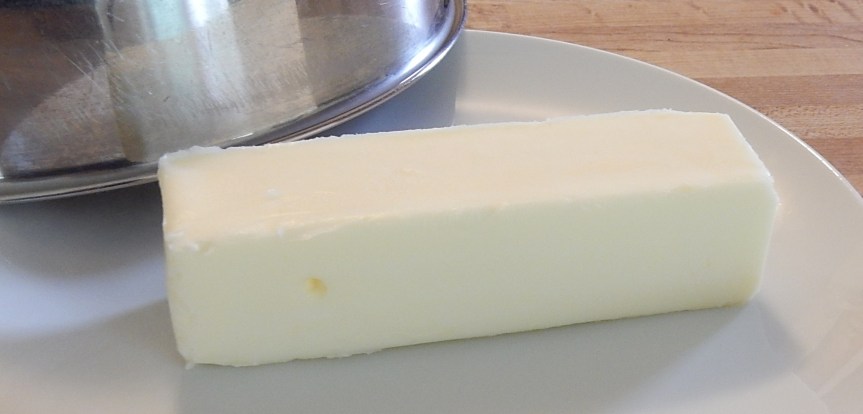 Butter is sooo hard when I first take it out of the refrigerator. It’s impossible to spread. Also, I never seem to think about setting it out ahead of time to soften when I want use it in recipes. I could be imagining it, but I think that cold butter is harder today than in the past.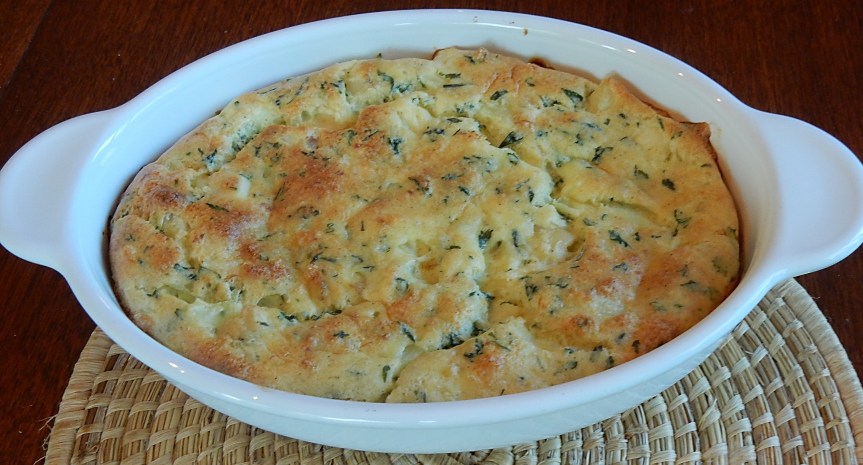
 Until I read a reader’s request in a hundred-year-old magazine, I never thought about whether muffins should have a flat top: