
Why Do Cows Kick?

17-year-old Helena Muffly wrote exactly 100 years ago today: 

Wednesday, July 3, 1912:  Did the same things today as I usually do on other days. Got so mad at a cow who took a notion to run over the whole creation.

Advertisement in June 30, 1911 Issue of Farm Implement Magazine

Her middle-aged granddaughter’s comments 100 years later:

Sounds like Grandma again was having problems with a cow escaping from the pasture. Grandma also occasionally had  to deal with other cow behavior problems. For example, on March 31, 1911 she wrote:

I got kicked today, and it was such a violent one that it caused me to land on my back. It was by a modest cow, who happened to kick me and the bucket at the same time. I guess I was as much surprised as she was.

Here’s an abridged version of what a 1908 book called The Farm Dairy by H.B. Gurler had to say about cows that kick:

Find the Cause of a Cow’s Kicking.—When a cow kicks, the first thing the milker should do is look for the cause. Do not fly into a rage and scold the cow, but remember that the cow must have had cause for the kicking. You may think the cause was not sufficient, especially if she hit you where it hurt, as she probably did for cows have a facility for doing that.

When a cow kicks she is either frightened or hurt, and if she is frightened and kicked you it is strong circumstantial evidence that you have at some time hurt her and she is afraid that you are going to hurt her again, and she feels that her safety depends on her ability to defend herself.

Sometimes cows are hurt. For example, the cause for one cow that kicked was a pond of water in the pasture in which the cow stood fighting flies, getting her teats wet, and causing them to chap, but not so deeply that the milker discovered it until the healing process had commenced. A few applications of linseed oil on the teats remedied the trouble.

There is always a cause for a cow’s kicking and it is not to our credit not to be able to find it.

Milk and Cream: How Rich was the Milk?

17-year-old Helena Muffly wrote exactly 100 years ago today:

Tuesday, July 2, 1912:  Ruth tried to deceive me this morning about the quantity and richness of Mollie’s milk. I had saved some last evening to see how rich it was, and Rufus dumped nearly all of it out and filled it up with cream. Wasn’t she mean?

Photo source: The Farm Dairy (1908) by H. B. Gurler

Her middle-aged granddaughter’s comments 100 years later:

Hmm—I grew up on a dairy farm and I barely understand this diary entry, but I’ll give a whirl at trying to explain it.

Each of the Muffly children apparently had their own cow—and Mollie was Grandma’s cow.

Milk that has not been homogenized separates after sitting for awhile. The cream floats on top of the skim milk.

Cream is worth more than skim milk because it can be used to make butter.

Cows vary in the ratio of cream to milk that they produce. And, cows that produce lots of cream were considered more valuable.

Here’s a quote from a 1908 book about the importance of having cows that produce a lot of cream (butter-fat).

A cow that produces less than 200 lbs. of butter per year should not be kept in the herd, and the 200-lb. cow should only be retained in such a time as is necessary to secure a better one. No one will become rich milking 200-lb. cows.

You can afford to pay $130 for a cow that will make 250 lbs. of butter yearly as to pay $30 for a cow that will only produce butter-fat to make 200 lbs. of butter.

The Farm Dairy  by H.B. Gurler

Grandma probably wanted to know if her cow Mollie was a profitable cow. Her sister Ruth (also called Rufus in this entry) apparently decided to tease her—by making it look as if Mollie was an exceptional cow who produced almost all cream.

Finished Picking Strawberries

17-year-old Helena Muffly wrote exactly 100 years ago today: 

Monday, July 1, 1912:

In the shadow of a shade tree,

There the weary often be,

After they have been well roasted,

In the hot sun of July.

Stopped picking strawberries today. All my earnings, about $4.00 in all, I still have and expect to keep until I spend them.

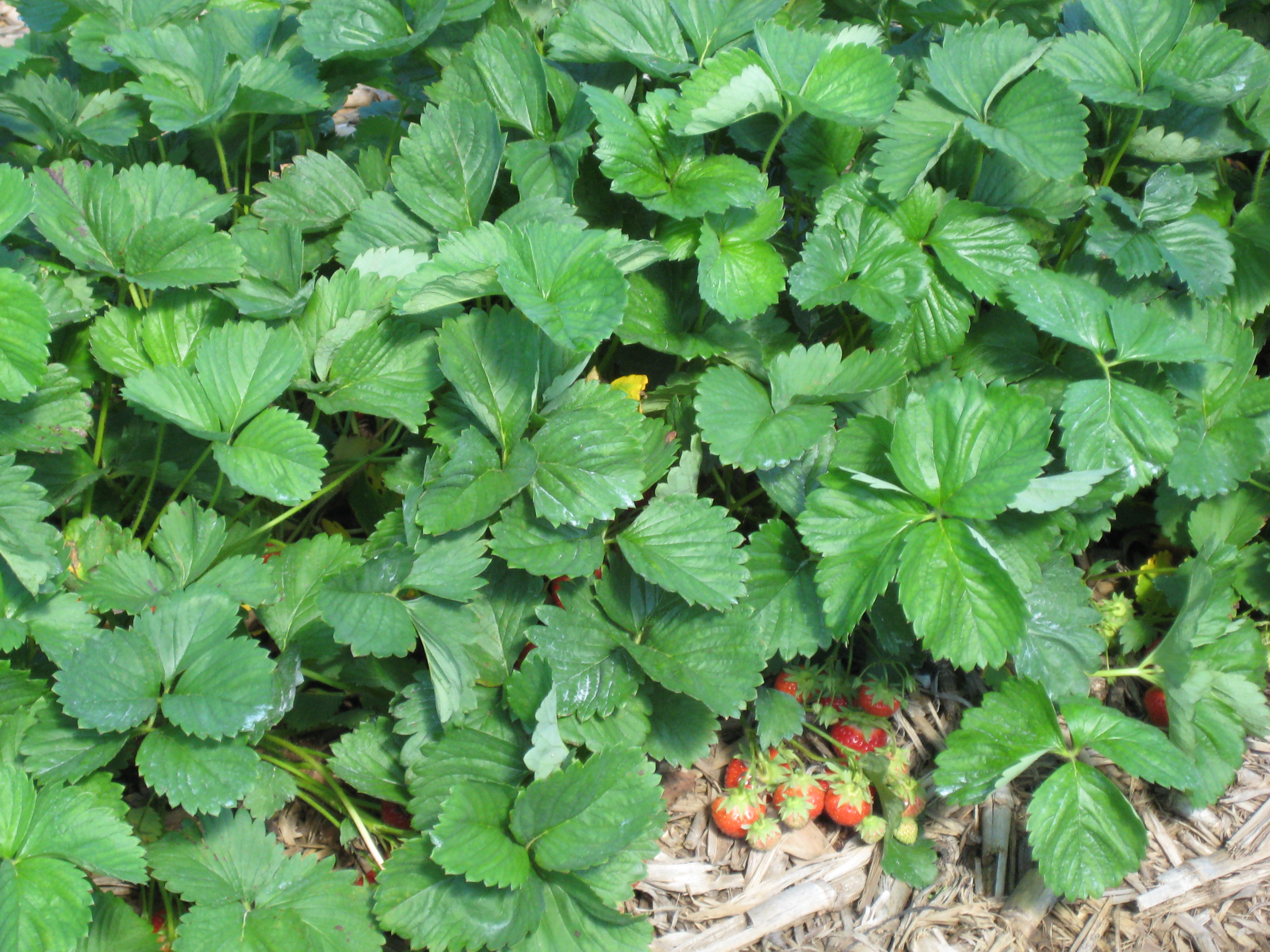
strawberry plants
Strawberry Plants (Source: Wikimedia Commons)

Her middle-aged granddaughter’s comments 100 years later:

Grandma apparently has—at least occasionally– been picking strawberries for money since June 10. I assume that a neighboring farmer paid her to pick them.

$4.00 would have been worth a lot more a hundred years ago than it is worth today. I wonder how Grandma eventually spent the money.

Poem

On the first day of every month Grandma included a poem in her diary entry.