17-year-old Helena Muffly wrote exactly 100 years ago today:
Wednesday, July 10, 1912:Did some ironing this forenoon and puttered around this afternoon.
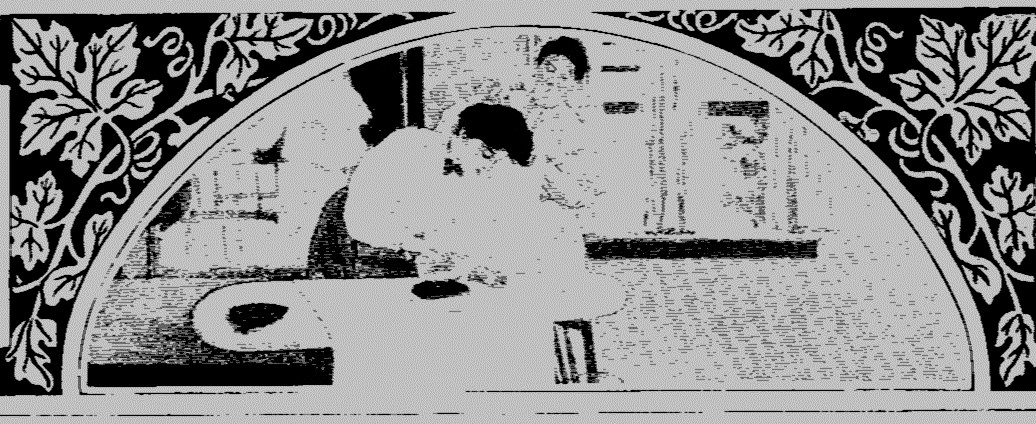
Picture Source: Approved Methods for Home Laundering
Her middle-aged granddaughter’s comments 100 years later:
Each day of the week used to have its own tasks. An old booklet called Approved Methods for Home Laundering published by Proctor & Gamble said that most of the ironing should be done on Wednesday.
Plan for the Week’s Work
MONDAY
1. Put the house in order.
2. Plan and cook for Tuesday.
3. Sort clothes.
4. Mend clothes (rents grow in washing).
5. Take out stains.
6. Soak soiled clothes.
7. Lay fire for morning.
8. Fill boiler.
9. Get tubs and other things ready.
TUESDAY
1. Light fire and heat water.
2. Make soap solution.
3. Do washing.
4. Sprinkle and roll clothes.
WEDNESDAY
1. Iron and bake.
2. Do thick starching.
THURSDAY
1. Finish ironing.
FRIDAY
1. Put house in order.
SATURDAY
1. Bake and plan for Sunday.
There was some variation from one list to the next in which things should be done on which days. (This list doesn’t quite match the recommended tasks for the various days of the week in the old Round and Round the Mulberry Bush ditty.)
17-year-old Helena Muffly wrote exactly 100 years ago today:
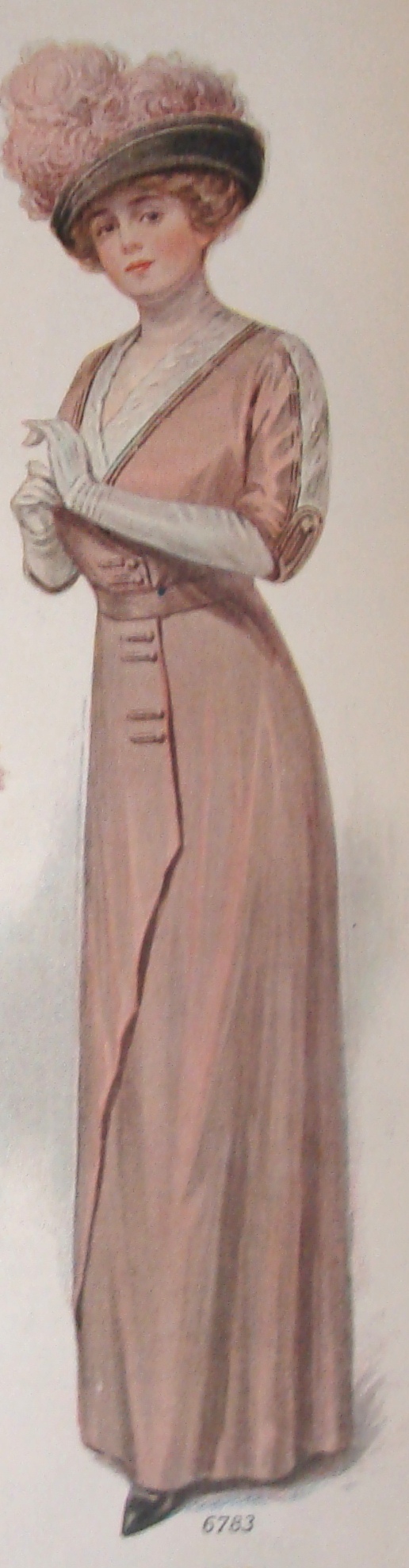
Tuesday, July 10, 1912:Went to Milton this morning to have my teeth filled, and was so fortunate as to only have three cavities. Also did some shopping besides. Got a pair of white silk gloves.
Source of photos: Ladies Home Journal (March, 1912)
Her middle-aged granddaughter’s comments 100 years later:
Why did Grandma need white silk gloves? She may have worn gloves to Sunday School, but it seems like a somewhat unusual purchase in the middle of the summer. Maybe there was an upcoming special event where she needed to wear gloves.
A Trip to the Dentist
Three cavities!—but Grandma seemed pleased to only have three. Grandma had gotten some teeth filled almost exactly a year prior to this date—on July 6, 1911 she wrote that she’d gotten several teeth filled. People must have had more cavities in the days before fluoride.
17-year-old Helena Muffly wrote exactly 100 years ago today:
Monday, July 8, 1912:Nothing much to record. My head feels sort of heavy like.
Her middle-aged granddaughter’s comments 100 years later:
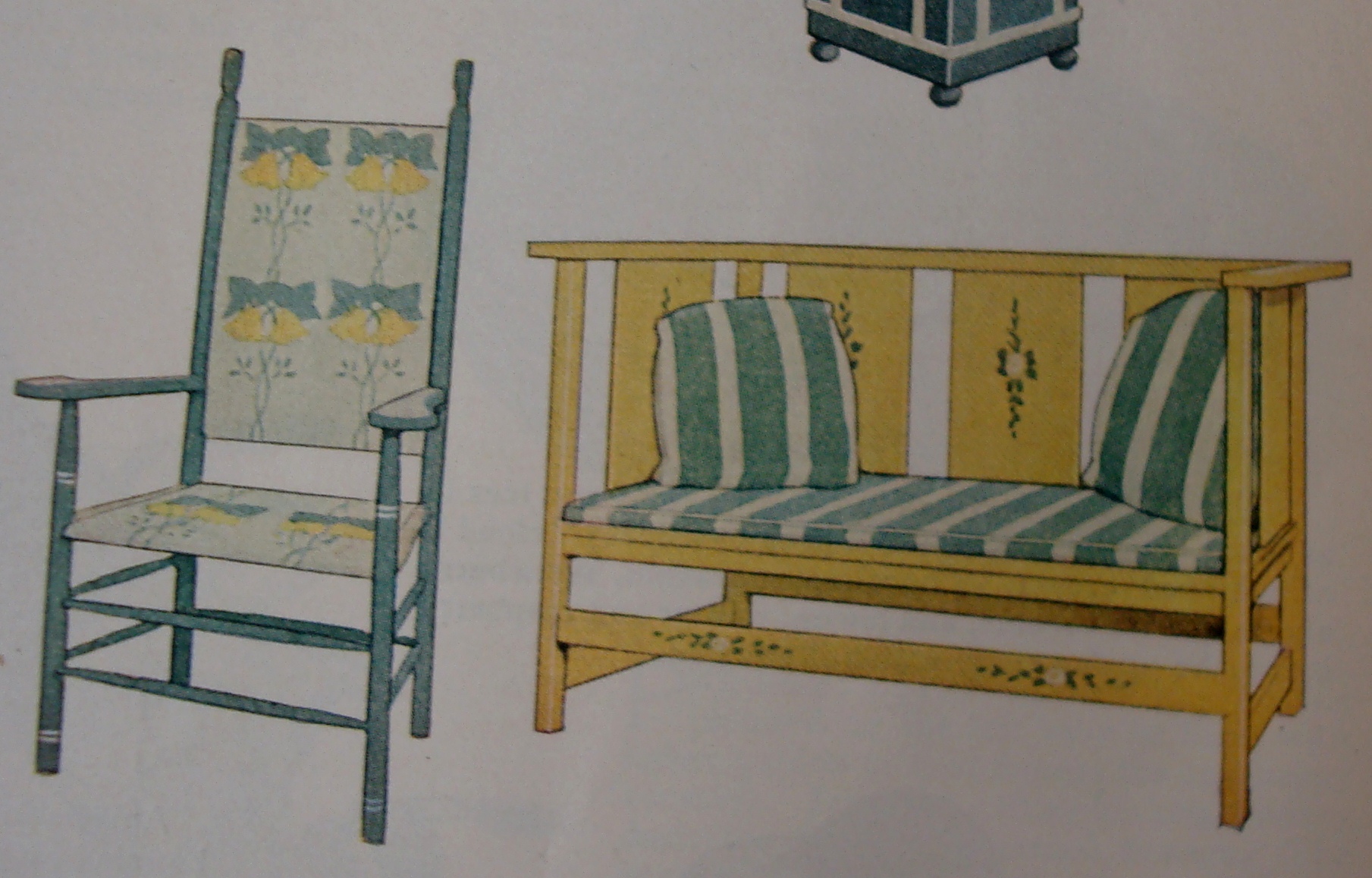
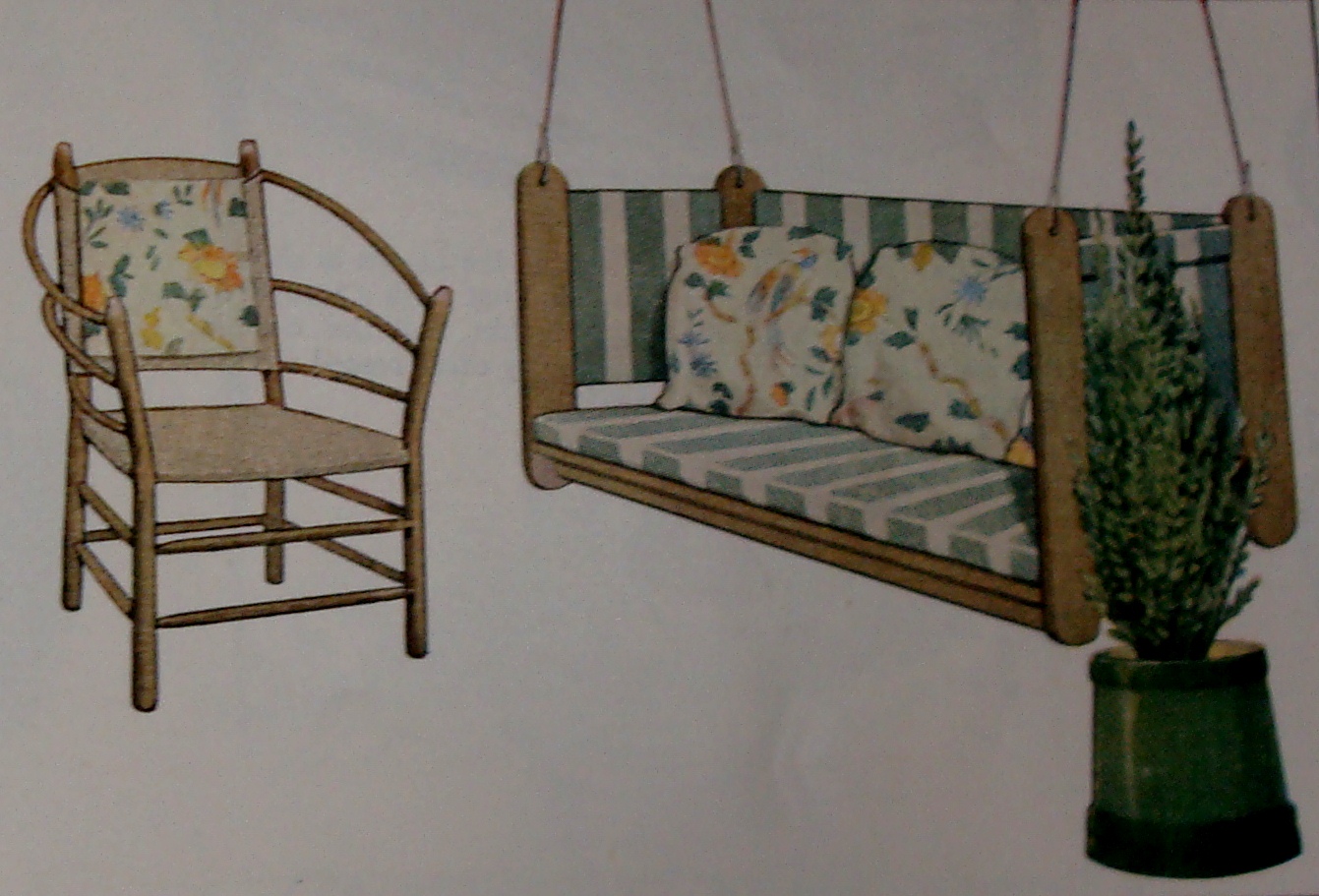
My head feels heavy like, too. I think it’s the hot weather. On days like this, I wish that my house had an old-fashioned porch that I could sit on.
Here are some drawings of furniture for summer porches from an article called “The Little House Summer Porch: Making the Living Porch Attractive” in the July, 1912 issue of Ladies Home Journal.
17-year-old Helena Muffly wrote exactly 100 years ago today:
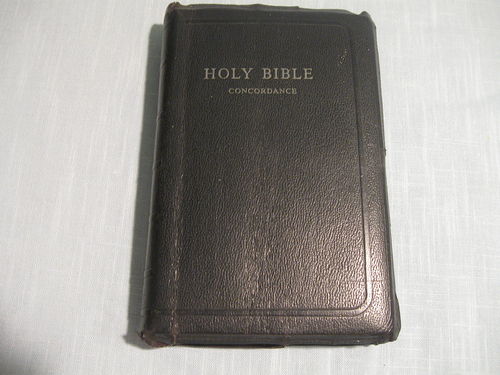
Sunday, July 7, 1912:Went to Sunday School this morning. Received my Bible after having been learning verses for about a year and a half.
Her middle-aged granddaughter’s comments 100 years later:
Whew, Grandma finally received her Bible. She learned 700+ verses to get it—and some weeks she learned more than 20 verses. For example, on December 23, 1911 she wrote that she was trying to learn 27 verses that week.
She sure was persistent—I never would have stuck with it.
Grandma completed memorizing the verses on May 26–and received the Bible the previous week (June 30), but they kept the Bible to put her name on the cover .
17-year-old Helena Muffly wrote exactly 100 years ago today:
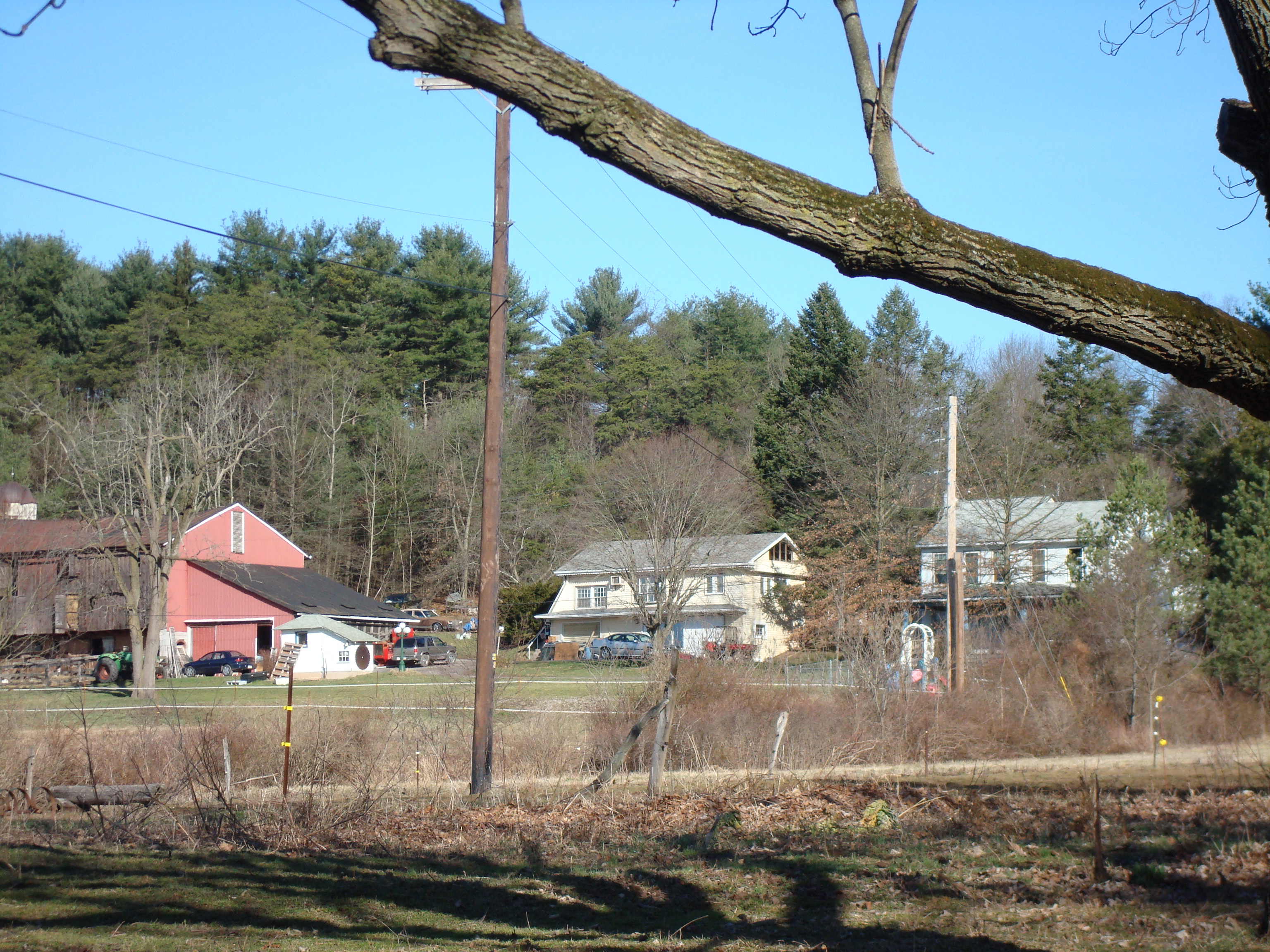
Saturday, July 6, 1912: Ruth and I hunted our cows for a change this afternoon, and found them at last after hours search safe in a neighbor’s barnyard.
Recent photo of a neighbor’s farm
Her middle-aged granddaughter’s comments 100 years later:
Whew, how in the world did the cows wonder so far afield (no pun intended) that they were lost for several hours?
I bet that Grandma and her sister Ruth were really relieved when they found them. I wonder which sister was supposed to be watching them. (See previous posts about the need to watch the cows to ensure that they stayed in the pasture and didn’t wonder off—see, for example, June 22 and May 18).
It sounds like the Muffly’s had nice neighbors (or at least neighbors who didn’t want stray cows wondering around their corn and wheat fields destroying their crops).
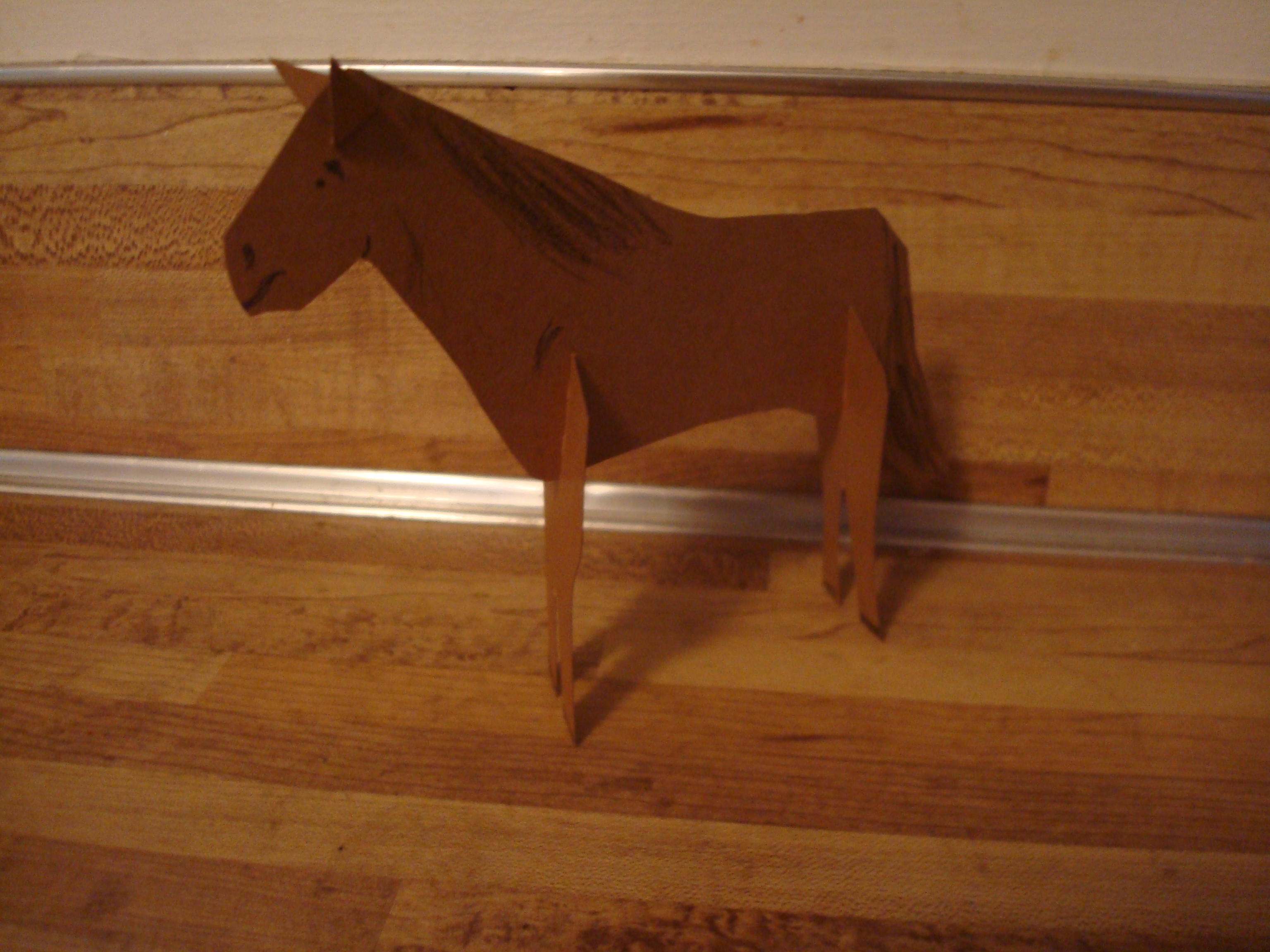
Cut out the pattern pieces. On heavy cardstock trace around the pieces. (Note: for the cardstock I used a brown file folder.) Cut out and decorate as desired.
Dovetail the legs and body together at the slits. The slits for the ears (see small black line between eyes and neck) can be made by an adult using a small sharp knife or very small sharp scissors.
P.S.—Previous posts with old-time paper crafts have been very popular. If you haven’t already seen them you may want to check them out:
17-year-old Helena Muffly wrote exactly 100 years ago today:
Thursday, July 4, 1912: Such a magic sound it has to some, but to me it is about the same as other days. We got a glorious rain this afternoon. I can’t help but rejoice over the very thought of it. It’s cooler now for one thing.
I bet that people a hundred years ago would never have expected that “ancient” traditions like fireworks would still exist in 2012.
Her middle-aged granddaughter’s comments 100 years later:
Poor Grandma–It sounds like an incredibly boring 4th. Some places were livelier.
About 125 miles northeast of McEwenville, New York City was holding a modern 4th of July celebration.
Here are some excerpts from the July 4, 1912 issue of the New York Times:
CITY TO CELEBRATE ITS SANEST FOURTH
Music, Parading, Speeches, and Electric Light to Banish Firecracker Riot
Over the Old Fort Block House at 5:30 o’clock this morning the new forty-eight-starred flag of this country will be raised and its raising will be the start of this city’s celebration of Independence Day. This celebration will be the 136th anniversary of the signing of the Declaration of Independence in Philadelphia.
It will represent weeks of effort put forth by the Mayor’s Committee and by countless societies and organizations, all joined in a determined campaign to free the marking of this day from the ancient rites of fire and powder and its ancient toll of death and wounds.
Instead of the steady popping of firecrackers and deafening crash of the cannon cracker, there will be parading, music, dancing, and speechmaking.
The prediction last evening, as the final touches were put on the innumerable arrangements, pointed to the safest and sanest Fourth in a city where the Nation’s big day has been growing safer and saner every passing years.
For safety Acting Chief Guerin of the Fire Prevention Bureau reported that for the last week he and his men had been on the lookout for fireworks stored away for sale. Confiscation is the rule and some $3,000 worth of explosives have been so put out of harm’s way.
The weather man, after scanning the heavens and weighing the evidence with unusual care last evening announced his gloomy fear that this city and the surrounding country would experience thunderstorms this afternoon or evening.
Quite as much as any other part of the celebration, the elaborate illumination depends on the holding off of the rain. If all goes well many parts of the city will be radiant with fantastic light, for nearly a hundred thousand Japanese lanterns have been strung to the trees in the parks and these were supplied with current last evening to try them out. As the dim trees in each park, loaded with festoons and strung ropes of these lanterns would spring into radiance with the turning of the switch, a shrill chorus of delightful approval would go from hundreds of children. The current is the gift of the New York Edison Company for the celebration and besides this, it has given the lanterns.
City Hall and its square is to be more brilliantly lighted than any, 6,000 electric light bulbs being devoted to this purpose.