Food is expensive. Sometimes I’m shocked by how much I spend when making a recipe, so I was absolutely thrilled to see a page of recipes in the January, 1916 issue of Ladies Home Journal for dishes that could be made for 10 cents.

I tried not to get my hopes up too much, but the magazine promised that the recipes were not only inexpensive, but also nutritious and appetizing. I decided to try Rice Creole.
I was not disappointed. The Rice Creole was simple to prepare, and absolutely delicious. This is a lovely rice-pilaf type dish with a mild onion flavor. And, diced tomatoes with bits of green pepper and parsley interspersed in the rice create a colorful dish that is a perfect accompaniment to fish, meat, or other entrees.
Bottom line – Rice Creole is wonderful with a surprisingly modern look and taste. I plan to serve it in the very near future when I have friends over – and I fully expect they will to be amazed when I tell them it’s a hundred-year-old dish.
Here’s the recipes updated for modern cooks:
Rice Creole
1 cup rice
1 tablespoon bacon drippings
1 cup onions, finely diced
2 tablespoons (1/8 cup) green pepper, finely diced
1 teaspoon salt
1 tablespoon parsley flakes (or use 3 tablespoons chopped fresh parsley)
1 1-lb. can diced tomatoes, drained
Cook rice following the directions on the package. In the meantime, melt bacon drippings in a skillet, then add onions and green pepper; sauté until tender. Stir in salt, parsley, and tomatoes, and heat until it begins to simmer. Stir in the cooked rice; heat until hot.
Since Rice Creole is supposed to be an inexpensive recipe, I decided to cost it out: 1 cup rice ($0.50), 1 onion ($0.50), 1/4 green pepper ($0.32), 1 can tomatoes ($1.29), salt/parsley/bacon drippings ($0.05) for a total of $2.66. It’s a little more than the 10 cents of days gone by, but considering that a dollar in 1916 is worth $22 today, it’s still an inexpensive dish.
Here’s the original recipe:
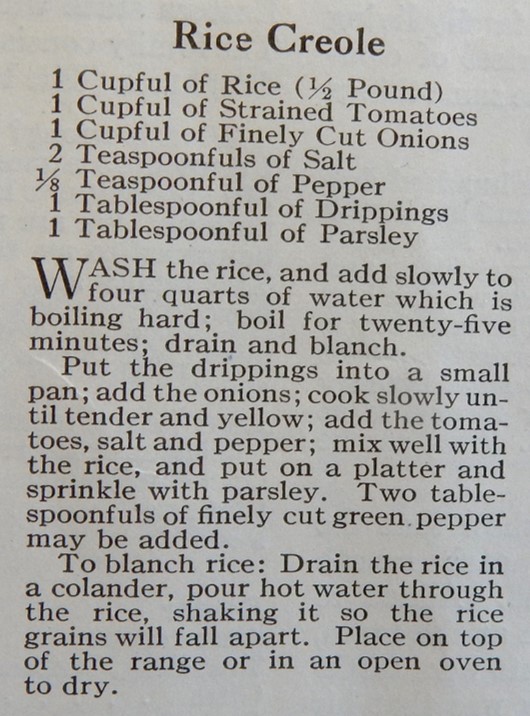
When I made this dish I used 1 teaspoon of salt (instead of the 2 teaspoons called for in the old recipe), and it turned out perfectly.
The old recipe calls for strained tomatoes. It’s unclear whether this means that the drained tomatoes or the strained liquid should be used in the recipe. I interpreted it to mean that drained tomatoes were combined with the other ingredients.