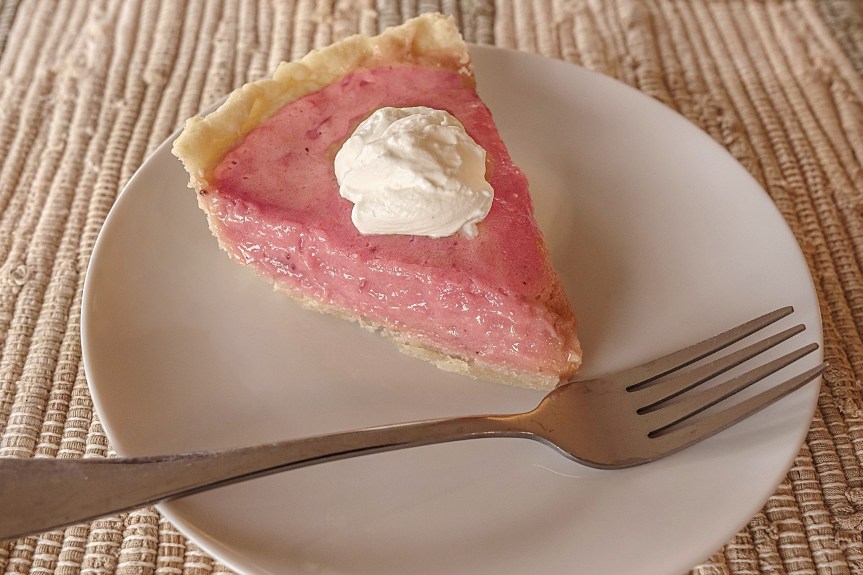
Old-Fashioned Pink Chiffon Pie (Cranberry Chiffon Pie)

Many fruits are available year round, but some fruits are available only for a few weeks each year. Cranberries are one of those fruits. I crave them for months, and am excited when they finally begin to appear in the produce aisle at the store. This fall, I saw them for the first time last week. I immediately began searching through my hundred-year-old cookbooks for cranberry recipes.

I found a recipe for Pink Chiffon Pie which is made using cranberries, and decided to give it a try.

The Pink Chiffon Pie was smooth and silky with the sweetness of the sugar in the filling nicely balancing the tart cranberries. It was tasty and looked lovely; however, if you decide to make this pie, be sure to set aside sufficient time. It is a relatively complicated recipe.

Here’s the original recipe:
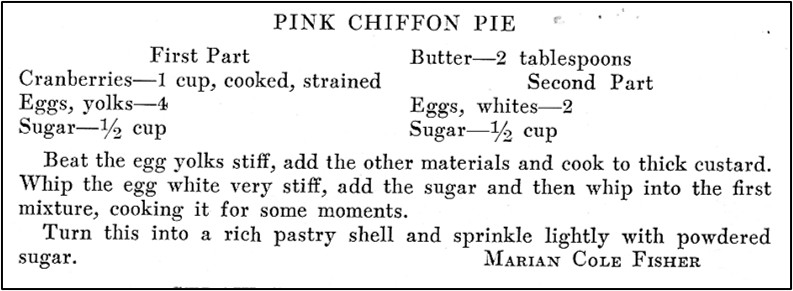
Recipe for Pink Chiffon Pie (Cranberry Chiffon Pie)
Source: Diamond Jubilee Recipes (1925) compiled by the Sisters of Saint Joseph, St. Paul, MN

When I selected this recipe, it looked easy – not very many ingredients and directions that, based on a quick scan, sounded straight forward. Then I started making the recipe and discovered that it was more challenging than I anticipated.

I had lots of questions. How large is the pie shell/pan? The amounts called for in the recipe seemed fairly small – so it probably was for a 7 or 8-inch pie. I decided to make a 9-inch pie, so I doubled all ingredients. The recipe called for a baked pie shell – so I needed to make and pre-bake a pie shell prior to beginning this recipe.

I was also was not sure whether the recipe called for 1 cup of raw cranberries or for 1 cup of cranberries that had previously been cooked. I decided to assume that it meant raw cranberries. That decision led to my next question.  How much water should be added to the cranberries prior to cooking? I decided to go with 1/3 cup of water.

Once the cranberries were cooked, I tried to strain them, I was able to press relatively little liquid through the strainer, so I used a Foley mill to more thoroughly strain and mash the cooked cranberries. A food processor could also be used to puree the cranberries.

It was tricky cooking the egg-rich chiffon so that the pie filling was smooth, and the egg did not separate out while cooking. It is important to cook the filling until it barely begins to bubble. And, it is vital to not rush cooking the filling, and to stir it vigorously and constantly to prevent the filling on the bottom of the pan from scorching.

I skipped garnishing the pie with confectioners’ sugar, and instead served it with whipped cream.

Here’s the recipe updated for modern cooks:

Pink Chiffon Pie (Cranberry Chiffon Pie)

  • Servings: 6 - 8
  • Difficulty: somewhat challenging
  • Print

1 baked 9-inch pie shell

2 cups cranberries

1/3 cup water

8 egg yolks  + 4 egg whites

4 tablespoons butter

1 cup sugar + 1 cup sugar

confections’ sugar, if desired

whipped cream, if desired

Wash cranberries, then put them in a saucepan and add the water. Bring to a boil using medium heat, then reduce heat and simmer until all of the cranberries have softened and burst (about 8-10 minutes). Remove from the heat and press through a strainer. (I used a Foley mill.)

Put the egg yolks in a mixing bowl and beat until smooth, then add 1 cup of sugar and beat. Add the pureed cranberries and continue beating. Put mixture in a saucepan; add butter. Heat, using medium heat, until the cranberry mixture gets very thick; stir constantly. Remove from heat when the mixture is barely beginning to bubble.

In a mixing bowl, beat the egg whites until stiff peaks form. Then add a small amount of the hot cranberry mixture, while beating continuously. (Be sure to add only a small amount of the cranberry mixture and beat it in immediately to prevent the egg whites from cooking.) Continue adding small amounts of the cranberry mixture while continuing to beat.

After all the cranberry mixture has been incorporated into the egg whites, return the mixture to the saucepan. Using medium heat, cook until the mixture barely begins to boil; stir constantly and vigorously. (This mixture will easily scorch on the bottom of the pan. It is vital to stir continuously and vigorously with the spoon while regularly scraping the bottom of the pan. A double boiler could be used to reduce the possibility of scorching the mixture.) Remove from heat and spoon the cranberry chiffon filling into the previously baked pie shell.

If desired, lightly sprinkle confections’ sugar on the pie to garnish. Refrigerate until the pie is cold (at least 2 hours).

If desired, serve pie with whipped cream.
http://www.ahundredyearsago.com

Hundred-Year-Old Tip for Making Flaky Pie Crusts

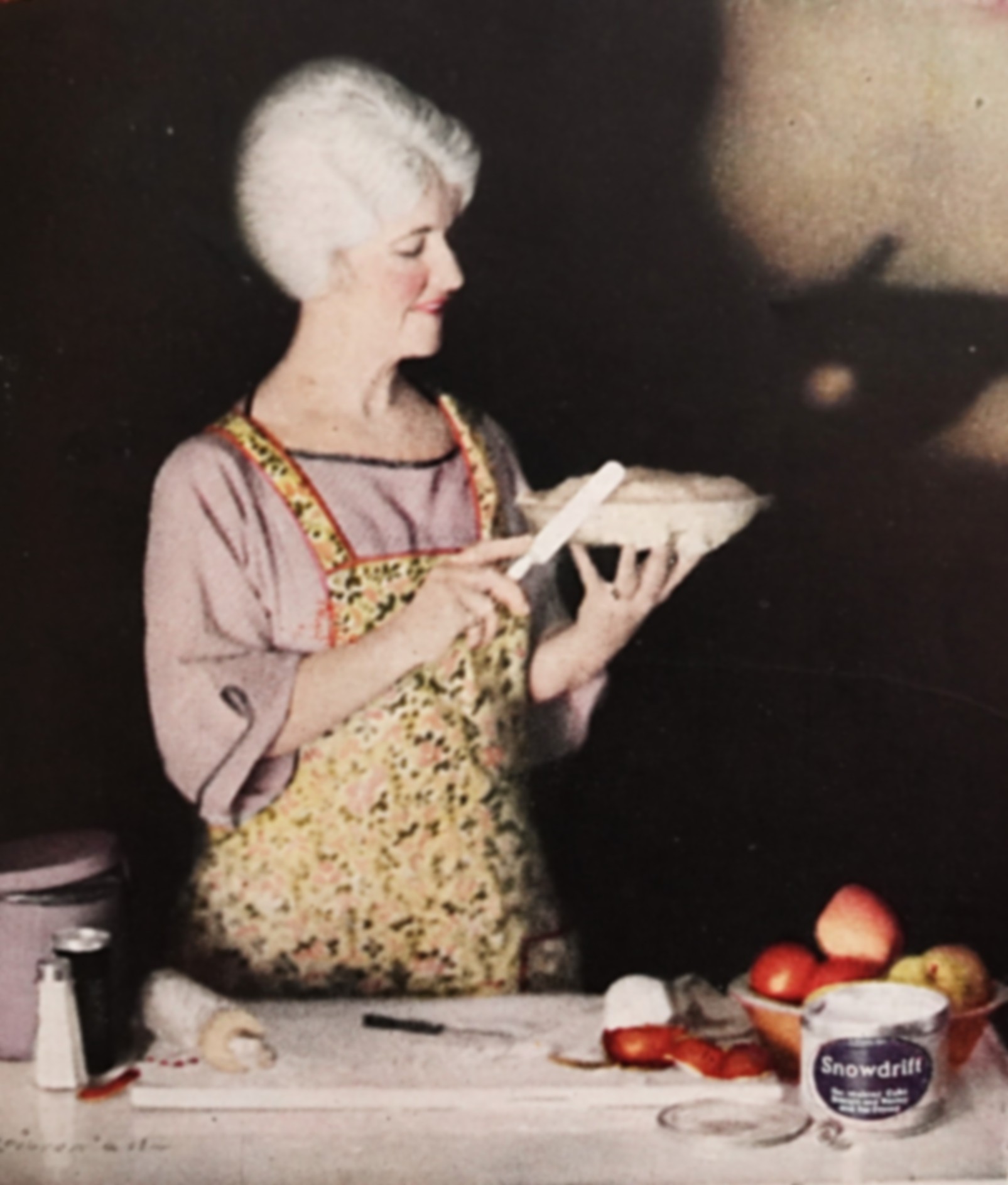
Woman making pie
Source: Snowdrift Shortening advertisement, Good Housekeeping (October, 1925)

Sometimes information in a hundred-year-old magazine or cookbook helps me improve my cooking technique. Making a flaky pie crust is a recurring challenge for me, and I often end up with hard, dry crusts. I tried many recipes that call for using shortening, lard, or butter – but I have not found the perfect recipe.

Our sour cherry tree produced lots of cherries last summer, and I froze 24 pints. A few days ago, I decided to use some of the cherries to make a cherry pie. I wasn’t thinking about hundred-year-old recipes, or this blog – but I was thinking about how hard it is to was to make good pie crusts. Suddenly I remembered seeing a hundred-year-old advertisement for an old-time cottonseed oil shortening called Snowdrift – and how it contained a recipe with a tip for flaky pie crusts. Next thing I knew I was digging through old magazines looking for recipe in the ad:

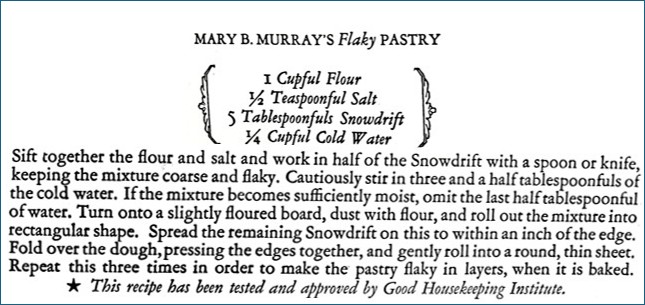
Recipe for pie pastry
Source: Snowdrift Shortening advertisement, Good Housekeeping, October, 1925

Even if I could find a cottonseed shortening similar to Snowdrift, I had no interest in making a pie pastry using it. What intrigued me were the directions for making flaky pastry – reserve a little of the shortening when making the pie pastry, then spread some of the reserved shortening on the rolled out dough, fold dough, re-roll, repeat.  Were they adaptable for use with other recipes?

The answer is a resounding “yes.” I made the crust for the cherry pie using a modern pastry recipe – but with the added steps described in the old recipe. This resulted in a noticeably flakier pie crust. I definitely plan to regularly use this technique in the future.

Here are the additional steps for a flaky pie crust.

Step 1

Reserve a little of the shortening or other fat when making the pastry. Use any pastry recipe that calls for shortening, lard, or butter; but, use a little less shortening or other fat than called for in the recipe.

Step 2

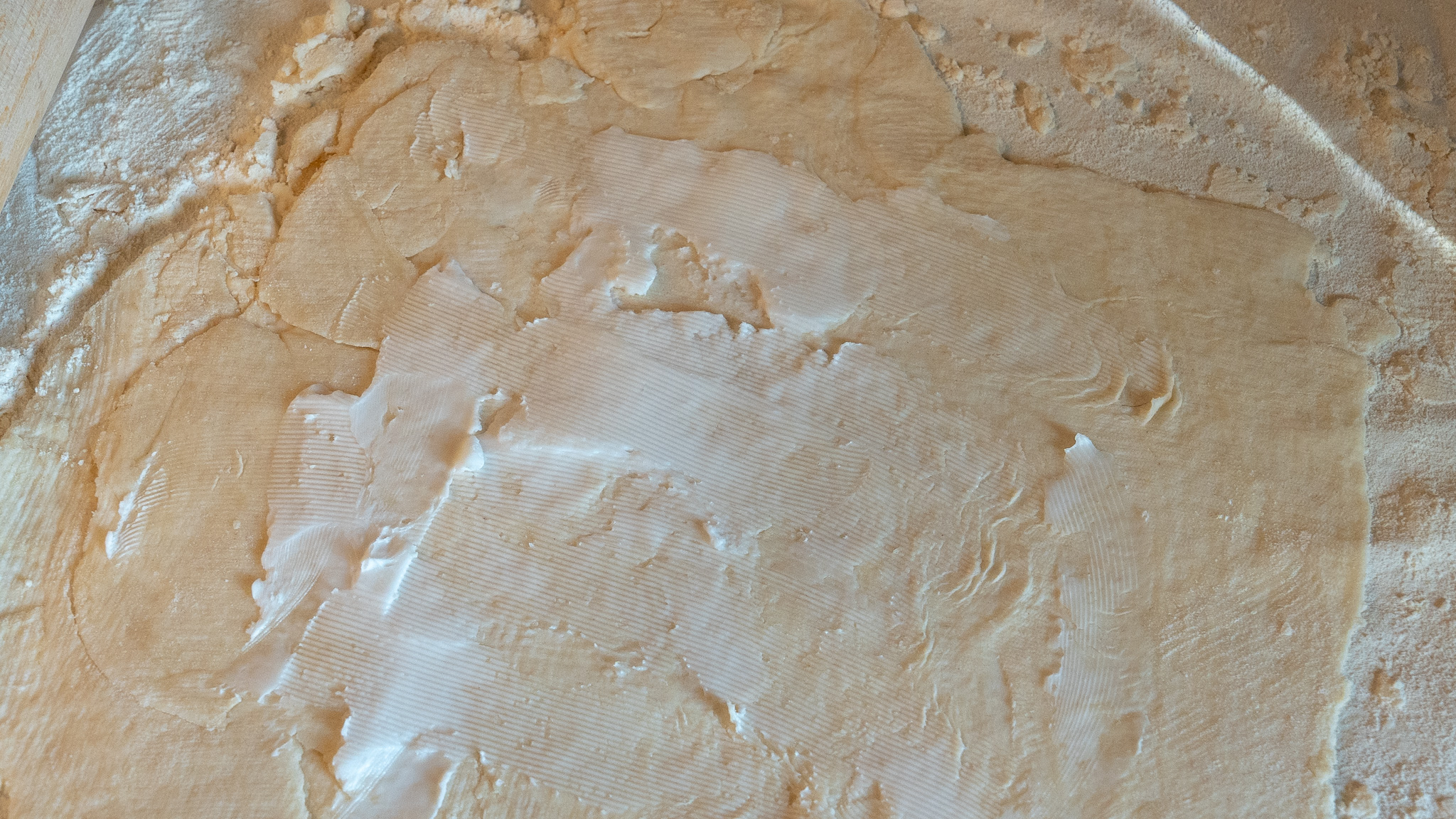
Roll out the pastry, and spread with some of the reserved shortening or other fat.   pie pastry with shortening spread on top

Step 3

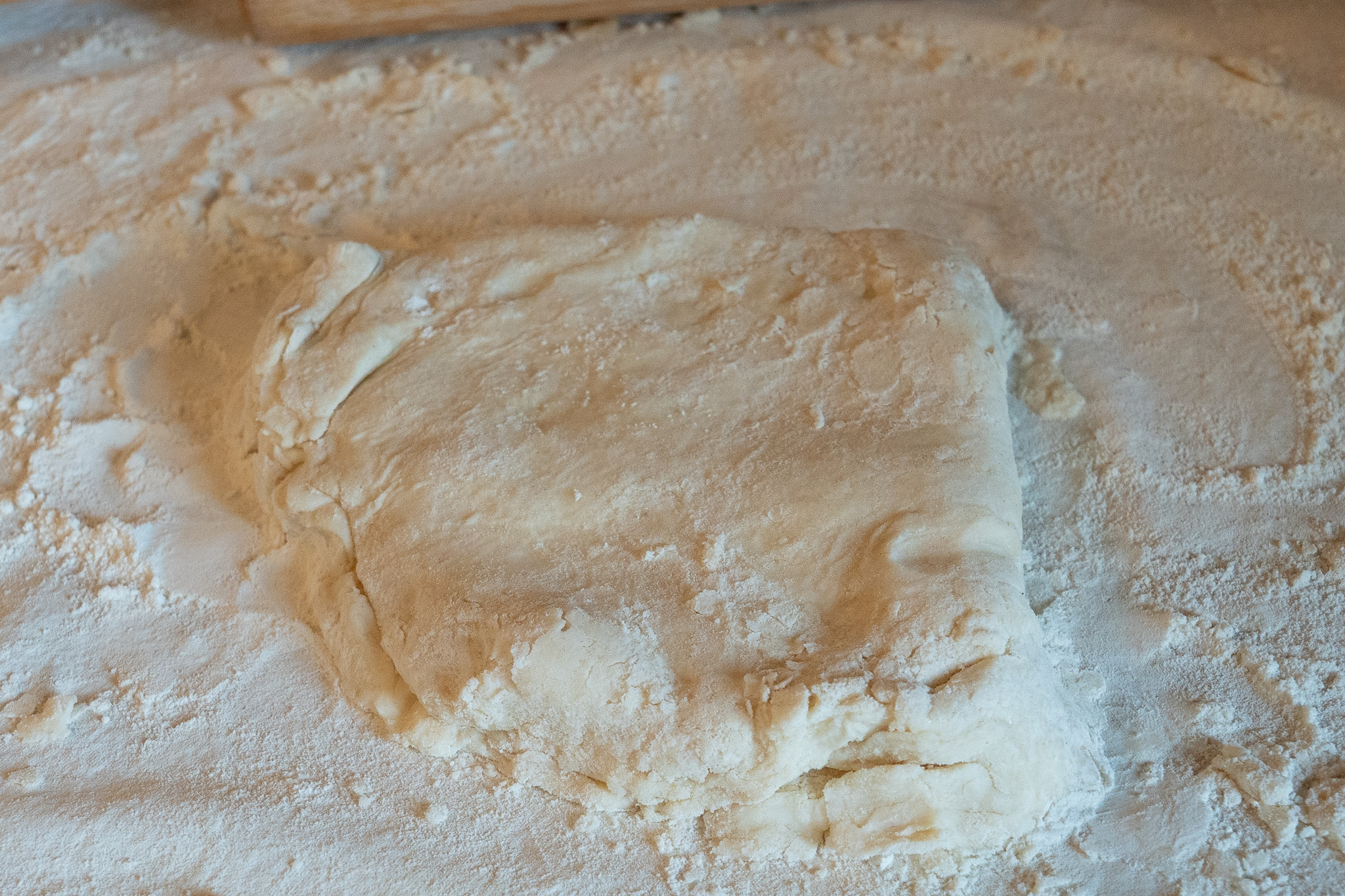
Fold the pastry dough twice (so that it is four layers thick).
folded pie pastry

Step 4

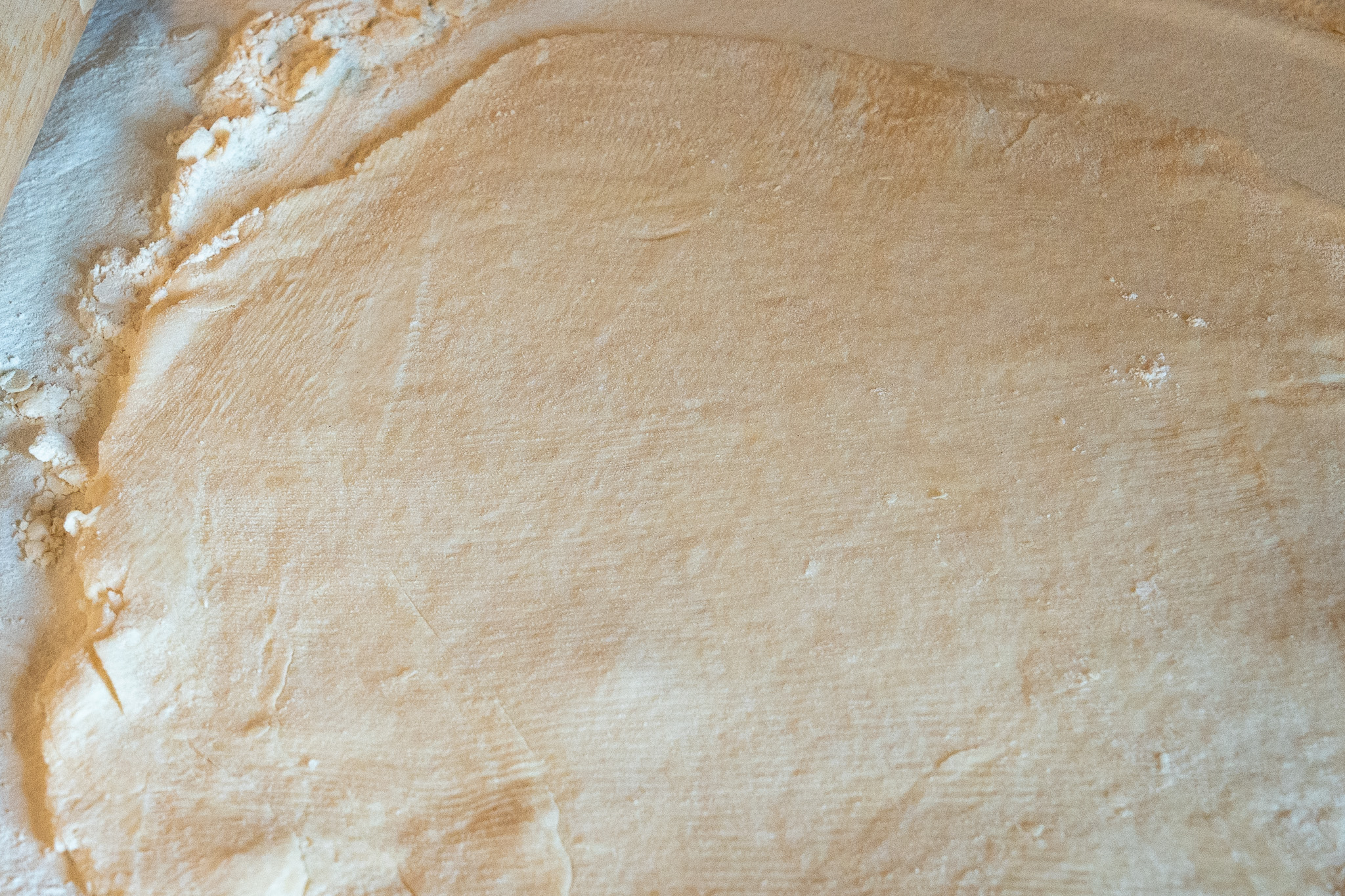
Roll dough out.
rolled out pie pastry

Step 5

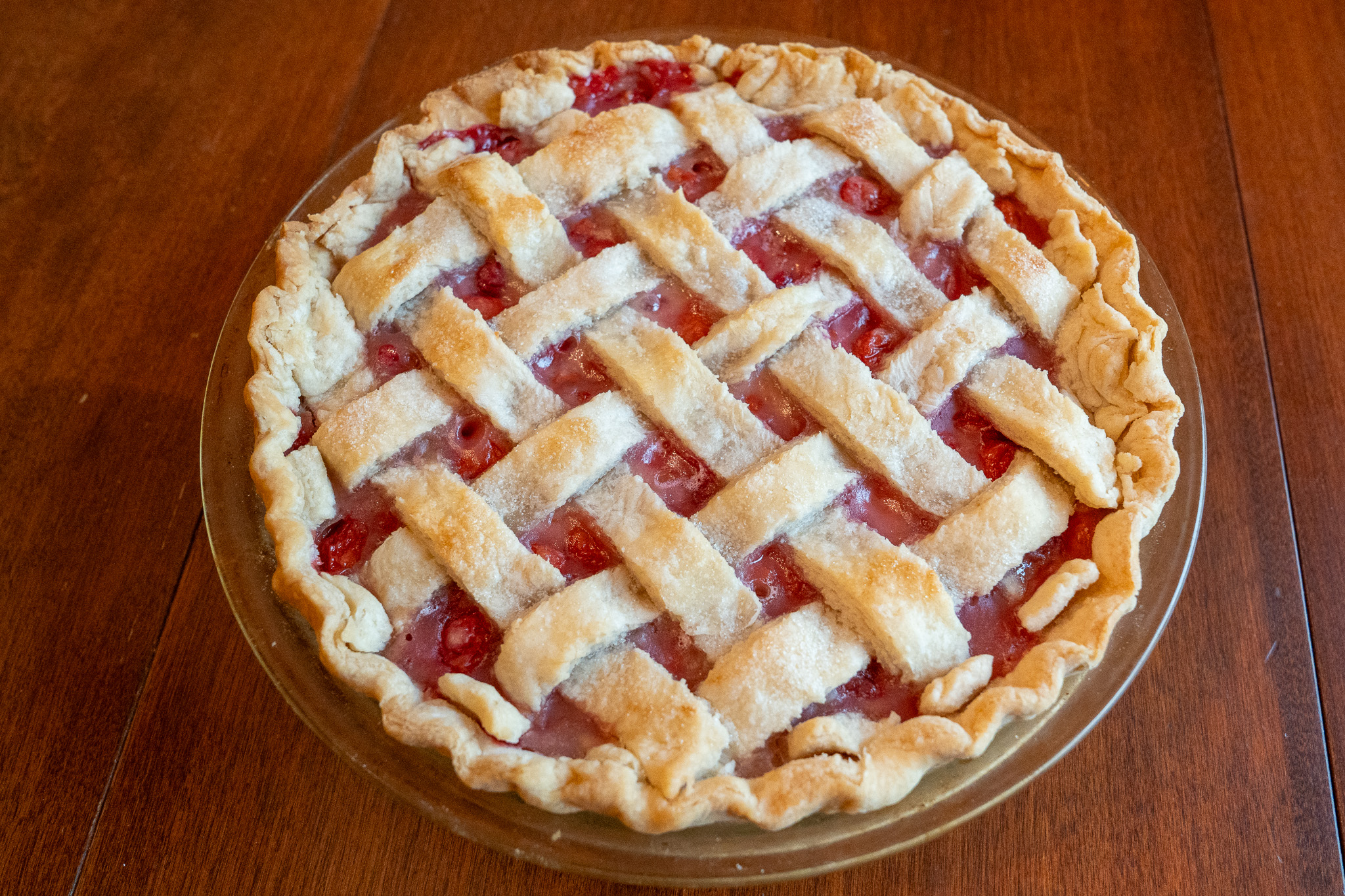
Repeat Steps 2 – 4 (roll out dough and spread with shortening or other fat, fold dough, roll dough) two additional times. cherry pie

Old-fashioned Applesauce Pie (with Meringue)

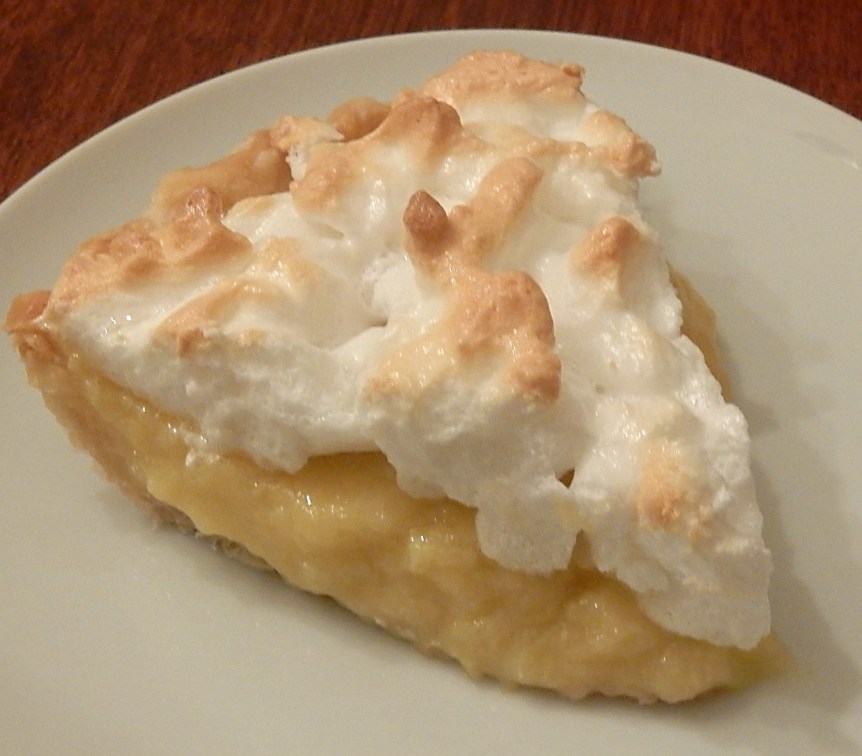
Slice of Applesauce Pie

I recently came across a hundred-year-old recipe for Applesauce Pie (with Meringue) and decided to give it a try. It is very different from modern Apple Pie recipes because it doesn’t call for any cinnamon, but rather just allows the natural flavors of the applesauce to shine through. The pie filling is made by combining applesauce, sugar, egg yolks, and cornstarch. The net effect is that the filling has a consistency somewhat similar to the filling in a custard pie. The meringue topping is a nice change of pace. Today, we generally only see meringue toppings on Lemon Pies; a hundred years ago meringue was much more popular and used on a wide variety of pies.

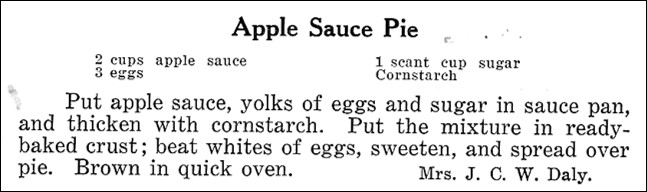
Here’s the original recipe:

Recipe for Applesauce Pie
Source: General Welfare Guild Cook Book (Beaver Valley General Hospital, New Brighton, PA, 1923)

We generally write applesauce as one word. A hundred years ago, it was written as two words – apple sauce. I’m always intrigued by why these minor changes in how words are written have occurred across the years.

The old recipe doesn’t indicate how much cornstarch should be used. I think that how much is needed is dependent upon how thick the applesauce is. It is very important that the filling is fairly thick so that it doesn’t run all over when the pie is cut. I used homemade applesauce when I made this recipe, and it may have been juicier than some commercial applesauces. When I made this recipe, I first used 2 tablespoons of cornstarch. After I cooked the applesauce mixture, it didn’t seem very thick. So I mixed another tablespoon of cornstarch and a little water in a small bowl, and then added it to the cooked applesauce mixture. I then reheated until it boiled. The pie filling ended up being about the right thickness, but the lack of clarity regarding the amount of cornstarch (and it being a key ingredient in regards to the success of the recipe), made this recipe somewhat challenging to make.

And, here’s the recipe updated for modern cooks:

Applesauce Pie (with Meringue)

  • Servings: 6 - 8
  • Difficulty: difficult
  • Print

7/8 cup sugar

3 tablespoons cornstarch

2 cups unsweetened applesauce

3 egg yolks, beaten

1 baked 9-inch pie shell

Meringue

3 egg whiles

1/3 cup sugar

Combine the sugar and cornstarch in a saucepan. Stir in the egg yolks and applesauce. Using medium heat, heat until the mixture thickens and begins to boil. Stir constantly while cooking. Then remove from heat, and spoon into the previously baked pie shell.

Preheat oven to 400° F. To make the meringue, place egg whites in a mixing bowl, and beat the egg whites until they form stiff peaks. Gradually add sugar while continuing to beat. Then spoon on top of the pie and swirl. Bake for 7 – 10 minutes or until the meringue is lightly browned.

http://www.ahundredyearsago.com

Old-Fashioned Lemon Crumb Pie

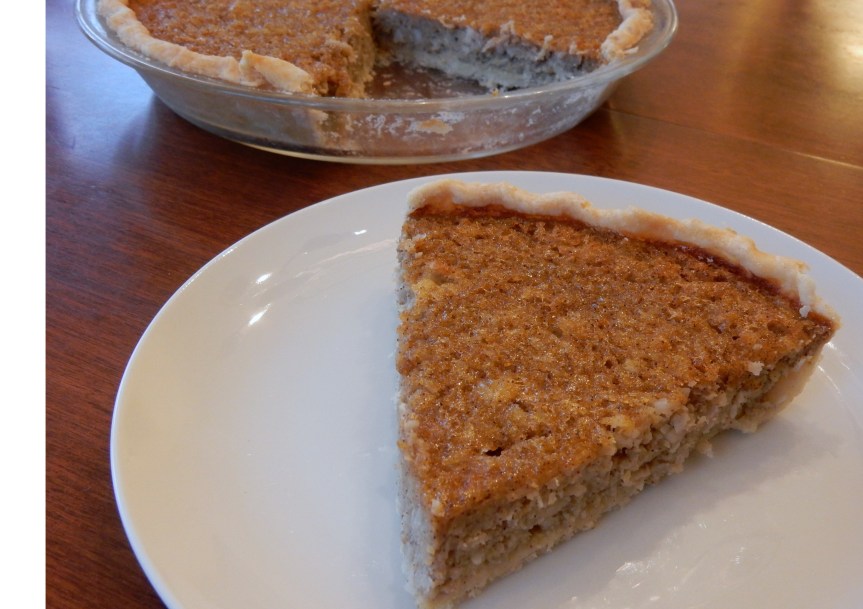
Slice of Lemon Crumb PieWhen browsing through a hundred-year-old cookbook, I came across a recipe for Lemon Crumb Pie.
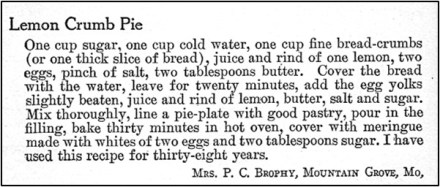
Recipe for Lemon Crumb Pie
Source: Larkin Housewives Cook Book (1923)

I was intrigued by the statement that the recipe author has used this recipe for 38 years. Even though all recipes I make for this blog are old, this one seemed particularly old-fashioned and called for using bread soaked in water to help thicken the pie filling.

The pie turned out well, and is very similar to Lemon Meringue Pie. I never would have guessed that there was bread in the baked pie. There’s something to be said for recipes that have been made (and maybe refined) over the course of 38 years .

Here’s the recipe updated for modern cooks:

Lemon Crumb Pie

  • Servings: 4 - 6
  • Difficulty: moderate
  • Print

1 slice bread torn into small pieces (about 1 cup)

1 cup water

1 cup sugar

Juice from 1 lemon

Grated rind of 1 lemon

2 egg yolks

dash salt

2 tablespoons butter, melted

1 8-inch (small) pie shell

Meringue

2 egg whites

2 tablespoons sugar

Preheat oven to 425° F. Put bread pieces and water in a mixing bowl and let soak for 20 minutes. Then add sugar, lemon juice, grated lemon rind, egg yolks, salt, and melted butter; beat until combined. Pour mixture into pie shell and bake until the mixture is hot and bubbly and thickened (about 30 – 35 minutes). Watch pie closely because the filling will easily boil over.

To prepare the meringue, put the egg whites into a mixing bowl. Beat until stiff peaks form, then beat in the sugar. Spoon the meringue onto the top of the baked pie, and then swirl. Bake in the oven for approximately 8-10 minutes or until the meringue is a light brown.

http://www.ahundredyearsago.com


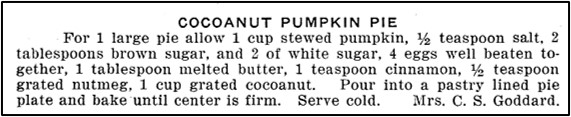
Old-fashioned Coconut Pumpkin Pie

Slice of Coconut Pumpkin Pie

When it comes to planning my Thanksgiving menu I always struggle with getting the right balance between traditional foods and new recipes. New recipes that are variations of traditional foods can be a nice way to strike that balance. I recently came across a new recipe (well, actually a hundred-year-old recipe – but it was new to me) for Coconut Pumpkin Pie, and decided to give it a try.

The coconut gave the pie a lovely milky sweetness that blended nicely with the pumpkin. The recipe called for two spices – nutmeg and cinnamon. My standard pumpkin pie recipe does not use nutmeg, so the flavor was noticeably different from many typical pumpkin pies, but it was lovely. The verdict – this recipe is a keeper and I may make it again for the big day.

Here’s the original recipe:

Recipe for Coconut Pumpking Pie
Source: Cement City Cook Book Compiled by the First Baptist Church Alpena, Michigan (1922)

What is the correct way to spell “coconut:”? The old recipe spells it “cocoanut” though I usually see it spelled “coconut,” so I went with the latter spelling when I updated the recipe.

Here’s the recipe updated for modern cooks:

Coconut Pumpkin Pie

  • Servings: 6 - 7
  • Difficulty: moderate
  • Print

4 eggs, beaten

1 cup pumpkin puree

2 tablespoons brown sugar

2 tablespoons white sugar

1 tablespoon butter, melted

1/2 teaspoon salt

1 teaspoon cinnamon

1/2 teaspoon nutmeg

1 cup shredded coconut

1 9-inch pie shell

Preheat oven to 425° F.  Put the eggs in a mixing bowl; beat until smooth and lemon colored. Add pumpkin, brown sugar, white sugar, butter, salt, cinnamon, and nutmeg: beat until combined. Stir in the coconut, and pour into the pie shell. Put into oven and bake for 10 minutes. Reduce heat to 350° F and continue baking until a knife inserted in the center comes out clean.

http://www.ahundredyearsago.com

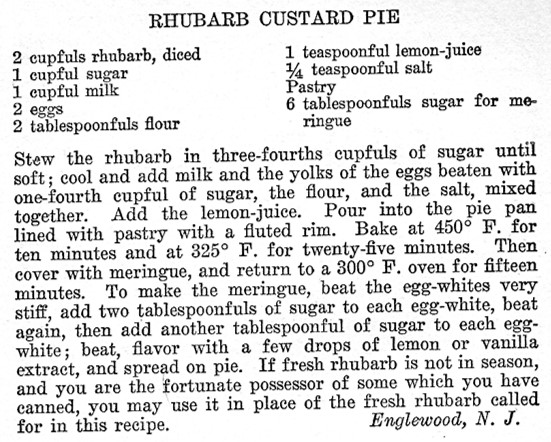
Old-fashioned Rhubarb Custard Pie with Meringue Topping

Slice of Rhubarb Custard Pie

Rhubarb is only available for a short while each spring and summer – and than it is gone until the next year. Since it will be gone all too soon, I always make numerous rhubarb dishes and desserts while it’s in season. Which brings up a question. When does rhubarb season end? I grew up hearing that it ended on the 4th of July – and that the rhubarb plants needed the remainder of the season to recharge so that they’d survive the winter. I continue to follow this rule of thumb – though always want to push the limits and continue eating rhubarb just a little longer.

Before rhubarb season ends, I decided to make another hundred-year-old rhubarb recipe. This time I made Rhubarb Custard Pie. The pie was topped with meringue and the rhubarb custard had just the right amount of tartness.

Here’s the original recipe:

Recipe for Rhubard Custard Pie
Source: Good Housekeeping’s Book of Menus, Recipes, and Household Discoveries (1922)

The old recipe states that if you don’t have fresh rhubarb, canned could be used. I’ve never seen canned rhubarb, but am guessing that frozen rhubarb could be used – though didn’t provide directions for using frozen rhubarb since the amount of sugar in the recipe would need to be reduced if the rhubarb had been frozen with sugar – and the needed reduction in sugar would probably vary depending upon the sweetness of the frozen rhubarb.

Here’s the recipe updated for modern cooks:

Rhubarb Custard Pie with Meringue Topping

  • Servings: 5 - 7
  • Difficulty: moderate
  • Print

2 cups rhubarb, diced

3/4 cup sugar + 1/4 cup sugar

2 egg yolks

2 tablespoons flour

1 teaspoon lemon juice

1/4 teaspoon salt

1 cup milk

1 9-inch pie shell

Meringue

2 egg whites

6 tablespoons sugar

1/4 teaspoon lemon juice

Rinse diced rhubarb and drain. Combine rhubarb (with a small amount of water clinging to the rhubarb) and 3/4 of sugar in a saucepan. Bring to a boil using medium heat while occasionally stirring, then reduce heat and simmer until tender (about 7 minutes). Remove from heat and cool.

Preheat oven to 450° F.  Put the egg yolks, 1/4 cup of sugar, flour, salt, and 1 teaspoon lemon juice in a mixing bowl; beat until smooth, then add milk and beat to combine. Stir in the cooked rhubarb. Put the mixture into the prepared pie shell. Bake in the oven for 10 minutes, then reduce heat to 325 ° F. and continue baking for 25 minutes or until the mixture has thickened. Remove from oven, and top with the meringue (see below). Reduce heat to 300° F., and put the pie back into the oven. Cook for an additional 15 minutes or until the meringue is lightly browned.

Meringue

In the meantime, make the meringue. Place egg whites in a bowl, and beat the egg whites until they form stiff peaks. Gradually add sugar while continuing to beat. Then spoon on top of the pie and swirl.

Old-fashioned Grapefruit Pie

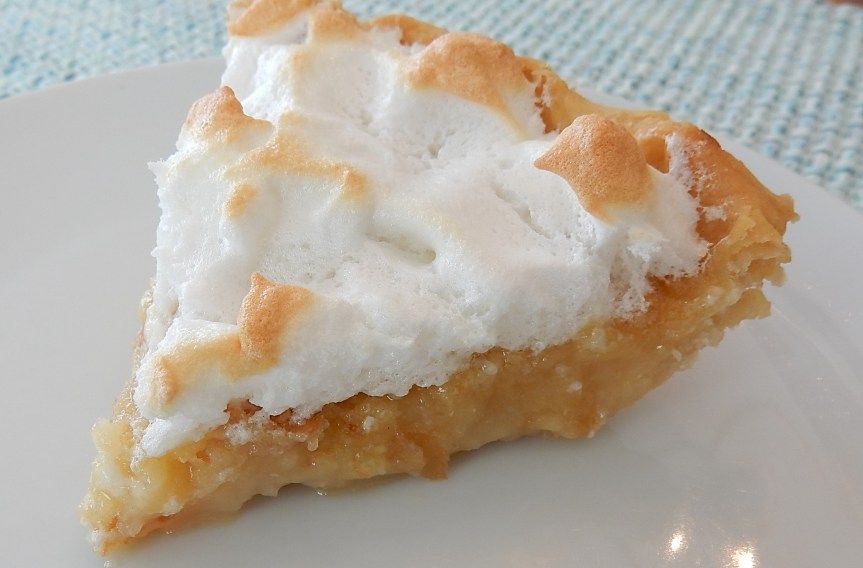
Grapefruit Pie

I was intrigued by a hundred-year-old recipe for Grapefruit Pie, and decided to give it a try. The pie was bursting with a sunny grapefruit flavor. It reminded me of lemon meringue pie, but was a little less tart.

Here’s the original recipe:

Grapefruit Pie

Recipe for Grapefruit Pie

Source: American Cookery (March, 1922)

Rather than squeezing a grapefruit to get juice to make the pie, I purchsed a bottle of grapefruit juice. A typical grapefruit contains about 3/4 cup of juice.. When I made this recipe, the pie filling was a little juicy, so when I updated the recipe I added an additional egg yolk, (The original recipe called for 2 yolks and 3 egg whites. Using an additional yolk eliminates the need to figure out what to do with an extra yolk.). I also added an additional 1/2 tablespoon of cornstarch when I updated the recipe to further thicken the filling.

Here’s the recipe updated for modern cooks:

Grapefruit Pie

  • Servings: 6 - 8
  • Difficulty: moderate
  • Print

Pie

1 cup sugar

1 cup water

3 1/2 tablespoons cornstarch

1/8 teaspoon salt

3/4 cup grapefruit juice

3 egg yolks, beaten

1 9-inch pie shell, baked

Meringue

3 egg whites

6 tablespoons sugar

2 teaspoons grapefruit juice

Place water, sugar, cornstarch, salt, and grapefruit juice in a saucepan, stir until thoroughly mixed and smooth. Using medium heat, bring to a boil while stirring occasionally. Reduce heat and simmer for 5 minutes. Add a small amount of the hot mixture to the beaten egg yolks, while stirring constantly, and then slowly add to the contents in the saucepan while stirring constamtly. Remove from heat. If not smooth, stain the mixture. Allow the mixture to cool.

In the meantime, preheat oven to 400 ° F. and  make the meringue. Place egg whites in a bowl, and beat the egg whites until they form stiff peaks. Gradually add 6 tablespoons sugar while continuing to beat; add the 2 teaspoons of grapefruit juice and beat.  Then spoon on top of the pie and swirl. Place pie  in the oven and bake for  8 – 10  minutes or until the meringue is lightly browned.

http://www.ahundredyearsago.com