Bouncer: Archaic Definition

19-year-old Helena Muffly wrote exactly 100 years ago today: 

Saturday, April 4, 1914:  My bouncer of a cousin Alma came over on the train this afternoon. All three of us went to a play up town. Didn’t get to bed till after 12, and then I had to sleep on the rail, it was rather fun though. Wonder I didn’t roll out.
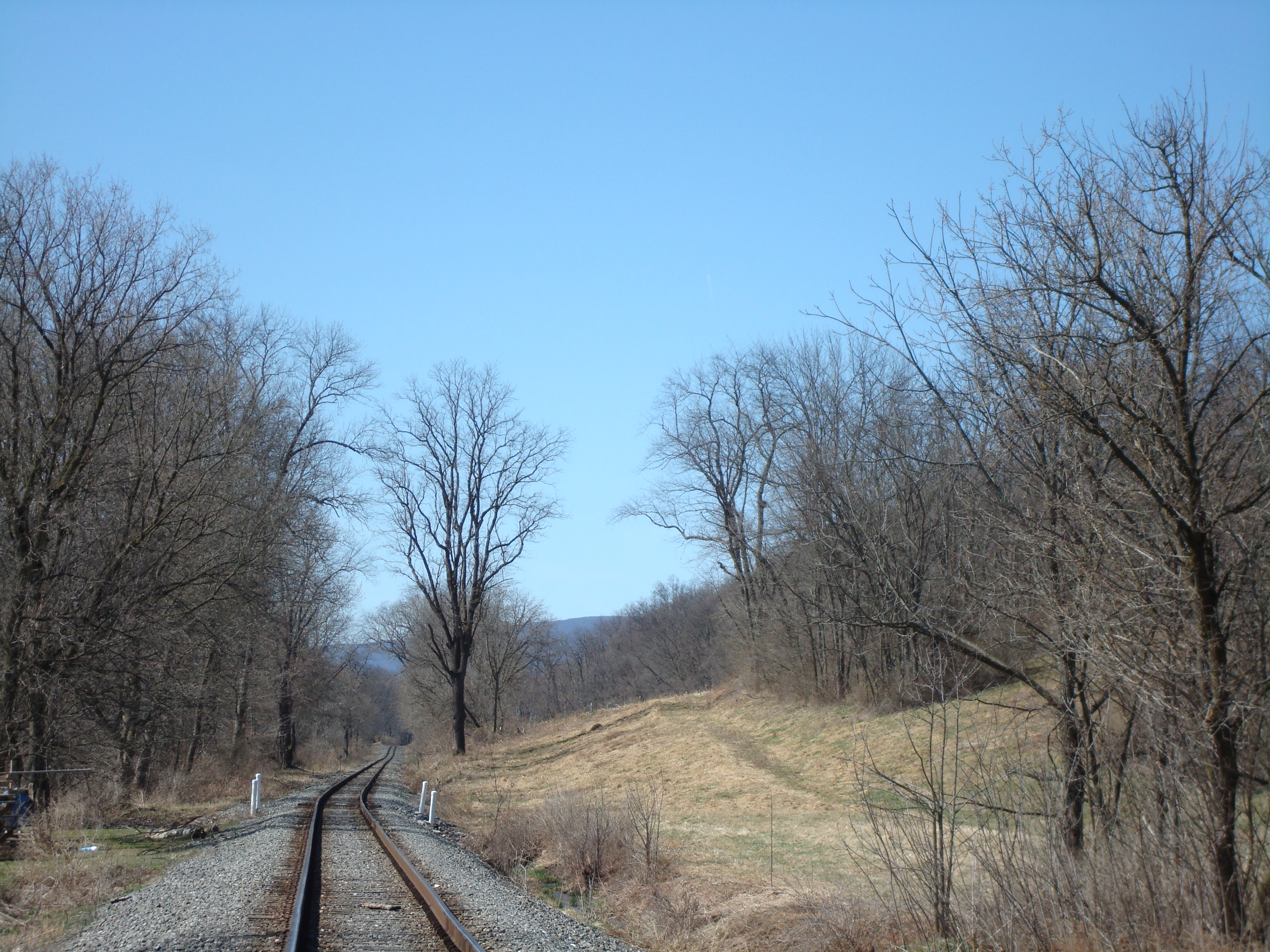
Recent photo of the railroad track near Grandma's farm. (The view is looking toward Watsontown.)
Recent photo of the railroad track near Grandma’s farm. (The view is looking toward Watsontown.)

Her middle-aged granddaughter’s comments 100 years later:

When I first read this diary entry it didn’t make any sense to me. What the heck, did “bouncer” mean? Did I transcribe it incorrectly—even though Grandma wrote the word clearly?

Then I googled “bouncer archaic definition”, and discovered that an archaic meaning is:

bouncer: One who bounces; a large, heavy person who makes much noise in moving.

Wordsense

Wow—Now that I know the meaning, what a descriptive word! I suddenly can almost picture Alma in my mind.

I think that Grandma and her sister Ruth shared a double bed during the months when the weather was cold. I suppose that Ruth, Alma, and Grandma all squeezed into the bed—and that Grandma was so far to the edge that she was right against the side rail.

Now that I think about it—most beds no longer have side rails; but I guess that metal bed frames hadn’t yet been invented a hundred years ago.

A New Soda Fountain

19-year-old Helena Muffly wrote exactly 100 years ago today: 

Friday, April 3, 1914: Don’t remember having done anything worthwhile.

Milton-Evening-Standard-4-2-14-d
Milton Evening Standard (April 2, 1914)

Her middle-aged granddaughter’s comments 100 years later:

Since Grandma didn’t write much a hundred years ago today, I’m going to share another article from the Milton Evening Standard. Milton is about 4 miles from McEwensville.

It sounds like Milton now had a super trendy soda fountain. I wonder if Grandma ever went there with her friends (or a cute guy), and had a malt or a root beer.

Pictures of the drug store and the soda fountain are on the Milton History.org site.

Mud Season

19-year-old Helena Muffly wrote exactly 100 years ago today: 

Thursday, April 2, 1914: Nothing much doing.

Milton Evening Standard (April 2, 1914)

Her middle-aged granddaughter’s comments 100 years later:

Since Grandma didn’t write much a hundred years ago today, I’m going to do a follow-up to yesterday’s diary entry when Grandma wrote:

. . . Twasn’t nice and warm at all, at all.

I found a clue about what the weather was like in a newspaper article that appeared on the front page of the Milton Evening Standard a hundred years ago today. Milton is located about 4 miles from McEwenville.

Sometimes doing research about a hundred years ago reminds me that I should be grateful for the little things—like paved roads.

Weather Twasn’t Nice and Warm

19-year-old Helena Muffly wrote exactly 100 years ago today:

Wednesday, April 1, 1914:

When the flowers begin to peep from their hiding place.
T’will be known that spring is here, spring with all her grace.
When the birds will sing their songs in the tree tops high.
Oh, then we know that April’s here and will not pass us by.
April fool, wash your face and go to school.

Twasn’t nice and warm at all, at all.

Crocus

Her middle-aged granddaughter’s comments 100 years later:

I love the surprise ending to this diary entry. April sounds so wonderful in the poem— but reality didn’t quite match the April of Grandma’s dreams.

You might also enjoy these previous posts:

Monthly Poem in Diary

April Fool’s Day

Social News

19-year-old Helena Muffly wrote exactly 100 years ago today:

Tuesday, March 31, 1914:  <<no entry>>

Milton Evening Standard (March 30, 1914)

Her middle-aged granddaughter’s comments 100 years later:

Since Grandma didn’t’ write anything a hundred years ago today, I’ll share the social news for McEwensville.

McEwensville was (and still is) a small town. Two friends of Grandma’s were mentioned in the newspaper: Rachel Oakes and Helen (Tweet) Wesner.  I don’t think that Grandma attended the party that Rachel helped organize—at least the diary provides no indication that Grandma was at a party on the previous Tuesday.


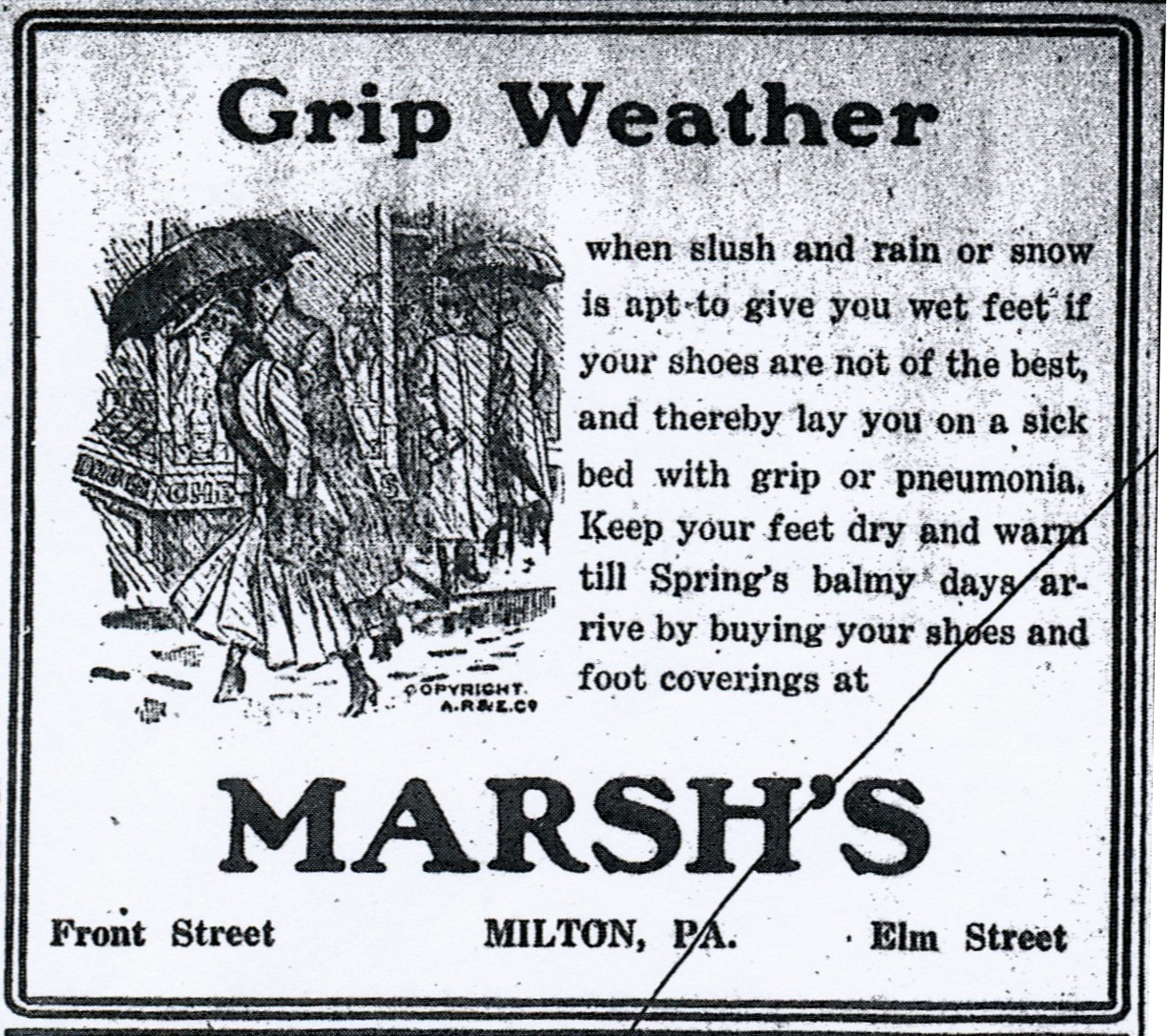
Grip Weather: 1914 Shoe Store Advertisement

19-year-old Helena Muffly wrote exactly 100 years ago today:

Monday, March 30, 1914:  Went to Watsontown this afternoon. Ma’s on the sick list. I was to get some medicine.

Source: Milton Evening Standard (March 27, 1914)

Her middle-aged granddaughter’s comments 100 years later:

Did Grandma’s mother have the grip? With all of the wet and gloomy March weather, maybe her feet got wet, and she caught the grip. She should have gone to Marsh’s Shoe Store in nearby Milton and bought some new shoes that would have kept her feet dry.

Lost 10 Pounds

19-year-old Helena Muffly wrote exactly 100 years ago today:

Sunday, March 29, 1914: Went to Sunday school this afternoon. Attended church, which isn’t very often since we don’t have a regular preacher as yet. Besse and Curt were here, when I got home. Am rather tired of dieting by this time. Have lost ten pounds.

DSC02319

Her middle-aged granddaughter’s comments 100 years later:

Grandma lost 10 pounds in 18 days– and, her weight has gone from 140 pounds to 130. She must not have been eating very much to lose so much weight.  Is it healthy to lose so much weight in such a short time?

She got her tonsils out on March 11, and had difficulty eating. Two days later, on March 13, she wrote:

Weighed myself this morning. I had lost six pounds. My tummy is flat you can bet. Ate solid food for supper.

Then on March 23 she wrote:

Got a streak of sewing today. I get the streaks quite often in many variations. Another one is to get rid of some of my superfluous fat. 140 pounds (January) is entirely too much for a girl of my age. I don’t weigh that now, since I lost six and gained about three. Intend to take advantage of the other three and fight for dear life.


Besse and Curt Hester were Grandma’s sister and brother-in-law. They lived in nearby Watsontown.