Hundred-Year-Old Composite Picture of the “Good Housekeeping Woman”

18-year-old Helena Muffly wrote exactly 100 years ago today: 

Friday, April 7, 1913:  There isn’t much for today.

Source: Good Housekeeping (September, 1912)

Her middle-aged granddaughter’s comments 100 years later:

Since Grandma didn’t write much today, I’ll tell you a little about what I’ve been thinking.

I am still trying to get a better understanding of how people of various backgrounds, ethnicities, and nationalities were perceived a hundred years ago.

An article in the September 1912 issue of Good Housekeeping magazine showed a composite picture of the “Good Housekeeping Woman.”

The photograph  is truly a photograph, and can truthfully be described as the typical “Good Housekeeping Woman.” It is nothing less than the portrait of one hundred of our feminine subscribers, printed upon a single negative . . . what is known as a “composite” photograph.

The hundred photographs were secured by the editor by correspondence and through agents of the magazine in widely separated sections of the continent. Some of the portraits, for example, came all the way from British Columbia. The majority, however, were from New York state, New England, and the Middle West.

I wonder how accurately the women included in the composite reflected the population.

Interesting how composite pictures were created in the days before computers . . .

Went to Sunday School

18-year-old Helena Muffly wrote exactly 100 years ago today: 

Sunday, April 6, 1913:  Went to Sunday School this afternoon.

The old McEwensville Baptist Church probably was located somewhere on the lot that contains this yard and house.
The old McEwensville Baptist Church is long gone. It probably was once located somewhere on the lot that contains this yard and house.

Her middle-aged granddaughter’s comments 100 years later:

Grandma probably was tired after the wonderful “splash” she’d made the previous evening in the class play.

Grandma wrote a  sentence this Sunday similar to one she wrote most Sundays—”Went to Sunday School this afternoon.”—though she often elaborated a bit more.

How was this Sunday similar or different from other Sundays? . . .

Was it a sunny day. . . or a cloudy one? Was it unseasonably hot. . . or unseasonably cold. . . or just a typical April day?

Was the road to McEwensville dry or muddy? If it was muddy, did Grandma wear galoshes or did she carefully try to avoid puddles?

Had church members seen the play the previous evening?—and did they praise her for her great acting?

What was the Sunday School lesson about? Was it interesting? . . . or boring?

The Play and Related Rambling Thoughts

18-year-old Helena Muffly wrote exactly 100 years ago today: 

Friday, April 5, 1913:  Tonight expect to stand before an audience and make them smile. I caught a fish this afternoon, and I didn’t’ go a fishing either.

—-

Our play went off pretty well, although we did make some slight mistakes. I cut quite a splash after I was all fixed up. We made over twenty dollars, but our expenses come out of that.

DSC04340

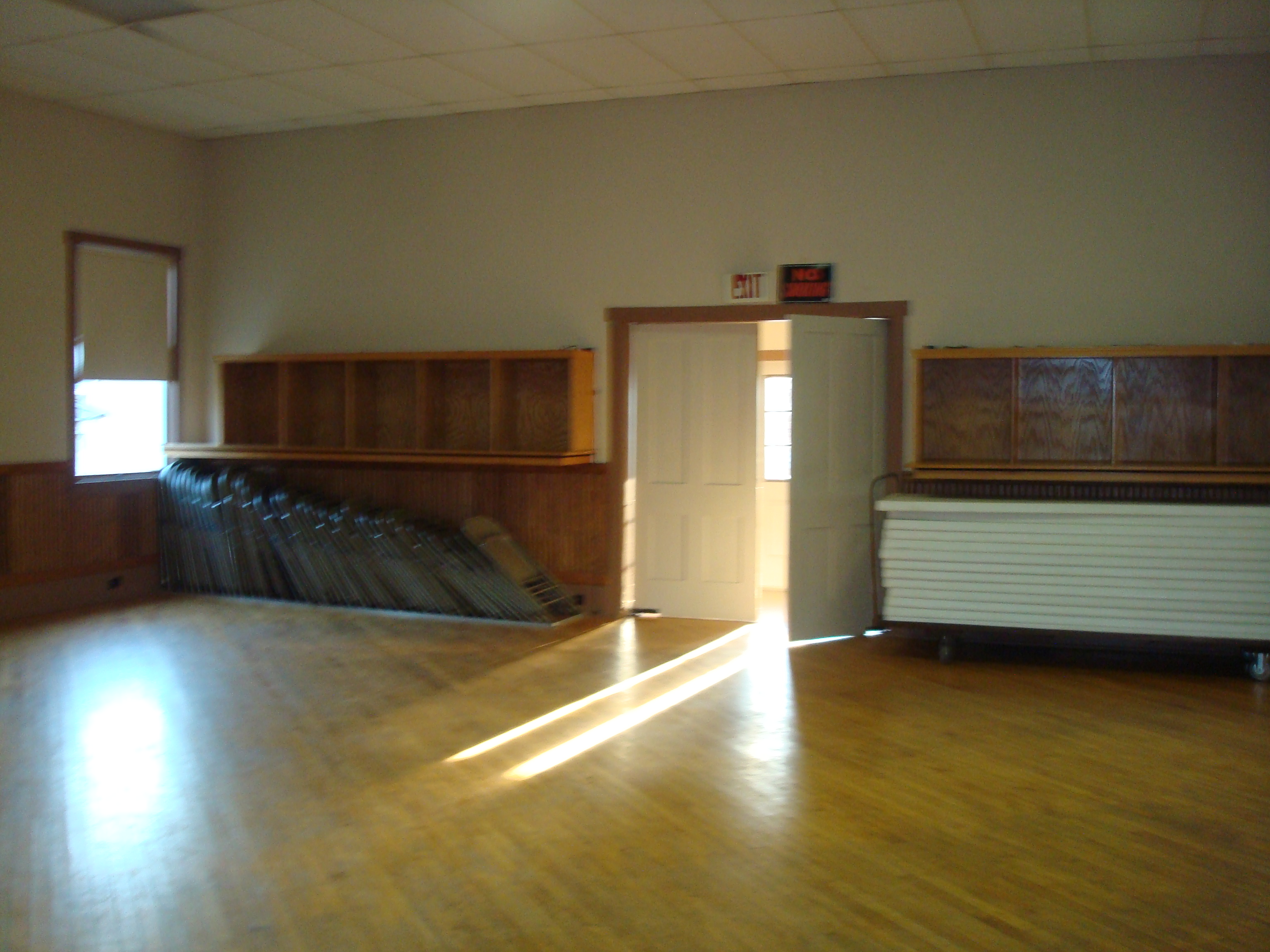
This is the stage in the McEwensville Community Center that Grandma would have stood on a hundred years ago today. Back then the stage was deeper and had curtains. In recent years, the back part of the stage was converted into a storage area.

DSC04336

I can almost picture the room  filled with an attentive audience sitting on rows of chairs.

Her middle-aged granddaughter’s comments 100 years later:

Yeah!—the class play went well.  $20 from ticket sales doesn’t sound like much—but in 2013 dollars it would be the equivalent of about $500 today.

I bet Grandma in blackface, playing the role of Chloe the servant, made quite a splash—and that she enjoyed every moment of it.

Thank you all for your thoughtful comments yesterday. They really help me think about the issues.

When I read the diary, I was surprised that Grandma had once played a role in blackface. I was especially shocked because it brought back another very vivid memory. Let me tell you a personal story—

About ten years ago, right after I got my Ph.D. in Educational Policy and Administration, I interviewed for a faculty position at a university located in a rural area. If I had gotten the job, I would have worked closely with school districts in that area.

During the interview I was told that a nearby rural school district had recently held a school play where some of the white cast members had played the role of Blacks wearing blackface.

I was then asked, “If you worked with this district, what would you do?”

—-

I wish Grandma was still around so that together we could grapple with complex topics and issues. . .

Wore Blackface

18-year-old Helena Muffly wrote exactly 100 years ago today: 

Friday, April 4, 1913:  We practiced for the last time tonight. Am glad it is over. This certainly has been a late to get to bed week for me and I am beginning to feel the effects of it. They blackened me up tonight. I had an awful time a-getting it off my face afterwards.

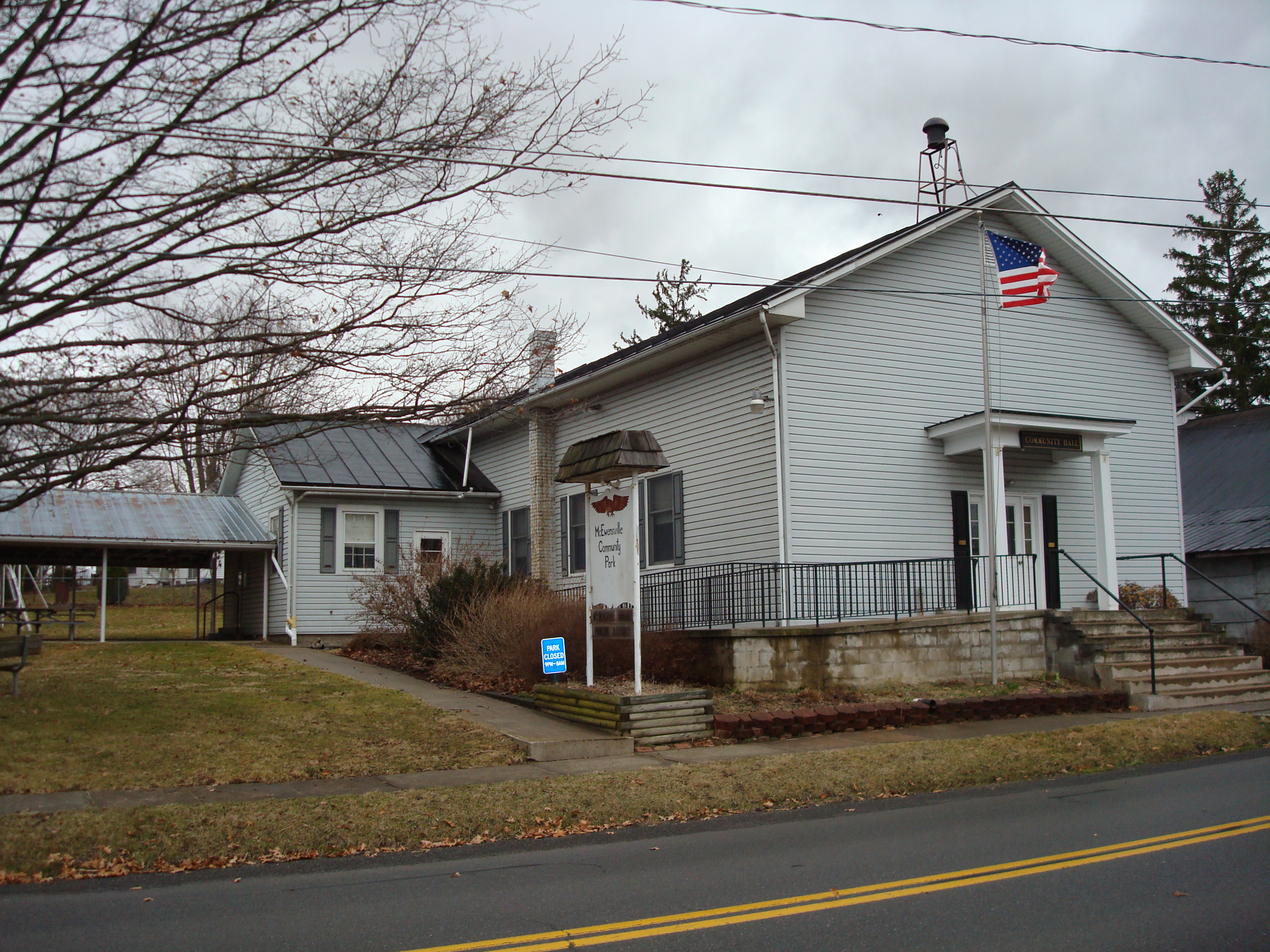
McEwensville Community Hall
The play was held in the McEwensville Community Hall

Her middle-aged granddaughter’s comments 100 years later:

Whew, I find diary entries like this one really difficult—and hope that you can help me figure out the best way to think about it.

I want to feel happy that the dress rehearsal for the class play went well—but I also want to look at this entry within the larger context of social history.  Let me try to explain–

Grandma played the role of Chloe the servant in the class play. This entry confirms what I think many of us suspected—Grandma wore blackface when she played this role.

According to Wikipedia, blackface was a type of makeup that performers used in the late 19th century and early 20th century to “create a stereotyped caricature of a Black person.” It is very controversial; and “played a significant role in cementing and proliferating racist images, attitudes and perceptions worldwide, but also in popularizing black culture.”

A hundred years ago, blackface was accepted and audiences thought that blackface characters were funny. Grandma probably enjoyed hamming it up as she played the role of Chloe.  (Back in January when the play was cast, she’d written, “I am Chloe the negro servant. That was the part I really wanted.)

—-

The civil rights movement in the 1960s brought about so many positive changes. At that time Grandma would have been in her 60s and 70s. Did she ever think back to when she was a teen who played Chloe in blackface?. . .

—-

You may enjoy reading a previous post that I did on a related topic:

How Should Offensive Language in Diaries be Handled?

Picture of Grandma Wearing Granduation Dress

18-year-old Helena Muffly wrote exactly 100 years ago today: 

Thursday, April 3, 1913:  My graduating dress is almost done. I think it will be very pretty.

helen_muffly2a

Her middle-aged granddaughter’s comments 100 years later:

Sometimes I almost tingle when I have a picture of something that Grandma was writing about. Today is one of those days.

I think that this photo is Grandma’s graduation picture—and that she is wearing her graduation dress.

A seamstress in McEwenville was making the dress for her. In a previous diary entry, she described it a plain white batiste dress trimmed with lace insertion and edging.

(This picture is also posted in the People category—see tab above.)

Recalling Past Events to Improve the Future: Let’s Make, Alter, and Repair Our Own Clothes

18-year-old Helena Muffly wrote exactly 100 years ago today:

Wednesday, April 2, 1913:  About the same as the other days.

Triangle Shirt Factory Fire--March 25, 1911 (photographer unknown)
Triangle Shirt Factory Fire–March 25, 1911 (photographer unknown)

Her middle-aged granddaughter’s comments 100 years later:

I’d like to thank Kristin at Finding Eliza for sharing a link with me that I found fascinating and provided the inspiration for this post.

Since Grandma didn’t write much a hundred years ago today I’m going to write about an important issue both a hundred years ago and today: poor working conditions for garment workers.

On March 25, 2011 I wrote a post about the hundredth anniversary of the Triangle Shirtwaist Factory Fire in New York City that killed many workers. The public outrage over that fire led to many safety and labor improvements in the garment industry (and other industries).

To commemorate the 102nd anniversary of the Triangle Shirtwaist Factory fire on March 25, The Sewing Rebellion website included a downloadable pattern for the shirtwaist that was made by the Triangle Factory.

The Sewing Rebellion points out that many garment workers in other countries still work under very poor conditions, and encourages people to emancipate themselves from the global garment industry by learning how to alter, mend and make their own garments and accessories.

What goes around, comes around. It’s intriguing to think that instead of buying new clothes each season, maybe we could again learn how to make and alter our clothes.

April Fooled Some People

18-year-old Helena Muffly wrote exactly 100 years ago today: 

Tuesday, March 25, 1913:  

The beginning of April or the time to be fooled.

To make people mad and make people gay

It’s the time of the year which we all must fear.

So be very careful about what others say.

April fooled some people today. And got fooled some myself. We had quite a row tonight while practicing.

Her middle-aged granddaughter’s comments 100 years later:

On the first day of each month Grandma began the diary entry with a poem.

I knew my elderly Grandmother. Her diary provides a window into what she was like as a teen. It’s fun to see how remnants of the fun, quirky teen in this diary were part of Grandma’s personality throughout her life.

Awhile ago several relatives wrote guest posts about their memories of Grandma.  My cousin Anne Marie wrote about an April’s Fools day when Grandma was in her late 60’s or early 70’s.

One April Fools Day Grandma took an old newspaper from her basement and carefully glued all of the pages together and quietly placed it in our newspaper box. I can still hear Mom laughing when she tried to read the paper that day and it didn’t take her long to figure out who the prankster was.

Photo from last summer of the house that Grandma lived in during her later years.
Photo of the house that Grandma lived in during her later years.

See more guest posts with relative’s memories of Grandma by clicking on the Family Memories category.

(This comment is a repeat of the comment that I made last year on April Fools Day. I apologize for being repetitive–but it seemed so appropriate and relevant for this diary entry.)

The class play is on April 5. It sounds like the cast was getting really stressed out as the big day approached.  The previous day Grandma wrote that they almost decided not to have the play–but decided to persevere.