Old Obesity Saying: “We Dig Our Graves with Our Teeth”

18-year-old Helena Muffly wrote exactly 100 years ago today: 

Tuesday, January 20, 1914:  Ditto

A recent photo of McEwensville

Her middle-aged granddaughter’s comments 100 years later:

Since Grandma didn’t write much a hundred years ago today, I’ll share a few fun quotes about the dangers of over-eating from a hundred-year-old article:

A Greater Curse Than the Saloon

The saloon is a curse, we say. And it is. But when we speak of the saloon as the greatest curse in America we are beside the facts. Statistics plainly prove that overeating kills more people.

Kidney diseases and heart troubles are tremendously on the increase in America.  Nor is the rush and strenuous life of America alone to blame. Nor is it alcohol. Both are contributing forces, but the greatest of all is the inability, particularly of men, to eat rightly.

The majority of men overeat. A man at forty cannot do the work of a man at thirty any more than he can at fifty do the work he did at forty. And he cannot and should not eat the same food in quantity. He does not need it.

Physicians agree that after a man or a woman has turned the corner at forty the system no longer needs the same quantity of food required in early manhood or womanhood. It actually does its work better on smaller amounts.

It is an old but true saying that “we dig our graves with our teeth.”

Ladies Home Journal  (February, 1914)

You may also enjoy this previous post:

Are You Obese?: 1911 and 2011

Hundred-Year-Old Cures for Insomnia

18-year-old Helena Muffly wrote exactly 100 years ago today: 

Monday, January 19, 1914:  Nothing much doing this day.

Photo of a bedroom in April, 1912 issue of Ladies Home Journal.
Picture Source: Ladies Home Journal (April, 1912)

Her middle-aged granddaughter’s comments 100 years later:

Since Grandma didn’t write much a hundred years ago today, I’ll share part of an interesting article on the causes and cures for insomnia that appeared in the March, 1914 issue of National Food Magazine.

To My Sleepless Friend

It is certainly true that thousands lose their health and many die every year through lack of sufficient sleep. Prolonged sleeplessness means nervous trouble of some kind and should not be neglected.

Rest Destroyers

The habitual use of stimulants and drugs.

The worrying habit.

The overwork habit.

Habitual overeating, or taking food at bedtime that is difficult of digestion.

The “wide-awakes” who cannot sleep themselves and disturb the rest of others.

The “fond mother” who wakes the baby to exhibit him to a friend.

The “early-to-bed” who interferes with the “late-to-bed’s” morning nap.

To Cure Insomnia

Strict attention to diet is an absolute necessity.

Weak, easily exhausted persons require food at short intervals (about every two hours).

The heartiest meal of the day should not be eaten later than 2 p.m.

Liquid nutriment or fresh, ripe fruit should be taken between meals.

No uncooked fruits should be eaten after the dinner hour.

Avoid

Condiments and spices; strong acids; food that is difficult of digestion for you; tea, coffee and alcoholic drinks, usually.

As Sleep Inducers

A cup of hot water or hot milk before retiring.

A light sandwich (minced meat or chicken).

Never go to bed hungry, nor with an over-loaded stomach.

Lay aside business worries and other cares at sunset.

Take a walk, some light exercise, after the evening meal (one hour later).

Substitute muscle fatigue for brain tire.

When you go to bed, relax the muscles, lie on the right side, and think of something pleasant.

Finally

Don’t keep yourself awake trying to get to sleep. Give up the idea that you cannot sleep. Seek rest and repose first, and sleep will come naturally with time.

1914 Libby’s Canned Fruit Advertisement

18-year-old Helena Muffly wrote exactly 100 years ago today: 

 Sunday, January 18, 1914: A couple of girlfriends called this afternoon.

Source: National Food Magazine (December, 1914)

Her middle-aged granddaughter’s comments 100 years later:

Since I don’t think that the Muffly’s had a phone, I assume that “called” means “visited.”

Did Grandma serve a snack to her girlfriends? . . .Maybe some Libby’s California canned fruits?

Got Home at 2 a.m.

18-year-old Helena Muffly wrote exactly 100 years ago today: 

Saturday, January 17, 1914:  I don’t believe I slept at all this morning. Got home at two o’clock. Felt rather queer all day.

DSC07025

Her middle-aged granddaughter’s comments 100 years later:

Grandma–2 am!!!

Awe, the joys of being young–I can’t remember the last time I stayed up until 2.

Probably Grandma couldn’t sleep because of all the thoughts, wishes, and dreams rushing through her head. The diary entry for the previous day said:

Ruth and I went up to Oakes’ this evening. The occasion being a birthday surprise part for Al. Had a very, very fine time. He was there. That’s why I had such a good time.

Based on the way the entries for January 16 and 17 were written, it seems like Grandma wrote them both on the 17th. It makes me wonder how often she actually wrote several diary entries at the same time.

Had a Very, Very Fine Time at Party

18-year-old Helena Muffly wrote exactly 100 years ago today: 

Friday, January 16, 1914:  Ruth and I went up to Oakes’ this evening. The occasion being a birthday surprise party for Al. Had a very, very fine time. He was there. That’s why I had such a good time.

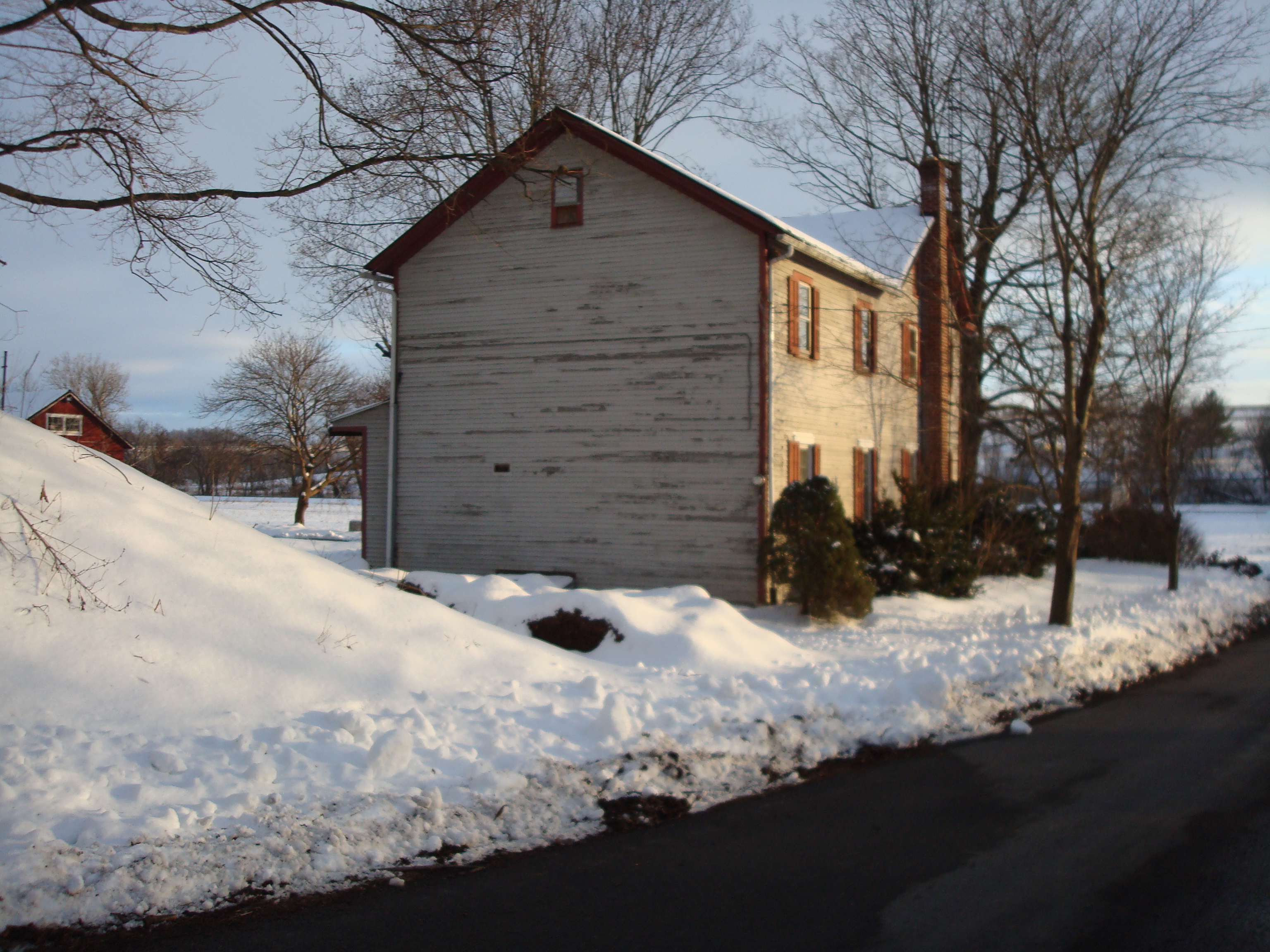
A hundred years ago today, Grandma and Ruth would down this road, past this farm, to get to the Oakes farm.
A hundred years ago today, Grandma and Ruth would have walked down this road, past this farm, to get to the Oakes farm.

Her middle-aged granddaughter’s comments 100 years later:

Grandma—

What fun!  It’s wonderful to hear that you had a “very, very fine time.” It sounds like your life is getting more exciting.

Just one question—Who the heck was “he”?

The Oakes lived on a farm near the Mufflys, and had several children about the same age as Grandma and her sister Ruth–—Al, Jim, and Rachel.

This was the second time in less than two weeks  Grandma and Ruth went to Oakes. On January 7, 1914 Grandma wrote:

. . . Ruthie and I went up to Oakes’ this evening.

Recent view of the farm where the Oakes lived.

Got Piano Tuned

18-year-old Helena Muffly wrote exactly 100 years ago today: 

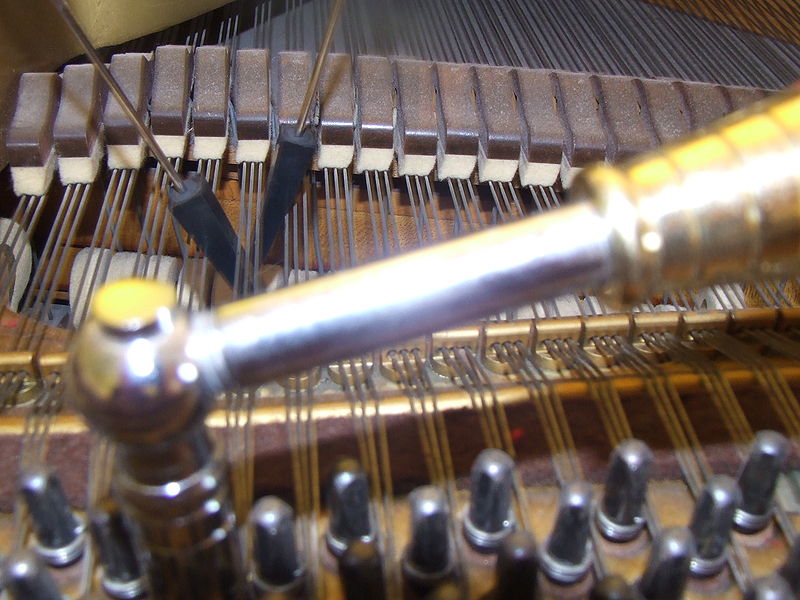
Thursday, January 15, 1914:  Well we did get our piano tuned at last. Am so glad of it. This will be more an inducement to get my lessons better.

Piano_Tuning_Hammer_and_Mutes“A piano tuner’s most basic tools include the tuning hammer (lever) and mutes.”

Photo and caption source: Wikipedia

Her middle-aged granddaughter’s comments 100 years later:

The piano tuner probably arrived in a horse and buggy—and today they’d come in a car—but I don’t think that the process used to tune pianos has changed much over the last hundred years.

This is how Wikipedia describes the process:

Piano tuning is the act of making minute adjustments to the tensions of the strings of an acoustic piano to properly align the intervals between their tones so that the instrument is in tune.  . . .

1914 Suffragette Joke

18-year-old Helena Muffly wrote exactly 100 years ago today: 

Tuesday, January 13, 1914:  Ditto

Source: Ladies Home Journal (January, 1914)

The Start for Her

“My Dear Girl” said a father to his daughter, “what do you suffragists want anyhow?”

“Why Dad, we want to sweep the country.” Replied the daughter.

“Do you?” said the father, “Why, now, suppose you take a broom and start with this room.”

Ladies Home Journal (January, 1914)

Her middle-aged granddaughter’s comments 100 years later:

The previous day Grandma wrote that it was cold outside. Since she didn’t have much to say a hundred years ago today, I’ll share a joke (and the illustration) about suffragettes in the January, 1914 issue of Ladies Home Journal.

Women didn’t get the right to vote until 1920. It’s somewhat shocking how little support a women’s magazine in 1914 showed for women’s rights.