Have you ever “hidden” vegetables in food to get your kids to eat healthier? I thought that hiding vegetables was a recent trend, but when I made a hundred-year-old recipe for Squash Bread, I discovered that cooks have been hiding vegetables for a long time.
The Squash Bread had a rustic artesian look, a nice texture, and a sunny yellow tinge – but I couldn’t taste the squash in it. It just tasted like the typical homemade bread.
The verdict: If you want to hide vegetables in bread this recipe is worth a try; otherwise, just stick with your usual bread recipe.
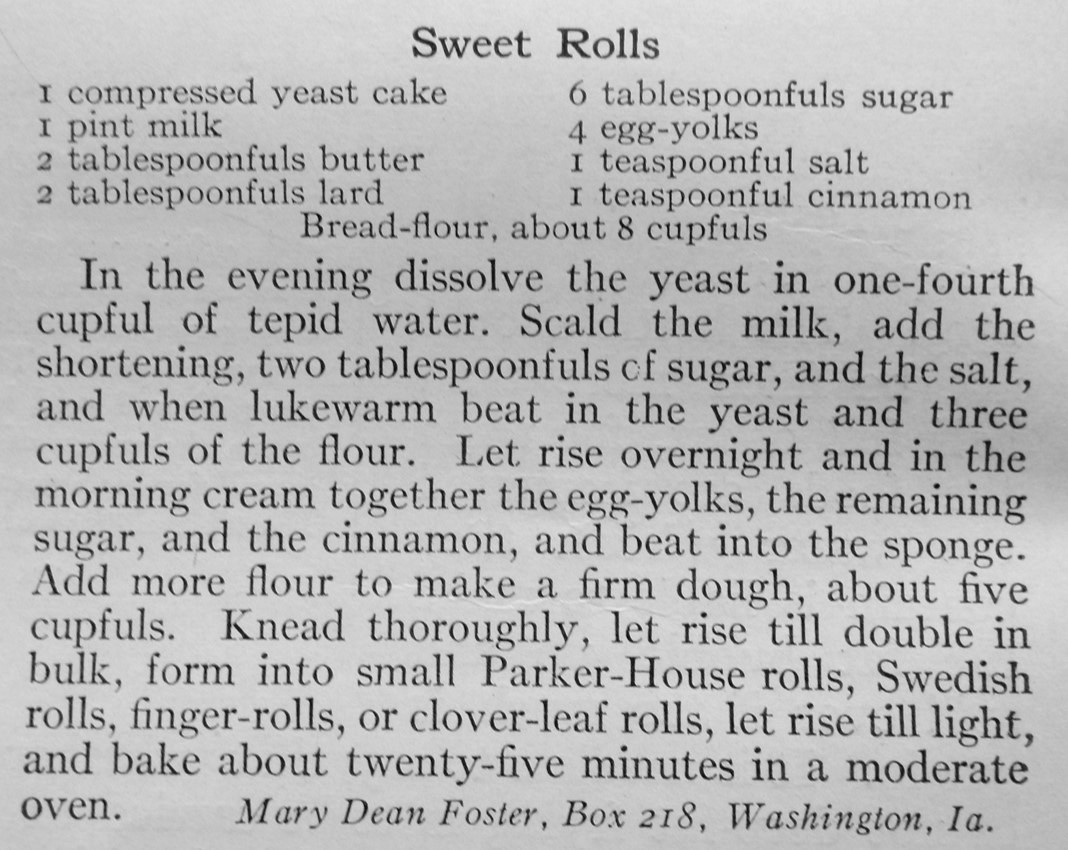
Here’s the original recipe:

Here’s the recipe updated for modern cooks:
Squash Bread
2 cups milk
2 packages dry yeast
5-6 cups flour
1 cup pureed winter squash (Butternut squash works well in this recipe.)
1 tablespoon shortening (or lard)
1 tablespoon butter
1 tablespoon sugar
2 teaspoons salt
Scald milk by heating in a sauce pan until the milk begins to steam and form bubbles; use medium heat and stir occasionally. Remove from heat before it comes to a boil. Let the scalded milk cool until it is lukewarm, then dissolve the yeast in the milk.
Put 2 cups flour, squash, shortening, butter, sugar, salt, and the water and yeast mixture in a large mixing bowl. Beat until smooth. Add enough additional flour to make a soft dough. Turn out onto a lightly floured surface and knead until smooth and elastic (about 10 minutes).
Place in a greased bowl. Cover; let rise at room temperature until doubled in size (about 1 hour). Turn onto lightly floured surface and knead for an additional 5 minutes. Divide dough into two equal parts and shape into loaves. Place in 2 greased loaf pans, 9″ X 5″ X 3″, and cover. Let rise until doubled in size (about 30 minutes).
Bake loaves in 400° F. oven for 35 minutes or until lightly browned.
I always find old-time bread recipes particularly difficult to interpret because modern yeast is so different from what it was a hundred years ago. Back then it was not dried like the yeast that we generally use today. I guessed that 2 packages of dried yeast would be the equivalent of 1/2 cup (1/2 yeast cake) back then. This substitution worked just fine when I made this recipe.