Old-Fashioned Baked Succotash

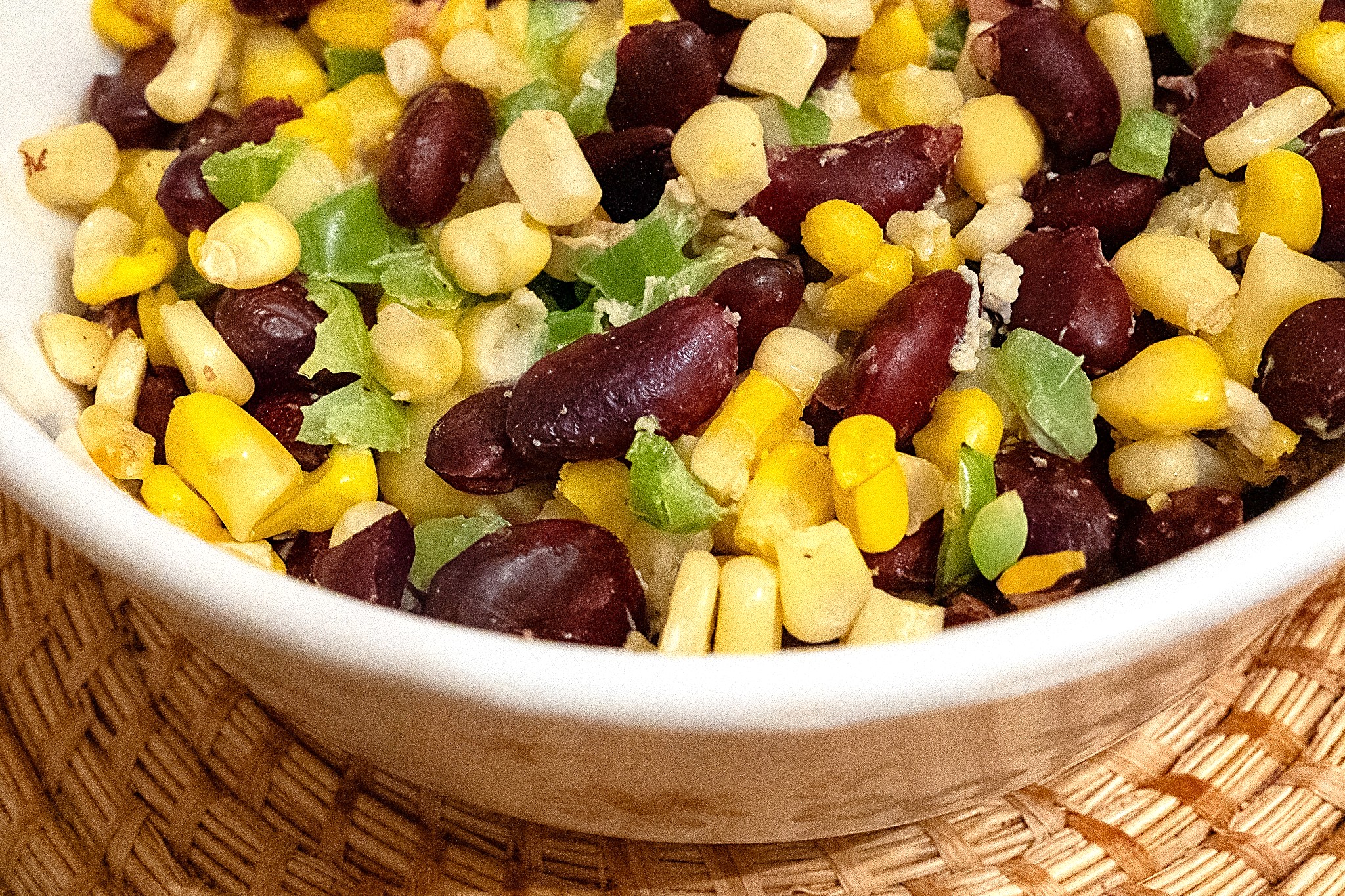
Baked Succotash in Dish

Kidney bean and corn dishes are having their day in the sun. I see recipes for them all the time, and they are served at many restaurants. Last week I went out for lunch, and had a lovely kidney bean and corn salad. So I was pleased to come across a Baked Succotash recipe that called for kidney beans in a hundred-year-old magazine.

I was a little surprised by the recipe name. I generally think of succotash as a mixture of lima beans and corn, but it apparently is a general term for bean and corn combinations. In any case, I decided to give the Baked Succotash recipe a try.

In addition to the kidney beans and corn, the recipe called for a little chopped green pepper. Beaten egg is stirred into the vegetables, and then it is baked.

The Baked Succotash was tasty, but a little dry (and a few of the kidney beans split).  The vegetables were lightly bonded to one another other by the egg coating, but since there was no milk, it did not have the creaminess of a scalloped vegetable dish. After I made this dish, I actually wondered why the recipe author decided to bake the succotash. If I made this recipe again, I might have a tendency just to heat the vegetables on the top of the stove . . . or I might adapt the recipe and add a white sauce to the egg to make Scalloped Succotash . . .  or . . .

Bottom line: Kidney beans and corn are a wonderful combination. And, I want to make dishes with this combination again in the future, but I’ll probably experiment a little when I do rather than replicating the Baked Succotash recipe.

Here’s the original recipe:
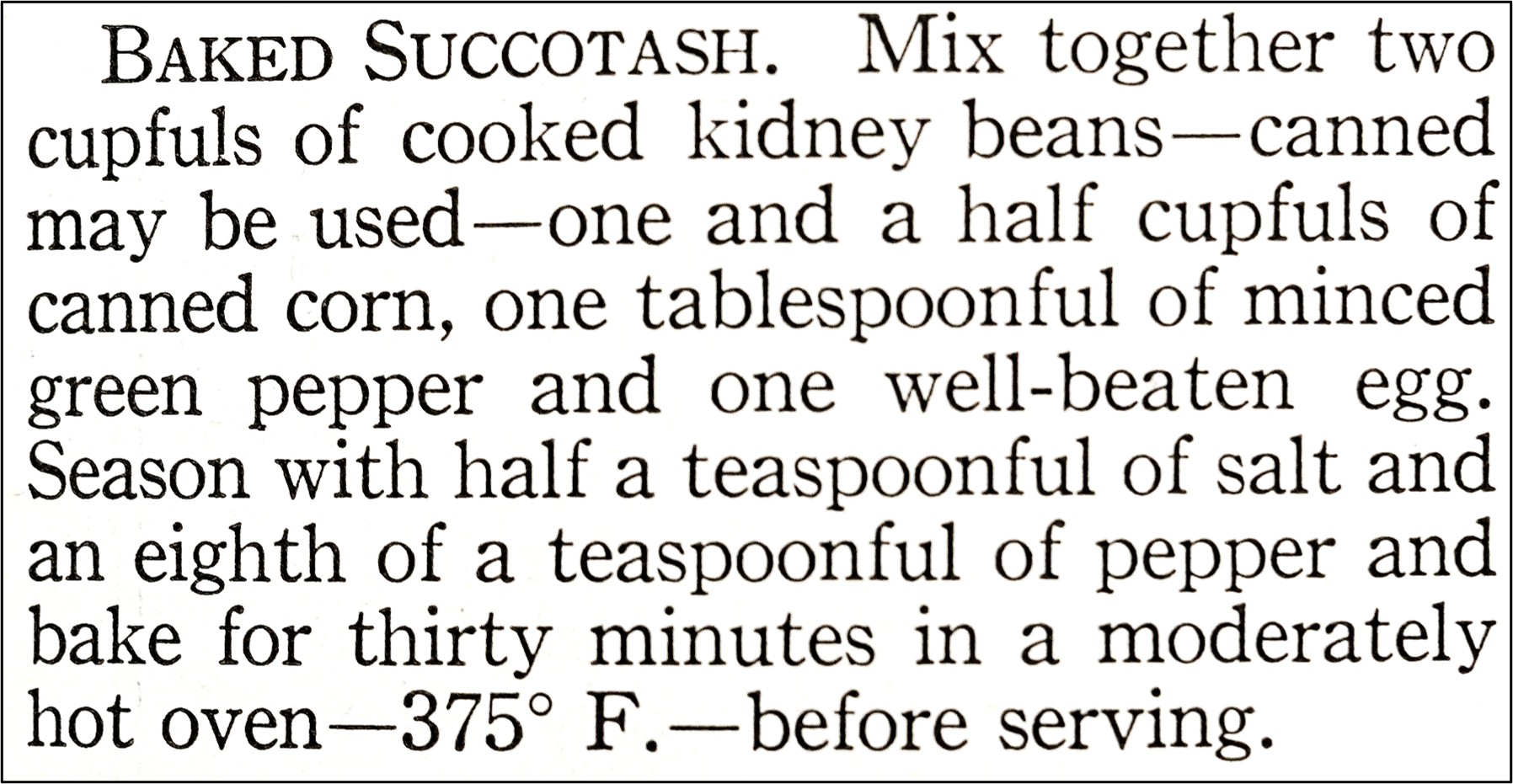
Recipe for Baked Succotash
Source: Ladies Home Journal (May, 1926)

When I made this recipe, it took more than 30 minutes for the food to get hot and for the egg to thicken.

Here’s the Bake Succotash recipe updated for modern cooks:

Baked Succotash

  • Servings: 4 - 5
  • Difficulty: moderate
  • Print

1 egg

1/2 teaspoon salt

1/8 teaspoon pepper

1 can kidney beans, drained and rinses

1 can corn, drained (or 1 1/2 cups frozen corn, thawed)

1 tablespoon green pepper, finely chopped

Step 1. Preheat oven to 375° F.

Step 2.  In a mixing bowl, whisk together the egg, salt, and pepper.

Step 3.  Add the kidney beans, corn, and green pepper. Stir gently to coat the vegetables with the egg mixture.

Step  4. Put in a baking dish (a 1-quart dish works well), and place in oven. Bake for 30 – 40 minutes, or until hot.

http://www.ahundredyearsago.com

Hundred-year-old Baked Bean Recipe

Baked beans are a classic summer dish to take to picnics, barbeques, and potluck dinners. So I was excited when I found a hundred-year-old recipe for Baked Beans.

It takes a long time to make Baked Beans the traditional way. They need to be soaked overnight and then cooked for many hours. I thought about possible shortcuts (using canned beans or cooking the beans in a pressure cooker), but I decided that it would be more authentic to follow the directions in the old recipe.

The old-fashioned Baked Beans were hearty and tasty – however, they had much less sauce than most modern versions. When I served them, I asked my husband what he thought. He said, “They remind me of Baked Beans relatives used to bring to reunions years ago.”

I still had a few doubts, so when I begin to write this post I said to him, “I’m still not sure about this recipe. The beans seemed a little dry and there wasn’t much sauce.”

He replied, “They were good.”

So the final verdict is that they aren’t quite like modern Baked Beans, but they’re good.

Source: Larkin Housewives’ Cook Book (1915)

Here’s the recipe updated for modern cooks:

Baked Beans

  • Servings: 6-8
  • Difficulty: moderate
  • Print

2 cups dried pea or navy beans (I used navy beans.)

4 cups water + additional water

1 small onion, diced (approximately 1/3 cup)

2-3 slices bacon, diced + bacon for top of dish

1 teaspoon salt

2 tablespoons canned diced tomatoes (or use diced fresh tomatoes)

2 tablespoons molasses or brown sugar (I used molasses.)

1/8 tablespoon baking soda

pepper

Soak dried beans in 4 cups water overnight, then drain. Put the soaked beans in a large saucepan, add onions, diced bacon, and salt, then cover with water. Bring to a boil using high heat. Reduce heat and gently simmer until the beans are almost tender (about 1 hour).  Remove from heat and add tomatoes, molasses/brown sugar, and baking soda; Place in 2-quart heavy casserole dish or bean crock; arrange bacon slices on the top and sprinkle with pepper; cover.  Put in oven (preheated to 325° F.), and bake for 4-5 hours. If necessary, add additional hot water to keep moist while cooking. (I didn’t add any water.)

Hundred-Year-Old Bean Chowder Recipe

bean-chowder-e

It’s cold and blustery here – and time to make a  hearty soup. I searched though my hundred-year-old recipes and came up with the perfect soup for a cold winter day – Bean Chowder.

This savory, comforting, filling and nutritious chowder is made with dried navy beans, salt pork, onions and tomatoes; and it hit the spot perfectly. This recipe is a keeper (though if I made it again I might shorten the prep time by using canned navy beans).

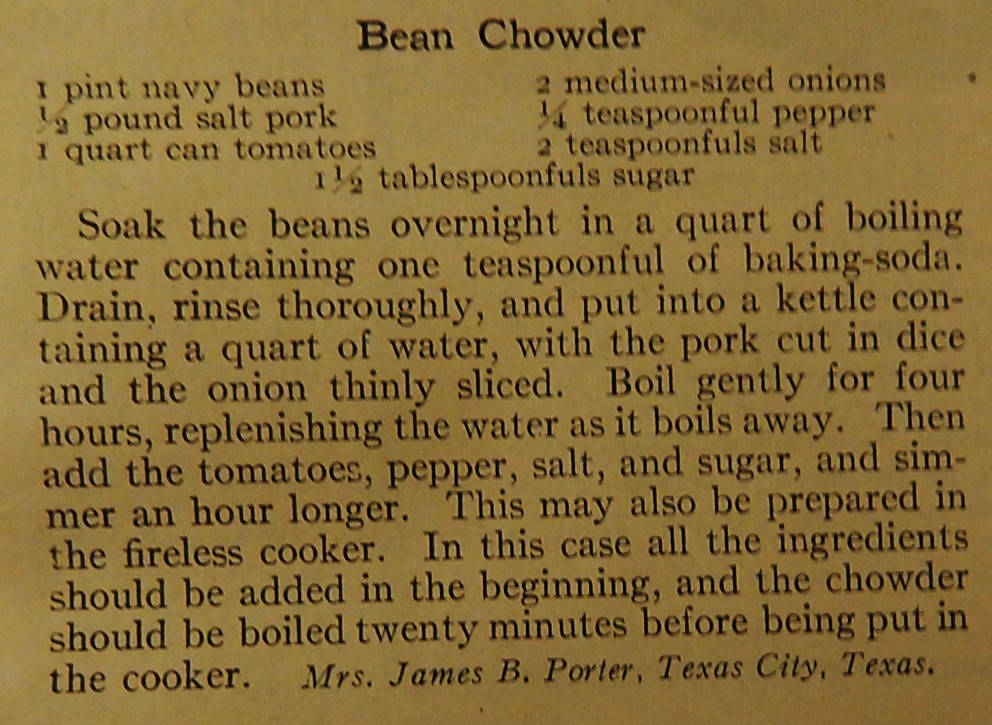
Here’s the hundred-year-old recipe:

Source: Good Housekeeping (April, 1916)

And, here’s the recipe updated for modern cooks:

Bean Chowder

  • Servings: 8-10
  • Difficulty: easy
  • Print

1 quart (4 cups) water + approximately 2 quarts water

1 teaspoon baking soda

2 cups dried navy beans

1/2 pound salt pork, diced into small pieces

2 medium onions, thinly sized

1 quart (28 oz. can) canned tomatoes

1/4 teaspoon pepper

2 teaspoons salt

1 1/2 tablespoons sugar

In a large saucepan bring 1 quart water and the baking soda to a boil using high heat. Remove from the heat, then stir in the navy beans, and cover. Let sit overnight (10-12 hours).  Then drain the beans. Rinse thoroughly and then put into a large dutch oven or soup pot. Add one quart water, the diced salt pork, and the onions. Bring to a boil on high heat, and then reduce heat and let gently simmer for four hours. Add additional water as needed (approximately one additional quart of water will need to be added).

At the end of the four hours, add the tomatoes, salt, pepper, and sugar. Cook for an additional hour, and then serve.