19-year-old Helena Muffly wrote exactly 100 years ago today:
Friday, May 22, 1914: I saw the dear little babe this evening. How proud I was that it was my little niece. How I longed for one, I alone know. Ruth and I attended the commencement at Watsontown.
Source: Milton Evening Standard (April 1, 1914)
Her middle-aged granddaughter’s comments 100 years later:
Grandma—
Congratulations! Your niece sounds really special. Did you get to hold her?
Did you sister Besse get any baby gifts? I saw an advertisement for Carter Baby Carriages in your local paper. Maybe someone will give her one. It looks awesome.
—
The baby was born two days prior to this diary entry. On May 20, 1914, Grandma wrote:
This afternoon I learned that I am an “auntie” for the second time. It is a little baby girl. Mingled with this new joy is a dim foreboding.
—
Besse lived in Watsontown. It is located about 1 1/2 miles from the Muffly farm. Grandma and her other sister Ruth probably stopped by Besse’s home to see the baby then continued on the commencement. MyWatsontown has a list of the 1914 graduates. There were 12 graduates. Which were friends of Grandma and Ruth? I don’t recognize any of the names.
19-year-old Helena Muffly wrote exactly 100 years ago today:
Thursday, May 21, 1914: Mother was with Besse today. I dreaded it when she came home for I was afraid she would bring bad news, but no, they filled me with glad anticipations.
Source: Ladies Home Journal (February, 1914)
Her middle-aged granddaughter’s comments 100 years later:
Grandma’s married sister Besse gave birth to a daughter the previous day. Besse lived in the nearby town of Watsontown. She had a baby that died in 1912, and Grandma was very worried about this infant.
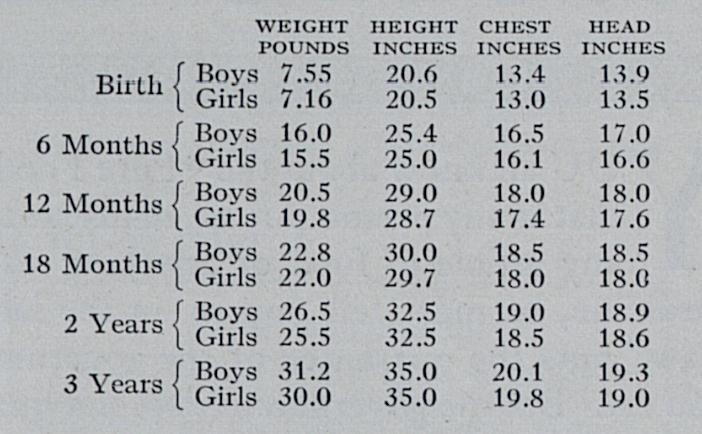
I wonder if the baby was born prematurely, and was very small. Here’s what Ladies Home Journal had to say in 1914 about the characteristics of “normal” babies:
The Normal Baby
Every mother is anxious for a normal baby, but many mothers, do not know just what a normal baby should be like. Variations are always found in every human being, but the following measurements given by Dr. L.E. Holt in his large book, “Diseases of Infancy and Childhood,” are now taken as the standard for the normal baby.
The weights are taken without any clothing. The height is taken by placing the baby on a perfectly flat surface like a table, and having some one hold the child’s knee down so that he lies out straight, then taking a tape-measure and measuring from the top of his head to the bottom of his foot, holding the tape line absolutely straight.
The chest is measured by means of a tape line passed directly over the nipples around the child’s body and midway between full inspiration and full expiration. The head measurement is taken directly around the circumference of the head, over the forehead and occipital bone.
Some other points of interest in the development of the normal baby are the following: head held erect if trunk is supported during the fourth month. Sit alone for a few minutes about seven months of age. In the ninth or the tenth month the baby will usually attempt to bear his weight on his feet. When ten or eleven months old he often stands alone with slight help. Makes first attempt to walk at twelve or thirteen months. The baby must not be urged to do any of these things; let him alone to develop naturally.
The teeth are always of interest; here is the way the average normal baby cuts his first set of teeth: Two lower central incisors, 6 to 9 months; four upper incisors, 8 to 12 months; four canines, 18 to 24 months; four posterior molars, 24 to 30 months.
At 1 year a child should have 6 teeth; at 1 1/2 years, 12 teeth; at 2 years, 16 teeth; at 2 1/2 years, 20 teeth.
The “soft spot” on fontanel on top of the head closes with the average normal baby at eighteen months, but often varies greatly.
19-year-old Helena Muffly wrote exactly 100 years ago today:
Monday, May 18, 1914: These May days are rather lazy times. I go to bed sleepy; sleep like a top, and get up sleepy.
Source: Ladies Home Journal (July ,1914)
Her middle-aged granddaughter’s comments 100 years later:
Life was good! . . Grandma usually had to do so much work. I think this is the first time that she ever sounded like she had some time to relax.
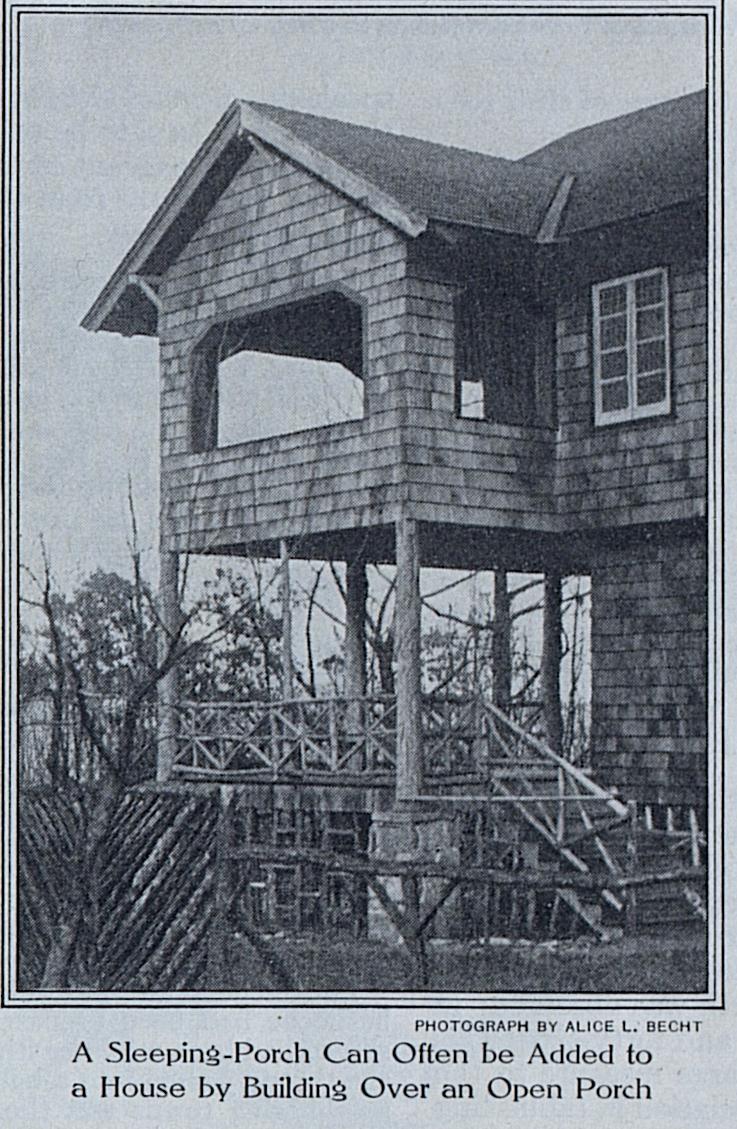
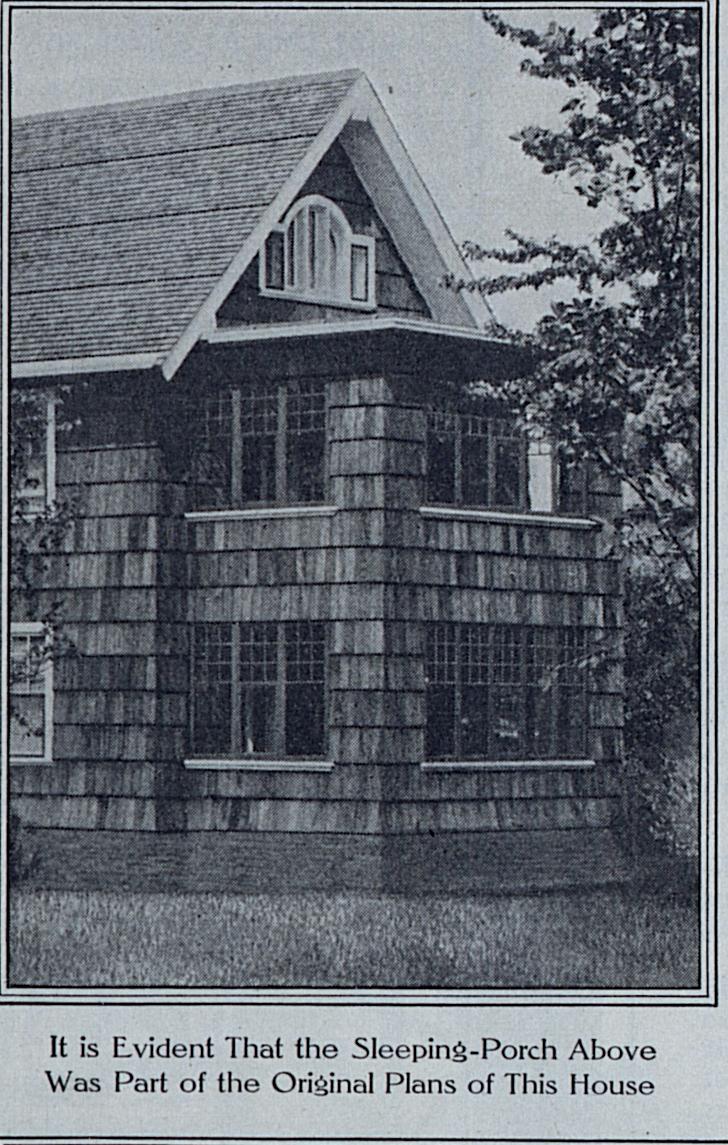
The weather must have been perfect for sleeping. A hundred years ago—in the days before electric fans and air conditioning— sleeping porches were very popular. The Muffly’s didn’t have one, but I thought that you might enjoy seeing pictures of some lovely sleeping porches that were featured in the July, 1914 issue of Ladies Home Journal.
19-year-old Helena Muffly wrote exactly 100 years ago today:
Saturday, May 16, 1914: Same as yesterday.
Milton Evening Standard (April 9, 1914)
Her middle-aged granddaughter’s comments 100 years later:
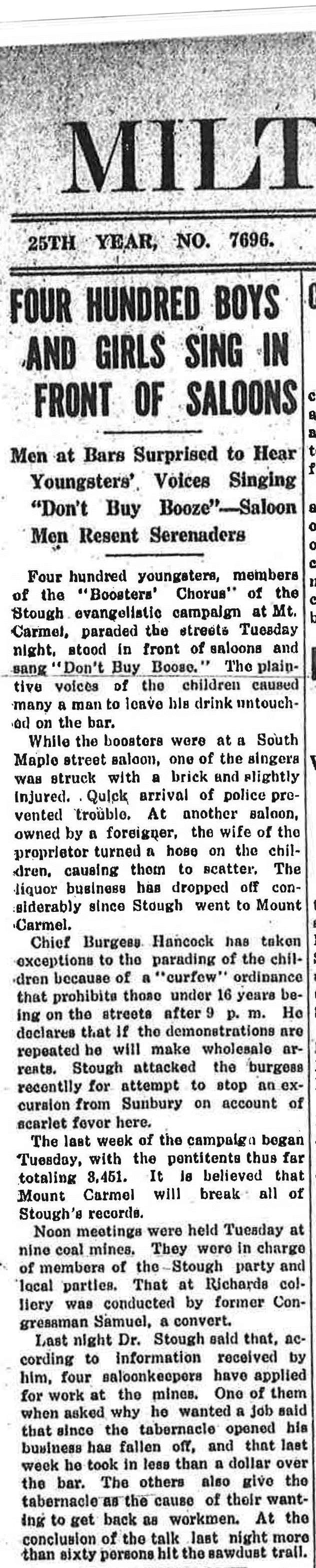
Since not much was happening at the Muffly house, I’ll share an intriguing 1914 article from Grandma’s local paper, the Milton Evening Standard. I’m not quite sure what to make of the article, but it’s definitely thought-provoking.
Prohibition in the US began in 1920 when the 18th amendment went into effect—but, as this article indicates, there was a strong movement against alcohol in preceding years.
The article is about the town of Mount Carmel. Grandma lived in the northwestern part of Northumberland County. Mount Carmel is at the eastern edge of the county, and was in the heart of the anthracite coal region.
19-year-old Helena Muffly wrote exactly 100 years ago today:
Thursday, May 14, 1914: Had a job this afternoon, and it lasted quite a while, too.
Source: Ladies Home Journal (March, 1914)
Her middle-aged granddaughter’s comments 100 years later:
Hmm. .. Grandma—
You aren’t giving me much to go on here. What was the job?. . . cleaning the house? (I don’t think so , since you just completed the spring housecleaning a few days ago.). . . pulling weeds? . . . cleaning manure out of the barn? . . . doing laundry? . . .
—
I’m going to go with the laundry. . . Farmers clothes get very, very dirty; and it can be a lot of work to get the stains out of overalls and other work clothes.
19-year-old Helena Muffly wrote exactly 100 years ago today:
Wednesday, May 13, 1914: Tried to turn milliner and fix up a hat. Mad over the shape, also dyed it with shoe-blackening. Later in day I missed the wonderful creation on which I had spent so much energy. It ended in Ma fessing that she had burned it. All that time wasted too. Oh my.
Was shoe blackening used to dye this hat? Source: Ladies Home Journal (February, 1914)
Her middle-aged granddaughter’s comments 100 years later:
Note to my Great-Grandmother—
I know that I should be respectful since you are my great grandmother. but how dare you destroy your daughter’ s self-esteem by burning her creative efforts?
Maybe the hat was ugly, but couldn’t you have waited a couple days to destroy it?
19-year-old Helena Muffly wrote exactly 100 years ago today:
Saturday, May 9, 1914: Well for the most part it rained today, which kept me indoors a good bit.
Source: Ladies Home Journal (March, 1914)
Her middle-aged granddaughter’s comments 100 years later:
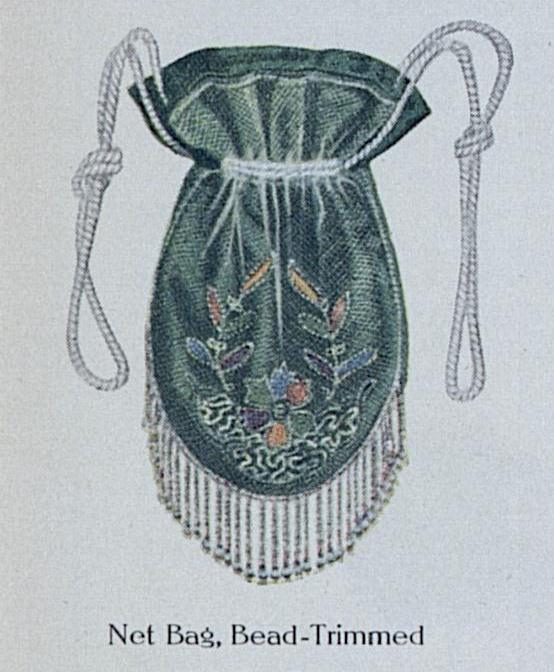
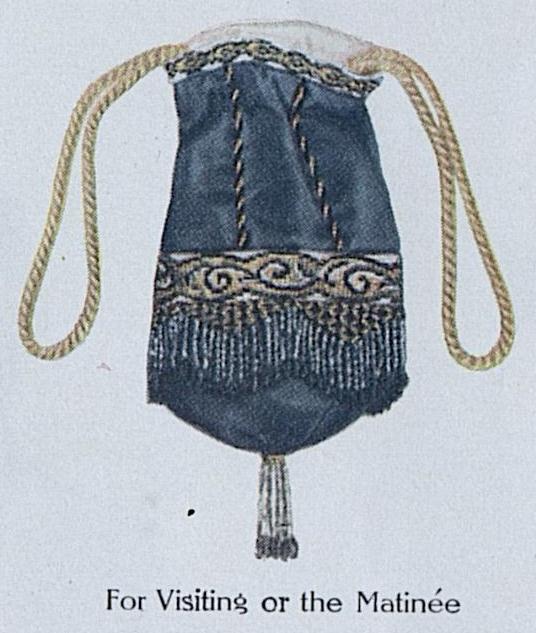
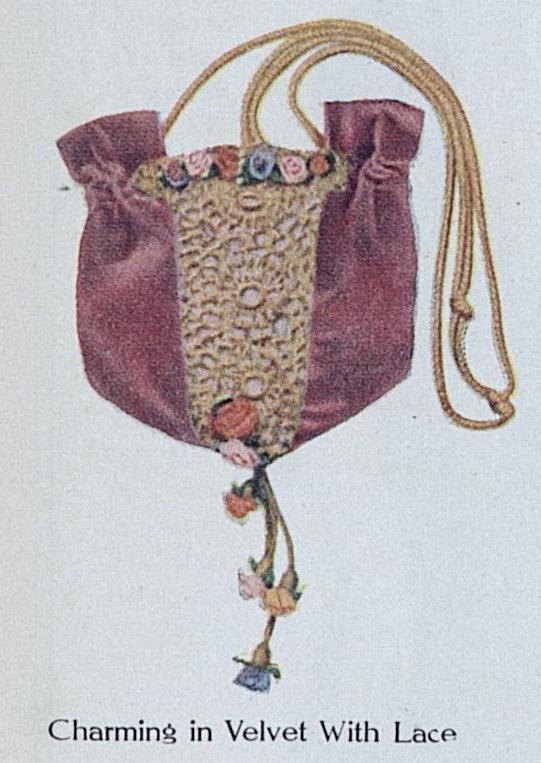
Did Grandma do any sewing on rainy days? Maybe she made a bucket bag.
Yesterday’s Wall Street Journal had an article titled, “The Bucket is Back.” The first sentence said:
If ever there was a moment for the bucket bag, it is now.
Wall Street Journal (May 8, 2014)
What goes around comes around. The bucket bag was equally popular a hundred years ago. The four bucket bags in this post were all featured in the March, 1914 issue of Ladies Home Journal.