Temperance, Suffragettes, Pure Food, Anti-trust Legislation, and Patent Medicines

 January 10, 1911: Missing entry (Diary resumes on January 12)

 Her middle-aged granddaughter’s comments 100 years later: 

Times were different in 1911. It was before Prohibition, patent medicines containing opium could be purchased without a prescription, and women could not vote. Neither World War I nor World War II had yet occurred.

The unemployment rate 6.2%. Only 3% of the people in the United States had a college degree.

The suffragettes were organizing and marching for their rights—though it would be another 9 years before women won the right to vote.

William Taft was president. He is generally remembered for getting stuck in the White House bath tub. But, he also brought about positive changes by signing anti-trust legislation and breaking up monopolies.  

1911 was a heady time. Corporate greed, led by the robber barons had created many problems and inequities. Muckrakers–in today’s world they’d probably be called investigative reporters–used their pens to highlight the many problems and horrors that may have been caused by monopolies. And, the Standard Oil monopoly was finally broken up in 1911. (In history books this is generally seen as one of the key events in 1911).  

Hatchet-wielding temperance advocate Carrie Nation died on July 9, 1911, but many women’s clubs across the nation continued her efforts–though the law that enacted prohibition wasn’t passed until 1919.

Carrie Nation

Workers had few rights in 1911. Federal child labor laws would not be passed until 1918. Grandma lived in the agricultural portion of Northumberland County–but the far end of the county contained some of the largest anthracite coal mines in the US. Those mines–as well as other industries, but the mines were some of the most notorious–relied upon cheap child labor to do some of the jobs. Muckrakers and photographers were highlighting the horrors of the practice.

In March 1911 a fire at the Triangle Shirtwaist Factory in New York City killed 146 garment workers because the doors had been locked to keep the workers from leaving early. This led to laws requiring better factory safety standards.

A few years before 1911 Upton Sinclair wrote The Jungle, which highlighted the horrible conditions in the Chicago meat-packing plants, and the unsafe, adulterated foods coming out of the plants.

In 1911 people were furious about chemically-laden foods and demanding safe, pure food that did not contain chemical preservatives or unfit materials. In July 1911 the use saccharin was banned by the US Department of Agriculture. (The decision would be reversed in 1912).    

Did these national issues affect Grandma? Or as a teen in rural Pennsylvania did she have little overt awareness of the bigger picture? 
McEwensville in 1911

Wedsnesday, January 4, 1911:  Missing entry: Diary resumes on January 12

 Her middle-aged granddaughter’s comments 100 years later: 

As I’ve prepared to post this diary I’ve discovered a lot of background information about McEwensville–the nearby town where Grandma attended high school. I’ll be posting some of what I’ve learned about McEwesnville’s history over the next several days. 

Today McEwensville is a sedate town where, according to a resident, “It’s a wonderful place to live, but nothing ever happens.”

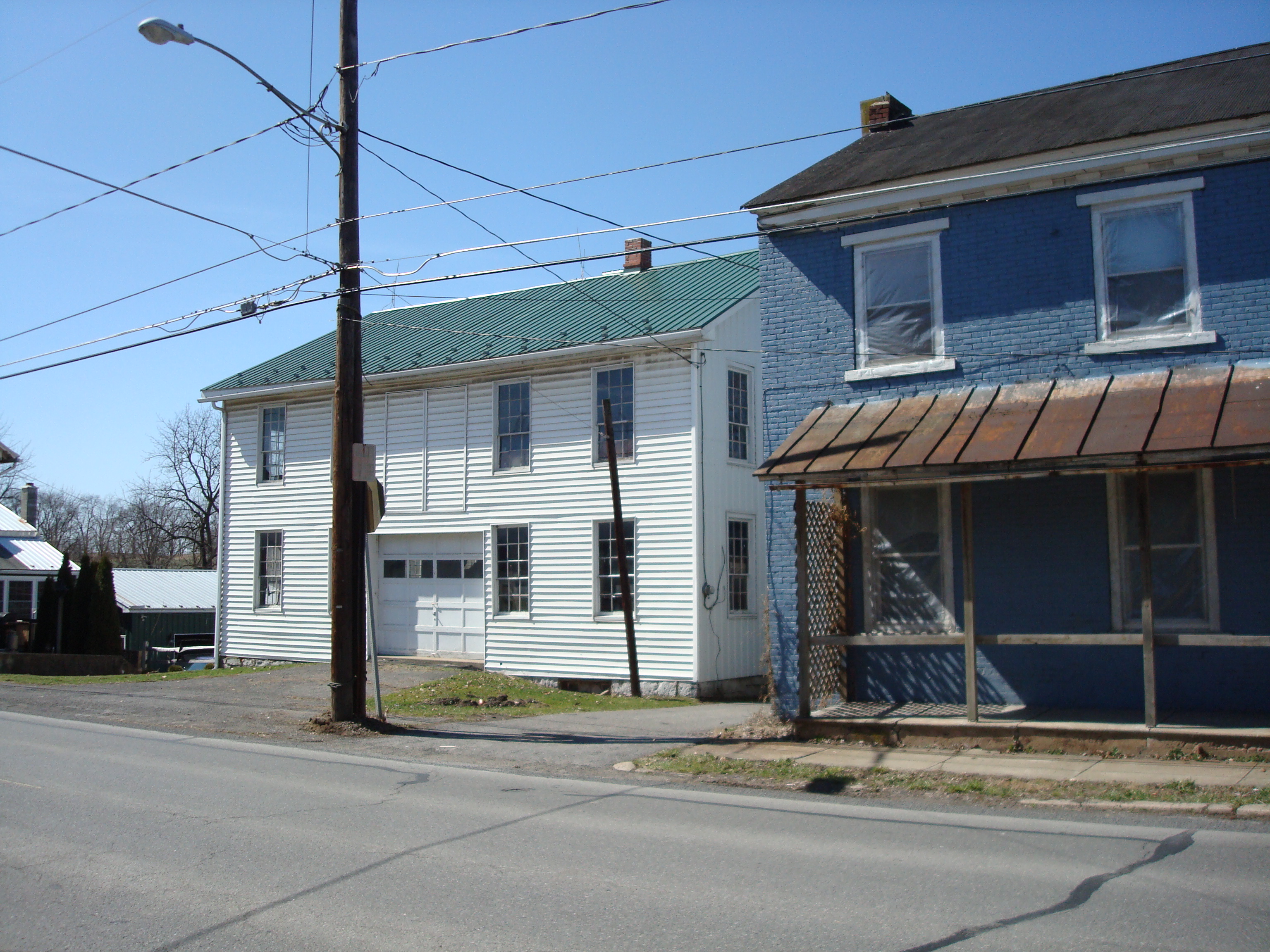
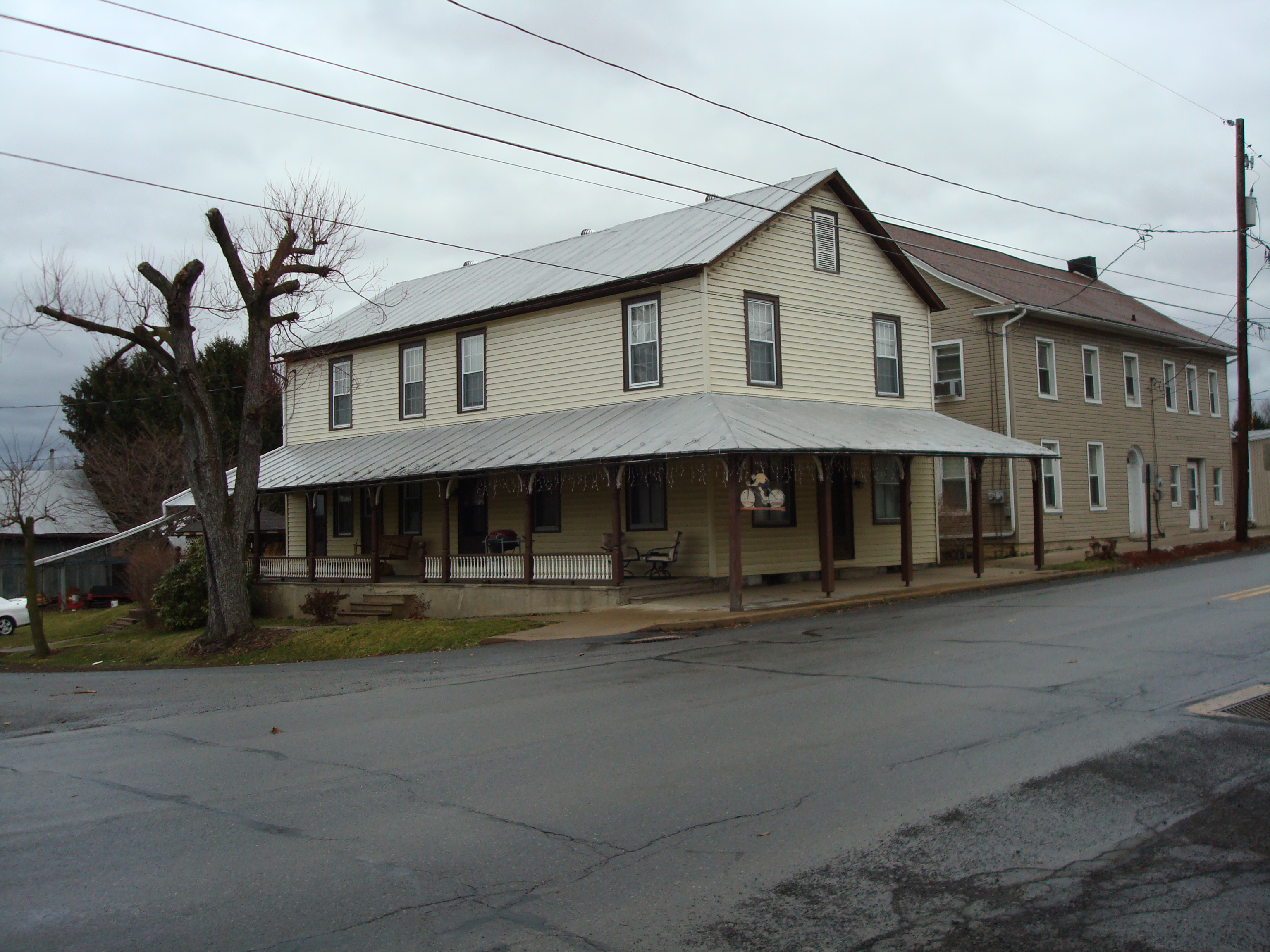
The building in the foreground was a combination restaurant and boarding house in 1911. The building further down the street used to be Armstrong's Store.

I love to visit McEwensville and find it relaxing to dig into the local history books at the Montgomery House Library while quilters –or other meeting attendees–are busily at work in the library’s community room.   

According to the 2000 census McEwensville has a population of 314. A hundred years ago McEwensville had several stores, a pharmacy, a carriage factory, three churches, and a school. Today it has a diner, a chain saw repair shop, a bicycle shop, a beauty shop, and a church.

In 1911 Armstong’s General Store on Main Street was the center of activity. There was a combination restaurant and boarding house at the corner of Main Street and Watsontown Road. A transportation service using horse-drawn vehicles took residents from McEwensville to their jobs in Watsontown and Milton.

When Grandma was young there were large oil lamps on street posts in McEwensville that were lit each evening. The lamplighter got the job through a sealed bidding process, and the low bidder usually got the position. According George Wesner in his 1976 history of McEwensville, “Johny Phillips was one who filled this position for many years. He was short of stature and used a short ladder while performing his duties as a lamplighter.”

The white building was once Mauser's Carriage Shop.

In 1911 Mauser’s Carriage Shop was at the corner of Maple St. and Main Street. The company made horse-drawn carriages and employed about 12 people.

Advertisement in the January 4, 1911 issue of the Milton Evening Standard

At the corner of Main Street and Potash Road there was a blacksmith and horse shoeing shop. Somewhere along Main Street there was a foundry that manufactured  farm implements (including plows), water troughs, butcher stoves and other cast iron items.  

 Most food was locally produced in Grandma’s day. According to Wesner, “In the early days many families kept a cow to provide milk and butter for themselves and at times extra for neighbors.”

Grandma probably walked past Gold’s  Butcher Shop on her way to school each day.  Wesner wrote,  “Gold’s Butcher Shop was located along the south side of the old Watsontown road, the last building in the borough . . . Gold’s sausage was a favorite of the community. As there was no refrigeration at that time, it was a cold weather project.”

Christmas and New Year’s Day

15-year-old Helena Muffly wrote exactly 100 years ago today:

Mid ice and snow,

and wintry glow

The happy new year rings.

So now I’ll commence,

And not with pretense,

My diary of interesting things

Sunday, January 1, 1911: The old year has passed, and the new year is ushered in with its joys and possibilities. To me the old year has been quite a pleasant one. May this year be as pleasant. Christmas brought me no fatal grievances, and it really proved to be enjoyable and merry. I received quite a small number of Christmas presents although none of them were very costly. Judging none of them to exceed the modest price of fifty cents. (By this no one should think I am ungrateful for I really mean to be a grateful girl.)

This afternoon I went to Sunday school and attended catechize after church. On my way home I received a charming new year’s gift. (Thanks to the donor.) The first day of the new year is almost spent and I feel rather sad.