
1911 Algebra Problems: The Lusitania and Molasses

15-year-old Helena Muffly wrote exactly 100 years ago today: 

Thursday, March 2, 1911:  Dear me, what shall I write? Mrs. Hester was out this afternoon. I intended to work thirty-one algebra problems this evening or rather tonight but instead of that I only worked one. Perhaps I may get the remaining thirty tomorrow, but it is only perhaps.

Her middle-aged granddaughter’s comments 100 years later: 

Sometimes I have a vague idea about what I might say about a diary entry—and then I discover something interesting that sends my post in a totally different direction. Today is one of those days—

I found a high school algebra textbook published in 1911 at the library and idly flipped through the pages while pondering—Should I include some example problems from the chapter on Simple Equations  . . . or from the chapter on Quadratic Equations? And then I saw the problem on the Lusitania:

4. One ton of coal will make 8.7 tons of steam. If the Lusitania requires 1200 tons of coal a day for this purpose, how many tons of steam are required for an hour?

First Year Algebra (1911, page 157) by William J. Milne

Lusitania

Wait—Isn’t the Lusitania famous because it was sunk  during World War I by the Germans  in 1915? Why was the Lusitania in a textbook published in 1911?

And, as I sought answers, this post  headed in a totally different direction.

The Lusitania was a British ship that made its first trans-Atlantic trip in 1907—and it periodically held the world record as the fastest ship to make the crossing. For example, in October 1907, it held the record for an eastbound trip with a time of 4 days, 19 hours, and 53 minutes. The average speed was 24 knots/hr. (27.6 miles/hr.).

(Cruise ships today don’t cross the Atlantic as quickly as they did a hundred years ago. It now takes at least 6-7 days to make the crossing. I guess that if  someone wants to cross quickly they just fly.)

In the early 1900s there were several very fast ships that held the record at one time or another. They informally competed with one each other and the newspapers regularly reported on when the ships entered the New York harbor –or  the harbors in England on eastward trips– since there was the potential with every trans-Atlantic voyage that the world record would be broken.

A hundred years ago the general public across the US knew about the Lusitania and were following its story even before it was sunk by a German torpedo. (And, the Lusitania was apparently considered a good topic for an algebra problem since it was a timely, high-interest topic that might motivate students ).

Algebra problems provide lots of hints about what was common knowledge a hundred years ago. For example, would you ever find a problem about molasses pumps and tubing in a text today? Well, it provided the context for the word problem that followed the Lusitania problem in the 1911 textbook:

5. A grocer paid $8.50 for a molasses pump and 5 feet of tubing. He paid 12 times as much for the pump as for each foot of tubing. How much did the pump cost? the tubing?

First Year Algebra (1911, page 157) by William J. Milne
High School Graduation Rates, 1911 and 2010

15-year-old Helena Muffly wrote exactly 100 years ago today: 

Tuesday, February 28, 1911: I really cannot think of one thing that happened today of marked importance concerning my little world. One of the boys stopped school today. 

Her middle-aged granddaughter’s comments 100 years later: 

It’s amazing how much high school graduation rates have changed over the last one hundred years. In 1911 only about 20% of youth attended high school—and fewer than 10% graduated. Whereas, in 2010, about 90% of all students in Pennsylvania graduated from high school; and, the graduation rate for the Warrior Run School District (the district that now includes McEwensville) was 91%.

I wonder what the boy did after he dropped out of McEwensville High School. Even as a high school drop-out he had a higher educational level than most people in 1911.

Today the nation is focused on enacting policies that will ensure that all students graduate from high school “college and career ready”. Are schools better or worse now than a hundred years ago?

In Grandma’s day many people went on to lead successful lives with an 8th grade education. In my father’s day, a high school diploma was generally the minimal requirement for a good job. When I entered the job market, a bachelor’s degree was often a needed qualification. And, today it seems like many positions require at least a M.S.

Chased with a Stir Stick

15-year-old Helena Muffly wrote exactly 100 years ago today:

Saturday, February 25, 1911: Mother got mad at me this morning and chased me around with a stir stick. I always seem to get into some kind of trouble on Saturdays. I went up to Oakes this afternoon. I didn’t want to go, but Ruth wanted me to take home some papers and cards of theirs. So at last I went. I stuck fast in the mud several places, but succeeded in extricating myself. I have been for the past few days, and still am, the owner of a very sore thumb on my right hand. I guess it is either a ring-around or a run around.

Her middle-aged granddaughter’s comments 100 years later:

I’m not positive what a stir stick was in Grandma’s day, but I think it was a wooden spoon.

I’m slightly appalled by this entry. I recognize that times were different and that physical punishment was used more frequently one hundred years ago than it is today—yet I’m still surprised that it was used to discipline an adolescent.

Being chased by her mother with a stir stick was unusual enough from Grandma’s perspective to merit mention in the diary—yet it doesn’t seem like she is particularly surprised by the action. This suggests that her mother periodically hit her.  

Methods of punishment shape individuals’ attitudes toward authority and obedience. I wonder how being chased by a stir stick affected Grandma.

——

The sore thumb mentioned in the entry refers to the finger that Grandma cut six days earlier.

Old-time Headache Remedies

15-year-old Helena Muffly wrote exactly 100 years ago today: 

Thursday, February 16, 1911:  I blackened my shoes this morning. I don’t know what was the matter with the polish, but it did have a most peculiar smell. Some of the girls at school declared, “they smelt medicines.” I have a most awful headache tonight. My head just feels as if it would like to jump into space.

Her middle-aged granddaughter’s comments 100 years later: 

Whew, that must have been some shoe polish. It’s hard to imagine how it could have had such a strong odor. Could the noxious fumes have caused Grandma’s headache?

I wonder if Grandma tried any of the headache treatments recommended in the Compendium of Every Day Wants: General Information and a Thousand and One Facts (1908):

  • There are remedies for headaches by the dozen, but probably none simpler or more effective than the following: After nearly filling a breakfast cup with black coffee, squeeze into it the juice of one lemon and in a very short time after this has been taken relief will be experienced.
  • Drink some hot herb tea, and at the same time soak the feet in hot water for about twenty-five minutes. Get into bed then and cover up warm, sweating for an hour or more. Relief will soon follow.
  • Take a cup of tea in the evening with a small slice of bread and try to get to sleep.
  • Here is a simple remedy which has been tried many times and proved a cure in cases of sick headache. Powder finely two teaspoonfuls of charcoal, drink it in half a tumblerful of water. I have learned of this great remedy, though simple, from many persons who have used it in cases of sick headache.
  • Take ¾ of a quart of water, 1 tablespoon of salt and one ounce each of heartshorn and spirits of camphor. Mix well, wet a rag in it and apply to the forehead.
  • Crumble a piece of dry bread into a cup, put in a little butter, pepper and salt to suit the taste, pour boiling water over it and drink it.

A Rotten Apple Spoils the Barrel

15-year-old Helena wrote a hundred years ago today:

Saturday, February 11, 1911. Got up about eight o’clock this morning. Did quite a lot of work this forenoon. Carrie Stout was over a while this afternoon. Nearly all my Saturdays are alike.  

 Her middle-aged granddaughter’s comments 100 years later:

As I read this diary I want to constantly remind the 15-year-old who wrote it to write about day-to-day activities and routines. For example, I wonder what my future grandmother and her family did on Saturday mornings in the middle of the winter.

Maybe the family sorted through the bins of apples stored in the basement and discarded apples that were starting to spoil. If there were only small bad spots on some of the apples, they probably were put into a pan and brought up to the kitchen for immediate use. 

Or maybe the family sorted potatoes—and selected the damaged or spouted ones to eat first. If there were lots of spouting potatoes the sprouts would have been broken off and then put back into storage. Back then carefully curing, storing, and spouting extended the storage life–whereas today potatoes are often treated with chemicals to minimize sprouting.

Today we talk about local foods being freshest—but in the old days there was also a competing notion that the food that would spoil first should be used first. This particularly played out during the winter months. The practice of saving the most desirable specimens helped ensure that there would be sufficient food for the entire winter.

For example, let’s say that there were 10 winter squash put into storage. A month later someone went to get a squash and noticed that one had a small bad spot on it—whereas the one sitting next to it still looked as perfect as the day it was harvested. The one with the imperfections would be selected—and the bad spot would be cut out of it before using—because that one won’t last as long into the winter as the perfect one.

That said, a hundred years ago people also weren’t afraid to throw out food if it did spoil. More food would be put into storage than could possibly be eaten and it was anticipated that a certain percentage of it would spoil.

I have a friend who won’t shop at farmers’ markets because the bunches, trays, and baskets of produce sold at them provide more produce than her family can eat before it spoils. I always tell her to enjoy the fresh food—and not to worry if she ends up throwing some away—but the waste bothers her and she’d prefer to buy processed foods  and supermarket produce that are less likely to decay.

That said— in Grandma’s day meals were planned to use available foods and whenever possible food was used—or given to a neighbor who could use it.

Are Tests Too Hard?

15-year-old Helena wrote a hundred years ago today:

Thursday, February 9, 1911. I’m glad our examinations are over for this month, gee whiz, some of the marks I got weren’t very encouraging, but I suppose it’s my fault. If I were to be made over again I would like to be made a little bit smarter than I am at present.

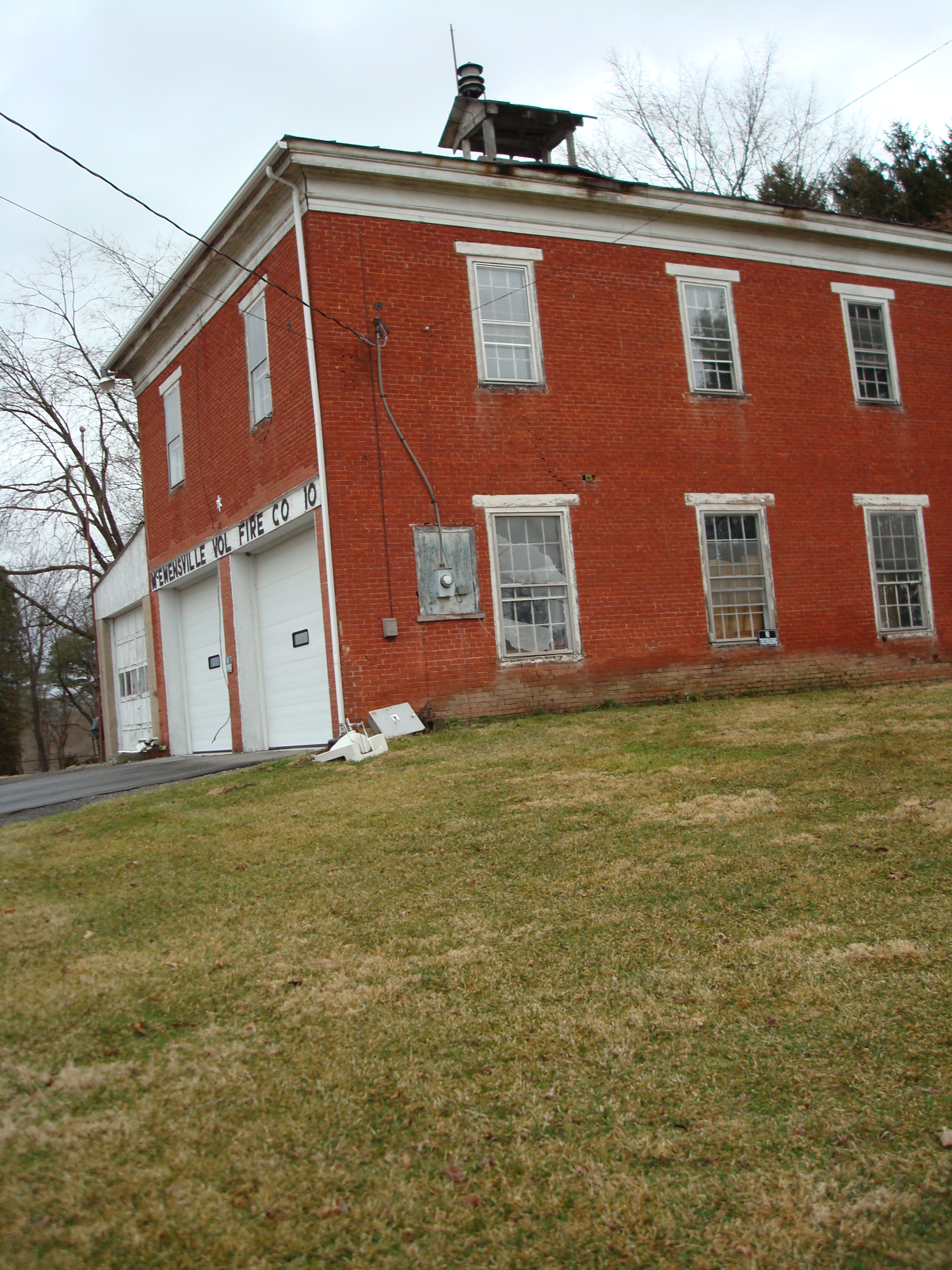
Recent photo of McEwensville High School

Her middle-aged granddaughter’s comments 100 years later:

Grandma probably got the grades she deserved–actually she probably did better than what was justified (see the diary entries on February 7th and  8th). I know that I’m overthinking this entry and that she should have just studied more–but I somehow want to try to put it into some sort of bigger context.

Grandma is frustrated over her grades—and she probably was not alone. The early 1900s was a period when the nation was grappling with issues such as –What do students need to know? How can students successfully show what they know? And, how should that learning be measured?

In 1911 many students dropped out of school—often because the curriculum seem irrelevant or because of poor grades. There was an ongoing debate about how to measure learning and how tough the grading system should be. I don’t have specific information about McEwensville High School but based on this diary I assume that exams were an important part of the grading system. But nearby schools faced political pressure to rely less on exams.  Jack Williams’ A Historical Study of Education in Milton, Pennsylvania provides hints about how parents and students felt about examinations.  In the early 1900s schools, “strived for a lessening of the importance of examination. . . for removing non-essentials from the curriculum, for a greater flexibility in the grading system and for economizing of time.” 

In Milton there a huge uproar over inflexible exams in the early 1900s and many of the quarterly examinations were eliminated. According to Williams in 1905 the Milton School Board instituted a reward system for good students. “Under this system, a pupil in the grammar or high school could be excused from these examinations provided they had attained a standing of 90 percent of their daily work and that their conduct had been satisfactory.”

Sometimes Cheats Aren’t Fooled

15-year-old Helena wrote a hundred years ago today:

Wednesday, February 8, 1911. Had some of our exams today. Came out all right in Latin. Our arithmetic wasn’t so easy though. My fingers feel rather tired. Had banana ice cream for supper. Yum, yum, yum.

Her middle-aged granddaughter’s comments 100 years later:

Be sure to see yesterday’s post if you missed it.  Otherwise, no comment . . .