Woodrow Wilson Inaugurated

17-year-old Helena Muffly wrote exactly 100 years ago today: 

Thursday, March 6, 1913:  I got pretty cold today. My hands got rather chilly coming home from school. Ma and Ruth went up to Oakes.
woodrow wilson
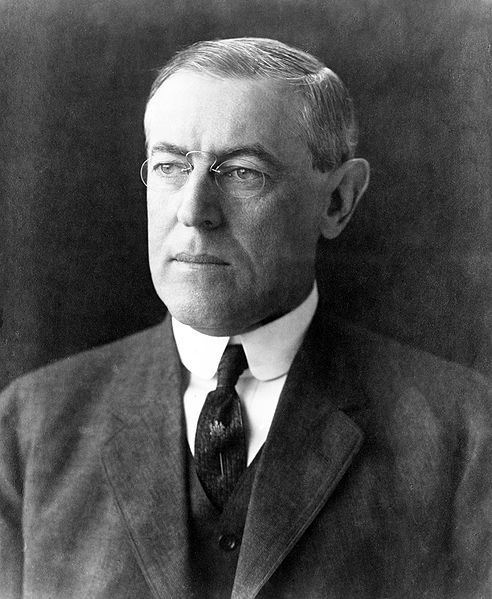
President Woodrow Wilson

Her middle-aged granddaughter’s comments 100 years later:

It sounds like it was a cold day. Did Grandma forget her gloves? Maybe she thought that the day would be warmer than it actually was.

For today’s post, I searched for a hundred-year-old newspaper article about the weather, but I failed to find any anything. Instead I discovered that a hundred years ago today was the 3rd day of President Woodrow Wilson’s presidency.

A hundred years ago the presidential inauguration was in March.  Inauguration Day used to be four months after election day. In 1913, it was on March 4.  Inauguration day was changed to noon on January 20 by the Twentieth Amendment in 1933.

In November, 1912 Woodrow Wilson, a Democrat, beat the incumbent president, Robert Taft in a three-way race. He also beat former president Theodore Roosevelt. Roosevelt was the founder of the Bull Moose Party. For more on the election see:

The 1912 Presidential Campaign: The Republicans, the Democrats, and the Bull Moose Party

Was Grandma excited about the new president? . . unhappy about the change. . .indifferent?

The Oakes lived on a farm near the Muffly family. They had several children about the same age as the Muffly children. Rachel Oakes was a friend of Grandma and her sister Ruth.
Selected Graduation Invitations

17-year-old Helena Muffly wrote exactly 100 years ago today: 

Wednesday, March 5, 1913: We had a class meeting tonight to decide some things. One was we selected our invitations.

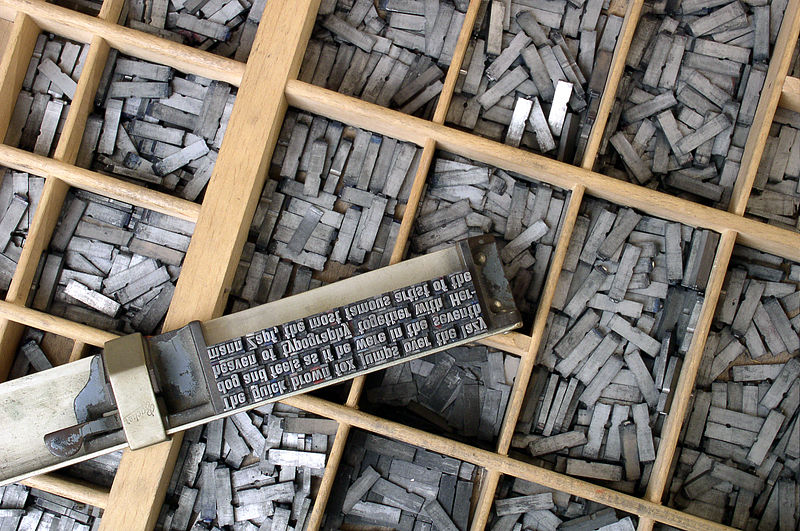
Metal movable type similar to what the printer may have used to make the invitations (Source: Wikipedia)

Her middle-aged granddaughter’s comments 100 years later:

Grandma was in her last year at McEwensville High School. Her class apparently was selecting what the invitations to their graduation would look like. I think that you’d call Grandma a senior, but I’m not sure since the school was an old-fashioned 3-year high school.

I think this is what was involved in getting invitations—

One of the class members probably visited the shop of a printer and got some sample invitations. The samples may have been glued into a book.  There probably were different prices for different invitation styles.

Once the class selected an invitation style, the words that would go on the invitation, and the number of invitations needed, the information would have been taken back to the printer.

The printer would then have ordered the blank invitations from his supplier. Once the blank invitations arrived, the printer would set up the type-face and print a copy for the class to proof.

Once the proof was approved, the invitations would be printed.

Whew, that’s a lot of steps (and I probably missed a few). It’s so much easier today with the internet.

Pictures of Several Hundred-Year-Old Waists Made From One Pattern

17-year-old Helena Muffly wrote exactly 100 years ago today: 

Tuesday, March 4, 1913: Today was quite an eventful day. Took my waist up this morning. We went up to practice this evening. I now think we are making some progress.

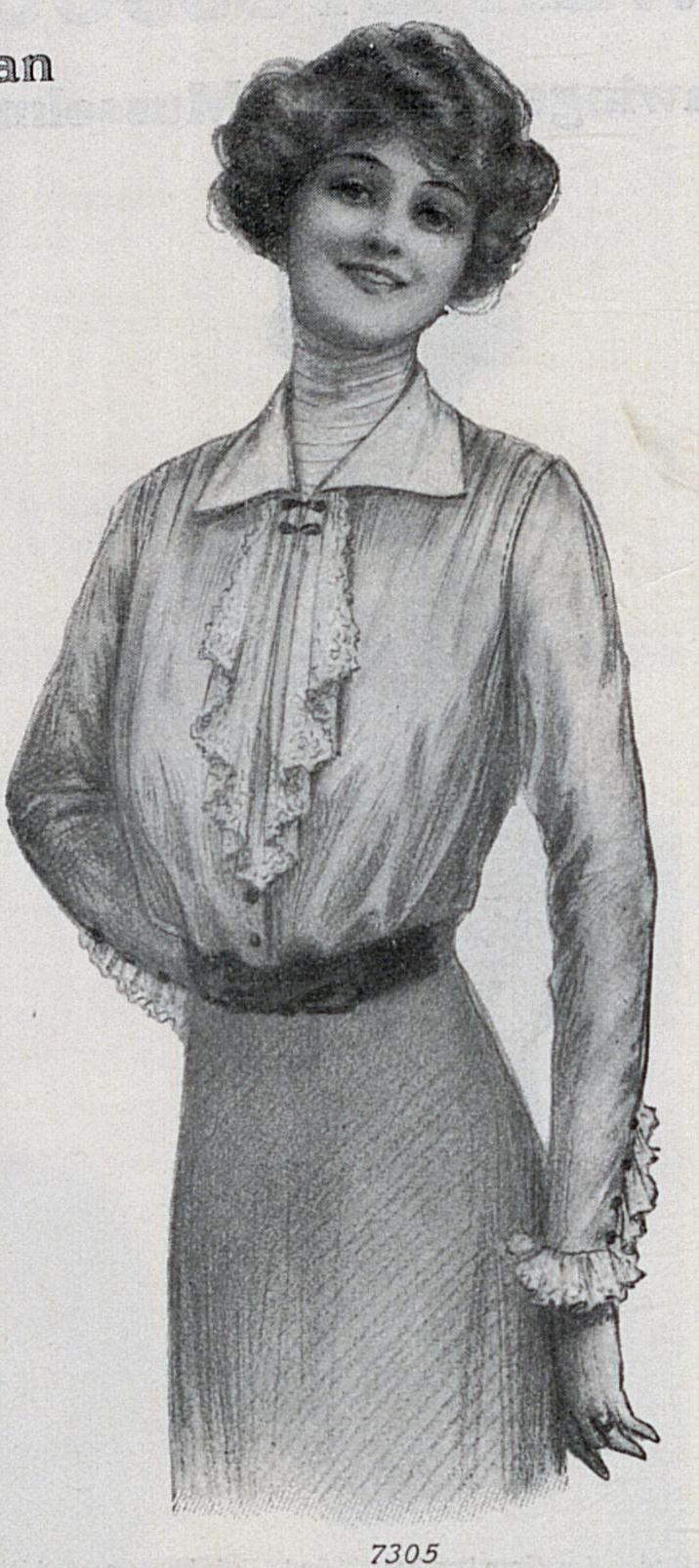
wils36346.d1This tailored waist is the foundation waist; the tucks in the front and back allowing ample material for the other waists illustrated.

Her middle-aged granddaughter’s comments 100 years later:

When Grandma was young, blouses and shirts were called waists. What does “took up my waist mean?” Was she remodeling a waist or making a new one?

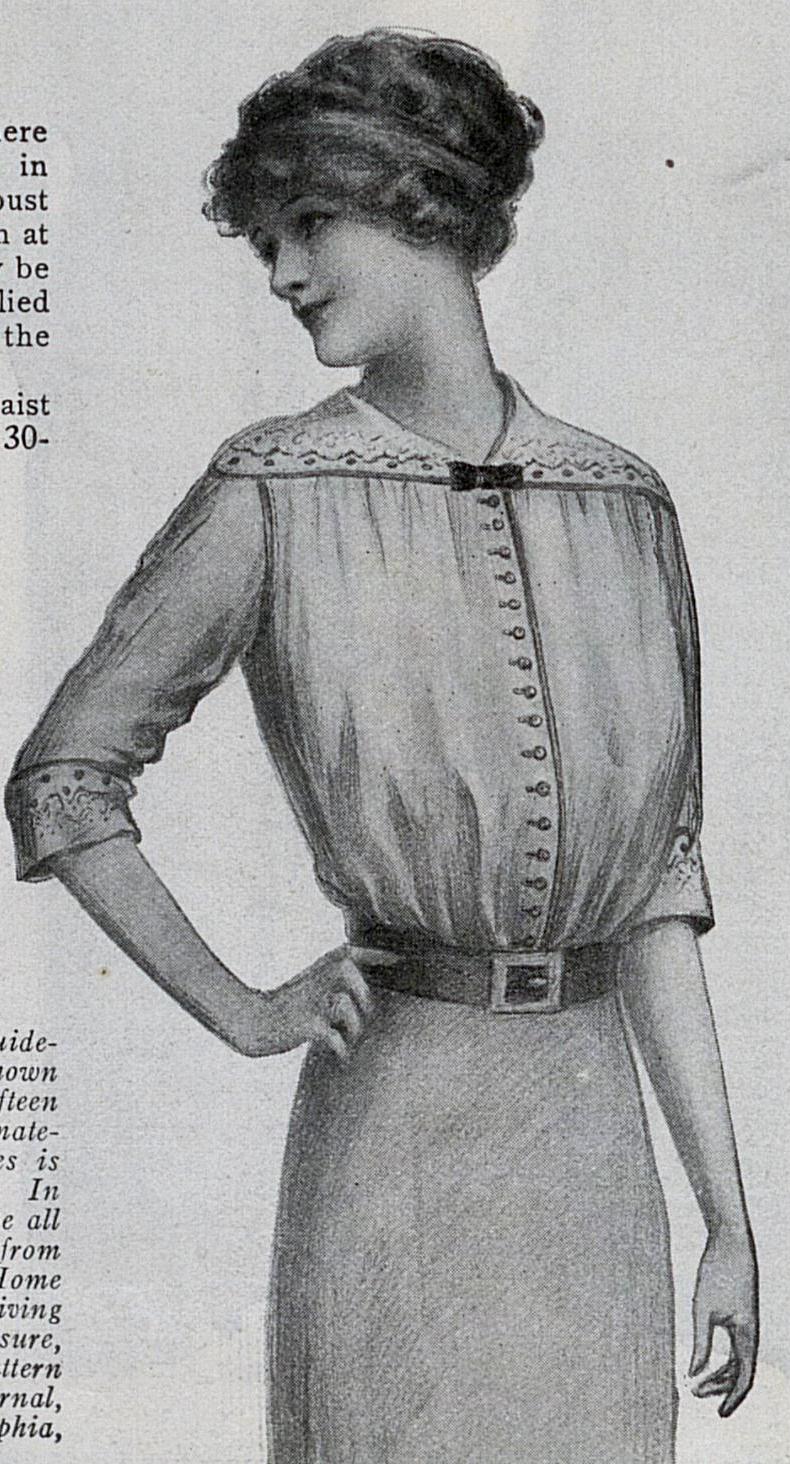
Maybe Grandma adapted a pattern that she’d previously used to make a new waist. Here are some drawings from a hundred year old issue of Ladies Home Journal that show several waists made from the same basic pattern.

Five Waists From One Pattern

To the woman who does her own sewing the advantage of a pattern from which several different styles of a particular garment can be made is obvious. It reduces materially the fitting problems and the need of studying the various parts of separate patterns. Once you have mastered the construction of the foundation pieces it is extremely easy to apply the various other pieces to make any of the five waists.

Ladies Home Journal (November, 1912)

wils36346.a

wils36346.b

wils36346.c

wils36346.e

Practice referred to play practice. Grandma had the role of Chloe the servant.

Packing School Lunches a Hundred Years Ago

17-year-old Helena Muffly wrote exactly 100 years ago today: 

Monday, March 3, 1913:  Nothing much for today.

Source: Kimball's Dairy Farmer Magazine (September 15, 1913)
Source: Kimball’s Dairy Farmer Magazine (September 15, 1913)

Her middle-aged granddaughter’s comments 100 years later:

Since Grandma didn’t’ write much a hundred years ago today, I’m going to go off on a tangent.

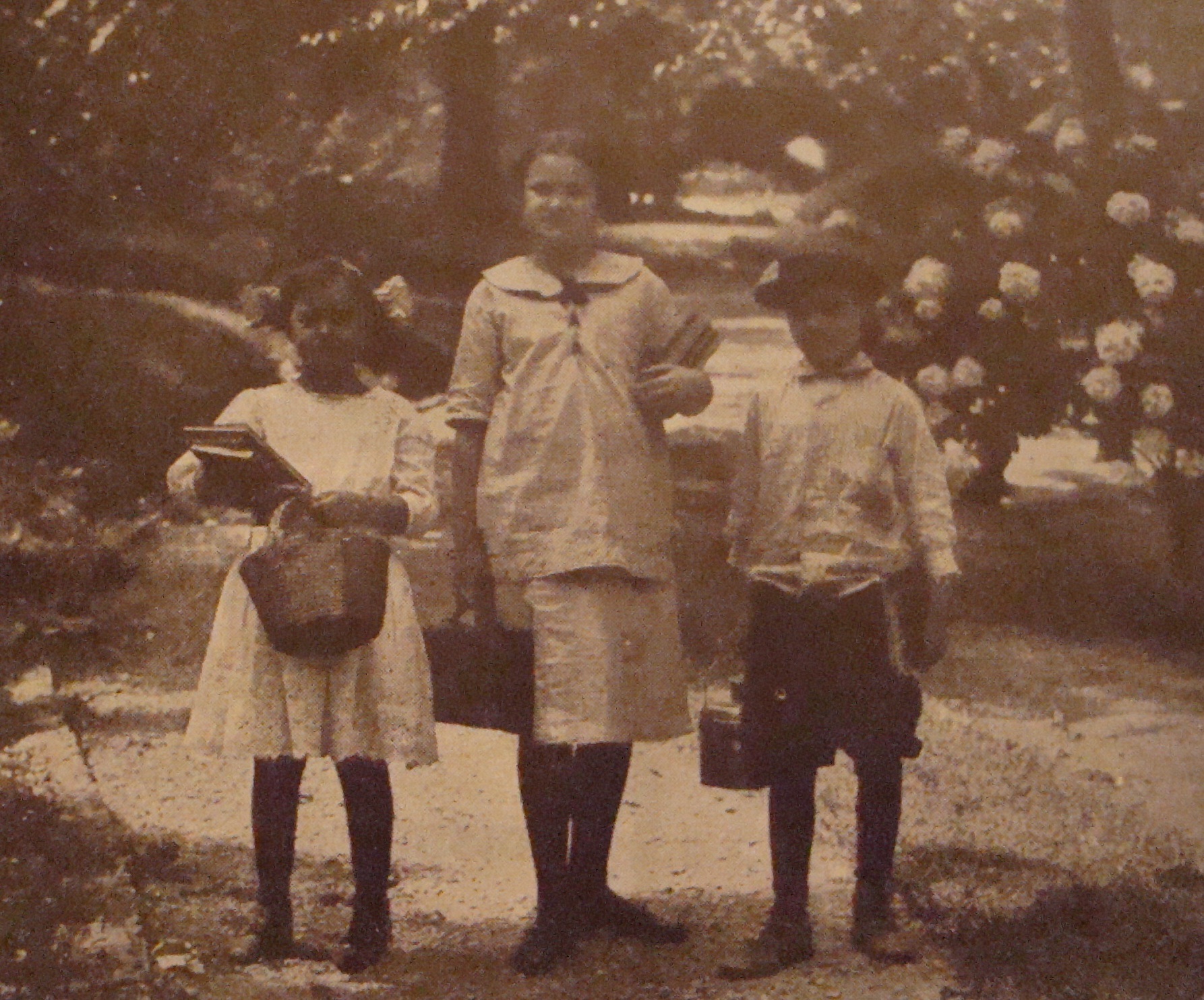
I’ve often wondered what children ate for lunch a hundred years ago. Today we hear so much about how unhealthy school lunches are—and that even children who bring their own lunch often don’t bring nutritious foods.

.Of course, in the small rural schools a hundred years ago all students needed  to bring their own lunches. I found a great article on packing school lunches in a 1913 magazine:

The School Lunch Pail

Great care is essential in making the lunch and the lunch pail appear attractive, not only for the sake of the child’s appetite, but for his pride as well. Many a lunch has been surreptitiously thrown under a convenient hedge, because the child was ashamed to open it before the critical eyes of his playmate. . .

The foundation of a lunch is always the reliable bread sandwich. There are many dainty and appetizing sandwich fillings to be made from left-overs. . .

You can make the most appetizing custards and puddings in little ramekins. These are easily prepared the day before when you are getting dinner for the home folks. . .

There are a variety of simple cookies and cakes which delight the child’s heart, particularly when baked in “animal” fancy shapes.

No lunch pail is complete without fruit. If it is impossible to obtain fresh fruits, the dried stewed ones may be substituted. Figs, prunes or dates are wholesome and may be made doubly so when stuffed with nuts, peanut butter, or the puffed grains.

Kimball’s Dairy Farmer Magazine (September 15, 1913)

A Busy Day

17-year-old Helena Muffly wrote exactly 100 years ago today: 

Saturday, March 1, 1913:  

The month of March, ah welcome sound

You bring to us a coming spring.

Where glimpse of leaf and budding flower,

Awake to us this glorious thing.

Today was a busy one for me. Ma got mad at me, but it’s over by this time. Rufus has gone up to Tweet’s to stay til tomorrow evening. I got my fee in advance.DSC06511

Her middle-aged granddaughter’s comments 100 years later:

There’re lots of nicknames in this entry. Rufus referred to Grandma’s sister Ruth. Grandma often called her Rufus in the diary—especially when she was upset with Ruth. Tweet was their friend Helen Wesner.

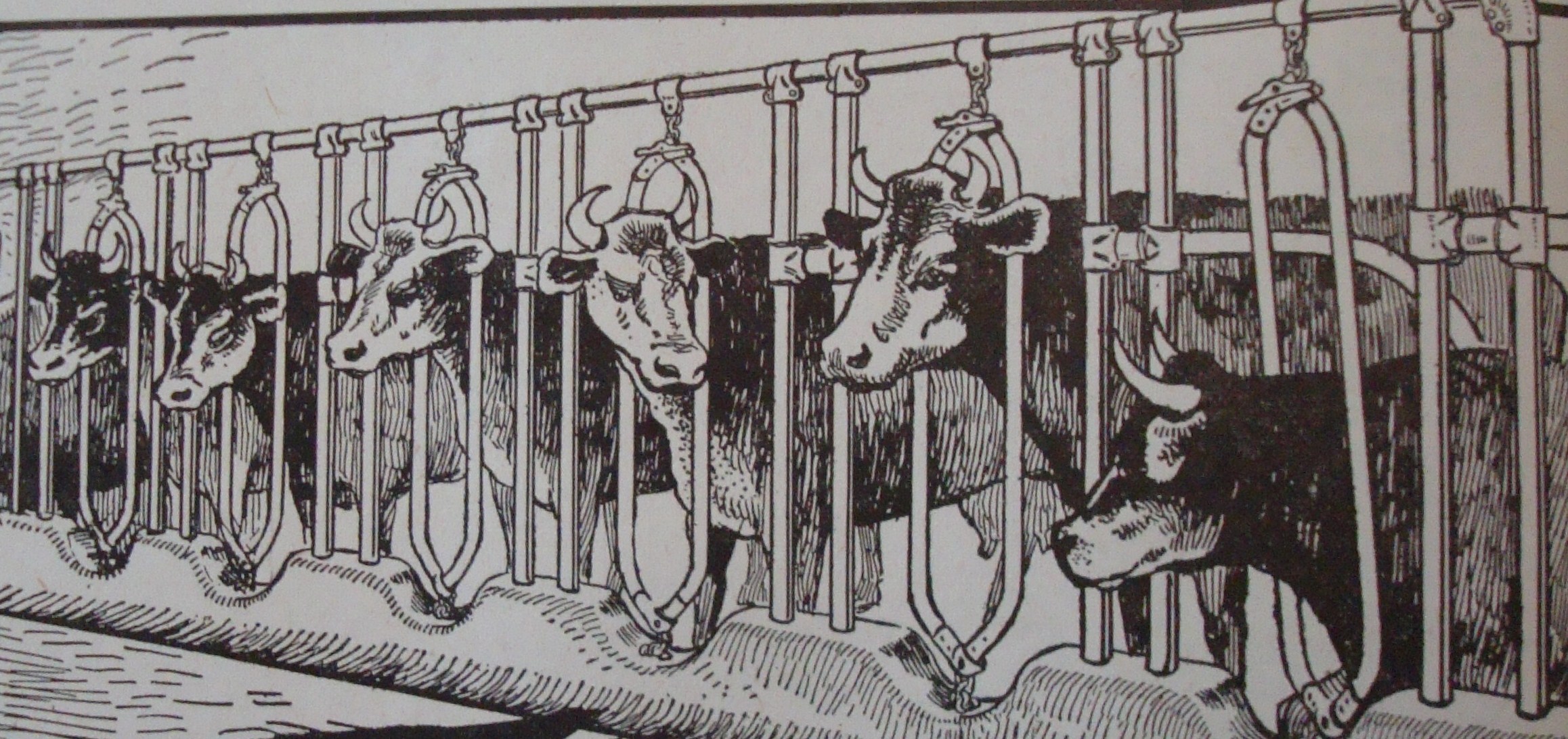
I think that on a typical day Grandma and Ruth shared the daily farm chores, and each milked several cows. Grandma probably had to do all of the chores herself since Ruth was away—though it sounds like she made Ruth pay her.

Why did Grandma’s mother get mad?  Since it was a busy day, maybe Grandma failed to do something or didn’t do it to her mother’s satisfaction.

___

On the first day of every month Grandma included a poem in the diary.

A Typical Day for a Farm Kid a Hundred Years Ago

17-year-old Helena Muffly wrote exactly 100 years ago today: 

Wednesday, February 26, 1913:  We practiced tonight.

Source: Kimball's Dairy Farmer Magazine (April 1, 1913)
Source: Kimball’s Dairy Farmer Magazine (April 1, 1913)

Her middle-aged granddaughter’s comments 100 years later:

Grandma was referring to play practice. She had the role of Chloe, the servant, in the class play.

Here’s my best guess as to what Grandma’s schedule looked like on this date a hundred years ago:

  1. It was probably still dark when Grandma got  up and dressed in work clothes.
  2. Went to the barn to feed and milk the cows.
  3. Came back to the house, ate a quick breakfast, and changed into school clothes.
  4. Walked 1 1/2 miles to  McEwensville.
  5. Attended school.
  6. Walked 1 1/2 miles home after school.
  7. Grabbed a quick snack—and changed  into work clothes.
  8. Went to the barn to do the evening chores (clean the cow stalls, feed cows, milk cows). She may have also fed the chickens and gathered eggs.
  9. Went back to the house and ate a quick supper.
  10. Changed into clean clothes and walked 1 1/2 miles to McEwensville.
  11. Participated in play practice.
  12. Walked 1 1/2 miles home.
  13. Did homework.
  14. Wrote this brief entry in the diary.
  15. Went to bed.

Whew, I’m exhausted just thinking about Grandma’s schedule.  I probably don’t have all the details exactly right—maybe someone gave her a ride home after play practice . . . or maybe her little brother Jimmie gathered the eggs. . . or. . . . maybe she didn’t do any homework. . .

But, even if Grandma only did three-quarters of the things on this list (and my gut feeling is that she did most of them),  she had one crazy, busy day.

Hundred-Year-Old History Review Questions on the American Revolution

17-year-old Helena Muffly wrote exactly 100 years ago today: 

Tuesday, February 25, 1913:  I’ve forgotten. Finished essay.

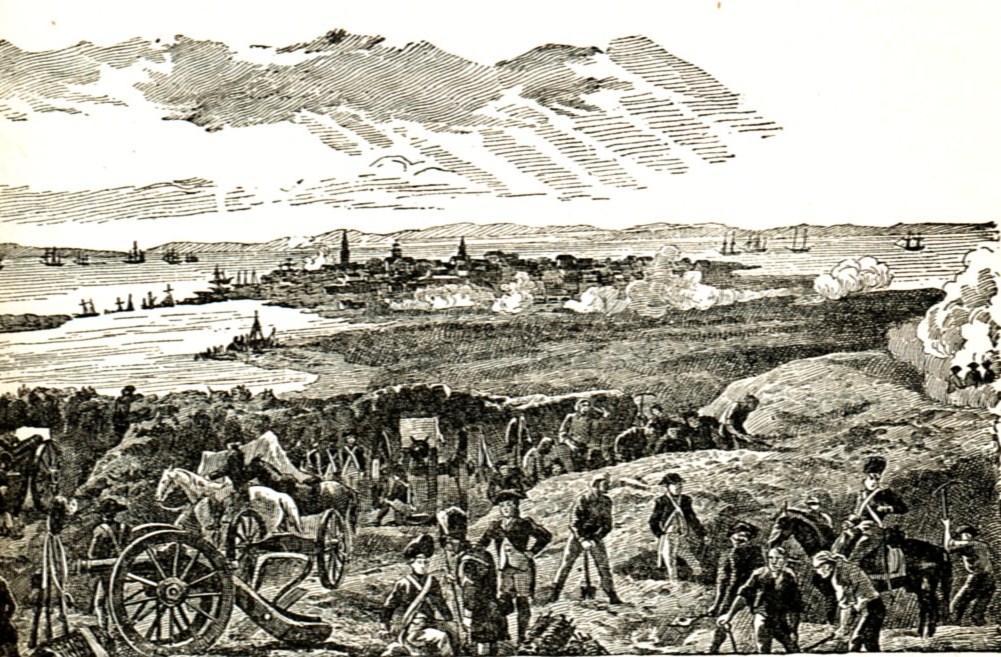
Battle.CharlestonPicture caption: The Siege of Charleston, After the picture by Chappel (Source: American History for Schools, 1913)

Her middle-aged granddaughter’s comments 100 years later:

Yeah, Grandma! I bet it feels good to have finished the essay on the American Revolution that you’ve been working on for almost two weeks. I’m keeping my fingers crossed that you win the two and a half dollar gold piece that your teacher is going to give to the student who wrote the best essay.

I’m still having fun reading the chapter on the American Revolution in the 1913 American History textbook that I quoted in several previous posts.

Here are a few of the review questions at the end of the chapter:

1. If modern battleships had been in use during the Revolution, would the outcome of the war been different?

2. Did the British government have any sound basis, moral or legal, for its policy of coercion?

3. In your opinion, what was the most important battle of the war?

4. How was the Revolution an aid to the cause of liberty everywhere?

5. Name some of the serious problems that confronted the Americans when the war was over?

6. How do you account for the success of the American navy?

American History for Schools (1913) by R.B. Cousins and J.A. Hill

For previous posts on the American Revolution from the same 1913 textbook see:

American Revolution as Described in 1913 Textbook

1913 Perspectives on the Importance of the American Revolution