16-year-old Helena Muffly wrote exactly 100 years ago today:
Monday, January 22, 1912: Ruth and I went up to Oakes’ this evening. I didn’t care very much about going as I had my lessons to study and don’t do so much as it is.
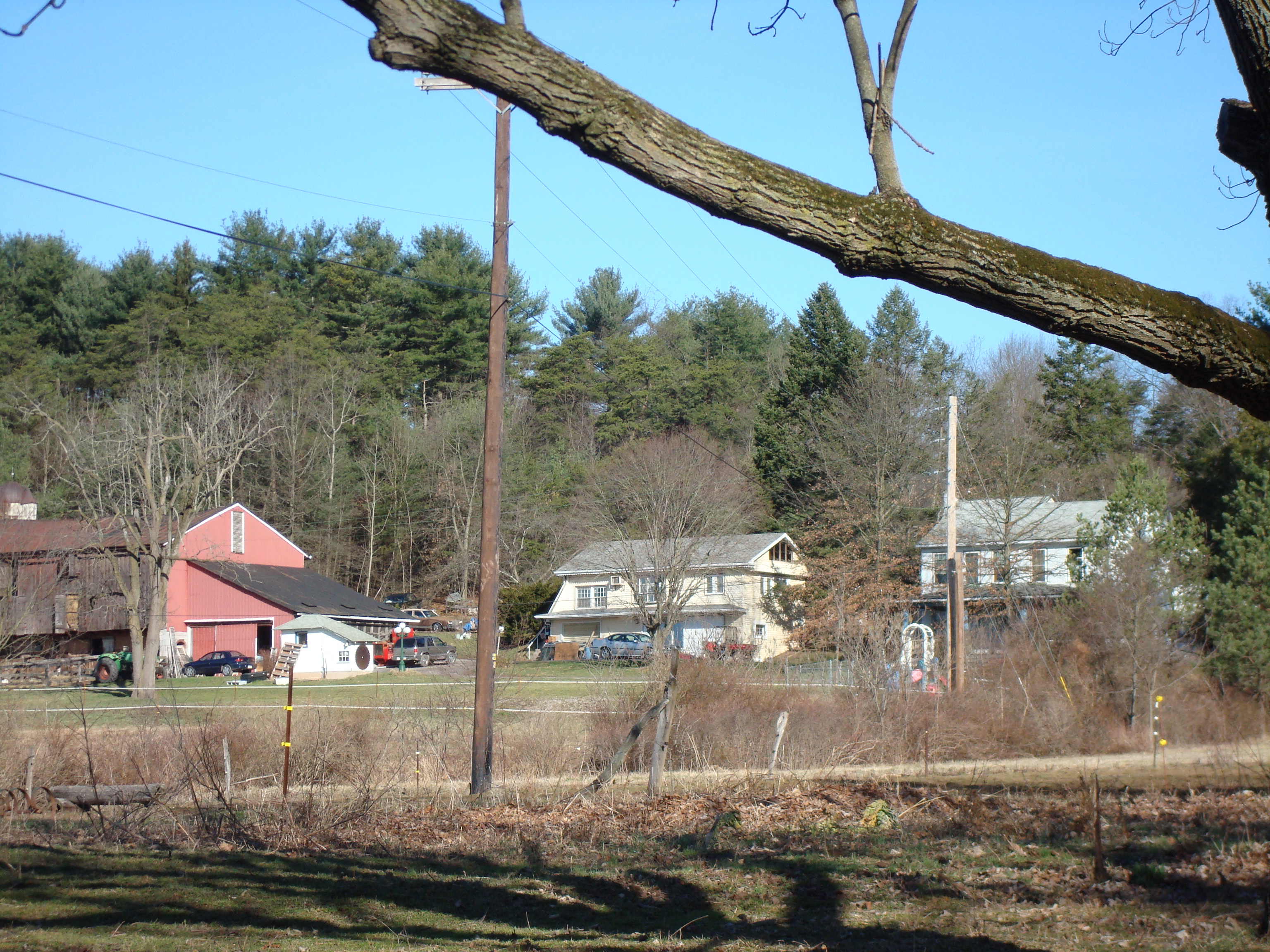
Recent photo of the farm where the Oakes family lived.
Her middle-aged granddaughter’s comments 100 years later:
Brrr. . . it sounds like a cold walk in the dark.
Grandma and her sister Ruth would have walked down the road that went past their house to the farm where their friend Rachel Oakes lived.
Rachel’s brothers, Alvin and James, may have also been there. The previous spring Ruth dated James—but he hasn’t been mentioned in the diary in months, so I don’t think that they were still dating.
16-year-old Helena Muffly wrote exactly 100 years ago today:
Sunday, January 21, 1912: Pa and I went over to Ottawa today. I suppose if I had expected yesterday to do today I would have been disappointed. It’s my luck. But the unlucky thing about it was that Uncle George was the only one at home. I made the coffee. I would have liked to have known what it tasted like, but you see I don’t drink any.
Her middle-aged granddaughter’s comments 100 years later:
Ottawa is a tiny village in Limestone Township, Montour County—and is located about 12 miles east of the Muffly farm.
George Muffly was a brother of Grandma’s father (Albert Muffly). He lived with is brother Samuel and his widowed sister Mary and her two two children (20 year-old Kathryn and 15 year-old John). Grandma probably hoped that her cousin Kathryn would be there.
Grandma’s father was one of eleven children of Samuel K. and Charlotte Muffly. He was born in 1857 and was the fourth oldest child in the family. George was the youngest. He was born in 1874 and would have been 35 years old when this diary entry was written.
According to the 1910 census George was single and lived with his 43-year-old single brother Samuel and his widowed sister Mary Feinour and her two children. Mary was two year older than Grandma’s father.
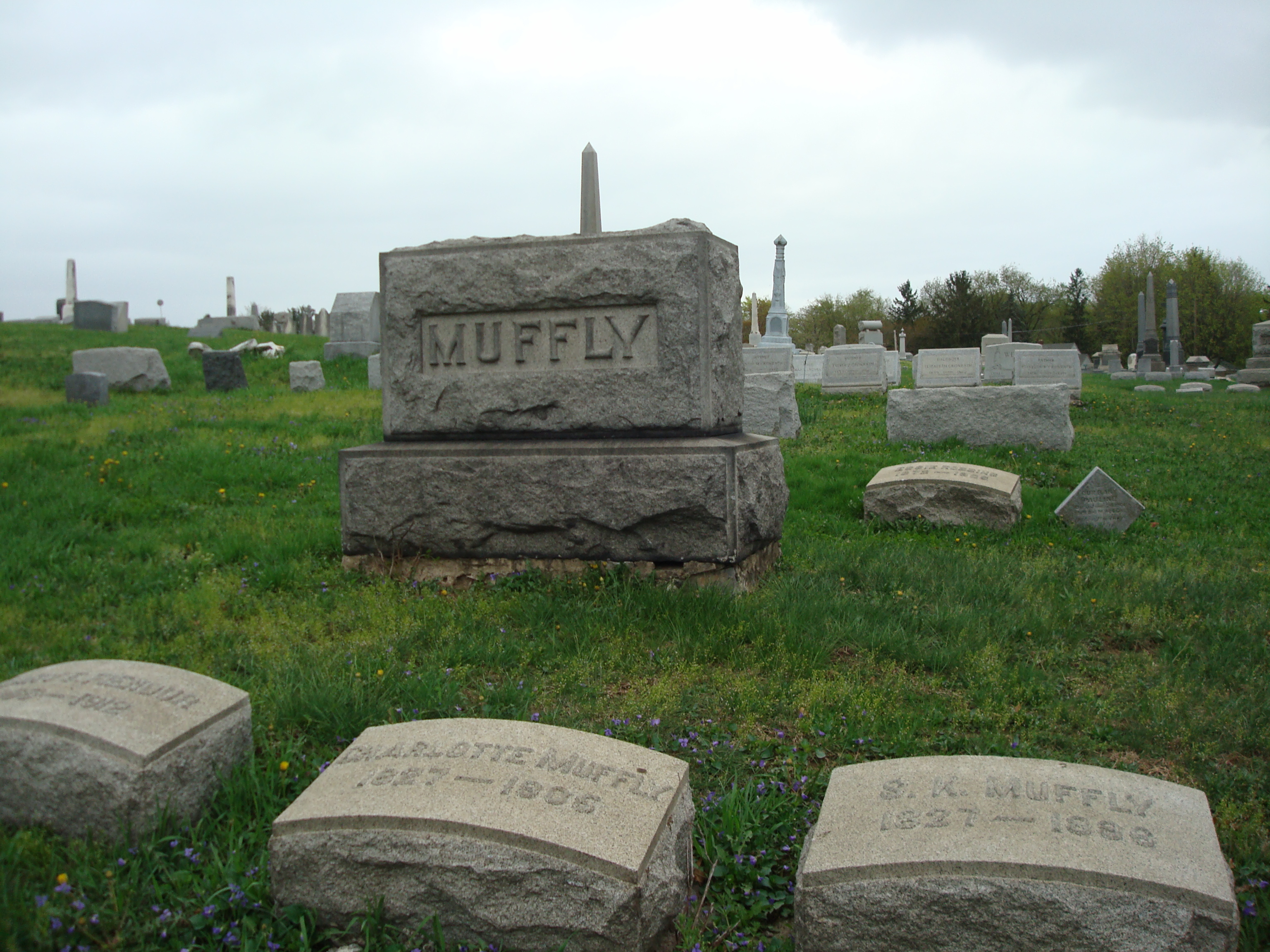
An aside–According the 1920 census, Samuel was still single, but lived alone. George apparently had married. Mary died in 1912. She is buried in the Watsontown Cemetery next to her parents. Somehow I sense that Mary had a difficult life. I wish I knew more about her—though she was a very distant relative and is really tangential to the family members that my research focuses on.
Mary's tombstone is on the left. Her mother's is in the middle and her father's is on the right.
For more about the genealogy of the Muffly family, click here.
16-year-old Helena Muffly wrote exactly 100 years ago today:
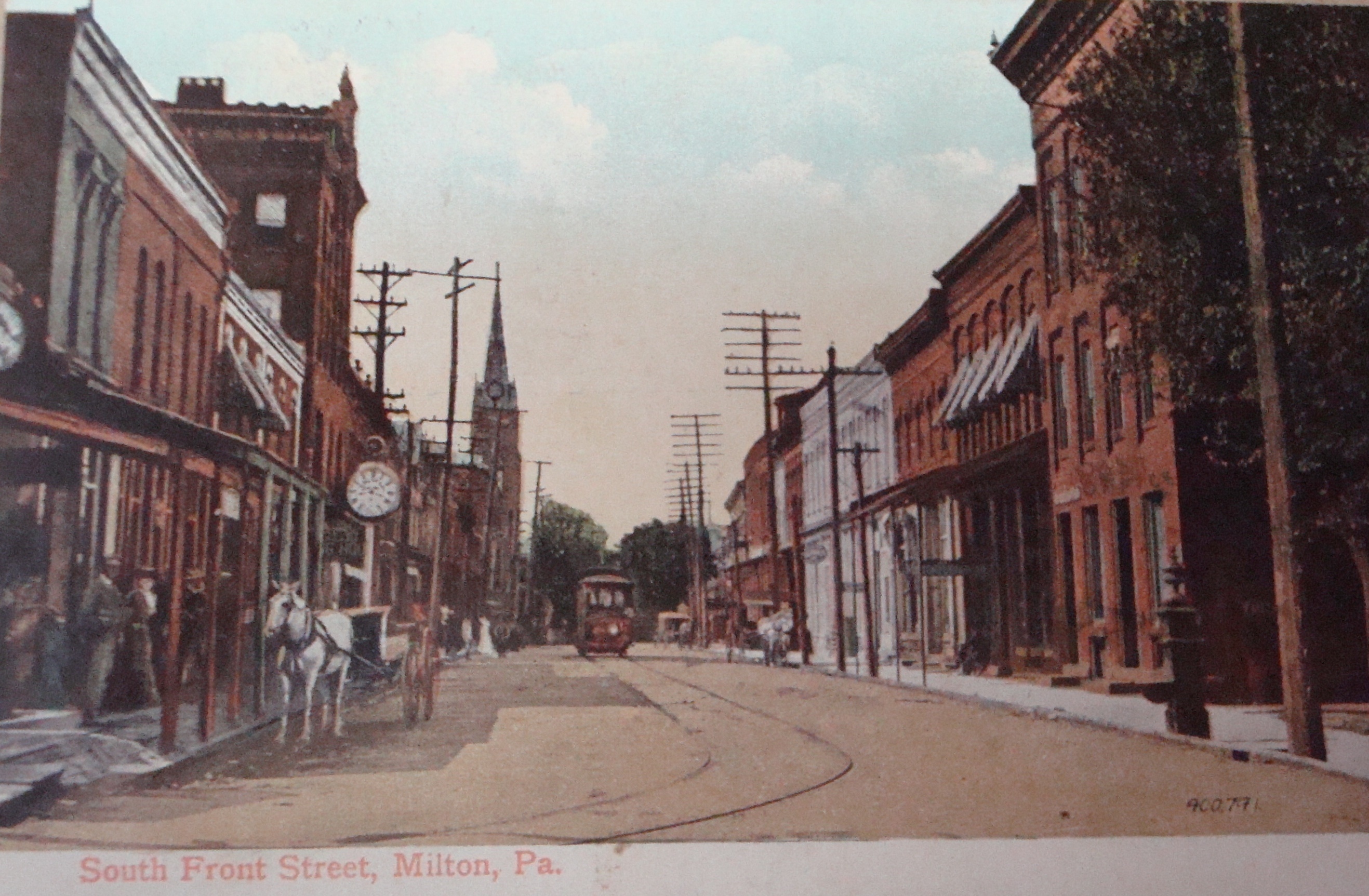
Saturday, January 20, 1912: Ruth and I went to Milton this afternoon. We both had our pictures taken. I hope mine won’t be any bigger than what I am, but I won’t know for a whole week yet.
Old postcard of South Front Street, Milton. (Source: Milton Historical Society, Used with permission.)
Her middle-aged granddaughter’s comments 100 years later:
Sounds like Grandma was worried that she’d look heavy in the photo. I wonder if she’d gained weight over the holiday season.
The Muffly farm is about 6 miles from Milton—but the sisters probably used “mass transit” to get there.
Ruth and Grandma probably walked the two miles to Watsontown—or maybe they took the train to Watsontown. (There was a whistle-stop for the Susquehanna Bloomsburg and Berwick Railroad at Truckenmiller’s Feed Mill which was located near their farm.) Once the sisters got to Watsontown they would have taken the trolley from Watsontown to Milton.
It amazes me how many transportation options were available in a relatively remote area of Pennsylvania a hundred years ago. And, how trolleys and passenger rail service vanished a little later in the 20th century as automobile ownership proliferated.
16-year-old Helena Muffly wrote exactly 100 years ago today:
Friday, January 19, 1912: You walk through slush instead of snow for the present. I pulled Ruthie’s ears. I tell her she is getting to be an old maid but really don’t mean it.
I was rather mad this afternoon. We had some Algebra problems that I didn’t know how on earth to do them. But I guess I can do them now if I try hard enough.
Ruth Muffly*
Her middle-aged granddaughter’s comments 100 years later:
A hundred years ago today was Grandma’s sister Ruth’s 20th birthday. People used to pull the birthday person’s ear lobes one time for each year, so Grandma would have pulled Ruth’s ears 20 times.
In 1911, on Ruth’s birthday, Grandma woke Ruth by pulling her ears. She made have done the same thing in 1912.
*1913 photo of Ruth. Photo used with permission. Source: The History of the McEwensville Schools: 1800-1958 by Thomas Kramm.
16-year-old Helena Muffly wrote exactly 100 years ago today:
Thursday, January 18, 1912: To write something when you have nothing to write is an impossible task.
Her middle-aged granddaughter’s comments 100 years later:
Since Grandma didn’t write much a hundred years ago today, I’m going to go off on a tangent.
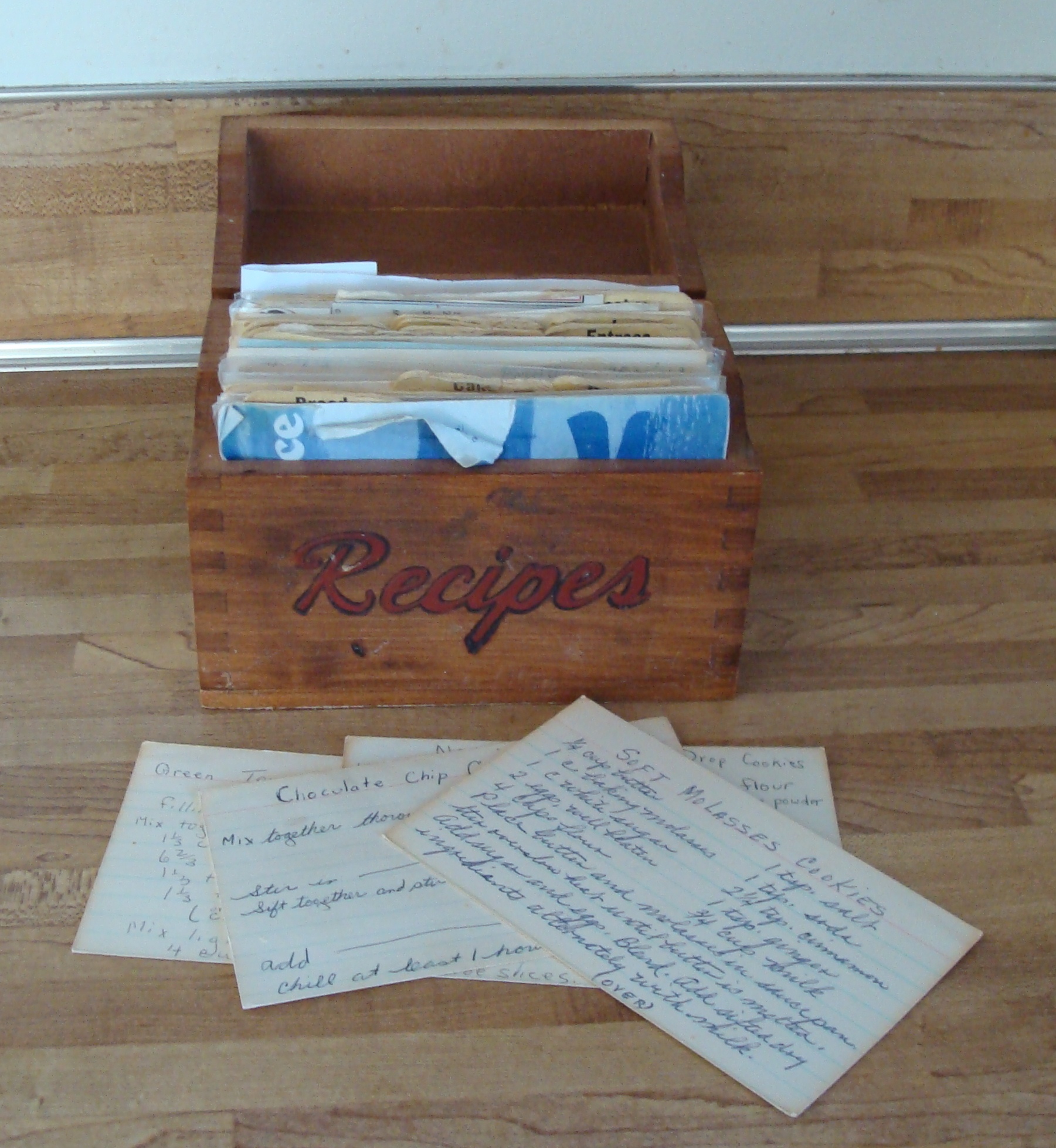
When I began working on this blog I knew that cars, airplanes, and telephones were all relatively new technology in 1912–I was amazed to discover that recipe boxes and cards were also a new idea.
I got my recipe box when I got married many years ago--and many of the recipes in it are old family recipes that were copied at that time. Who would have guessed that I was compiling the recipes in the modern way?
Here are some excerpts from an article called “A Housekeeper’s Filing Cook Book A Novel Way to Save Recipes and Household Hints in a Systemic and Convenient Form,” that was in the March 1912 issue of National Food Magazine:
Every year housekeeping becomes more of a science. Shiftless methods and poor tools give place to system and efficient utensils, so that housekeeping is taking the rightful place by the side of other well-managed businesses.
One of the greatest aids to system in business offices is the filing drawer, or cabinet. A clever housewife has adapted the filing idea to her own needs and developed a filing cook book which she and several others have been using successfully for some time past.
Cards measuring 5×8 were bought at a stationer’s and fitted into a pasteboard drawer such as can be bought to fit the cards. The drawer holds over two hundred cards. Any size card may be used but the above has been found the most convenient.
The cards are grouped under sub-heads is alphabetical order, as Bread, Cake, Desserts, Meats, Pastry, Oysters, Salads, Specials, Vegetables, etc.
On these cards are written or typed, under their proper sub-head, choice recipes from friends, the favorite dishes of the hostess or more particularly, recipes taken from culinary magazines such as the National Food Magazine.
The “old way,” to save a recipe was to paste it anywhere on any page in an old note-book which became covered with flour and mayonnaise whenever used. Or the recipe was just “tucked away” among the leaves of the real cook book—and never found.
Here instead of writing down your friend’s recipe for her best sponge cake or pasting some of the fine recipes you have read in the National Food Magazine into a messy book, in a disorderly fashion—you write the recipe on a card, or paste the clipping on a card and slip it into its proper place . . .
16-year-old Helena Muffly wrote exactly 100 years ago today:
Wednesday, January 17, 1912: Had to walk to school this morning, as Daddy was busy elsewhere. We didn’t get any mail today because the mail carrier was almost too lazy I guess to get through the drifts. How you do miss the mail then. Ahem.
1996 stamp commemorating the 100th anniversary of rural free delivery of the mail
Her middle-aged granddaughter’s comments 100 years later:
Today’s diary entry brings back warm fuzzy memories of the days when getting mail was one of the highlights of the day.
A hundred years ago the mailman probably used a horse and buggy to deliver the mail.
The mailman would not have delivered packages. A hundred years ago merchants opposed the establishment of parcel post because they believed that it would take business away from the local stores—but farmers and others strongly advocated for parcel post and it would be established a year later in 1913.
16-year-old Helena Muffly wrote exactly 100 years ago today:
Sunday, January 15, 1912: Decided to take up spelling just for fun, and three others followed my example. To my dismay I missed a word. Then a lot of the Freshies wanted to know what that word was. Were I to mention it here, you might think I was an awful dummy, so I won’t.
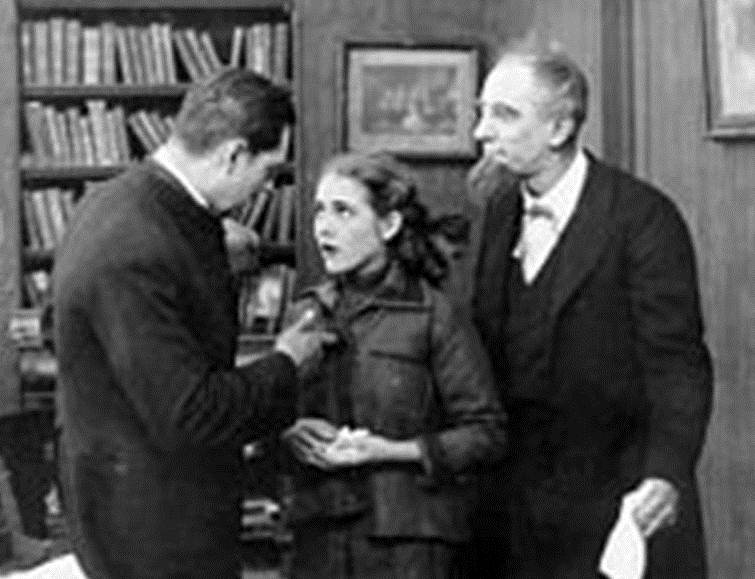
Scene from The New York Hat (Photo Source: Wikipedia)
Her middle-aged granddaughter’s comments 100 years later:
I wish Grandma would have told us the word she missed. The previous Friday, she’d misspelled ‘nihilism’.
An aside—I just discovered an awesome 1912 silent film short called The New York Hat with Mary Pickford and Lionel Barrymore on YouTube. It’s a delightful 10-minute film that will take you back in time. I’d like to thank Kristin who writes a wonderful family history blog called Finding Eliza for finding this film.
Addendum in response to comments–I believe that several films were typically shown during each show. In a post last year I included an May 5, 1911 advertisement for the Bijou Dream Theatre in nearby Milton. It described the four silent films that were being shown on that date.