
Role of Churches in Rural Revitalization

15-year-old Helena Muffly wrote exactly 100 years ago today: 

Sunday, March 12, 1911:  Tweet slept with me last night. I was rather restless. Don’t know whether she was the cause or not. This afternoon I went to Sunday school and church, staid for catechize. Besse and Curt were out this afternoon. I guess they just happened to come because we had some ice cream left from dinner.  

Her middle-aged granddaughter’s comments 100 years later:

Grandma faithfully attends Sunday school in the diary. I’m still trying to figure out why the Baptist Church in McEwensville which Grandma apparently attended closed and vanished from the scene a few years later (See February 5 entry).
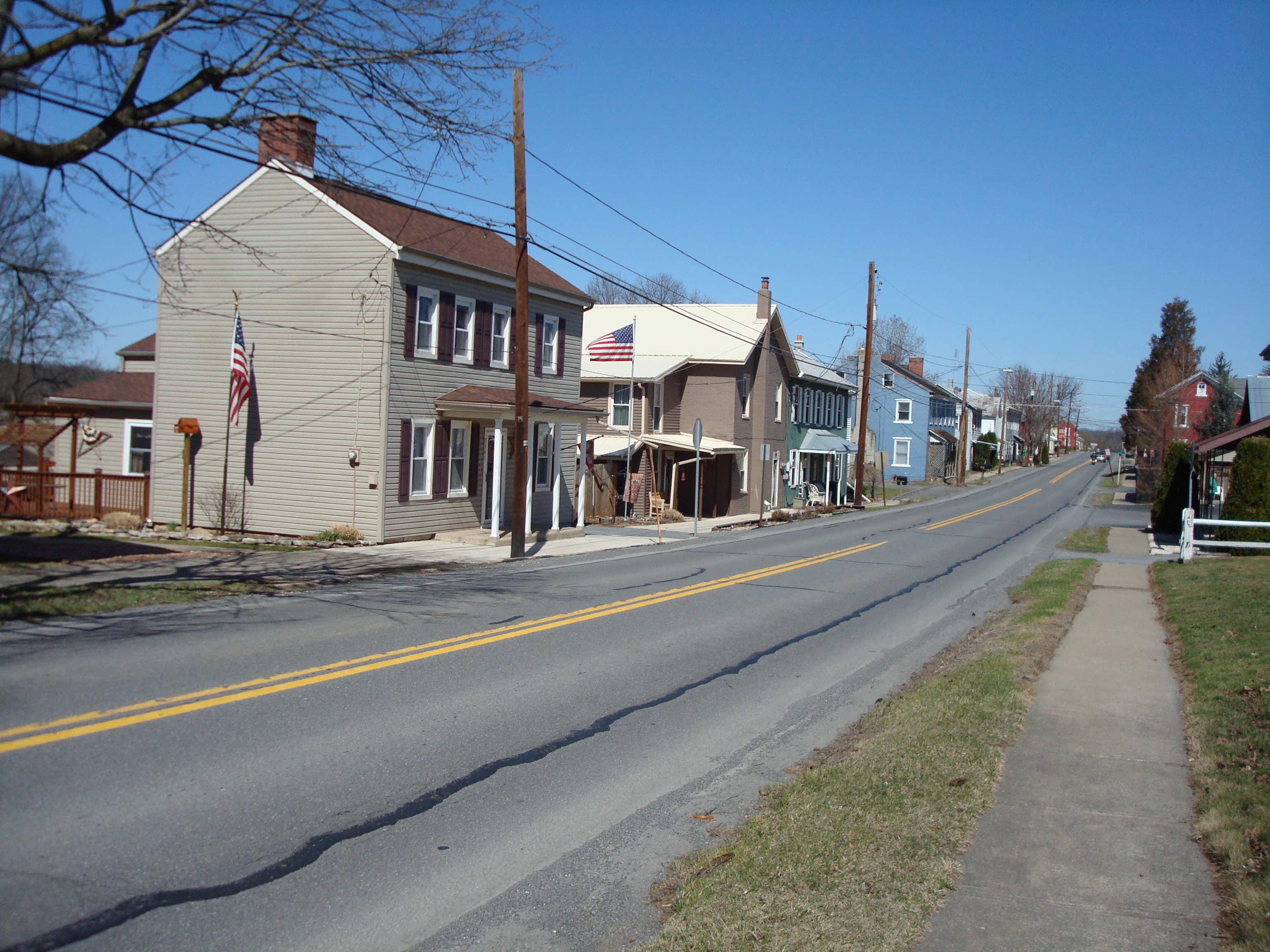
The Baptist church building was demolished years ago, but it was located somewhere in this section of Main Street.

There were many different denominations and ethnically-based churches scattered across rural America a hundred years ago. And memories were still strong of the ancestors who had migrated to the United States for religious reasons.  Those who traced their ancestry to Germany often attended a Lutheran or Baptist church. The Scot-Irish generally were Presbyterian and so on.

There were a number of church closures early in the 20th century and the McEwensville Baptist probably was caught up in those closures. As the older generation  passed on–and the differences across the various protestant denominations seemed less clear to younger people–many tiny, struggling rural churches closed.

Also, in 1911 national leaders in the United States believed that there was a “rural problem” because so many rural youth were migrating into the cities. The Country Life Commission published a plan for revitalizing the countryside a hundred years ago. The Commission believed that little rural churches with few social activities and members who bickered with members of neighboring churches were part of the problem with rural life—but that churches had a role in revitalizing rural America. (I’ve heard elderly people say that in the old days you knew people didn’t get along if there were more churches in a town than bars.)

The present system of little struggling churches involves great financial and moral waste, divides rural people instead of uniting them. . . Still, federation and cooperation embody the dominant spirit of the age we are now entering . . .

If the church is to play any important part in rural reorganization, it must evolve a program for social betterment and make its ministrations such as will enable it to render effective social service. Only a giving church is a growing church. There are many real needs of rural people which today call for ministration, and the church should set itself the task of finding these and trying to serve them.

Rural Life and Education: A Study of the Rural-School Problem as a Phase of the Rural-Life Problem (1914) by Ellwood Cubberley

That said, in 1911 the McEwensville Baptist Church seems to be meeting Grandma’s needs. She mentions attending church or Sunday school every week in her diary.

Nicknames

15-year-old Helena Muffly wrote exactly 100 years ago today: 

Saturday, March 11, 1911:  I had to bustle around and do some work today. I did most of it this forenoon and too a rest this afternoon. Helen Wesner alias Tweet was coming down to go along with Rufus to a play at W. tonight and I poor kid had to stay at home.

Her middle-aged granddaughter’s comments 100 years later: 

This is the first time in the diary that Grandma referred to Helen Wesner as Tweet—though she’s previously mentioned her. (And, be sure to see the Tweet ‘Tweeting’ posting.)

Grandma calls her sister Ruth Rufus in this entry. Both Ruth and Helen were three years older than Grandma. W. probably refers to the nearby town of Watsontown.

Watsontown Brick Company

15-year-old Helena Muffly wrote exactly 100 years ago today: 

Friday, March 10, 1911:  Pulled a girl’s ears at school. It was her birthday. Will be glad when mine comes along. Hope tomorrow will prove more stirring than what today had been.

Her middle-aged granddaughter’s comments 100 years later:

Grandma’s sixteenth birthday will be on the first day of spring—March 21. It sounds like she’s already looking forward to it. This is the second time that pulling ears on someone’s birthday has been mentioned in the diary.

____________________

On days when Grandma writes little of interest, I always wish that she’d described her daily routines more. For example, what time did school start each morning? And when Grandma walked to school each morning were there men going in the opposite direction towards jobs in Watsontown?

The road Grandma walked to school each morning. It would have been dirt (or mud) in 1911.

Raymond Swartz, Grandma’s classmate at McEwensville High School and future husband, wrote a short family history many years later. He mentioned working in the Watsontown Brick Plant a few years after he graduated from McEwensville High School.

The next five years I spent working for father on the farm with the exception of three months in the winter of 1918 when I worked at the Watsontown Brick Plant. To do that, it was necessary to get up at four o’clock in the morning in order to get some of the morning chores done on the farm and then leave home to drive a horse and buggy to work about six-fifteen. Work at the plant started at seven o’clock and lasted until five o’clock. Then I drove home and helped with some of the chores in the evening. We worked five hours on Saturdays. For the three months work I received $228.00 which was good wages in those days.

Raymond Swartz

Watsontown Brick Company was founded in 1908, and a hundred years ago other strong young men were probably making the daily trip on the road from McEwensville to Watsontown to earn a good wage for a hard day’s work.

Bricks are still produced in Watsontown and sold nationally. The town is famous for its clay soils that make excellent bricks.

Causes of Catarrh (Colds in the Head)

15-year-old Helena Muffly wrote exactly 100 years ago today: 

Thursday, March 9, 1911:  I have cold, and a sore nose, but my nose was worse than my cold. I just had to keep rubbing at it all day. It is a beautiful pink now. I didn’t feel very good today. Well who would with a sore nose and a blistered hand.

Her middle-aged granddaughter’s comments 100 years later: 

Grandma’s just having a bad week. See yesterday’s post  for more details about Grandma’s blistered hand.

A hundred years ago there a basic understanding that germs caused colds—but the focus was on keeping resistance high so that the germs wouldn’t take root and cause the cold.

CATARRH, COLD IN THE HEAD

Cause—There are many causes of catarrh; sudden change of temperature, too light clothing, sitting in a draught, chilly atmosphere, or anything that will cause a cold in the head. Exposure to cold lowers the resistance of the body to infection, and, what is more interesting still, it has been proved that in regard to various diseases which are known to be caused by micro-organisms, and especially in regard to pneumonia, we may carry the organisms about with us and not suffer, and yet that exposure to cold may at once enable the microbes to take root.

Compendium of Every Day Wants (1908)

Treatments for Scalds and Burns a Hundred Years Ago

15-year-old Helena Muffly wrote exactly 100 years ago today: 

Wednesday, March 8, 1911: I arose with the feeling this morning that things were sure to go wrong today and they certainly did this forenoon. I had the misfortune to scald my left hand this morning. Be told, if you weren’t careful you had to suffer surely enough. Oh how my hand did burn this morning. I was in agony nearly all forenoon, and then we had examinations too, but every day brings some new pleasure in life to balance with the pain.

Her middle-aged granddaughter’s comments 100 years later: 

I guess that Grandma was a bit of a klutz. This is the second time in five weeks that she burned her hand—the previous time was on February 6 when she burned it on the wood or coal stove at school while horsing around. And, on February 19 she’d cut her finger while doing dishes.

Recommended treatments for burns have changed over the past hundred years. The Compendium of Every Day Wants  recommended:

SCALDS AND BURNS

Treatment No. 1.—A good remedy to apply to burns is a mixture of equal parts of linseed oil and lime water. This is shaken and applied by saturating cloths and placing them over the burned places, and over the cloths place cotton batting or flannel. Secure the whole with a light bandage. The air must be kept from all burns. This is of primary importance and they must also be kept warm.

Treatment No. 2.—Burns may be treated with fresh lard, lard oil, sweet oil, vaseline, cold cream or olive oil. Wrap in cotton batting or flannel.

Treatment No. 3.—Carbonate of soda is the best of all remedies in cases of scalds and burns. It may be used on the surface of the burned place, either dry or wet. When applied promptly the sense of relief is magical. It seems to withdraw the heat, and with it the pain, and the healing process commences.

Treatment No. 4.—A coating of wheat flour or cornstarch can be used if the soda is not handy, but if the skin is open, better use linseed oil, olive oil, or vaseline.

Compendium of Every Day Wants (1908)

Medicinal Value of Vegetables

15-year-old Helena Muffly wrote exactly 100 years ago today:

Tuesday, March 7, 1911: Oh pshaw, it’s a hard task to write something, when you have nothing to write. We had onions for supper, and I can taste them yet. I am not very anxious for the morrow, for with it some questions to be answered, but they might be easier than what I think they really are.

Her middle-aged granddaughter’s comments 100 years later:

In Grandma’s day onions were considered to be good for the nerves—though they don’t seem to have done much to calm Grandma’s anxiety. The October 1910 issue of National Foods Magazine listed 12 vegetables with medicinal value. (The list suggests that nervousness and constipation were frequent problems a hundred years ago.)

Medicinal Value of Vegetables

Watercress is an excellent blood purifier.

Lettuce has a soothing effect on the nerves and is excellent for sufferers of insomnia.

Tomatoes are good for a torpid liver, but should be avoided by gouty people.

Onions are a tonic for the nerves.

Spinach has great aperient qualities and is far better than medicine for constipation.

Beet root is fattening and is good for people who want to put on flesh. So are potatoes.

Parsnips possess the same virtues as sarsaparilla.

Apples, carrots, and Brazil nuts are excellent for sufferers from constipation.

Celery contains sulphur and helps to ward off rheumatism. It is also a nerve tonic.

Dates are exceedingly nourishing and also prevent constipation.

The juice of grapes is laxative but the skin and seeds are likely to cause constipation.

Bananas are beneficial to sufferers from chest complaints.

National Foods Magazine (October, 1910)

Electrified for a Few Moments

15-year-old Helena Muffly wrote exactly 100 years ago today: 

Monday, March 6, 1911:  I passed a rather restless night. I was most too tired to sleep. I did some moaning before the night was over. It snowed in the night. Daddy took me to school this morning. What M.C.R. did at S. Was so electrified for a few moments. I got a ride home tonight. Did today’s walking yesterday.

Her middle-aged granddaughter’s comments 100 years later: 

I have no idea who M.C.R. was (another unsolved mystery in this diary!) or what was done—but it sure seems to have made an impression. Today’s “walking yesterday”, refers to walking the rails to Turbotville the previous day.