1911 Advice for Recent Brides

16-year-old Helena Muffly wrote exactly 100 years ago today: 

Saturday, June 10, 1911: The carpenters went away today and I sort of miss them, especially in my stack of dishes. Heard this morning that we will have the same old teacher back that we had last year. Mrs. Edith Reynolds was here a little while this afternoon. Came with her Harry.

Her middle-aged granddaughter’s comments 100 years later:

I wonder if Grandma ever got to know the two carpenters she thought were cute who were helping build the barn addition.

Grandma’s friend Edith and her fiancé  Harry got married in April—on the same day that Edith graduated from high school. I wonder how the marriage was going two months later. The April 1, 1911 issues of Ladies Home Journal had this advice for recently married women:

Marriage

One thing the bride must try to remember: If things seem awry, if the home you have gone to isn’t like you thought it would be, and life begins to seem like a disappointment, it is your love, not his, that is inadequate. In the first glow of love you believed that his presence would glorify a hut; if the glory is gone it is yourself that has changed—not he. Can you understand this? You will some day.

Happily for us all, the boy and girl once married have courage to face facts that they do not quite understand; they have some sense of the sanctity of a vow taken under the auspices of religion and law; and, better still, they love each other deeply and truly, even while they misunderstand. This will tide them over until the child comes, and with its coming, if they are decent young folk, comes the utter irrevocableness of their union. They are parents. As such the dignity with which childish eyes will soon invest them begins to hang visibly about them. They dare not fail then in “their great task of happiness.”

“The Ideas of a Plain Country Woman,” Ladies Home Journal (April 1, 1911)

Whew, in 1911 they sure put a lot of the responsibility for a happy marriage on the woman—
Are You Obese?: 1911 and 2011

16-year-old Helena Muffly wrote exactly 100 years ago today: 

Friday, June 9, 1911: Must have forgotten what I did today. It won’t come into my head when I am ready to write it down.

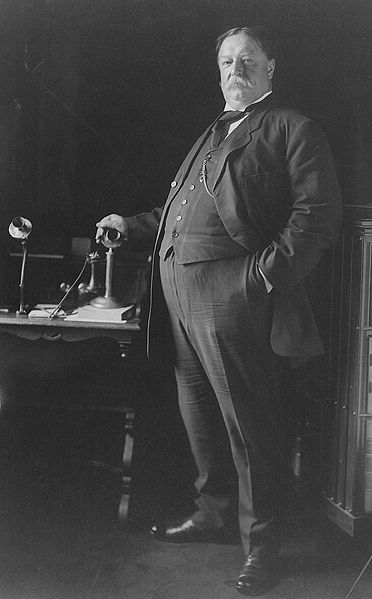
 William Taft (President in 1911): The most obese president in US history

Her middle-aged granddaughter’s comments 100 years later:

Since Grandma didn’t have much have much to say today, I’m going to go off on a tangent. When I look at photos from a hundred years ago some of the people look stout to me—well, frankly they look obese.

We hear that people are more likely to be obese today than in the past—and I wondered what people considered a healthy weight to be a hundred years ago.

I did a little research and found how one author defined obesity 100 years ago. According to Anna M. Galbraith, M.D. in a book published in 1911 called Personal Hygiene and Physical Training for Women:

Women should range in weight from one and eight-tenths to two and two-thirds pounds to each inch in height. In order to determine your own factor in this respect divide your weight in pounds by your height in inches. Any weight above two and one-half pounds to the inch in stature may be considered as excessive, inasmuch as it adds nothing to one’s mental or physical efficiency, and is frequently the forerunner to obesity.

According to the book, in 1911 the average woman was 5 feet 4 inches tall and weighed 133 pounds. According the Center for Disease Control and Prevention website the average woman today is still 5 feet 4 inches tall, but now weighs 165 pounds.

The chart above indicates when a woman was considered normal weight, overweight, and obese in 1911 and 2011. I was amazed to discover that according to the chart I’d be considered normal weight in 1911, but overweight today.

For 1911 I used the quote above to estimate the weights. I assumed that:

Normal weight = 1.8 pounds X height in inches to 2. 5 pounds X height in inches

Overweight = 2.5 pounds X height in inches to 2.67 pounds X height in inches

Obese =  Over 2.67 pounds X height in inches

Today a person’s body mass index (BMI) indicates whether they are a healthy weight. BMI is calculated based upon a person’s height and weight and is calculated using a formula that is more complex than the ones used in 1911.

A Camera

16-year-old Helena Muffly wrote exactly 100 years ago today: 

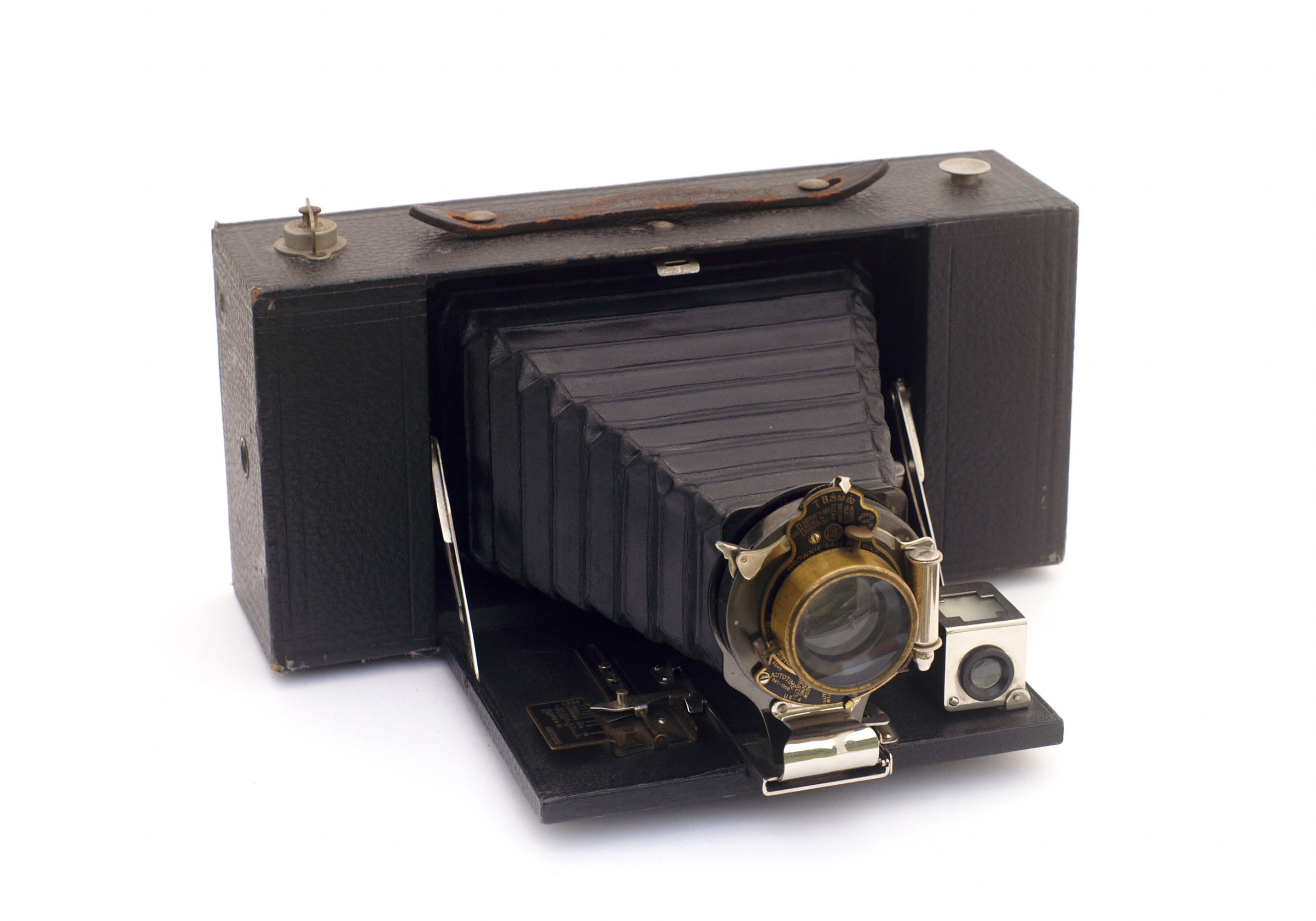
Thursday, June 8, 1911: I got my camera this morning which I had sent for about a week ago. I have a kind of cold that is not to my liking.

Folding Kodak Brownie Camera Model A (Manufactured: 1909-1915)*

Her middle-aged granddaughter’s comments 100 years later:

I didn’t realize until I read this diary entry that relatively inexpensive, easy-to-use cameras apparently were widely available a hundred years ago.

I was also surprised that Grandma received the camera only about a week after she ordered it. It often takes almost that long today to receive items that I order off the internet.

Grandma probably needed to go into Watsontown to pick up the package that contained the camera since rural parcel post didn’t begin until 1913. According to Wikipedia: “On January 1, 1913, parcel post service began, providing rural postal customers with package service along with their regular mail and obviating a trip to a town substantial enough to support an express office.”

Local merchants across the US had strongly opposed parcel post because they thought that it would give catalog companies an unfair advantage and drive them out of business, but policies were finally changed and it was implemented.

*Photo Source: Camera-Wiki.org (Photo by Steve Harwood)

Found photos of Ruth, Bill, Jimmie, Rachel, and Blanche!!

16-year-old Helena Muffly wrote exactly 100 years ago today: 

Wednesday, June 7, 1911: Can take a rest now since the hurrying, scurrying has subsided in part.

Her middle-aged granddaughter’s comments 100 years later:

A hundred years ago today was the day after a big event. The previous day, the addition to the Muffly barn was raised.

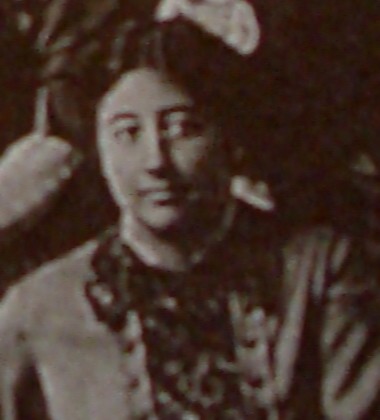
Since this entry doesn’t take much explanation, I’m going to share some photos of five people mentioned in the diary that I didn’t previously have photos of.  As I’ve worked on this blog, I’ve so often wondered what Grandma’s sister Ruth (and to a lesser extent the others) looked like. Now I know.

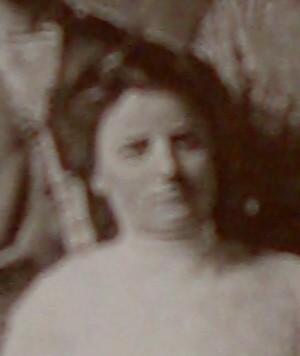
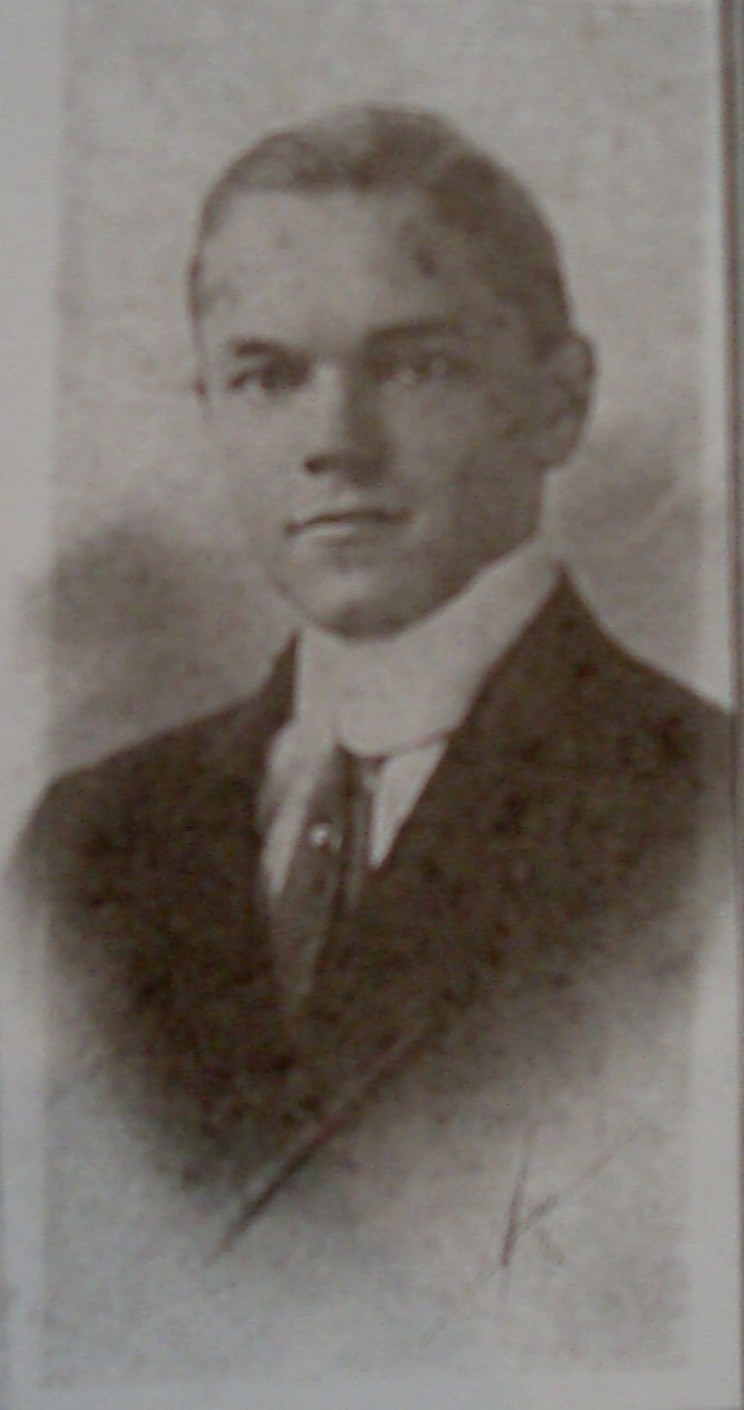
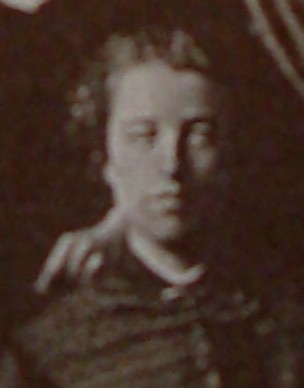
Lois Everitt recently shared her copy of an awesome book with me: The History of McEwensville Schools: 1800-1958 by Thomas S. Kramm. The book contained photos of Grandma’s sister Ruth, her brother Jimmie, her friends Rachel Oakes and Blanche Bryson, and Ruth’s future husband Bill (Willliam) Gauger. I contacted Mr. Kramm and he very generously allowed me to include the photos in this blog. (Lois and Tom—Thank you!! I couldn’t do this blog without wonderful people like you sharing materials and information with me. )

Now the photos:

Grandma's sister: Ruth Muffly (1913)
Ruth's future husband: Bill (William) Gauger (1913)
Grandma's brother: Jimmie Muffly (1915)
Grandma's friend; Rachel Oakes (1913)
Grandma's friend, Blanche Bryson (1913)

Ruth, Rachel, Blanche, and Bill  were teachers. Rachel was the elementary teacher at McEwensville. Ruth and Blanche were teachers at one-room school houses in the surrounding area. Bill was the teacher at McEwensville High School from 1913-15. A hundred years ago teachers were not required to have college degrees. For example, Ruth graduated from McEwensville High School in spring 1911—and she was already teaching elementary school by Fall 1911.

The picture of Jimmie is from a 1915 school photo of students at McEwensville School.

I’ve also added these photos to the People page.

It feels good to be able to cross five names off my list of photos that I’m searching for–though the quest never quite ends. I’m still looking for photos of Grandma’s father (Alfred Muffly), her oldest sister (Besse Muffly Hester), and two friends (Carrie Stout, Helen “Tweet” Wesner). If anyone has a photo of any of these people–and is willing to share, send it my way and I’d be happy to post.

Food for a Barn-Raising

16-year-old Helena Muffly wrote exactly 100 years ago today: 

Tuesday, June 6, 1911: We had the raising of the barn this morning. Tweetie and her mother were here to assist. Besse also. Perhaps you may think I was in my highest ecstasy, a hovering among the dishes. M.C.R. was here. Good night.

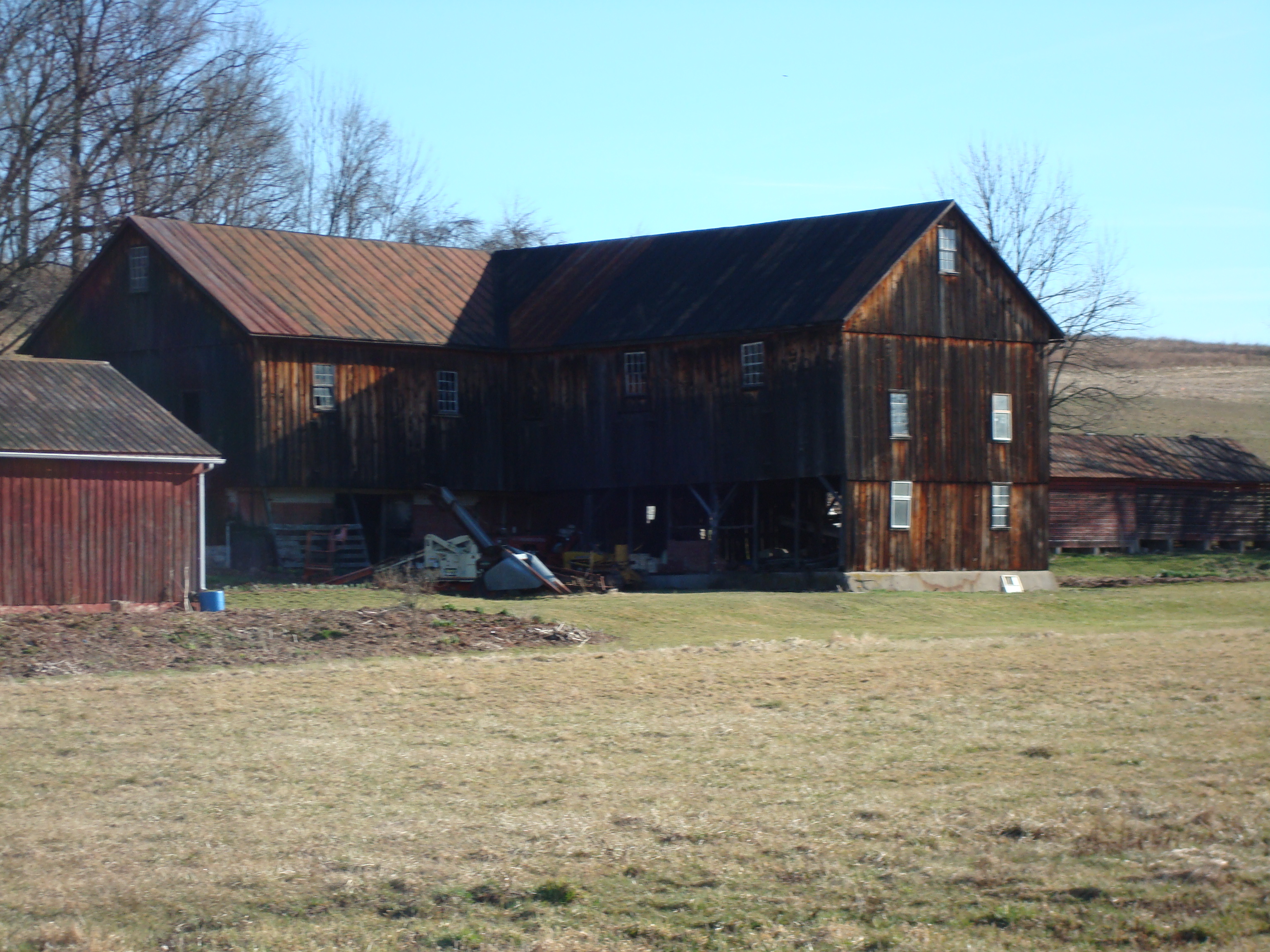
Recent photo of the barn on the farm where Grandma lived when she wrote the diary. Which part was the addition that was raised a hundred years ago today?

Her middle-aged granddaughter’s comments 100 years later:

It’s amazing how neighbors helped one another a hundred years ago. I wonder how many men helped with the raising of the barn addition, and how much food Grandma helped prepare and serve. The Mennonite Community Cookbook by Mary Emma Showalter contains a menu for a barn raising. The book was published in 1950—but the author writes that the menu was found in an old hand-written recipe book of her great-grandmother’s so it’s old:

Food for a Barn Raising

(Enough food for 175 men)

115 lemon pies

500 fat cakes (doughnuts)

15 large cakes

2 gallons applesauce

3 gallons rice pudding

3 gallons cornstarch pudding

16 chickens

3 hams

50 pounds roast beef

300 light rolls

16 loaves bread

Red beet pickle and pickled eggs

Cucumber pickle

6 pounds dried prunes, stewed

1 large crock stewed raisins

5 gallon stone jar white potatoes and the same amount of sweet potatoes

  The Mennonite Community Cookbook by Mary Emma Showalter

Rhubarb Sponge Pie Recipe

16-year-old Helena Muffly wrote exactly 100 years ago today: 

Monday, June 5, 1911: Mother, Besse and Ruthie flew around today a baking pies and cakes. I thought it be fun to swipe one, but oh, the result.

Rhubarb Sponge Pie

 Her middle-aged granddaughter’s comments 100 years later:

Grandma’s married sister Besse came to help her mother and sister bake pies and cakes. It sounds like Grandma didn’t help—I wonder why. As a 16-year-old, you’d think that she’d be a competent baker (or at least could help with some of the easier tasks). But instead Grandma apparently was clowning around—and swiped a pie—and got into trouble. Whew, what  punishment was referred to as “the result”?

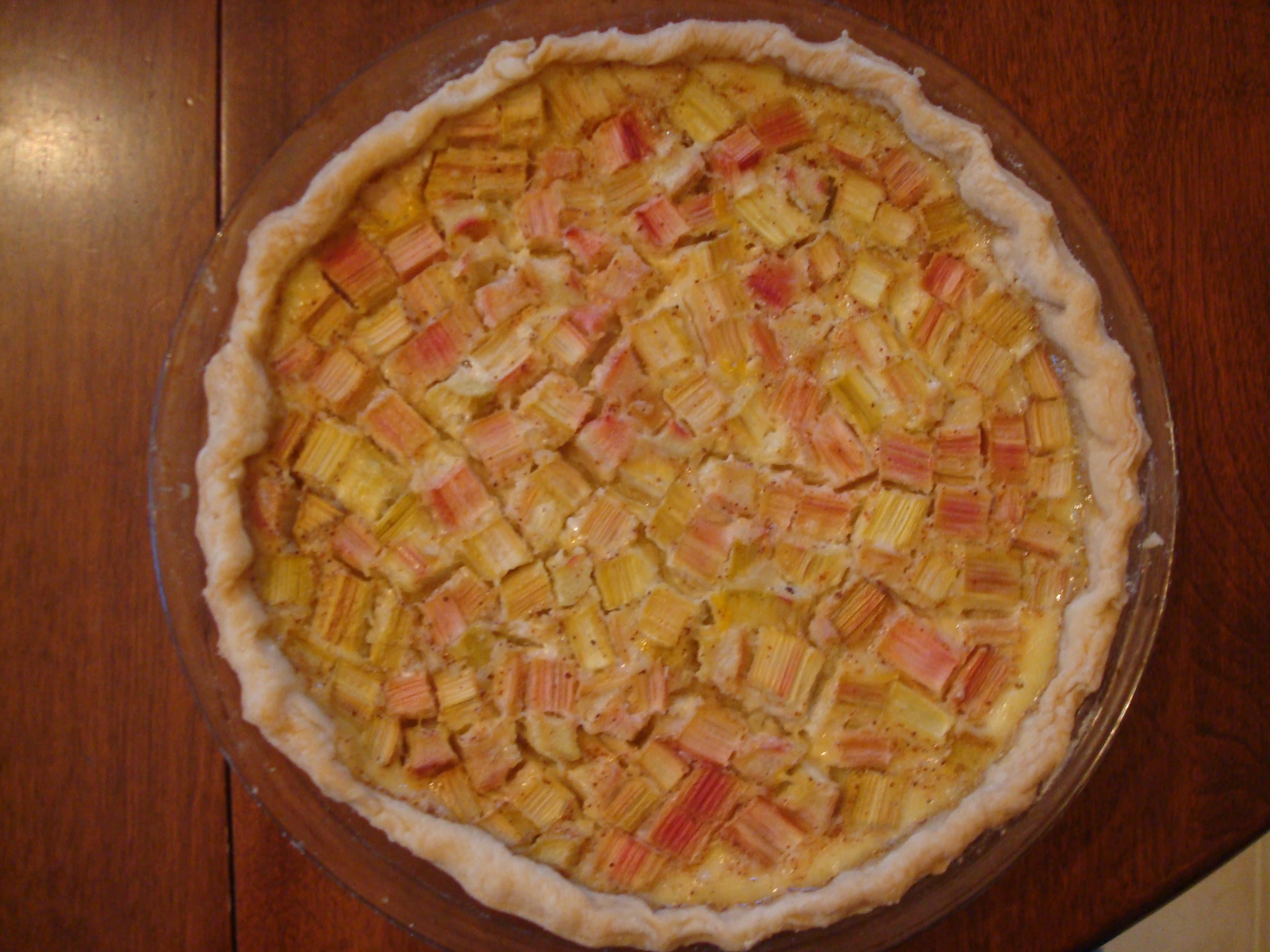
What kinds of pie did they make? My favorite old-fashioned spring pie is Rhubarb Sponge Pie. (I got this recipe from my mother-in-law. However, it is an old-time Pennsylvania recipe—and the Muffly women may have made a similar pie.)

Rhubarb Sponge Pie

3 eggs

3 tablespoons all purpose flour

1/2 teaspoon nutmeg

3/4 cup sugar

dash salt

1 cup milk

2 cups rhubarb

9 inch pie shell (see recipe below)

Heat oven to 425 degrees. Beat eggs slightly. Add flour, nutmeg, sugar, and salt; Beat for 1 minute. Add milk and beat until blended. Stir in rhubarb. Bake at 425 degrees for 5 minutes. Reduce heat to 325 degrees. Bake (1 – 1  1/2 hours*) until knife inserted into center of pie comes out clean.

*This pie takes a long time to bake. If the rhubarb starts to turn brown (burn) before the center of the pie is solid, reduce heat to 300 degrees.

Any pie pastry recipe—or a pie pastry purchased at the store— can be used to make Rhubarb Sponge Pie. But for a really flakey crust with an absolutely awesome taste, make an old-fashioned pie shell using lard.

I absolutely love the recipe below. At the stores where I shop lard can be surprisingly difficult to find—and I am always searching for it so that I can make really good pies. (Clayton and Elizabeth, thank you for the lard that I used to make the pie in the photo!)

In any case, here’s the recipe:

Old-Fashioned Pie Pastry (1 crust, 9 inch)

 1 cup flour

1/3 cup lard

2 to 3 tablespoons cold water

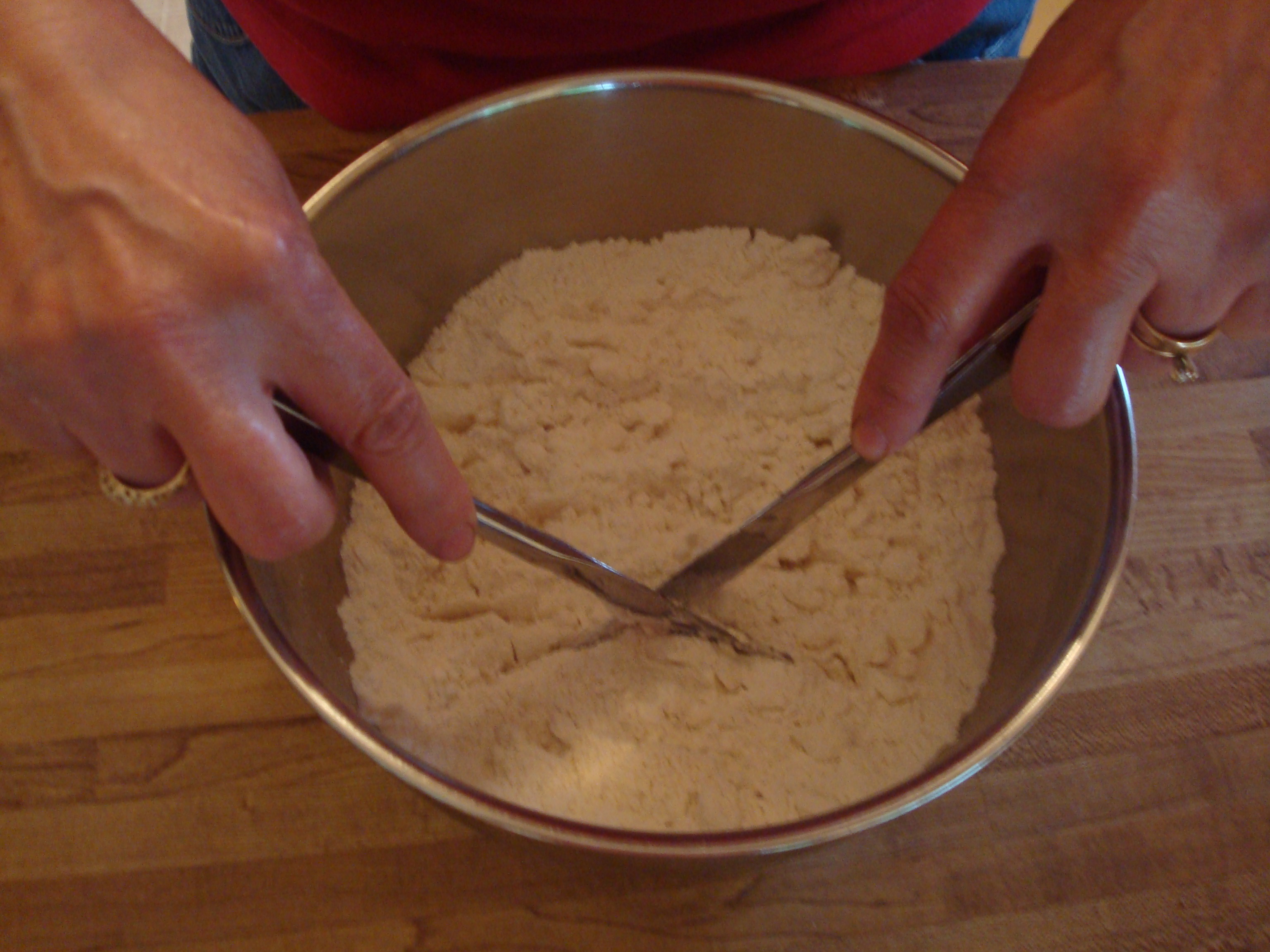
Put flour into bowl. Cut in shortening  using two knives or a pastry blender. Add water and mix using a fork until dough starts to cling together. If needed, add additional water.

With a little practice it’s easy to cut lard (or shortening) into the flour using two knives. I learned how to do it when I was young and have never felt a need to buy a pastry blender.

Gather dough together in a ball. Flatten into a round circle on lightly floured surface (a floured pastry cloth works well).  Roll dough 2 inches larger than needed to fit pie pan using floured rolling pin. Fold pastry into quarters; unfold and fit into pan.

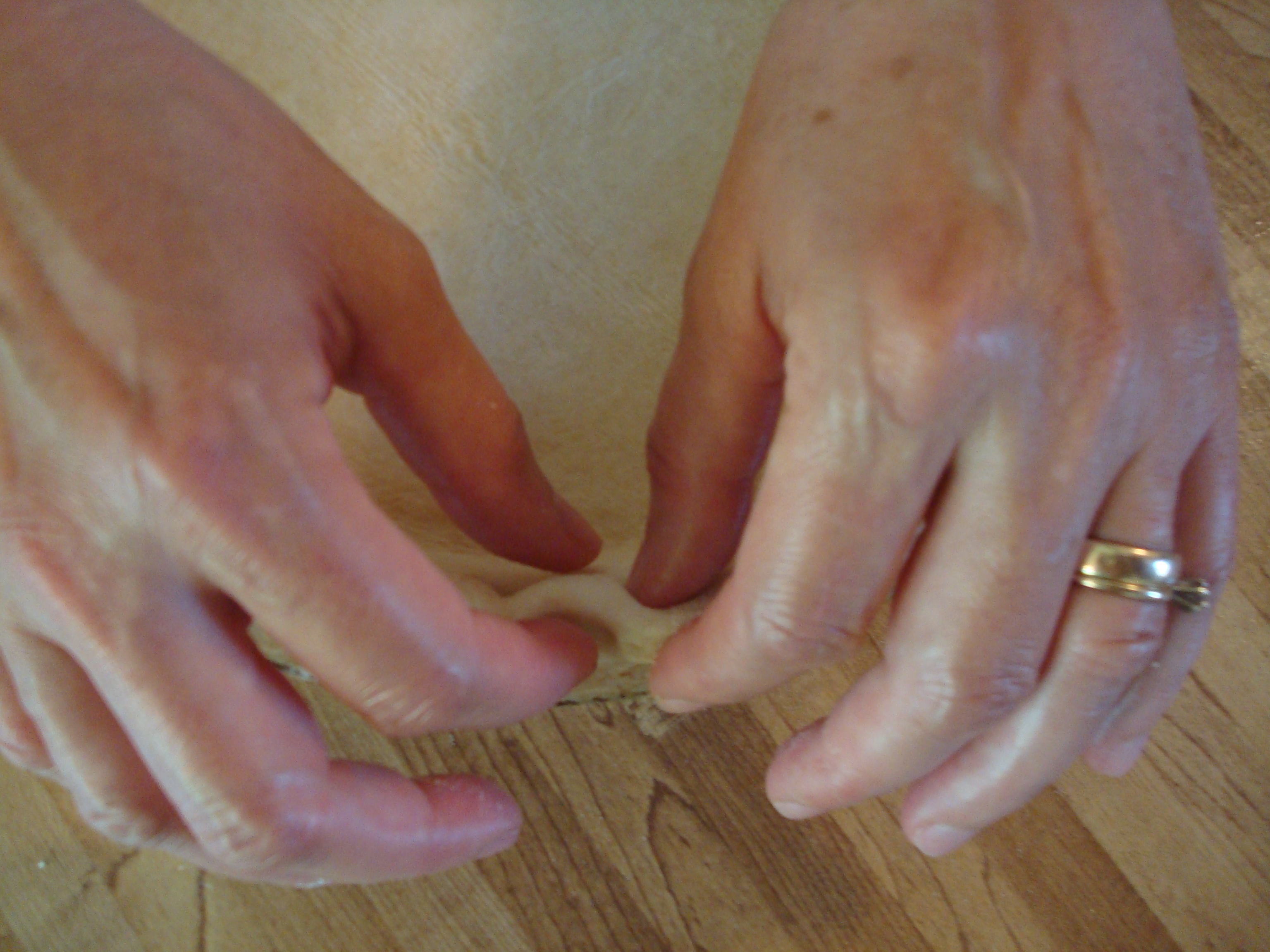
Trim  edge of pastry 1/2 inch from rim of pan. Flute pastry to create edge by pressing between fingers that are moving in opposite directions.

Fluting pie edge

A Spanking and a Growling

16-year-old Helena Muffly wrote exactly 100 years ago today: 

Sunday, June 4, 1911: Went to Sunday school this afternoon. Carrie Stout was over this evening. Somehow she happened to stay so late that her mother came after her. Guess she got a spanking and maybe a growling also.

 Her middle-aged granddaughter’s comments 100 years later:

Even though there have been previous diary entries about mothers using corporal punishment to discipline teens (see the February 25 entry where Grandma’s mother chased her with a stir stick)—I’m still in shock that parents apparently spanked teen-aged children a hundred years ago. And that the teens apparently accepted the punishment.