16-year-old Helena Muffly wrote exactly 100 years ago today:
Monday, September 11, 1911: Got hit by a stick this afternoon at recess in the region of my left eye. It did hurt a little bit for awhile. It is a little bit sore now.
If I use my imagination I can almost see 16-year-old Grandma, her 6-year brother Jimmie, and the other students playing on the grass outside the old McEwensville School building.
Her middle-aged granddaughter’s comments 100 years later:
I’m amazed that high school students had recess in 1911. The high school and elementary school at McEwensville shared the same building. Apparently the entire building had recess.
Some things are better now than a 100 years ago—but I’d argue that recess for high school students is an example of something at was better a hundred years ago.
Today high school students don’t have recess. And, obesity is an issue. At the high school my children attended I think that they only have two semesters of physical education during the entire four-year program.
16-year-old Helena Muffly wrote exactly 100 years ago today:
Sunday, September 10, 1911: Went to Sunday School this afternoon. I was the only one in my class today. It has happened that way for the past three Sundays. It is simply provoking the way the other girls attend Sunday School.
Her middle-aged granddaughter’s comments 100 years later:
I think Grandma attended the McEwensville Baptist Church and that the church closed sometime before 1920. Based on these diary entries it’s easy to understand why the church was shuttered a few years later.
Since Grandma didn’t write much a hundred years ago today, I’m going to tell you about a historic event that occurred in 1911–
Mona Lisa (Photo source: Wikepedia)
On August 21, 1911 the Mona Lisa was stolen from the Louvre in Paris. I’ve seen several articles recently about the hundredth anniversary of the robbery. For example, the Los Angeles Times had an article about the theft. The picture was eventually recovered in Florence, Italy in 1913.
I tend to think of McEwensville as a very isolated spot in 1911–and that Grandma would have known nothing of events happening half a world away–but actually she may have known about the robbery.
I was amazed to discover that at least one paper in rural central Pennsylvania, the Milton Evening Standard, was covering the story. The September 9 paper discussed the robbery—and that the U.S. secret service was trying to find it.
Source: Milton Evening Standard (September 9, 1911) An aside: I'm not sure why the article says that the painting was stolen on August 22. Modern sources all say that was taken on August 21.
Who would have thought that a hundred years ago today people thought that Mona Lisa was in the U.S.?
16-year-old Helena Muffly wrote exactly 100 years ago today:
Saturday, September 9, 1911: Today was rather a blue Saturday. It was so rainy this morning. Henry the nosey one upset almost a whole bucket full of milk. I felt rather sorrowful, but there was no use of crying over spilt milk.
Her middle-aged granddaughter’s comments 100 years later:
Who was Henry?—a dog?, . . a cat? . . . a calf? I’m guessing that he was a calf that Grandma was trying to feed. He probably was really hungry, and in his enthusiasm managed to tip over the bucket of skim milk.
A hundred years ago cream separators were commonly used. The cream was sold or used to make butter—and calves (and pigs) were fed the skim milk.
Ad in July 1, 1911 issue of Kimball's Dairy Farmer Magazine
According to a book published in 1911 called The Farm Dairy by H.B. Gurler:
The calf should be allowed to take the first milk from its dam as nature requires this and if her rules are violated there will surely be trouble. After the calf has once nursed, it should be removed from its mother but fed its mother’s milk for a few days, depending on the vigor of the calf. Commence to add skim-milk after a week or ten days, adding a small amount at first and increasing it daily until the calf is on an entire skim milk diet.
There are a few simple rules to follow in growing calves on skim-milk. The milk must be sweet; it must be as warm as the mother’s milk and care must be exercised not to feed too much of it. There are many more calves injured by being fed too much skim milk than there are by not having enough of it. Four quarts at a feed twice a day is sufficient for the average-sized calf for the first month.
Add a spoonful of ground flax seed to each feed and teach the calf to eat a little corn-meal as soon as possible. Corn is the most economical food to balance a ration containing so much skim milk. Feed shelled corn as soon as the young calf will digest it well.
16-year-old Helena Muffly wrote exactly 100 years ago today:
Friday, September 8, 1911: Had to laugh at the mistake a certain pupil made in school today. It seemed so comical. Something about sailing to the Spice Islands, wherever they are, and that said person had to remain after school this evening in order to recite her history properly.
1910 map of Molucca Islands (just west of New Guinea). They were sometimes called the Spice Islands. (Source; Commercial Geography, 1911)
Her middle-aged granddaughter’s comments 100 years later:
This was the fourth day of the school year. I bet that the history text used at McEwensville High School began with Columbus discovering American—and that the question that the student missed was something about Columbus searching for the Spice Islands but instead finding America.
Years ago the Molucca Islands were often called the Spice Islands. They are now part of Indonesia. In 1911 they were part of the Dutch East Indies. According to a 1911 textbook:
The Moluccas are still, as they were when Columbus set sail in search of them, and chanced upon America, the spice islands; thought the spice trade has relatively declined in modern times, owing to the use of fresh meat and green vegetables.
Commercial Geography (1911) by Edward Van Dyke Robinson
A footnote indicated that the chief spices from the East Indies were: black pepper, cloves, nutmegs and cinnamon.
16-year-old Helena Muffly wrote exactly 100 years ago today:
Thursday, September 7, 1911:Really nothing so very much for today. Am getting used to going to school now.
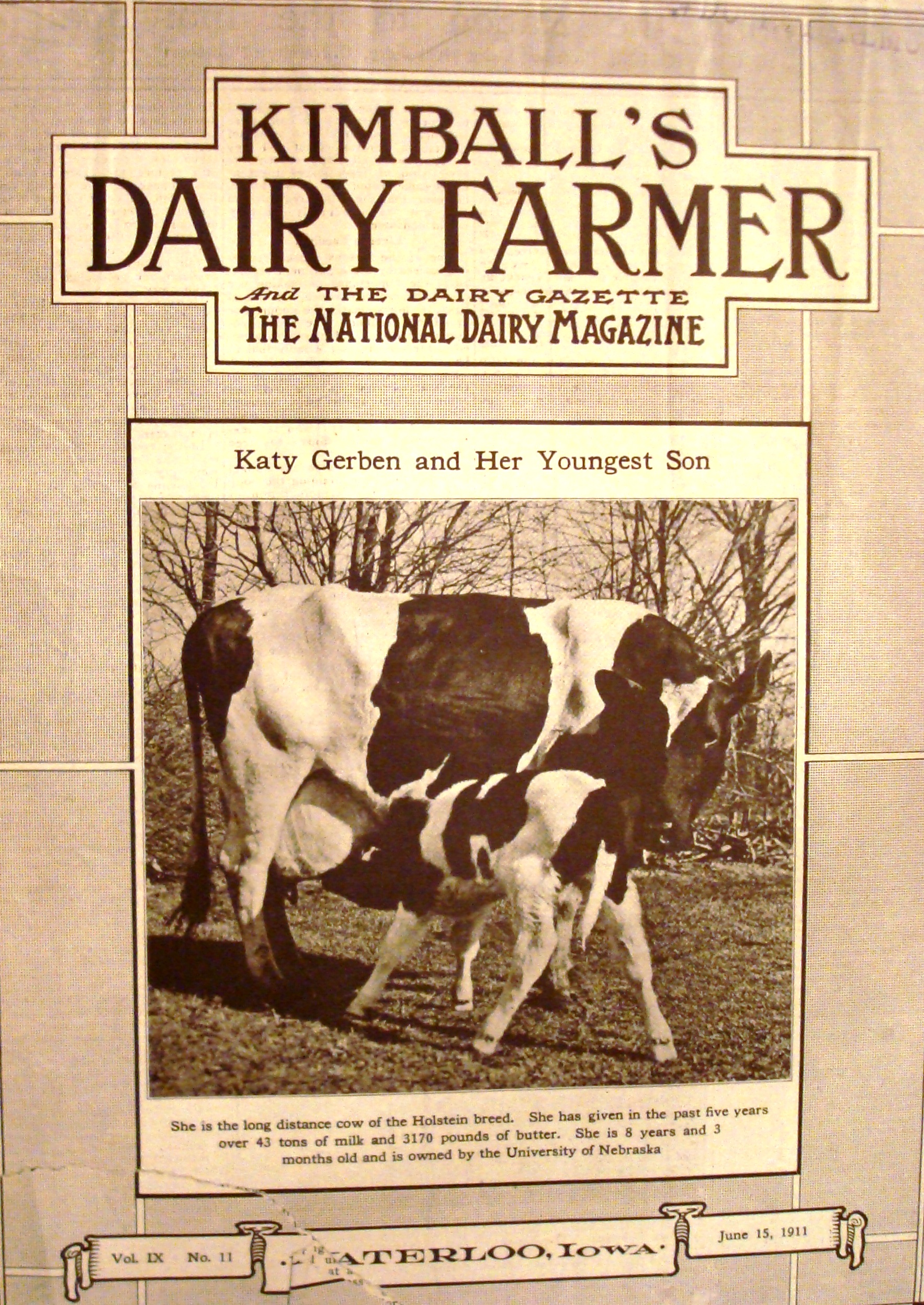
The caption says, "Every Dairyman Should Take a Vacation."
Her middle-aged granddaughter’s comments 100 years later:
Since Grandma didn’t have much to say a hundred years ago today, I’m going to go off on a tangent.
Summer’s over—and based on the diary I don’t think that the Muffly’s took a vacation during the summer of 1911. I just assumed that farmers didn’t take vacations back then because the animals needed to be fed regularly and the cows needed to be milked twice each day.
I was surprised to discover that my assumption was wrong and that some dairy farmers did take vacations a hundred years ago. The cover story in the July 15, 1911 issue of Kimball’s Dairy Farmer magazine recommended that dairy farmers take vacations.
However, apparently many farmers took vacations without their families–and they left their wives at home to do the farm work. The article reprimanded men who did this:
The farmer’s vacation should include other members of the family besides himself. The wife who has been struggling through the entire year with her difficulties and her tasks that oftentimes seem hopelessly burdensome should share in the recreation pleasures.
16-year-old Helena Muffly wrote exactly 100 years ago today:
Wednesday, September 6, 1911: Have to study in the evenings now, instead of sitting around, reading or doing nothing. I got stuck on an algebra problem this evening. Don’t know whether I’ll get it yet or not. I know how to work the problems of that kind but this is a bulky one.
Her middle-aged granddaughter’s comments 100 years later:
I suppose Grandma forgot some math over the summer.
Here are some problems in the first chapter of an algebra book that was published in 1911. Maybe the problems Grandma was struggling with were similar to these.
A bicycle and suit cost $54. How much did each cost, if the bicycle cost twice as much as the suit?
Two boys dug 160 clams. If one dig 3 times as many as the other, how many did each dig?
The average length of a fox’s life is twice that of a rabbit’s. If the sum of these averages is 21 years, what is the average length of a rabbit’s life?
The water and steam in a boiler occupied 120 cubic feet of space and the water occupied twice as much space as the steam. How many cubic feet did each occupy?
Canada and Alaska together annually export furs worth 3 million dollars. If Canada exports 5 times as much as Alaska, find the value of Alaska’s export.
The poultry and dairy products of this country amount to 520 million dollars a year, or 4 times the value of the potato crop. What is the value of the potato crop?
First Year Algebra (1911) by William J. Milne
For additional 1911 math problems see these previous posts:
16-year-old Helena Muffly wrote exactly 100 years ago today:
Tuesday, September 5, 1911: Started to school this morning. Jimmie started also. The teacher we have at present is a substitute, so that will be something like starting in twice when our real teacher comes back.
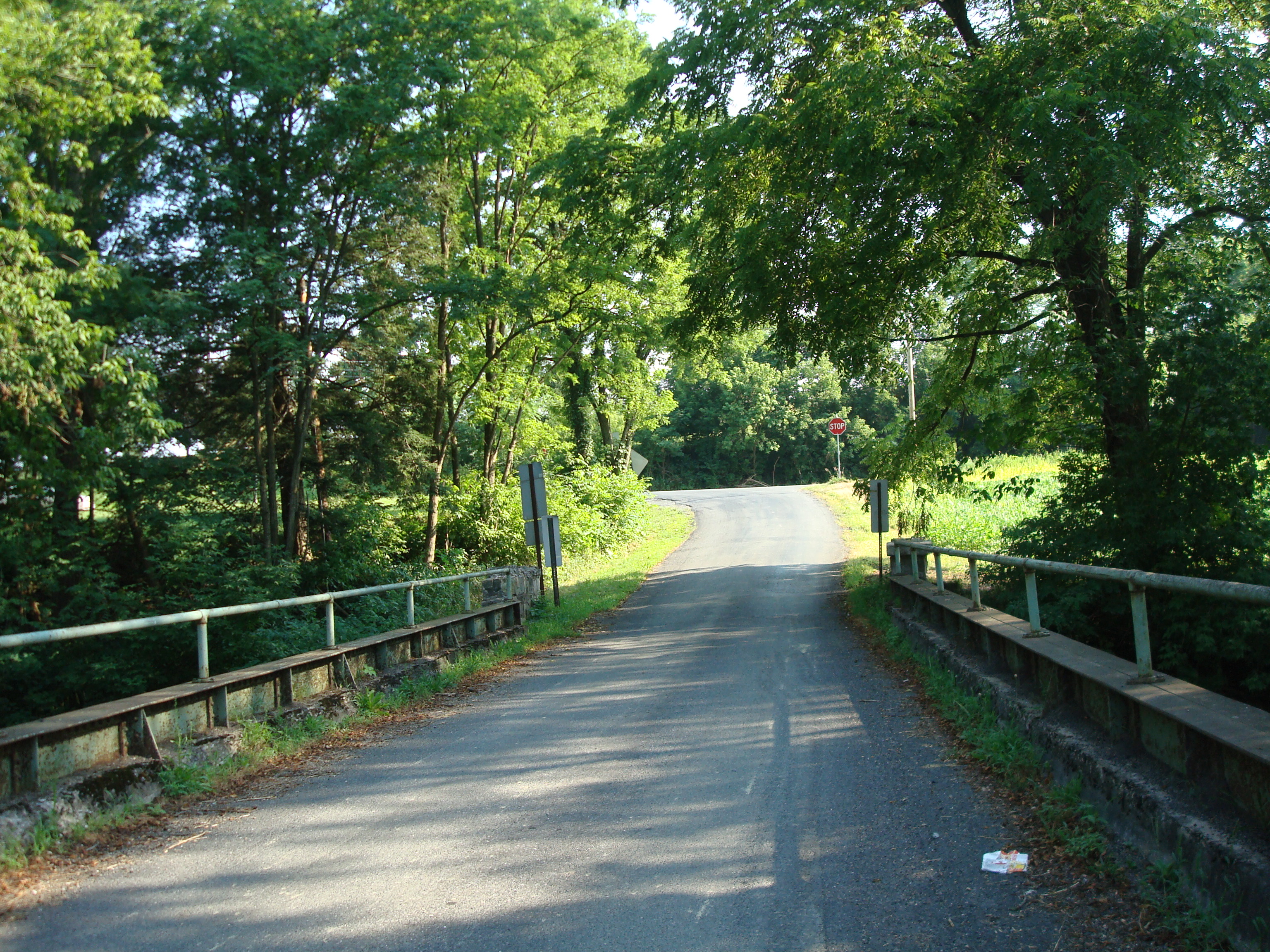
Recent photo of building the once housed McEwensville School.
Her middle-aged granddaughter’s comments 100 years later:
Both Grandma and her little brother Jimmie attended the school at McEwensville. Grades 1 through 8 were on the first floor of the building. Jimmie was starting first grade. There was no kindergarten, so this was Jimmie’s very first day ever as a student.
The high school was on the second floor of the building. It was a 3-year high school and Grandma was starting the 2nd year of high school.
Maybe Jimmie’s teacher had the students play some games. According to a book published in 1911 called Social Plays: Games, Marches, Old Folk Dances and Rhythmic Movements:
Games and plays have an important educational value. The sense perceptions are quickened, the motor powers are strengthened, powers of volition, inhibition, and accuracy are gained through them. By their agency is acquired a balanced power of will, the love of fair play, and a sense of true moral . . .
Here are the directions in the 1911 book about how to play The King of France:
The King of France
The King of France with forty thousand men
Marched up the hill and then marched down again.
The players stand in two rows facing each other, each row having a leader, which is the king leading his army. The players imitate the motion given by the kings, who take turns at singing the verse, at the same time marching forward at the first line of the verse and back to t their places during the second line, imitating the motion that is to be taken by all. The verse is then sung by both groups, advancing toward each other and retreating.
Social Plays: Games, Marches, Old Folk Dances and Rhythmic Movements (1911)