Teaching Farm Kids the Value of Money

16-year-old Helena Muffly wrote exactly 100 years ago today: 

Monday, September 25, 1911:  Our old teacher Mr. Northrop came back to teach school today. I like him better than the substitute we had. Sold Mollie’s calf today. Weighed 145 lbs. Came to $10.87. Quite a vast sum to get all at once. Guess I’ll save it and get a watch or something as useful.
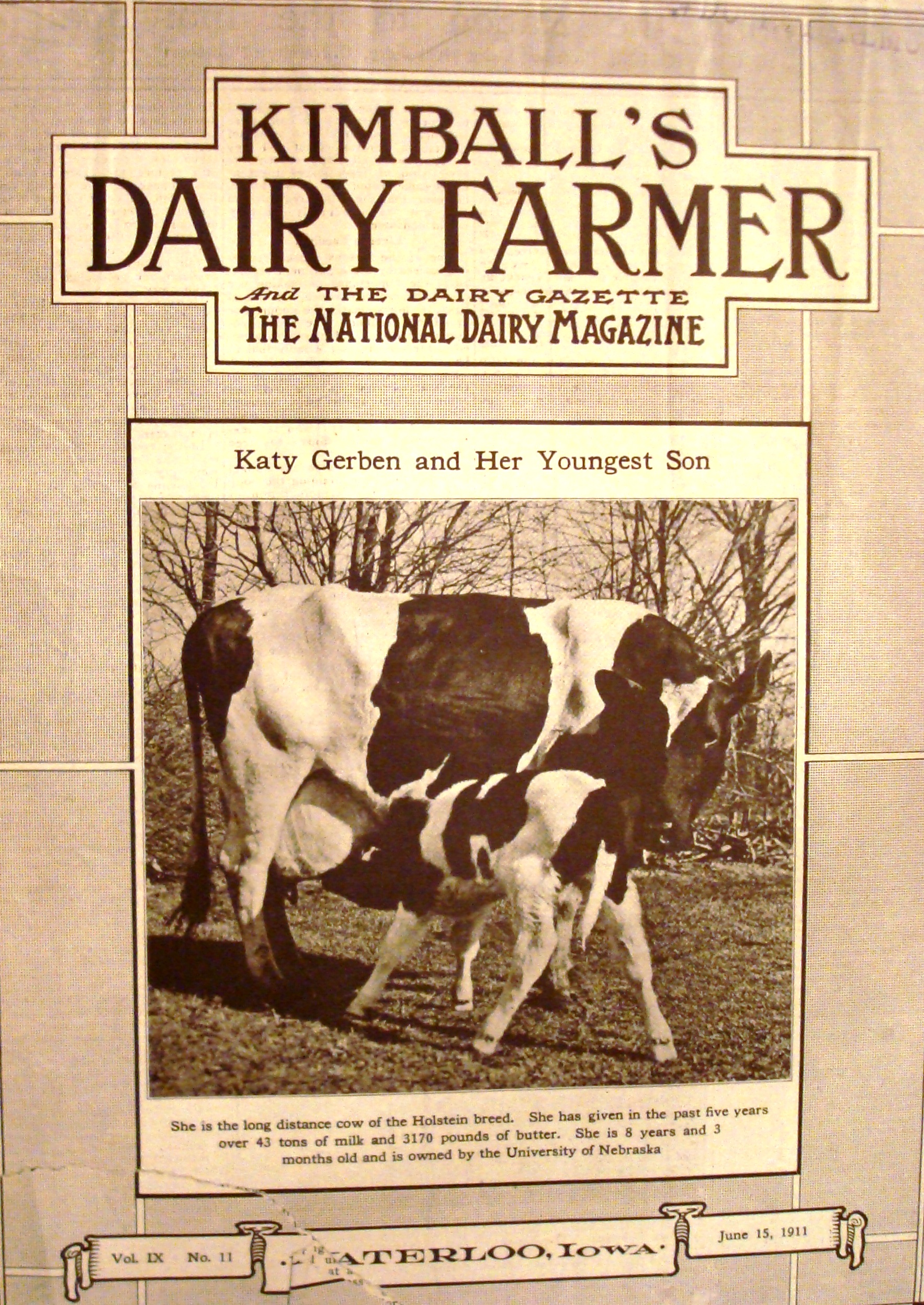
Kimball's Dairy Farmer Magazine (June 15, 1911)

Her middle-aged granddaughter’s comments 100 years later:

Mollie was a cow that Grandma owned. The calf was a little over a month old. (It was born on August 19.)

It’s uncanny—but this diary entry brings back strong memories of my own childhood.  It’s amazing how some child rearing practices go forward from one generation to the next.  . . .

My parents taught me about money by enabling me to become the owner of a cow. I’m now guessing that my father was taught the value of money by becoming the owner of a cow—just as his mother (Grandma) had before him.

When I was 9 or 10 I joined a 4-H club—and wanted to show a calf. My father said that I could buy a calf from him for $25. I only received a dollar a week allowance—and did not have anything close to $25. So he got an envelope out, labeled it “Sheryl’s calf”, and said that I should put half of my allowance into it each week. He then stuck the envelope in a cubby hole of his large roll-top desk.

Every week, I’d pull the envelope out and put two quarters into it. Occasionally I’d count the money to see how close I was to $25. Sometimes I’d ask my parents if I could exchange some of the quarters in the envelope for dollar bills. And then later I exchanged dollars for five- or ten-dollar bills.

The money accumulated and in less than a year I owned my own calf named Dolly. After Dolly grew into a cow, she had calves of her own. If it was a male calf, the calf was sold and I received the money. If it was a female calf it was mine—and the size of my personal herd grew.

Sometimes Little Brothers Get Even

16-year-old Helena Muffly wrote exactly 100 years ago today: 

Sunday, September 24, 1911: Went to Sunday School this afternoon. Only learned seven verses for today usually have twenty-seven. Was fooling with Jimmie tonight sprinkling him with water, but pretty soon he gave me a regular dunking (almost a whole tin cup full I judge) when I least expected it. Had to hang my dress up to dry.

Her middle-aged granddaughter’s comments 100 years later:

Jimmie was Grandma’s six-year-old brother. Sometimes when you tease little brothers they get even.

Memorizing Bible Verses

Whew, I can’t even imagine having a goal of memorizing 27 Bible verses a week. In fact, I can’t even imagine memorizing 7 Bible verses per week. Grandma was trying to memorize 700+ Bible verses for Sunday School so that she’d get a free Bible.  The diary entry from the previous Sunday said:

One reason for my regular attendance is that if you learn a number of verses from the Bible (over 700 it is) you will in the course of time receive a Bible.

Old-Fashioned Brown Sugar Cookie Recipe

16-year-old Helena Muffly wrote exactly 100 years ago today: 

Saturday, September 23, 1911: Mosey got me started in the arts of cookie making. As a whole the result wasn’t’ so bad for all that matters any way I don’t like that kind of employment very well because my achievements in that direction would be very apt to prove failures oftener than successes.

Her middle-aged granddaughter’s comments 100 years later:

I love all the different names Grandma uses when writing about her family and friends. You can get a sense how Grandma is feeling based upon what she calls people. Sometimes she calls her sister Ruth, “Rufus” and today her mother is Mosey. Mosey sounds like an affectionate term–though it sounds like Grandma didn’t like to cook.

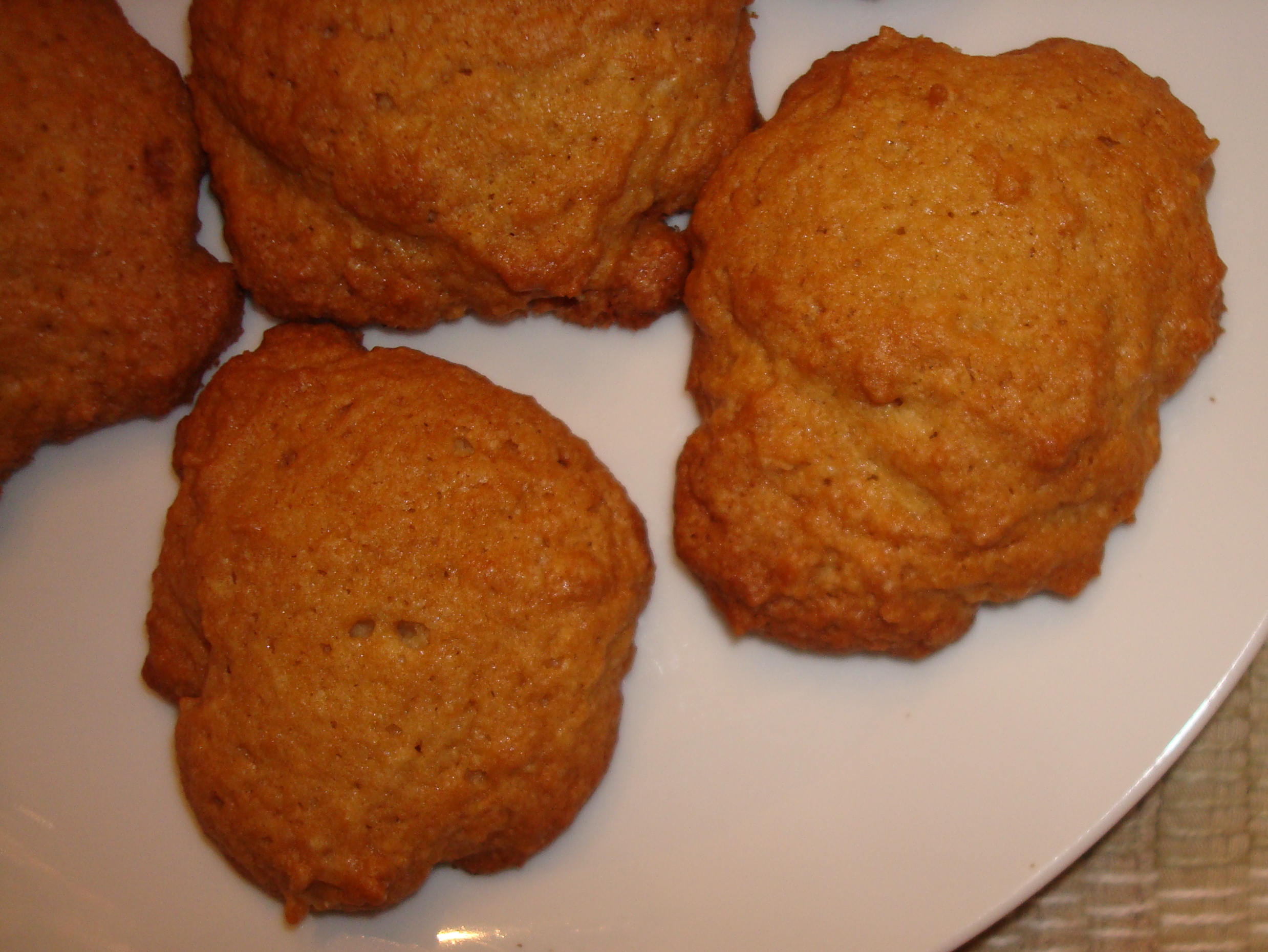
I wonder what kind of cookies she made.. . . Mmm . . . Maybe she made Brown Sugar Cookies.

Here’s a wonderful old recipe for Brown Sugar Cookies.  This is one of my children’s favorite cookies. They are more raised and softer than is typical of many modern drop cookie recipes—but they are superb.

Brown Sugar Cookies

1 cup lard (or other shortening)

2 cups brown sugar

2 eggs

1/2 cup sour milk*

1 teaspoon baking soda

1/2 teaspoon salt

3 1/2 cups flour

Preheat oven to 400 degrees. Mix the lard/shortening, brown sugar, eggs, sour milk, baking soda, and salt together. Add flour and stir until combined. Chill 1/2 hour. Drop rounded teaspoons of dough on greased cookie sheet. Bake 8 – 10 minutes, or until light browned.

Makes approximately 4 dozen cookies

*Add 1 1/2 teaspoons vinegar to regular milk to create sour milk.

I often add chocolate chips or walnuts into the batter before making the cookies.

I got the recipe from my mother-in-law, but it would be typical of cookie recipes from years ago—though obviously it’s been adapted for use with a modern range.

This recipe is from an era when pasteurized milk was not the norm since it calls for sour milk. In the old days raw milk would sour—but still be good for cooking. Vinegar can be used to “sour” pasteurized milk.

A hundred years ago lard would have generally been used in this recipe–though Crisco was rolled out in 1911  by Proctor and Gamble.

Awful Morning: Needed Some Peace

16-year-old Helena Muffly wrote exactly 100 years ago today: 

Friday, September 22, 1911: Had such an awful time this morning. Everything seemed to have something wrong about it. Decided to clear out this afternoon and have some peace, so I walked over to Ruthie’s school and made her a visit.

Sometimes a walk just makes you feel better!

Her middle-aged granddaughter’s comments 100 years later:

Grandma didn’t have school on this day. McEwensville High School was closed on both Thursday and Friday so students could attend the Milton Fair. She’d gone to the fair on Thursday—so she was at home on this Friday morning.

Did Grandma and her mother had a disagreement over what she should be doing? . . maybe washing the dishes vs. reading? . . . or doing the laundry vs. relaxing? . . . or . . .

I’m not sure exactly which school her sister Ruth taught at—but it probably was one of the one-room school houses near McEwensville. It seems odd that it was in session when the McEwensville School gave students the day off.

Rode Ferris Wheel

16-year-old Helena Muffly wrote exactly 100 years ago today: 

Thursday, September 21, 1911: Went to the Fair today with Miss Carrie of course. We took a ride on the Ferris Wheel (a thing I was never on before) and a ride on the Curling Wave. Saw a good many people I knew and more that I didn’t know. I got rather tired walking around all afternoon and sot such a thumping headache. Got home about six o’clock and then had to do all the milking as Ruthie hadn’t yet made her arrival.

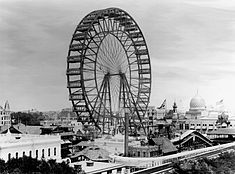
The Ferris Wheel at the World's Columbian Exposition in Chicago in 1893 (Photo Source: Wikipedia)

Her middle-aged granddaughter’s comments 100 years later:

Grandma and her friend Carrie Stout went to the Milton Fair. According to yesterday’s entry McEwensville High School gave the students the day off to attend the fair.

The rides sound exciting. I checked Wikipedia and discovered that the first Ferris Wheel was at the 1893 World’s Columbian Exhibition in Chicago. It was invented by a bridge builder named George Ferris, and manufactured by Bethlehem Steel in Pittsburgh.

I was somewhat surprised that a fair in central Pennsylvania would have a Ferris Wheel only 18 years after very first Ferris Wheel was created. I imagined that new technology once diffused more slowly than it does today. But I guess that 18 years was a long time—both then and now.

I asked my father about the Milton Fair. He cannot remember there ever being a fair at Milton, but says that when he was young, people called the area on both sides Route 405 near the Arrowhead Restaurant “the fairgrounds”.

Fair Week!

16-year-old Helena Muffly wrote exactly 100 years ago today: 

Wednesday, September 20, 1911: Guess this was our teacher’s last day, and I’m not sorry. Our real teacher is coming next Monday so I have heard. Papa and Mamma and Jimsey went to the fair this afternoon. I expect to go tomorrow if the weather is favorable. We have Thursday and Friday off for the fair.

I always feel especially energetic and alive on beautiful fall days--I wonder if that's how Grandma felt as she planned her trip to the fair. (McEwensville is in the background of this recent photo.)

Her middle-aged granddaughter’s comments 100 years later:

The students at McEwensville High School have had a substitute teacher since the beginning of the school years (see yesterday’s post for more details).

McEwensville High School and the primary school shared a building (the high school was on the second floor; Grades 1-8 were on the first). Apparently the primary school didn’t have classes a hundred years ago today—since Grandma’s little brother Jimmy went with her parents to the fair. I wonder why the high school had school. You’d think that two schools would have been on the same schedule.

Well as least she got Thursday and Friday off—and is ready for some fun.

School Boards a Hundred Years Ago

16-year-old Helena Muffly wrote exactly 100 years ago today: 

Tuesday, September 19, 1911: Thought this would be the last day for our substitute, but afterwards learned that he is going to teach tomorrow instead of having it off for the fair.

Recent photo of building that once housed McEwensville School.

Her middle-aged granddaughter’s comments 100 years later:

It sounds as if the teacher had the option of deciding whether to give students the day off to attend the fair in nearby Milton.

I don’t know why there was a substitute teacher for the first several weeks of the school year (the teacher from the previous year was slated to return the following week) — but Thomas Kramm, in his History of McEwensville Schools, wrote:

The election of a teacher from the available candidates sometimes became a serious problem. In 1901, a sixth ballot was required to break the previous five tie ballots. In 1904, seven ballots did not results in the an election of a teacher. All candidates were rejected, and a slate of new applicants was considered. Just before school was to start, the eight ballot resulted in an election. This suggestions that there were probably power struggles within the board membership.

. . . At least one teacher and perhaps more would not return to teach the following year because the school board refused to increase the teacher’s salary.

Throughout the United States in 1911 there were more school board members than teachers. This had both advantages and disadvantages.

For example, in McEwensville there were two teachers (an elementary and a high school teacher)–yet there probably were either 4 or 6 members on the board.

The community was very involved in ensuring that the schools were high quality and met the needs of the community–but they also sometimes micromanaged the schools and perhaps didn’t always make decisions in the best interest of the students (as suggested by the quote above).