Hundred-Year-Old Fashions for Stout Women

17-year-old Helena Muffly wrote exactly 100 years ago today: 

Thursday, September 5, 1912: Ditto.

1912 Dress and Coat for Obese Women
Source: Ladies Home Journal (February, 1912)

Her middle-aged granddaughter’s comments 100 years later:

Hmm—I guess that it was a slow week for Grandma. This is the third day in a row that she hasn’t written much. It seems odd. It’s the second week of the school year—and I’d have guessed that she would have been bubbling about the happenings.

In any case, I’m going to go off on a tangent . . .

Several days ago, a reader commented that in the old days that wealthy people were often overweight—or to use the term that was commonly used a hundred years ago, “stout.”

Her comment reminded me that the February, 1912 issue of Ladies Home Journal showed fashions for stout women:

Many distinctive features favorable for the woman who is included to stoutness of form are typified in the graceful, fringed wrap on the first figure in the group above. It is made of dull-finished black satin—for the stout woman will wisely pass by the more lustrous satins, which tend to accentuate plumpness.

A charming house dress for afternoon or for more informal evening occasions is pictured on the second figure in the group above. Here a soft old-rose satin is used for the foundation dress, brought into a subjection more becoming to the stout woman by the overdress of marquisette in the same shade.

1912 woman's suit

There is a pleasing fitness not only in the quiet colors used for the semi-dressy tailored suit, but also in the right placing of the lines of the coat and skirt for a figure inclined to overfullness.


Old Bread and Butter Pickles Recipe

17-year-old Helena Muffly wrote exactly 100 years ago today: 

Wednesday, September 4, 1912:  Same as yesterday.

Her middle-aged granddaughter’s comments 100 years later:

The previous day, she’d written:

Nothing doing today.

Sounds like a slow couple of days in Grandma’s life.

I wonder if Grandma’s mother was busy preserving foods for the upcoming winter months while Grandma in school. . . or did she wait until Saturday for major canning projects when she had her daughters home to help.

Maybe she made Bread and Butter Pickles.

Bread and Butter Pickles

8 cups cucumbers, thinly sliced

2 cups onions, thinly sliced

2 tablespoons salt

2 cups vinegar

3 cups sugar

2 teaspoons turmeric

3 inches stick cinnamon

2 teaspoons celery seed

4 peppers (red and green), finely diced

Mix cucumbers, onions, and salt together in a large ceramic bowl or casserole dish. Let stand two hours; drain. In a large pan mix together vinegar, sugar, turmeric, cinnamon, celery seed, and peppers. Bring to a boil. Put in drained cucumbers and onions. Boil for 15 minutes. Jar and seal.

Makes about 3 1/2 pints. (I usually double the recipe, but it requires a very large pan.)

Note: Small thinly sliced zucchini or yellow summer squash can be substituted for the cucumbers for excellent pickled squash.

I make this recipe almost every summer and they always turn out great.

(I probably should note that this recipe isn’t from my side of the family. I got this old recipe from my mother-in-law, but it is a typical traditional Pennsylvania recipe. In any case, the pickles are really good. )

The 1912 Presidential Campaign: The Republicans, the Democrats and the Bull Moose Party

17-year-old Helena Muffly wrote exactly 100 years ago today: 

Tuesday, September 3, 1912: Nothing doing today.

Willaim Howard Taft
President William Taft (Republican)

Her middle-aged granddaughter’s comments 100 years later:

Since nothing much happened in Grandma’s life a hundred years ago today, I’m going tell you a little about the 1912 presidential race.

(Somehow with the Republican convention last week and the Democratic one this week, this seems like an appropriate time to step back and take a look at the big picture.)

Lots of economic, social, and environmental issues dominated the campaign rhetoric in 1912:

  • How much power should corporations have?
  • Should tariffs be high or low?
  • Was the government corrupt?
  • Did political machines have too much power?
  • How important were environmental issues?
  • What role should government play in developing social welfare policies?
  • Should woman have the right to vote?
  • What role should Blacks have in the political process?
  • Should children be allowed to work?

In 1912, William Taft was the current president, but there was a three-way race between Taft (Republican), Theodore Roosevelt (Bull Moose Party), and Woodrow Wilson (Democratic).

Theodore Roosevelt
Former President Theodore Roosevelt (Bull Moose)

There had been a schism in the Republican Party between Taft and Roosevelt, which led to Roosevelt breaking away to form the Bull Moose Party.

Roosevelt had been president early in the 20th century. He was part of the progressive wing of the Republican party, but in 1908 he decided that he did not want to run for re-election and supported Taft as the Republican nominee.

However, by 1912 Roosevelt felt that Taft had not appropriately continued the progressive path he’d begun, and ran against him for the Republican nomination. When Roosevelt lost the nomination he founded the Bull Moose Party.

(Roosevelt said that he was as fit as a bull moose—and somehow it ended up being the party name.)

This split basically ensured that Woodrow Wilson would win.

Wilson was the governor of New Jersey when he received the Democratic nomination. He’d previously been president of Princeton University—but in 1910 ran for governor because he was frustrated by the infighting within the university over issues such where the graduate school building should be located, and whether or not there should be eating clubs on the campus.

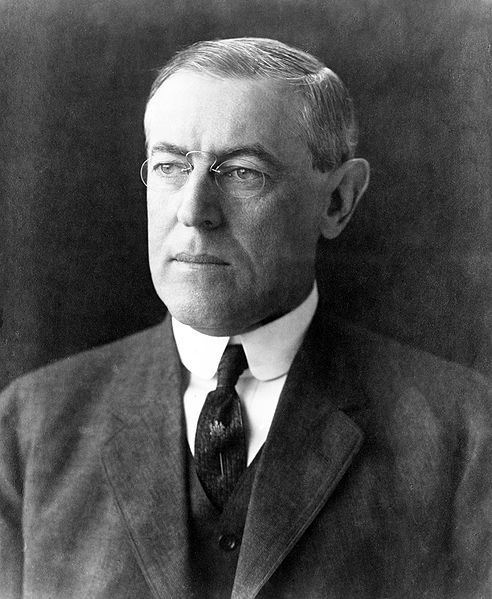
woodrow wilson
Woodrow Wilson (Democrat)

Wilson stayed out of the brawl between Taft and Roosevelt, and easily won the election.

Many of the campaign issues soon seemed less important. . .

. . . . in 1914, World War I would  break out in Europe.

—-

How aware was Grandma of the national issues? Did she listen to any campaign speeches supporting one or another of the candidates? Did her father talk about who he planned to vote for? Did she hope that within a few years that she’d be able to vote?

Newspaper Headlines: Labor Day, 1912

17-year-old Helena Muffly wrote exactly 100 years ago today:    

Monday, September 2, 1912:  Had to go to school, even if it is labor day. We had this day off last year.

Cold isn’t much better. Have to blow my whistle almost all the time, which constant usage make it rather sore and pink.

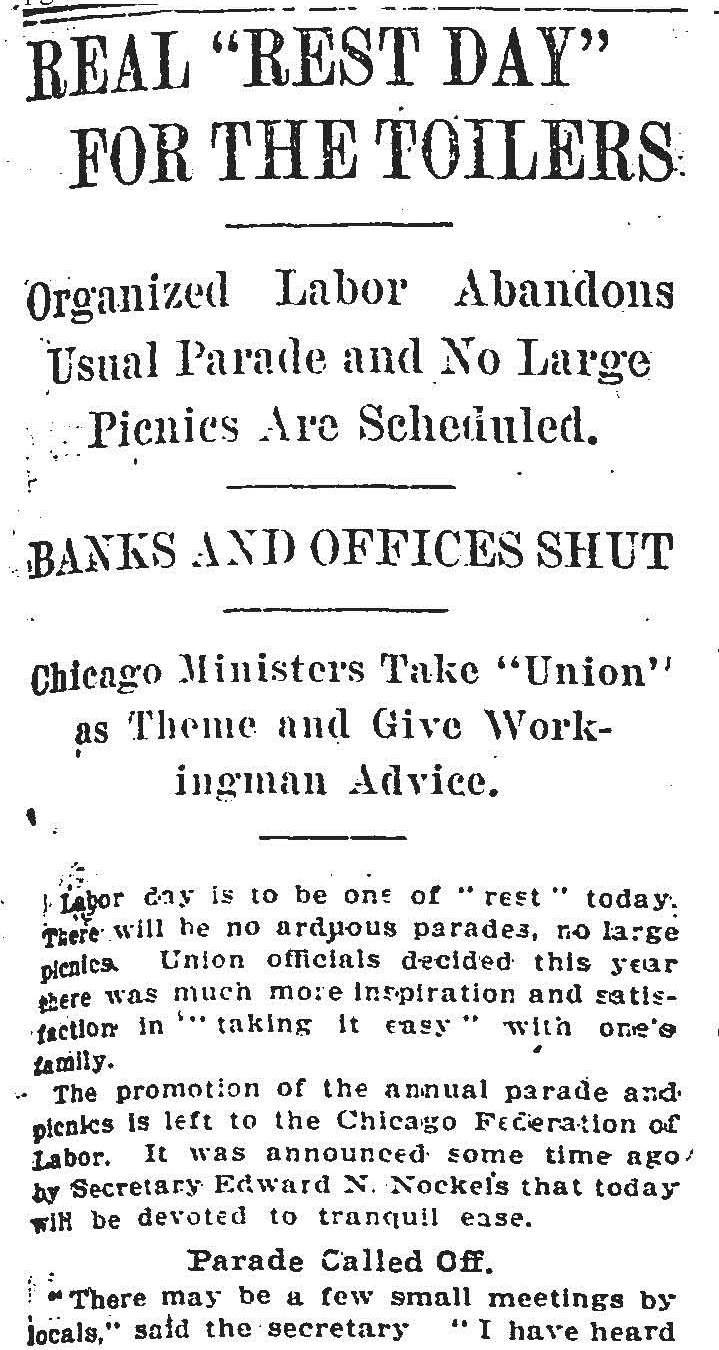
Labor Day, September 2, 1912 Chicago Morning Tribune Article
Source: Chicago Morning Tribune (September 2, 1912)

Her middle-aged granddaughter’s comments 100 years later:

It’s interesting that in 1911 the students didn’t have to go to school on Labor Day—but that in 1912 they did. Was Labor Day an important holiday in 1912?

A quick scan of newspaper headlines from September 2, 1912 shows that  in 1912 the nation was engaged in a debate over the role of labor and unions (as well as whether woman should be paid the same as men).

Representative Newspaper Headlines

Labor Day, September 2, 1912

Cathedral Packed for Labor Service: Mgr. Lavelle Points Out Socialism’s Weakness to Vast Throng of Union Men (New York Times)

Labor Day Parade: Large Squad of Police Detailed to Assist in Keeping Order-Line of March (Los Angeles Times)

Labor Will Parade Today, While City Lends Cheers: Predicted That 50,000 Persons Will Attend Celebration at Armory (Minneapolis Morning Tribune)

Minnesota State Fair to Open This Morning: Exposition Gates to be Thrown Wide to Northwest Visitors: Labor Program Planned (Minneapolis Morning Tribune)

Urges Pay Raise to Save Women: Bishop Samuel Fallows Advocates Putting Them on an Equal Basis with Men: Bar to Immorality (Chicago Daily Tribune)

Sweaters a Hundred Years Ago

17-year-old Helena Muffly wrote exactly 100 years ago today: 

Sunday, September 1, 1912:

What can be said of September,

Is very much I think,

But the thinking part is not with me now

Because my efforts so readily sink.

Went to Sunday School this morning. Took a slide on a bank coming out. Fortunately didn’t get myself very muddy. It’s raining now.

I have one cracker jack of a cold. Got the worst part of it yesterday going to the picnic without a coat. Hope it doesn’t last long.

Her middle-aged granddaughter’s comments 100 years later:

Sounds like a miserable day with miserable weather—and a miserable cold.

Instead of wearing a coat during the cool fall season, I wonder if Grandma ever thought about getting one of the stylish sweaters shown in the September, 1912 issue of Ladies Home Journal:

The Autumn Sweaters

With the approach of autumn the new sweaters play a prominent part in the array of apparel for outdoor wear.

A very new idea for a coat sweater is the tailored model in ivory white (Number One), with cloth collar and cuffs embroidered in worsteds. This is very modish and is not intended for a general knockabout. The cap is of white cloth also, finished with an embroidered band.

The white sweater with the striped collar and cuffs (Number Two) suggests an appropriate style for outdoor sports.

Was Grandpa at the Sunday School Picnic?

17-year-old Helena Muffly wrote exactly 100 years ago today: 

Saturday, August 31, 1912: The Lutherans had their S.S. picnic down at the park today. I got down there sometime after eleven. On the whole I had quite a nice time. Met three or four girls, four it was. Didn’t have to do the milking when I came home, as it was already done.

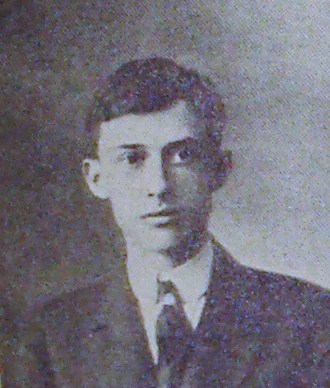
Raymond Swartz

Her middle-aged granddaughter’s comments 100 years later:

Was Grandma’s future husband (and my grandfather), Raymond Swartz, also at the picnic?

My grandparents were members of Messiah Lutheran Church in McEwensville when I was a child. I assume that Raymond was raised Lutheran, and that Grandma converted from Baptist to Lutheran when she got married.

Raymond lived on a farm just south of McEwensville and also attended McEwensville High School. He was three and a half years younger than Grandma—and did not seem to be on her radar screen when she was writing the diary.

When Grandma wrote this diary entry she was17—Raymond was 13.

Farm Chores

Did Grandma’s sister Ruth do Grandma’s share of the milking? Numerous diary entries mention times when Ruth got home late –and Grandma got stuck with the milking. For example, on June 12, 1912, she wrote.

I’m mad at that Ruth tonight. She goes away and leaves me with the milking.

I think this is the first time a diary entry suggests that maybe Ruth also got stuck with all the milking sometimes.

The Week Flew By

17-year-old Helena Muffly wrote exactly 100 years ago today:

Friday, August 30, 1912: This week went much faster, than the other weeks that preceded it. Ruth and I went up to Oakes’ this eve.

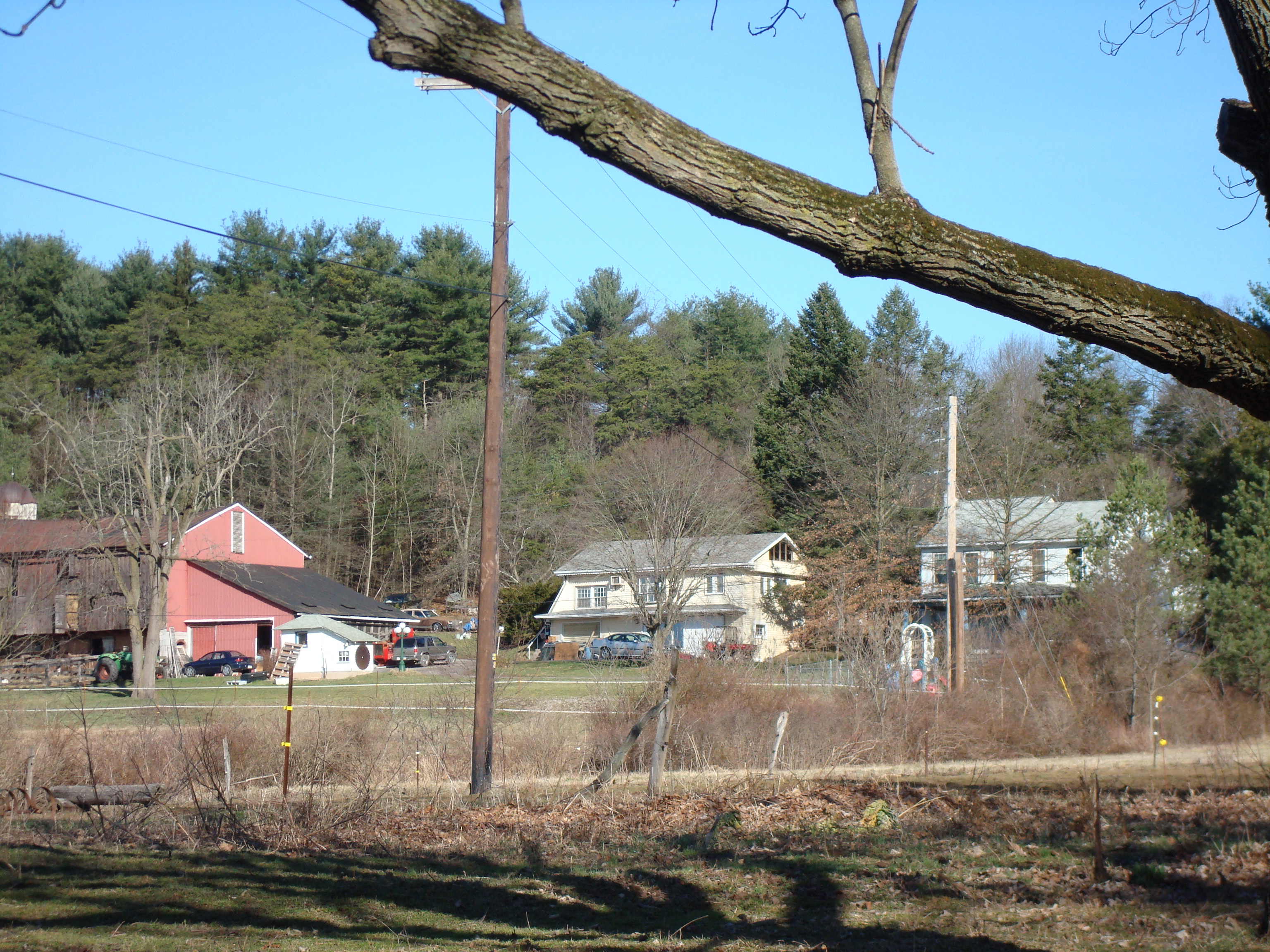
Recent photo of the farm where the Oakes family lived.

Her middle-aged granddaughter’s comments 100 years later:

Friday night, after the first week of school! Yeah for Grandma—

And, for those of us in 2012: only one more day until the week-end.

The Oakes family lived on a farm near the Muffly’s. They had several children who were close in age to Grandma and her sister Ruth.