17-year-old Helena Muffly wrote exactly 100 years ago today:
Sunday, January 26, 1913:Went to Sunday School this afternoon. Besse was out.
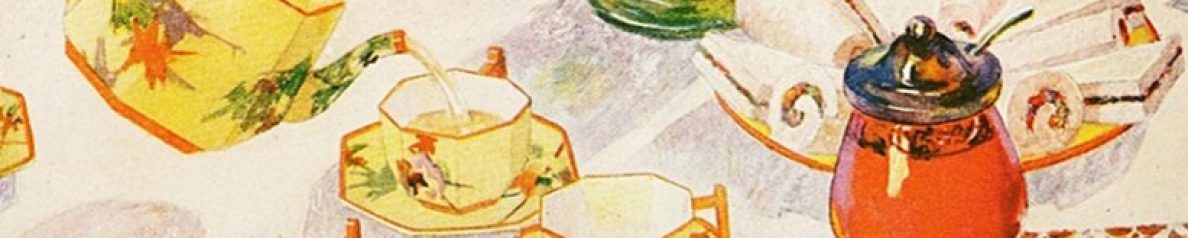
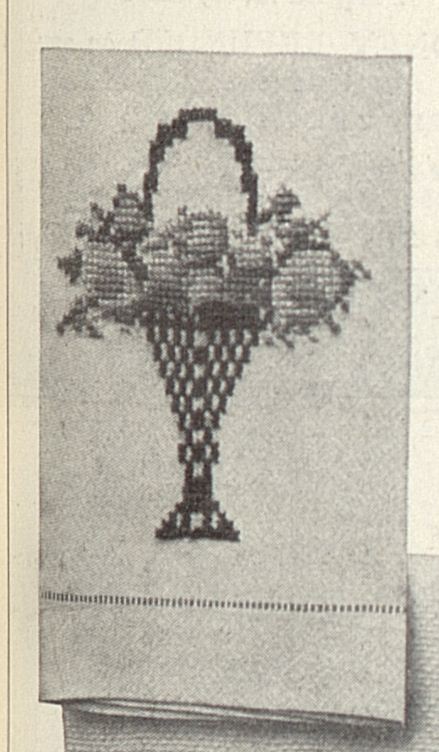
Source of Pictures: Ladies Home Journal (May, 1913)
Her middle-aged granddaughter’s comments 100 years later:
Grandma’s sister Besse was married and lived in nearby Watsontown. Sometimes Besse brought needlework or sewing along when she came to visit. For example, on August 9, 1912 Grandma wrote:
We had sort of s sewing bee here today. Besse was out and brought some of her stuff along.
On this January day, a hundred years ago, perhaps the sisters did cross-stitching while they chatted.
Cross-stitch and crochet work using same rose pattern
17-year-old Helena Muffly wrote exactly 100 years ago today:
Saturday, January 25, 1913: I have a sore thumb although I do not think it is as bad as it was several days ago.
Source: Wikipedia
Her middle-aged granddaughter’s comments 100 years later:
Poor Grandma—She sure seemed to get a lot of illnesses and injuries.
It sounds like she hurt her finger again (though I suppose that she possibly was still complaining about her December injury). On December 16, 1912 she wrote:
. . . We killed some pigs and I took a slice off the end of my thumb. Oh sad the day, for I don’t care anything about having a sore thumb . . .
17-year-old Helena Muffly wrote exactly 100 years ago today:
Friday, January 24, 1913: Didn’t have any visitors at our literary meeting this afternoon, and I was rather glad that we didn’t.
Recent photo of old McEwensville School building.
Her middle-aged granddaughter’s comments 100 years later:
Members of the Literary Society at Grandma’s high school presented recitations and dialogues at their meetings. Apparently, guests were always welcome.
Grandma’s went to a tiny one-room high school (The high school was on the second floor of the building; there was a primary school on the first floor).
The school was such an integral part of the social fabric of the community that it merited mention in the diary not when there were visitors at the meeting, but rather when there were none.
The school obviously had many limitations, yet I have a gut feeling there was something special about the small community-based schools a hundred years ago.
According to the June, 1913 issue of The Rural Educator:
We must, at the outset, recognize that the social institutions are the machines through which social energy works. There is abundant social energy in every rural community. The center of intellectual activities of the community should be the rural school.
17-year-old Helena Muffly wrote exactly 100 years ago today:
Thursday, January 23, 1913:Bout the same as ever.
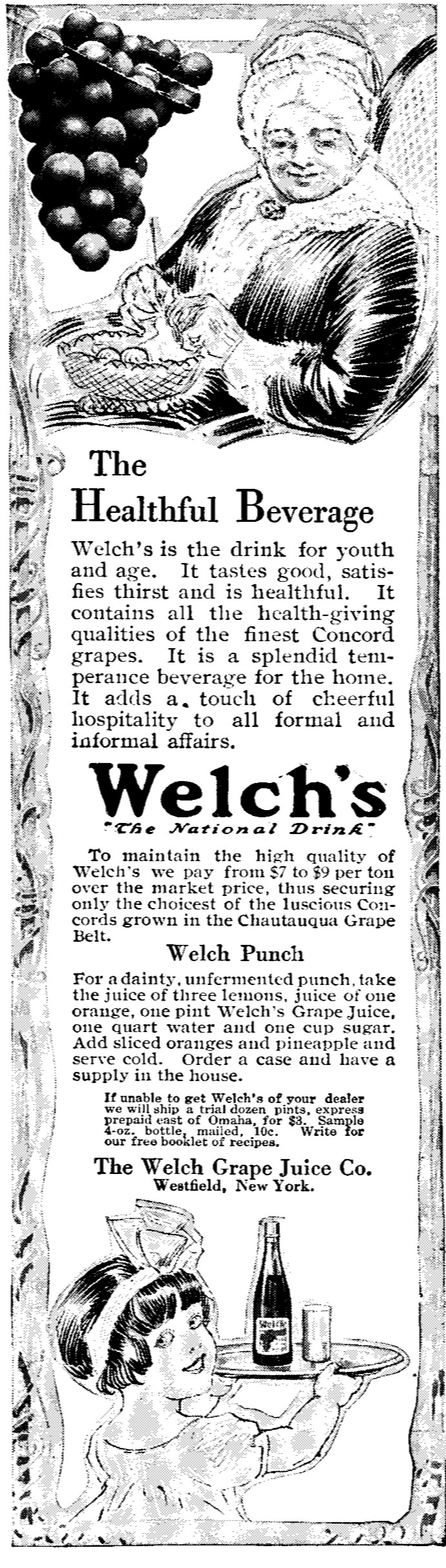
The
Healthful Beverage
Welch’s is the drink for youth and age. It tastes good, satisfies thirst and is healthful. It contains all the health-giving qualities of the finest Concord grapes. It is a splendid temperance beverage for the home. It adds a touch of cheerful hospitality to all formal and informal affairs.
Welch’s
“The National Drink”
To maintain the high quality of Welch’s we pay from $7 to $9 per ton over the market price, thus securing only the choicest of the luscious Concords grown in the Chautauqua Grape Belt.
Welch Punch
For a dainty, unfermented punch, take the juice of three lemons, juice of one orange, one pint Welch’s Grape Juice, one quart water and one cup of sugar. Add sliced oranges and a pineapple and serve cold. Order a case and have a supply in the house.
If unable to get Welch’s of your dealer we will ship a trial dozen pints, express prepaid east of Omaha, for $3. Sample 4-oz bottle, mailed 10¢. Write for our free booklet of recipes.
The Welch Grape Juice Co.
Westfield, New York
Her middle-aged granddaughter’s comments 100 years later:
Since Grandma didn’t write much, I’ll share old ad I found in the February, 1913 issue of National Food Magazine.
17-year-old Helena Muffly wrote exactly 100 years ago today:
Wednesday, January 22, 1913: We had a surprise party tonight. Had quite a good time. It was a surprise for Ruth, and she didn’t know the least of it.
Ruth Muffly
Her middle-aged granddaughter’s comments 100 years later:
It probably was a birthday party for Grandma’s sister Ruth. I bet it was a really big surprise since Ruth turned 21 three days earlier on January 19.
What was a 21st birthday party like a hundred years ago?
Did Grandma pull Ruth’s ears 21 times on her birthday? People used to pull the birthday person’s ear lobes one time for each year. On January 19, 1911 Grandma wrote:
Pulled Miss Muffly’s ears first thing this morning, whether she liked it or not. . .
17-year-old Helena Muffly wrote exactly 100 years ago today:
Tuesday, January 21, 1913: Nothing to write.
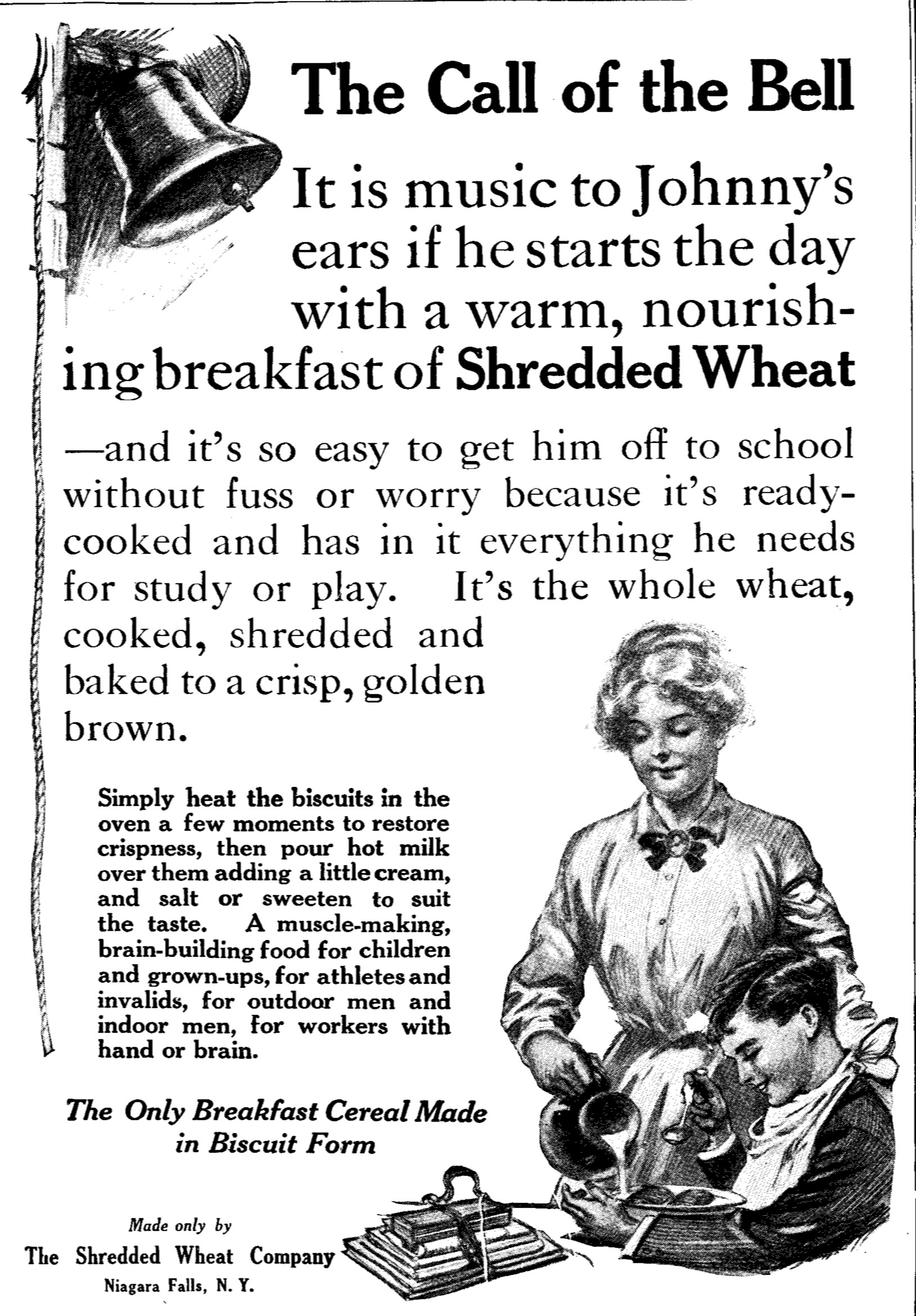
Source: National Food Magazine (January, 1913)
Advertisement Text:
The Call of the Bell
It is music to Johnny’s ears if he starts the day with a warm, nourishing breakfast of Shredded Wheat
–and it’s so easy to get him off to school without fuss or worry because it’s ready-cooked and has in it everything he needs for study or play. It’s the whole wheat, cooked, shredded and baked to a crisp, golden brown.
Simply heat the biscuits in the oven a few moments to restore crispness, then pour hot milk over them adding a little cream and salt, or sweeten to suit the taste. A muscle-making, brain,-building food for children and grown-ups, for athletes and invalids, for outdoor men and indoor men, for workers with hand or brain.
The Only Breakfast Cereal Made in Biscuit Form.
Made only by
The Shredded Wheat Company
Niagara Fall, N.Y.
Her middle-aged granddaughter’s comments 100 years later:
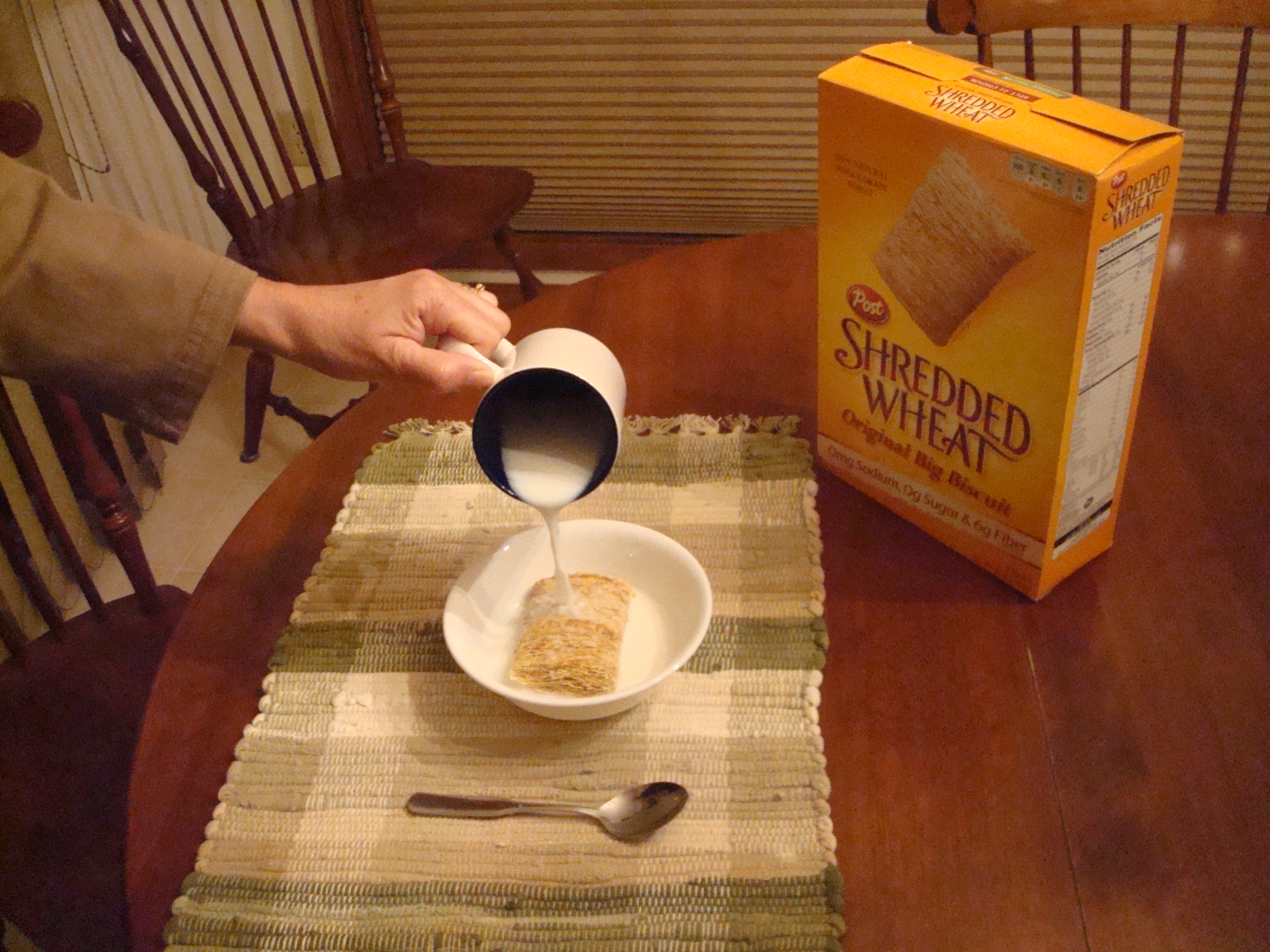
Since not much happened a hundred years ago today, I’ll share a 1913 advertisement I found for Shredded Wheat in National Food Magazine.
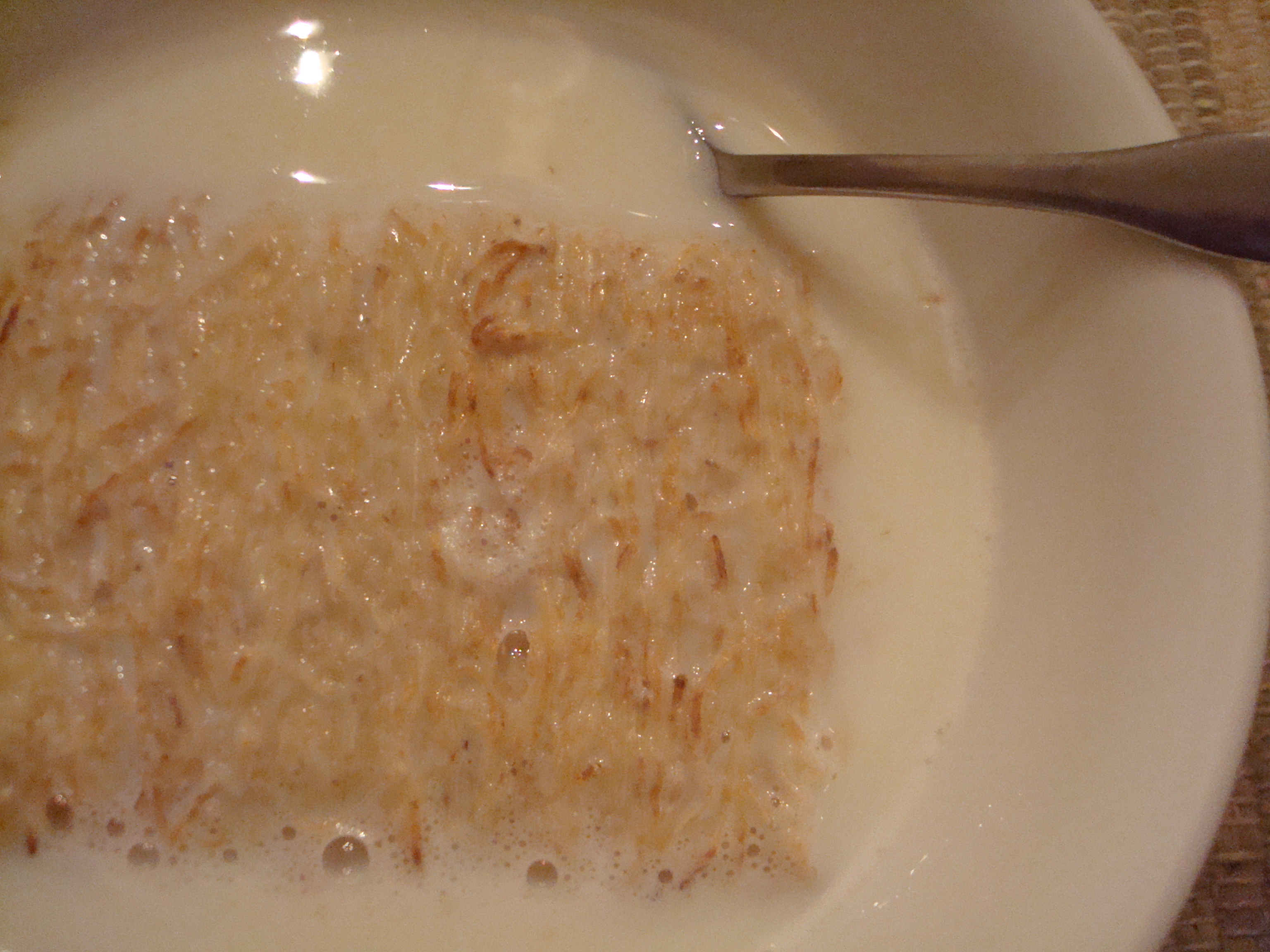
Back then you were supposed to heat the biscuits and then pour hot milk over them. Strange. . but I decided to try it.
The result—
I ended up with a hot, soft, mushy cereal. I had a difficult time getting past the texture—which was so very different from the crispiness of cold shredded wheat—but it warmed my tummy on a cold winter day.
17-year-old Helena Muffly wrote exactly 100 years ago today:
Monday, January 20, 1913: Our class expects to have a swell blow-out one of these days. We’re going to give a play. I am Chloe the negro servant. That was the part I really wanted.
Her middle-aged granddaughter’s comments 100 years later:
Hmm—I could go a lot of directions with this post, but I guess I’ll just leave it with this:
I’m glad Grandma got the part she wanted, but I wonder why she really wanted the role of Chloe. Was it a large part . . . or a relatively minor one? Did she think that it would be a challenging role . . . or an easy one?