18-year-old Helena Muffly wrote exactly 100 years ago today:
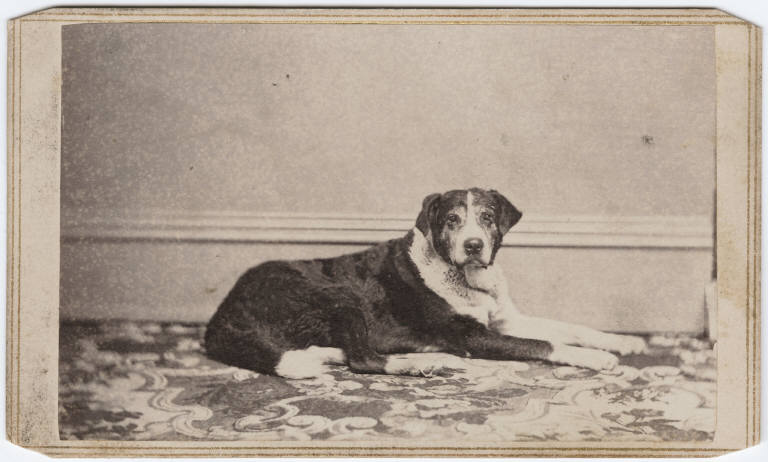
Sunday, August 17, 1913: I missed going to Sunday School this morning at McEwensville for the first time since January. Alma and I went to church this morning at Turbotville. While in church a dog came in and made his way up front and from there onto the pulpit, walked around awhile and then went out. I couldn’t keep from smiling.
Picture source: Wikimedia Commons
Her middle-aged granddaughter’s comments 100 years later:
And, a hundred years later, I also can’t keep from smiling as I picture the dog on the pulpit. 🙂
___
Alma lived about 15 miles from the Muffly’s in Montour county. The trip must have been a multi-day expedition. The previous day Grandma wrote that she took the train to Alma’s.
Grandma’s sister Ruth probably had to do all the milking while Grandma was gone. (Grandma so often had to Ruth’s milking, that it seem fair that it was now Ruth’s turn.)
18-year-old Helena Muffly wrote exactly 100 years ago today:
Saturday, August 16, 1913:Went out to Alma’s this morning on the train. We went to a festival over at California this evening. That was the first country festival I was ever to. We went up to the Hall this afternoon to tap the packers and then we swiped a dish of ice cream. When we finished it, we washed the dish and spoon in salt water.
At a festival an ice cream freezer larger than this one (and perhaps powered with a gasoline engine) may have been use to make the ice cream.(Picture source: National Food Magazine: June, 1910)
Her middle-aged granddaughter’s comments 100 years later:
California was a very small hamlet in western Montour County, and Alma was a cousin of Grandma’s.
Grandma would have taken the Susquehanna, Bloomsburg, and Berwick train from a whistle stop near her home to Montour County. It would have been about a 15 mile trip.
—
Grandma, you should have paid for the ice cream, and you shouldn’t have washed the dish and spoon in the salt water that was draining out of the ice cream maker—but whew, it sure sounds like you and Alma were having a lot of fun!
18-year-old Helena Muffly wrote exactly 100 years ago today:
Friday, August 15, 1913:Ma finished a lavender gingham dress for me. I’ve had it for some time. I wanted to make it myself, but Ma didn’t want me to.
Dress worn with guimpe (Source: Ladies Home Journal–May 1, 1911)
Her middle-aged granddaughter’s comments 100 years later:
Grandma—How annoying that Ma wouldn’t let you make the dress! !! You could have done an awesome job on it.
—
Here’s the description of a lavender dress pictured in the May 1, 1911 issue of Ladies Home Journal:
The lilac and white plaid gingham on the right is trimmed with strips of plain lilac gingham. The waist is cut in one with the elbow sleeves and is made ready to wear with a guimpe. The skirt has four gores, is gathered at the top of the side gores, and lengthened by a plaited flounce.
A guimpe is a blouse worn under a jumper or pinafore. It also can be a yoke insert on a low-cut dress.
18-year-old Helena Muffly wrote exactly 100 years ago today:
Thursday, August 14, 1913: Nothing much doing.
Caption: Putting in a new roll of film. Source: Practical Suggestions Regarding the Selection and Use of Photographic Equipment by Austin Hanks (1910)
Her middle-aged granddaughter’s comments 100 years later:
The previous day Grandma wrote that she initiated her new camera by taking two photos at the Sunday School picnic.
I found a hundred-year-old book called Practical Suggestions Regarding the Selection and Use of a Photographic Equipment. It has lots of advice that brought back vague memories of a camera we had when I was a child.
For example, it explained how to avoid double exposures:
One thing to do after making each exposure is to turn the film to the next number. Make this a positive habit. Cultivate yourself and it will be worthwhile. Upon beginning to use a Kodak, if you will constantly remember that the first thing to do after each is to turn the film, you will become accustomed to doing so and in time will do it intuitively and will no long have to think about it. This will mean no double exposures (two exposures on the same film).
18-year-old Helena Muffly wrote exactly 100 years ago today:
Wednesday, August 13, 1913:Today we had our S.S. picnic up at the creek. Not all that were invited came, but still I guess we had a good time. I initiated by camera by taking two pictures.
Source: Ladies Home Journal (July, 1913)
Her middle-aged granddaughter’s comments 100 years later:
The picnic sounds like fun—even if the group was small. Did Grandma gather everyone together to take a group shot?
Grandma ordered her camera from a catalog and got it on July 7:
Went into Watsontown this afternoon to see if my camera was there, nor was I mistaken. It was in a big box. I carried it home any way. Wonder if anyone one laughed at me. Perhaps I did look funny.
I’m amazed that it took her more than a month to actually use it. Why?
18-year-old Helena Muffly wrote exactly 100 years ago today:
Tuesday, August 12, 1913:Am busy planning.
Photo source: Wikimedia Commons
Her middle-aged granddaughter’s comments 100 years later:
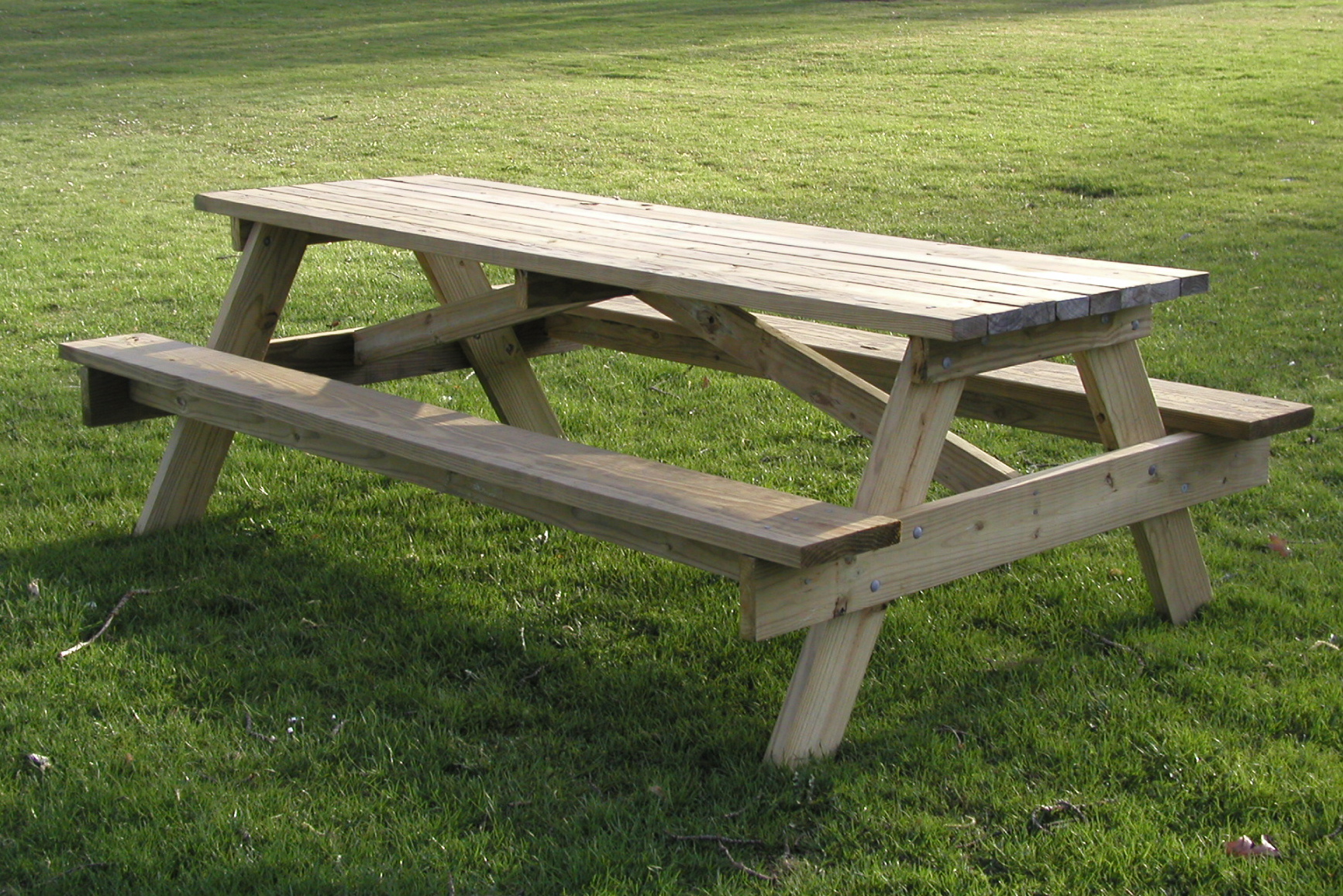
Grandma was helping plan a Sunday School picnic. A hundred years ago picnics often included games and activities. Here are some activity ideas in a July, 1913 article in Ladies Home Journal.
Names and Topics Game
One game is to mention all the names participants can think of—either given names or surname– by topic.
For instance, “What names suggest occupations?” These include: Miller, Farmer, Tanner, Goldsmith, Mason, Weaver, Cook, Dean, Smith, Carpenter, Taylor, Cooper, Butler, Preacher, Sheppard, Crook, Baker, Painter, Bishop, etc.
“What names are colors?” White, Black, Green, Brown, Gray, Violet, Rose, Lavender, Pearl, etc.
“What names are flowers?” Lily, Rose, Daisy, Violet, etc.
Alphabet Game
In the Alphabet Game, it will be necessary for one in the party to be close enough to the firelight to read from a memorandum card. When he calls out a subject, it must be answered with a word or sentence beginning with the letter that was chosen throughout the complete list of questions: Suppose “C” is the chosen letter; the leader will say: “Beginning with C, name (1) An American city; (2) a foreign city; (3) an American river; (4) a foreign river; (5) a mineral; (6) a poet; (7) a poem ; (8) a book of fiction; (9) an author; (10)a vegetable; (11) a bird; (12) a fish; (13) an insect (14) a statesman; (15) an article of apparel for men; (16) an article of apparel for women.
An Illustrative of how the game works with “C”. The answers to the questions: (1) Columbus; (2) Constantinople; (3) Columbia; (4) Congo; (5) Cooper; (6) Coleridge ; (7) Charge of the Light Brigade; (8) Crossing; (9) Carlyle; (10) Cabbage; (11) Canary; (12) Cod; (13) Centipede; (14) Churchill; (15) Cap; (16) Cape.
18-year-old Helena Muffly wrote exactly 100 years ago today:
Monday, August 11, 1913:Am busy planning.
Source: Ladies Home Journal (July, 1911)
Her middle-aged granddaughter’s comments 100 years later:
Grandma was planning for the Sunday School picnic. The previous day she wrote:
We have decided to have our S.S. picnic next Wed. . .
I wonder what she needed to plan. . . . activities? . . . what food to bring?
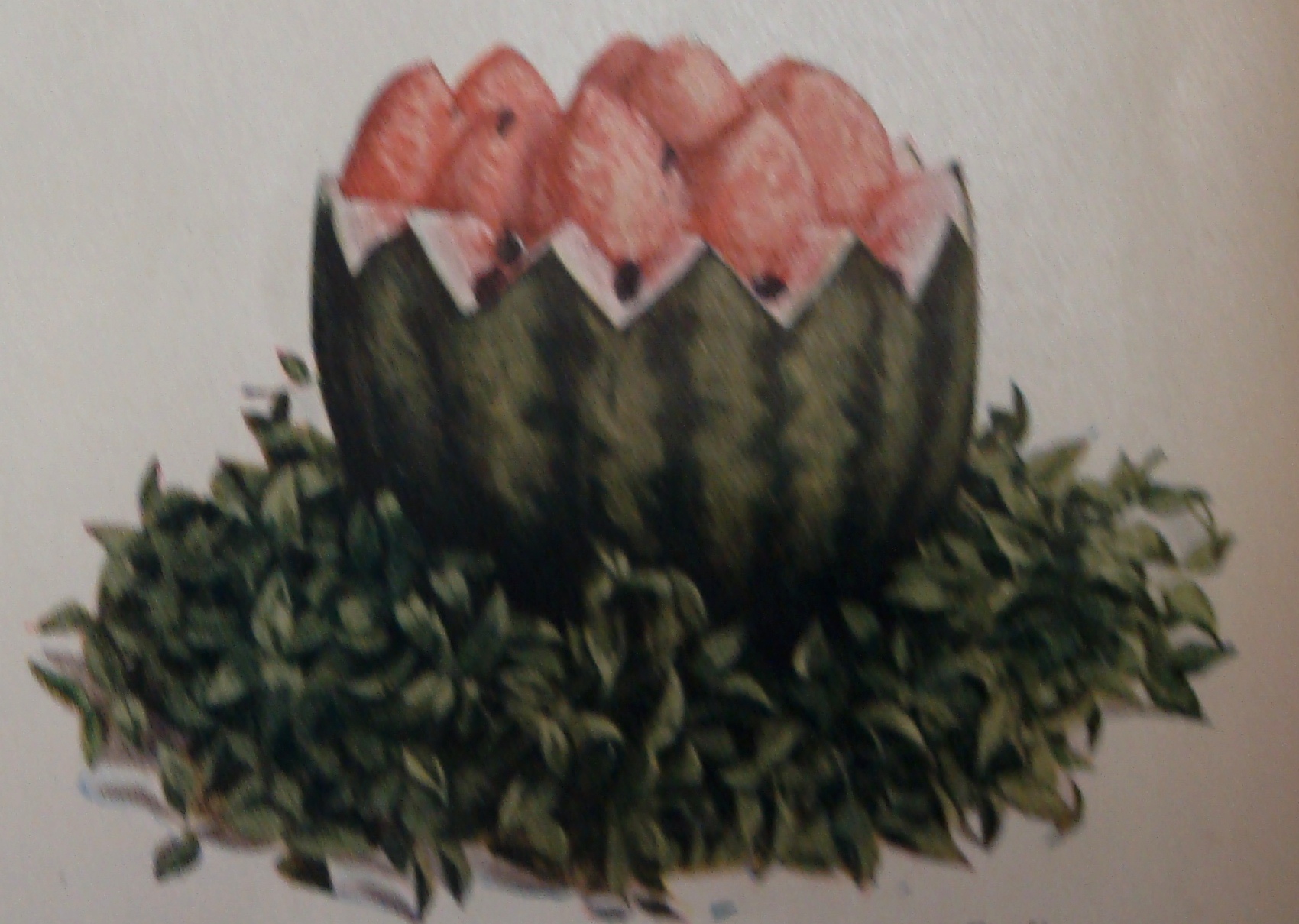
August would be the perfect time for watermelon.
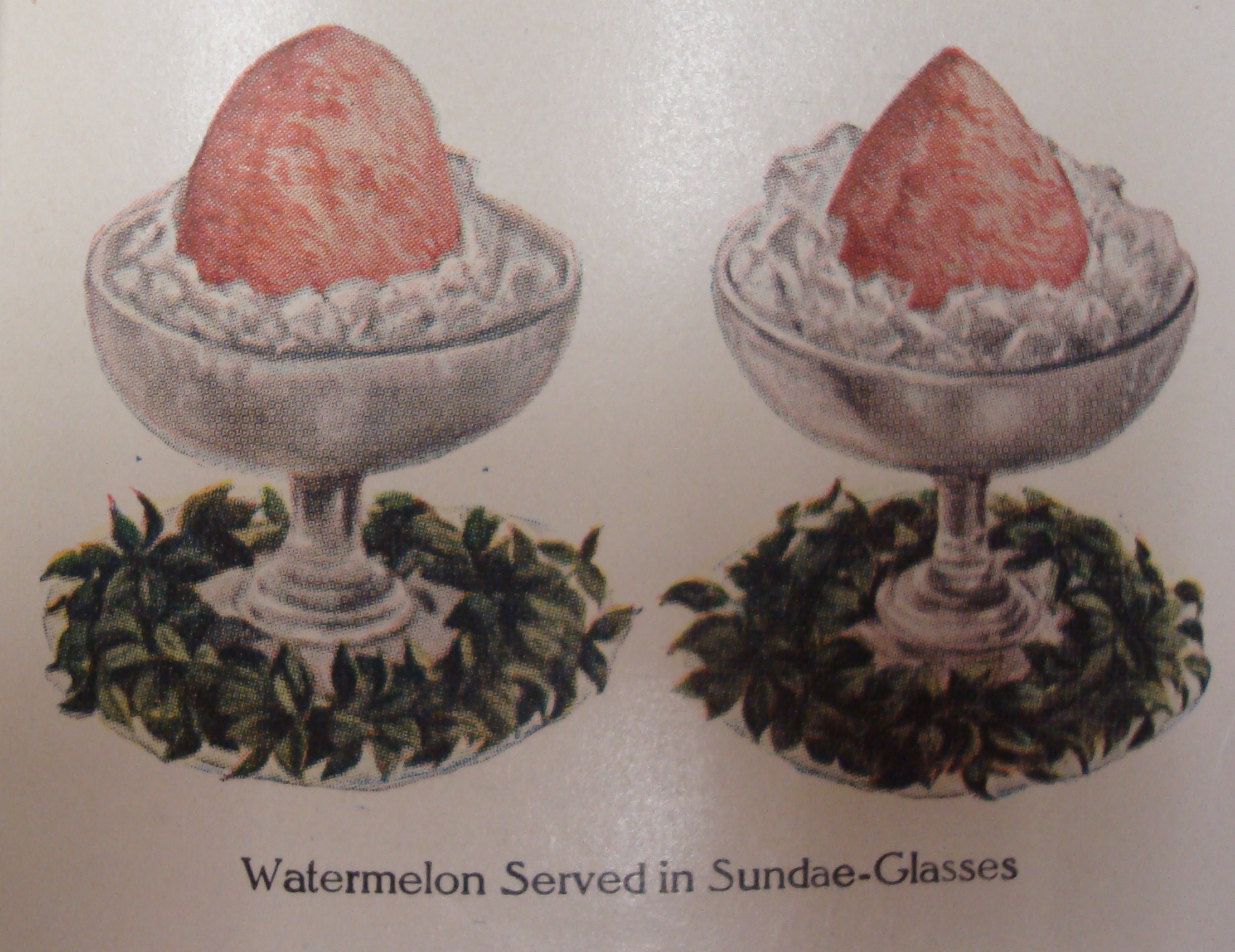
Grandma probably wouldn’t have done anything as fancy as the suggestion for serving watermelon in Ladies Home Journal:
An unusually nice way to serve watermelon is to have the pulp removed from the whole melon which has first been cut in halves, and replaced on cracked ice in half of the rind arranged in bowl fashion. Cone-shaped portions may then be served individually in sundae glasses, or cut in cubes in sherbet-cups.