Hundred-Year-Old Advice About the Right and Wrong Ways to Care for a Baby

18-year-old Helena Muffly wrote exactly 100 years ago today: 

Saturday, September 13, 1913:  This day is a good bit like some other days.

Her middle-aged granddaughter’s comments 100 years later:

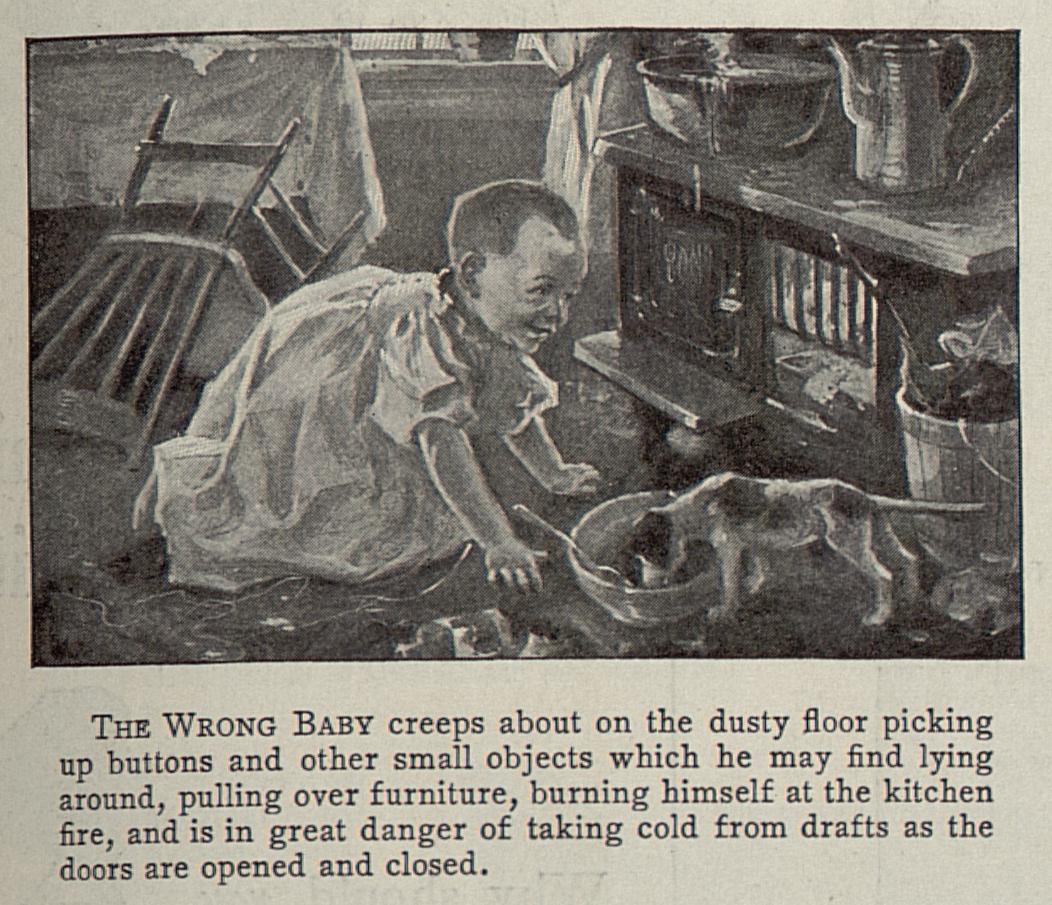
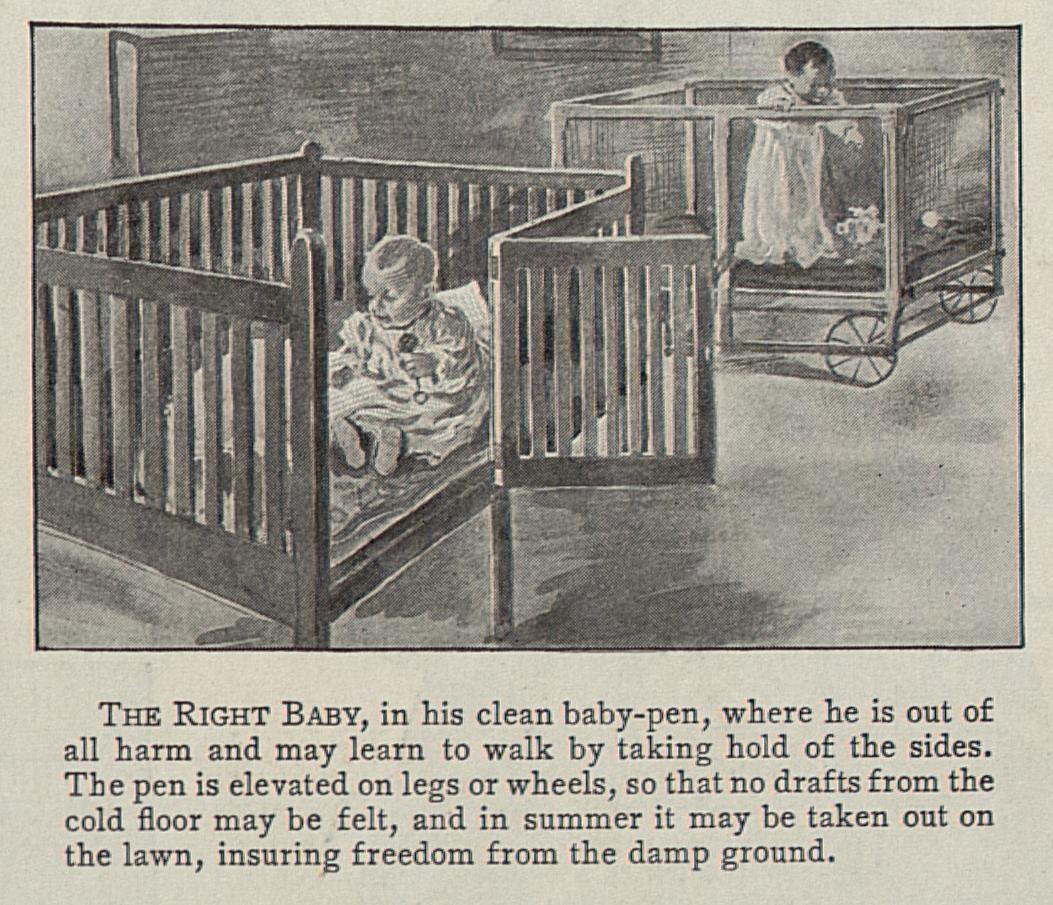
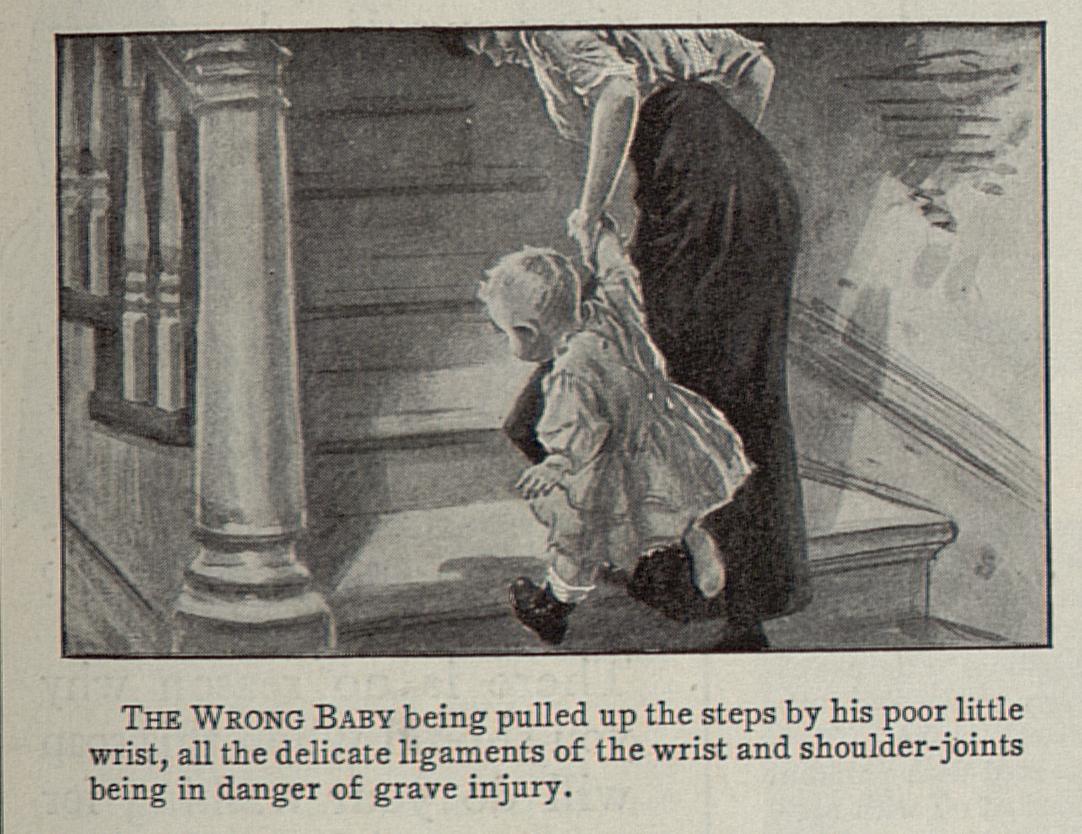
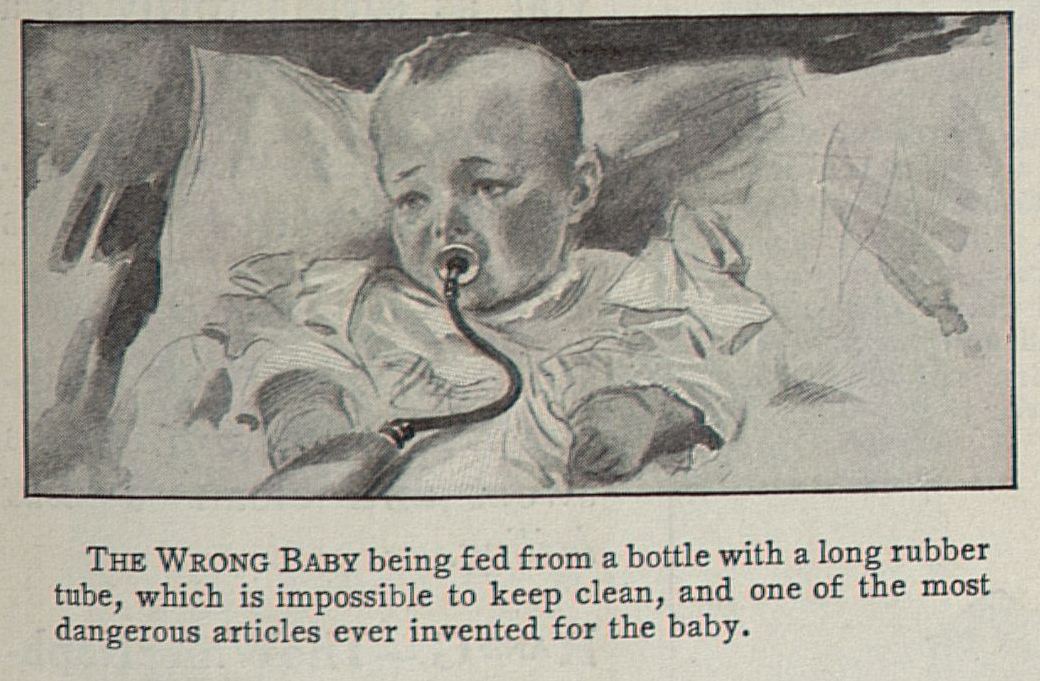
Since Grandma didn’t write much a hundred years ago today, I’m going to share some fun drawings of the wrong and right ways to care for a baby that appeared in the October, 1913 issue of Ladies Home Journal.

Wrong

1913-10-49.a

Right

1913-10-49.b

.

Wrong

1913-10-49.c

Right

1913-10-49.d

.

Wrong

1913-10-49.e

Right

1913-10-49.f

Colgate’s Ribbon Dental Cream Advertisement

18-year-old Helena Muffly wrote exactly 100 years ago today: 

Friday, September 12, 1913:  I’ve forgotten for today.

Her middle-aged granddaughter’s comments 100 years later:

Since Grandma didn’t write much a hundred years ago today, I’ll share a hundred-year-old ad for Colgate’s Ribbon Dental Cream that was in the March, 1913 issue of Ladies Home Journal.

1913 Colgate adCare of the teeth twice-a-day and every day is a good habit easily formed with Colgate’s.

COLGATE’S RIBBON DENTAL CREAM

DELICIOUS

ANTISEPTIC

ECONOMICAL

COMES OUT A RIBBON

LIES FLAT ON THE BRUSH

CANNOT ROLL OFF THE BRUSH

Its flavor is delicious—making its use a treat and insuring regularity.

Its antiseptic action is thorough—checking the germs which cause decay.

Its cleansing is safe—removing deposits and leaving the mouth non-acid without over-medication.

Every member of your household—man, woman and child—should have an individual tube.

Single tubes and boxes of half dozen at our dealer’s—or send us 2 cents for a trial tube and our booklet “Oral Hygiene.”

COLGATE & CO.

Dept. H

199 Fulton St., New York

Maker of Cashmere Bouquet Soap—luxurious, lasting, refined.

According to the Colgate website:

Colgate introduced its toothpaste in a tube similar to modern-day toothpaste tubes in the 1890s.

Until after 1945, toothpastes contained soap. After that time, soap was replaced by other ingredients to make the paste into a smooth paste or emulsion—such as sodium lauryl sulphate, a common ingredient in present-day toothpaste.

Old-fashioned Crab Apple Jelly Recipe

18-year-old Helena Muffly wrote exactly 100 years ago today: 

Thursday, September 11, 1913:  Nothing much.

Crab Apple JellyHer middle-aged granddaughter’s comments 100 years later:

Grandma, you must have done something. Were you too tired to write much because you spent the day in the kitchen helping your mother with the canning?

I made Crab Apple Jelly last week-end. It’s the season for crab apples—maybe you also made some a hundred years ago.

Crab Apple Jelly

5 pounds (approximately 10 cups) crab apples

8 cups water

Sugar

Remove stem and blossom ends from washed crab apples, cut in halves and place in large pan. Add water and cook until fruit is very soft, about 10 minutes.

Strain the mixture through a jelly bag. Do not squeeze or force just through bag.

Measure juice. There should be approximately 7 cups. Pour into a large pan. Stir in 3/4 cups of sugar for each cup of juice. Bring to a boil quickly and cook rapidly until the “jellying” point is reached. This is when the hot liquid coats the spoon and falls from the spoon in heavy drops (two drops forming side by side along the spoon edge that run together and fall off together). Immediately remove from heat. Do not overcook or the mixture will become a syrup rather than a jelly.

Skim off foam and pour into hot one-half pint jars to within 1/4 inch of the top. Wipe jar rim and adjust lids. Process in boiling water bath for 5 minutes.

Makes about 5 – 6 half pints.

1913 Books That Have Stood the Test of Time

18-year-old Helena Muffly wrote exactly 100 years ago today: 

Wednesday, September 10, 1913:  Didn’t feel the best the morning. Commenced reading a book.

o.pioneers

Her middle-aged granddaughter’s comments 100 years later:

What book was Grandma reading?

Goodreads lists two hundred books published in 1913 that are still in widely read. They probably were not the most popular books at the time, but rather they are the books that have endured –and whose message apparently continues to resonate a hundred years later.

Fifteen books on the list that I recognized the title or author are listed below:

1. O Pioneers by Willa Cather

2. Sons and Lovers by D.H. Lawrence

3. The Custom of the Country by Edith Wharton

4. Theodore Roosevelt: An Autobiography by Theodore Roosevelt

5. The Tale of Pigling Bland by Beatrix Potter

6. The Bobbsey Twins’ Mystery at School (Bobbsey Twins #4) by Laure Lee Hope

7. Chance by Joseph Conrad

8. Desert Gold by Zane Grey

9.  The Adventure of the Dying Detective by Arthur Conan Doyle

10. The Inland Voyage and Travels with a Donkey by Robert Louis Stevenson

11. The Story of My Boyhood and Youth by John Muir

12. Little Wars by H. G. Wells

13. The Night Born by Jack London

14. The War Correspondence of Leon Trotsky: The Balkan Wars 1912-1913 by Leon Trotsky

15. La Follette’s Autobiography: A Personal Narrative of Political Experiences by Robert M. La Follette

You may also enjoy similar posts that I did for books published in 1911 and 1912:

1912 Books That Have Stood the Test of Time

1911 Books That Have Stood the Test of Time

Shopping in Small, Medium-Sized, and Large Towns a Hundred Years Ago

18-year-old Helena Muffly wrote exactly 100 years ago today: 

Tuesday, September 9, 1913:  Went to Watsontown this afternoon to get some things.

DSC03659.crop
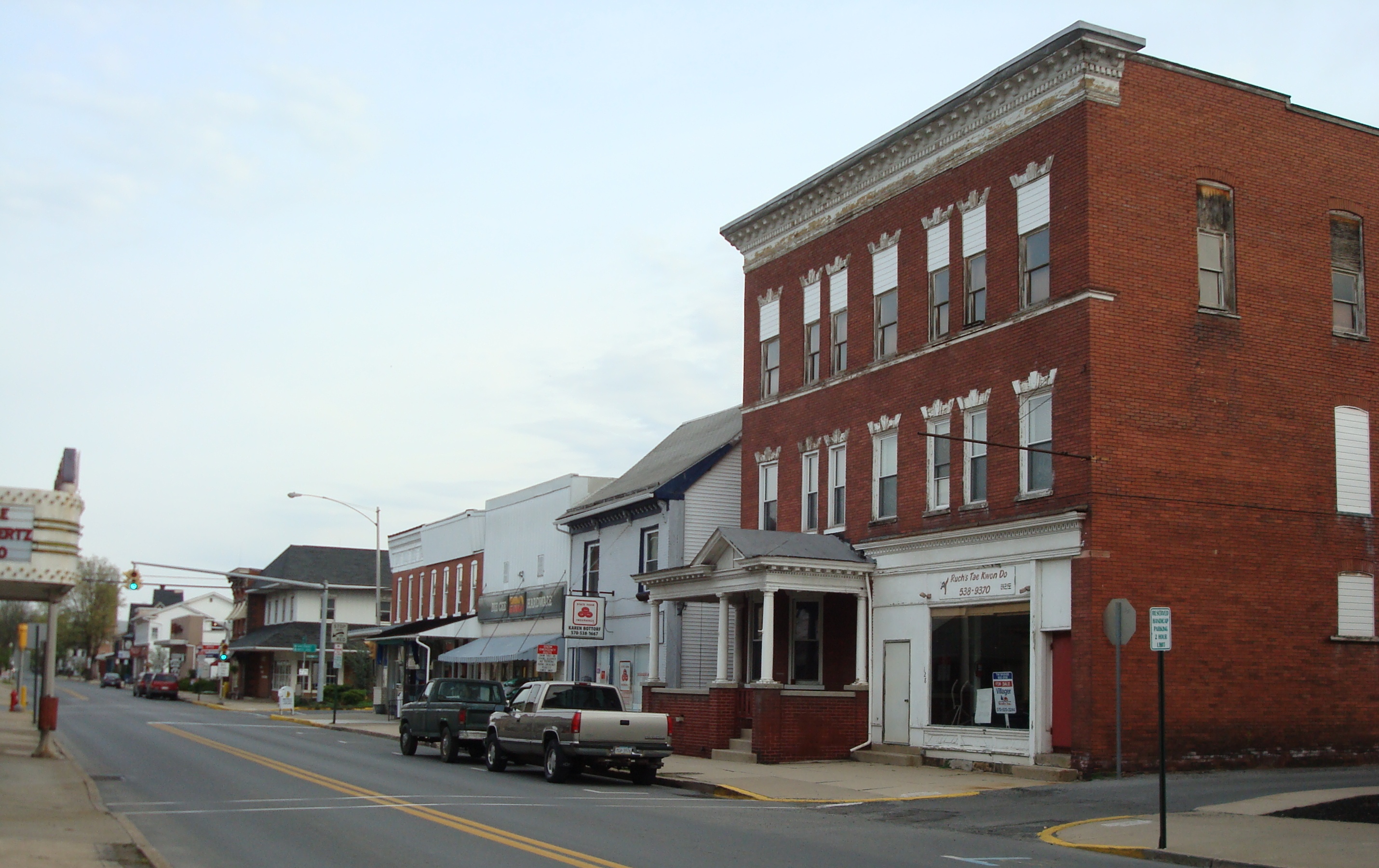
A recent photo of downtown Watsontown

Her middle-aged granddaughter’s comments 100 years later:

When I go shopping, the items that I want to buy determine where I go.  If I just need a gallon of milk I walk to the local convenience store, but if I need to buy a week’s worth of groceries I drive to the nearest strip mall. And, if I want to buy some new clothes I head to a more distant large mall.

It was the same in Grandma’s day. She often shopped in three towns–McEwensville, Watsontown, and Milton.

McEwensville had a general store and pharmacy—and sometimes Grandma could buy what she needed there. Watsontown was a somewhat larger town and had a small shopping district. And, Milton was a little further away, but had more stores.

Grandma could have easily walked to McEwensville or Watsontown; a trip to Milton would have required to train or buggy ride.

A hundred years ago today Grandma must have needed some things that were relatively common—but not so common that the McEwensville stores would have had them; so she had to visit the medium-sized town.

An aside–Maybe the title of this post isn’t really right, since by most standards McEwensville, Watsontown, and Milton are all small towns–but in Grandma’s world she definitely would have differentiated between them and considered one small, the other medium, and the third large.

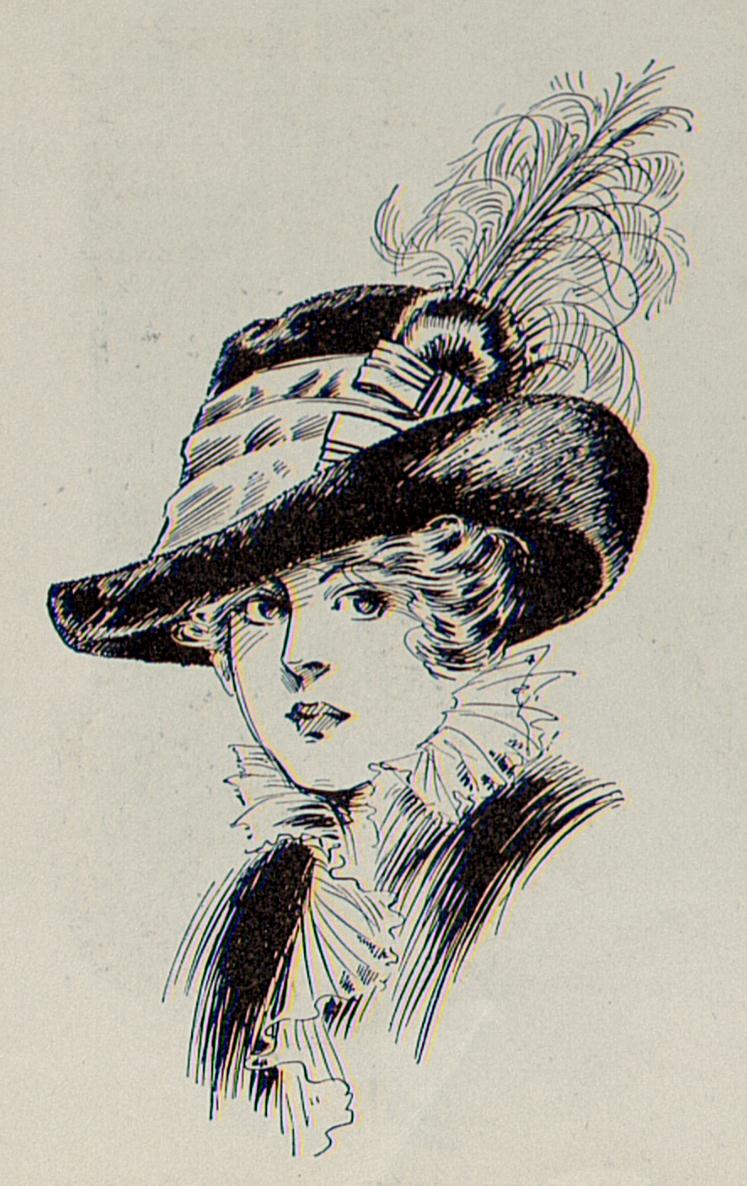
How to Make Four Hats Out of One

18-year-old Helena Muffly wrote exactly 100 years ago today: 

Monday, September 8, 1913:  Nothing very much.

1913-09-76.a

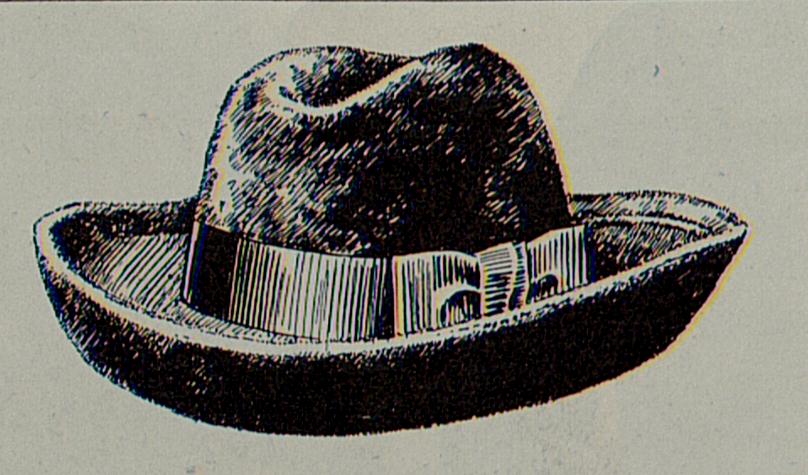
The hat of black velours, showing its simple original shape with a band of black grosgrain ribbon one inch wide. (Ladies Home Journal: September, 1913)

Her middle-aged granddaughter’s comments 100 years later:

Sounds like a slow day on the Muffly farm. After all of the work the previous week when the threshers were there, Grandma probably was ready for a more relaxing day.

Did she browse through the September, 1913 issue of Ladies Home Journal?  If she did, she would have learned how to make four hats out of one. The article said that it was an “economical way to good dressing.”

The plain band need not be taken off for any of these trimmings, as the others cover it completely, and are applied with milliners’ pins.

1913-09-76.b

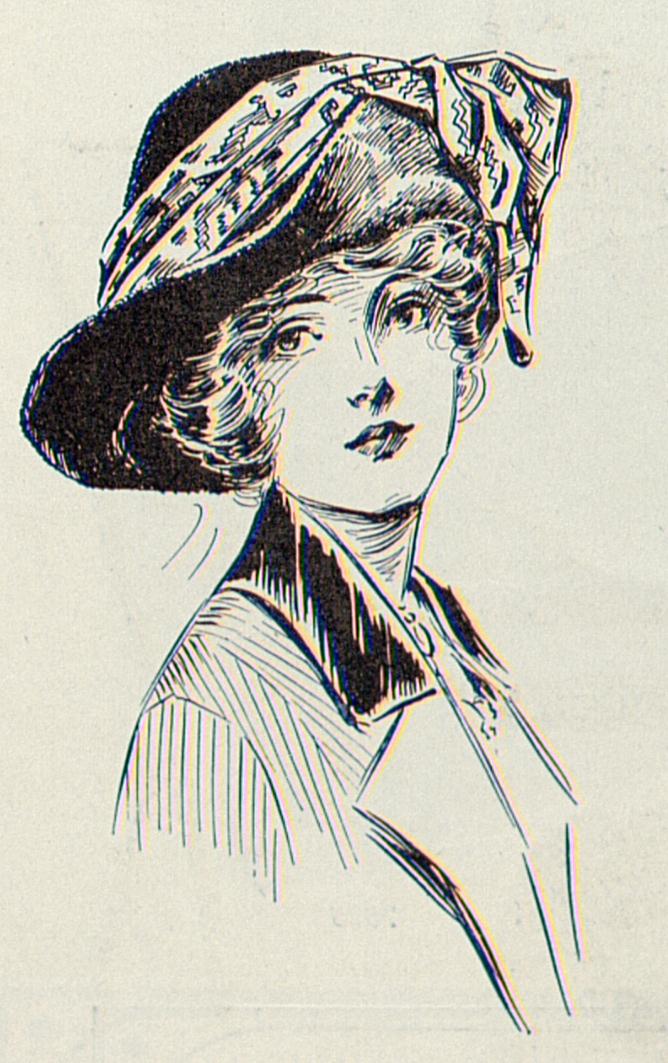
The first illustration shows a drapery and long soft bow of Oriental ribbon, which is six-inches wide. Two yards are required to make it.

1913-09-76.c

The second illustration, showing the Continental shape, the trimming is of white moiré ribbon, plaited, and made on a canvas foundation. Three yards of ribbon six inches wide is required to make it. The band measures three inches wide and the cockade six inches high, and three across, widening to five inches at the top.

1913-09-76.d

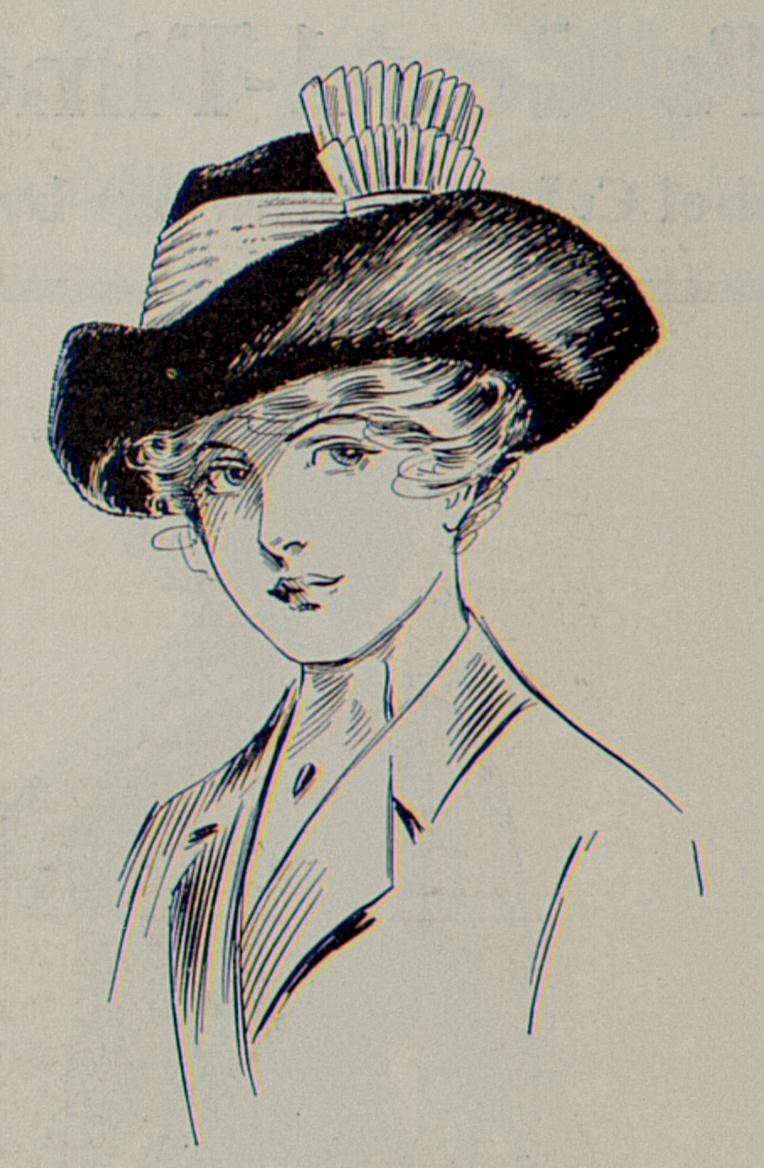
A little more dressy touch is given in the third trimming, which shows a crushed band of soft silk ribbon of a deep orange color. The feather fantasy at the side is of the same color, shaded and tipped with coque. This is held in place by two small plaited bows of the ribbon. One yard and a half of ribbon about seven or eight inches wide will be required for this trimming. The bow measures four inches across and two inches wide.

Did Sister’s Milking

18-year-old Helena Muffly wrote exactly 100 years ago today: 

Sunday, September 7, 1913:  Went to Sunday School this afternoon. We got a most refreshing rain towards evening. Ruthie is away to spend the day and I had the milking to do.

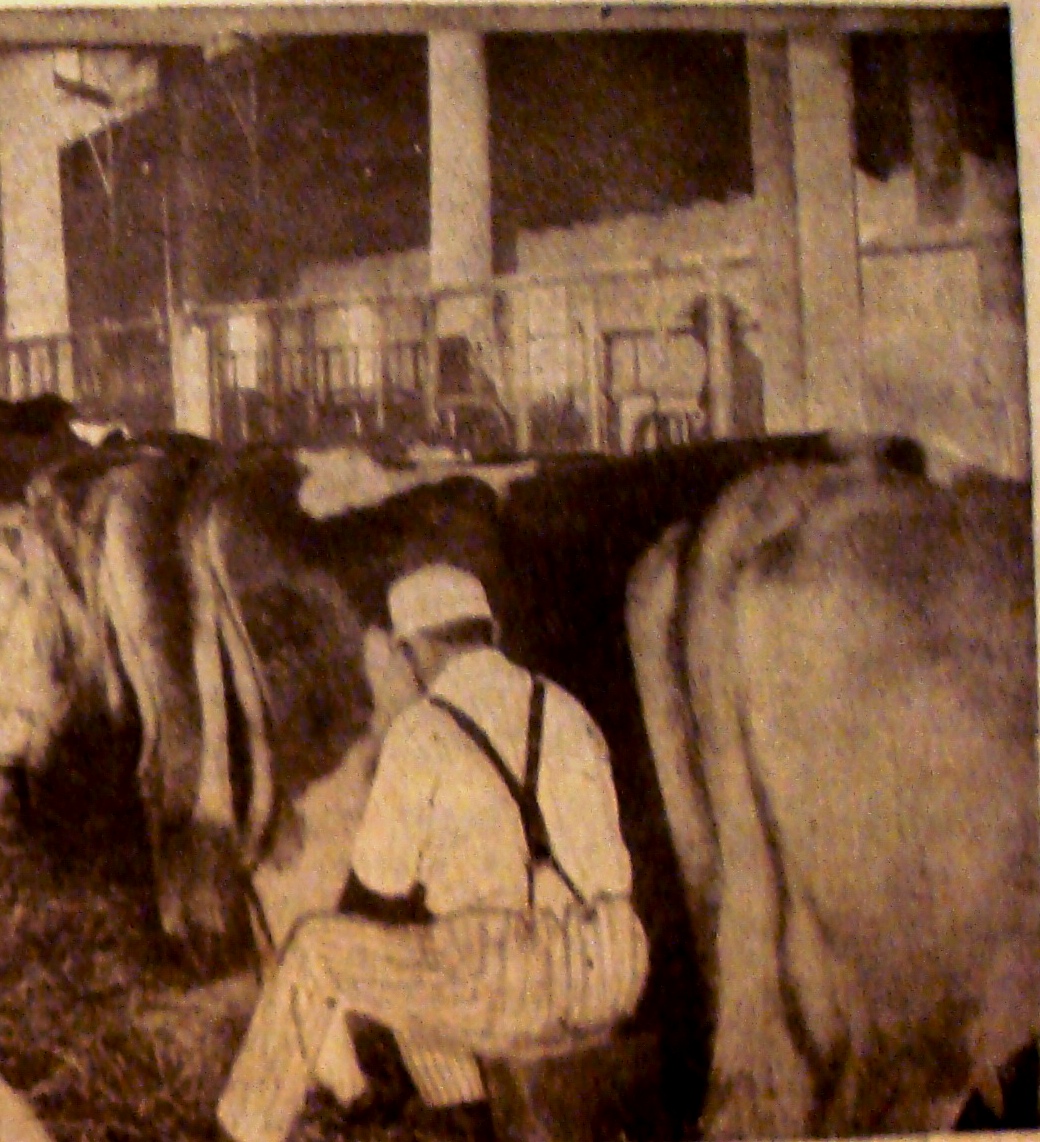
"Broken" cows standing still while being milked. (Photo source: Kimball's Diary Farmer Magazine, December 15, 1911)
 Grandma probably milked cows in a barn that looked similar to this one. (Photo source: Kimball’s Dairy Farmer Magazine: December 15, 1911) .

Her middle-aged granddaughter’s comments 100 years later:

Based on the diary, I think that Grandma and her sister Ruth shared the chore of milking the cows. The family probably had 6 or 8 cows—and each girl milked 3 or 4.

If one sister went somewhere, the other would milk all the cows.  Over time the informal trading of the milking chore would balance out—and each sister got some needed breaks.

Grandma visited her cousin Alma for three days in August—and Ruth probably milked all the cows while she was gone.  Now it was payback time.