18-year-old Helena Muffly wrote exactly 100 years ago today:
Saturday, November 22, 1913: Nothing of importance.
Annie (Derr) Van Sant and Homer Derr (circa, 1955)
Her middle-aged granddaughter’s comments 100 years later:
Today I’m sharing a photo of an aunt and uncle of Grandma’s that was taken years after this diary was written. In the process of doing research for yesterday’s post about the funeral of Grandma’s maternal grandfather, I came across the picture and thought you might enjoy seeing what they looked like in their later years.
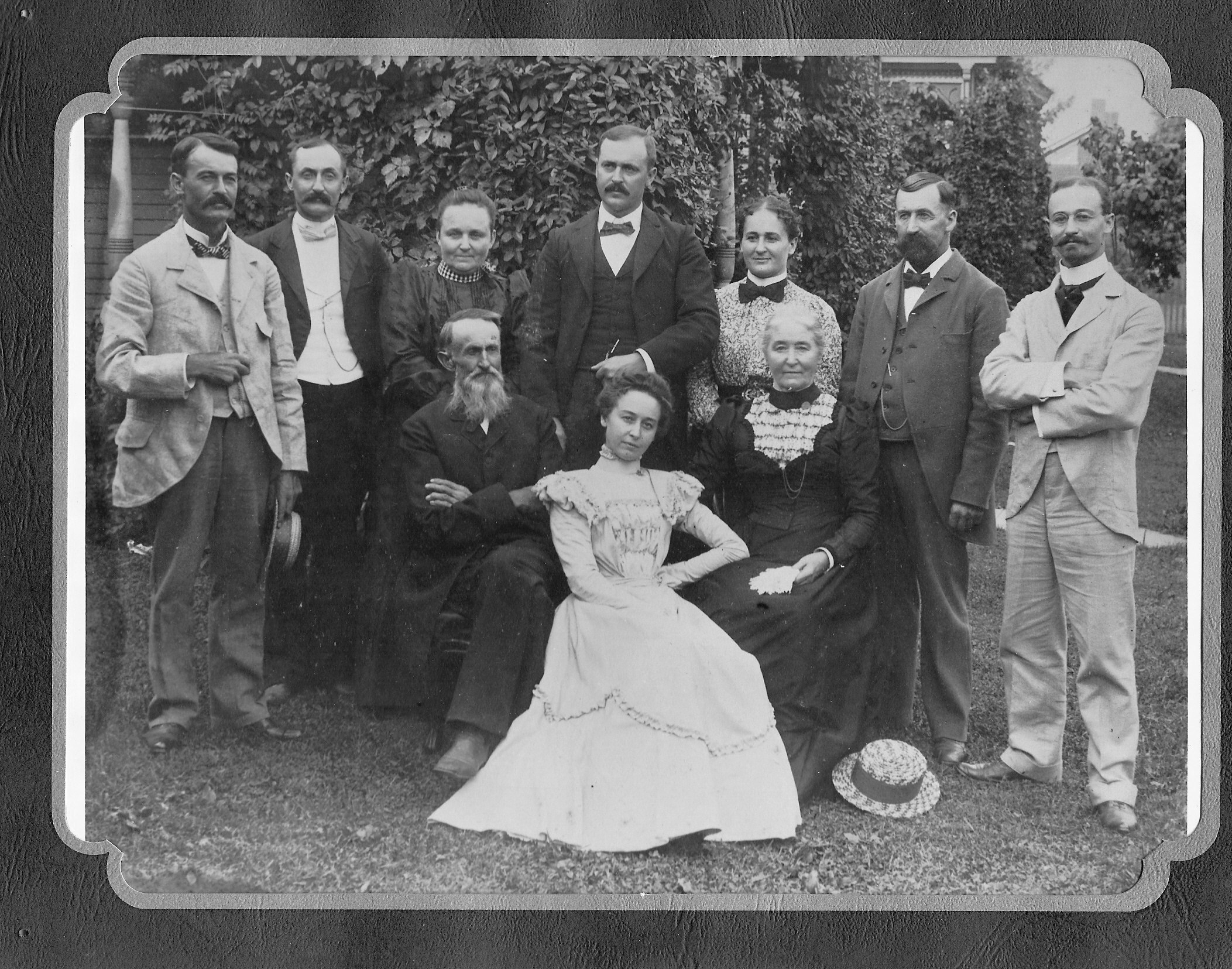
The picture is of Annie (Derr) Van Sant and Homer Derr. Homer died in 1958, so It probably was taken in the mid- 1950s. They were the two youngest children of John and Sarah Derr. I’m also including the group shot of the Derr family that was taken around 1900, so you can see what they looked like when they were young.
John and Sarah Derr Family. Taken about 1900. L to R. Front Row: John, Annie (Derr) Van Sant, Sarah. Back Row: Miles, Fuller, Alice (Derr) Krumm, Elmer, Phoebe (Derr) Muffly, Judson, Homer. Phoebe was the mother of Helena.
Annie is front and center, and Homer is on the far right.
Homer spent much of his career as a college professor at several universities including the school that is now called South Dakota State University in Brookings, South Dakota. At different schools he taught different subjects—including math and physics. He even wrote a publication that you can still buy today on Amazon called A Method of Petrographic Analysis, Based upon Chromatic Interference with Thin Sections of Doubly Refracting Crystals in Polarizing Light. (I would appreciate it if someone could explain to me in plain English what it is about.)
Annie was the widow of a doctor and lived in Turbotville, Pennsylvania (which is just a few miles from McEwensville).
18-year-old Helena Muffly wrote exactly 100 years ago today:
Friday, November 21, 1913: Ruth and I went to Turbotville this morning on the train to attend the funeral.
John and Sarah Derr Family. Taken about 1900. L to R. Front Row: John, Annie (Derr) Van Sant, Sarah. Back Row: Miles, Fuller, Alice (Derr) Krumm, Elmer, Phoebe (Derr) Muffly, Judson, Homer. Phoebe was the mother of Helena.
Her middle-aged granddaughter’s comments 100 years later:
Grandma’s 90-year-old grandfather, John Derr, died on November 17. He was her mother’s father. Grandma and her sister Ruth would have taken the the Susquehanna Bloomsburg and Berwick train to Turbotville for the funeral. It was about a five mile trip. There was a whistle stop at the feed mill near their home where they would have flagged the train down.
How did the rest of the family get to the funeral? One thought—
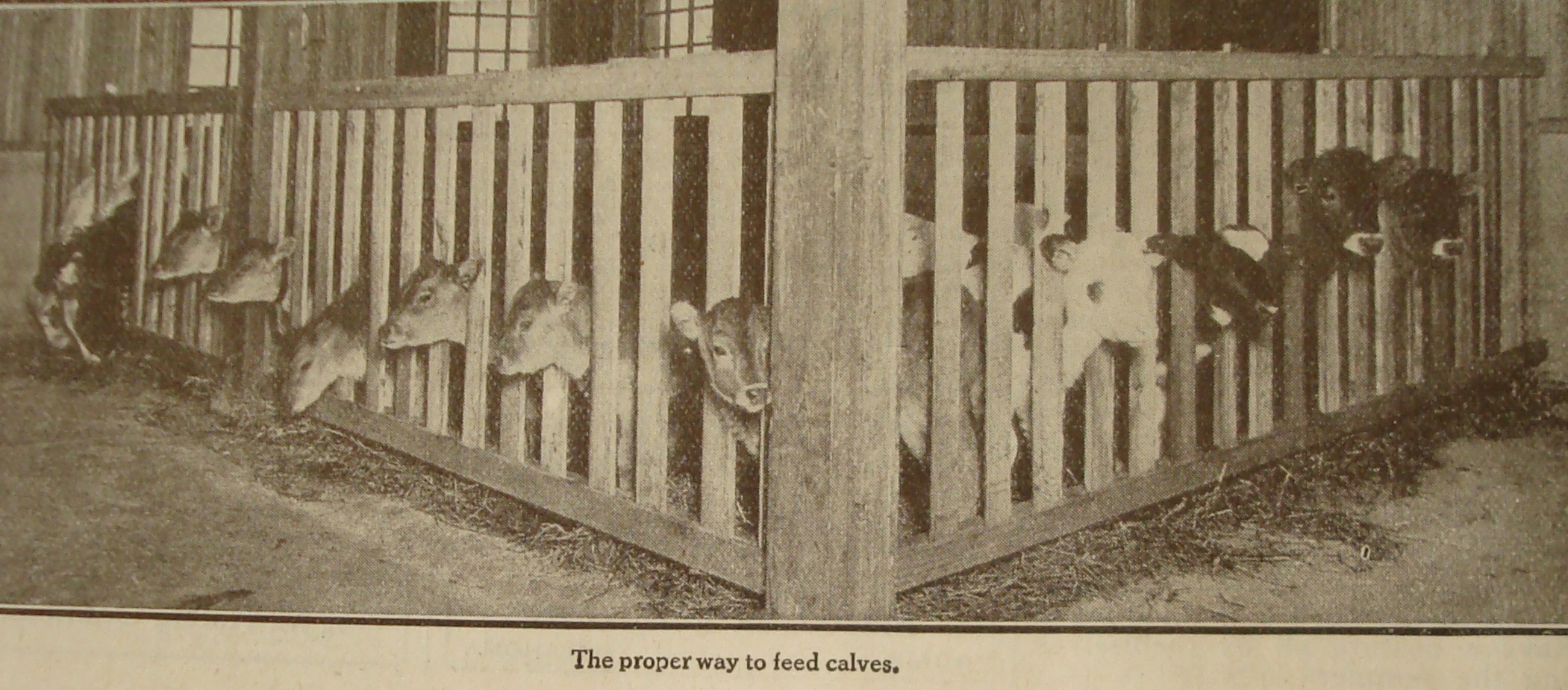
Maybe her mother, father, and little brother Jimmie had gone ahead to the funeral—but Ruth and Grandma had to stay home and milk the cows before they could go.
John Derr had a big family, so the funeral would have been large. It was probably held at a church or the family home—though it might possibly have been held at a funeral home. He was buried in the Turbotville Cemetery.
John’s wife Sarah was still living. Were family members worried about how she was taking her husband’s death? In 1913, Sarah was only 79 (and she would live another 14 years until she died in 1928 at the age of 93).
Eight of John’s nine children were still living. Did they all manage to get home for the funeral? Five of the children lived nearby: Phoebe (Grandma’s mother), Alice, Annie, Miles, Judson, and Fuller; but two were more distant.
The 1910 census indicates that one son, Homer, was a college professor living in Brookings, South Dakota. How did he get the message about his dad’s death? . . . by telegraph? Was it possible for him to get back to Pennsylvania in only four days for a funeral?
And, records indicate that Elmer was a “sales manager – harvester” in Baltimore, Maryland.
18-year-old Helena Muffly wrote exactly 100 years ago today:
Thursday, November 20, 1913: My Mollie’s calf over which I have been rejoicing for the past week or two on account of his bigness was sold this afternoon. He weighed 164 pounds. I had figured out a week or so ago that he would just have to weigh at least 145 pounds. Haven’t I something to be thankful for?
Her middle-aged granddaughter’s comments 100 years later:
Mollie was Grandma’s cow. I think that her parents gave each child a cow. When the cow had a male calf, the child got the money from the sale; when it was a female, their personal herd grew. (See previous post on teaching farm kids the value of money.)
This was the third year in a row that Mollie had a male calf. On December 27, 1912, Grandma wrote:
Sold Mollie’s calf today. It wasn’t a very big one and I rather feared my fortune would be pretty small, but after all it weighed one hundred and forty-four lbs. Received a neat sum of $11.56. I am real proud over what my purse that Ruth gave me contains. Over fourteen dollars.
. . .Sold Mollie’s calf today. Weighed 145 lbs. Came to $10.87. Quite a vast sum to get all at once. Guess I’ll save it and get a watch or something as useful.
—-
I’m keeping my fingers crossed that Mollie has a female calf in 1914. Grandma sounds pleased with the money—but it it’s about time for a girl!
18-year-old Helena Muffly wrote exactly 100 years ago today:
Wednesday, November 19, 1913: Ditto
Her middle-aged granddaughter’s comments 100 years later:
Huh???? The previous day Grandma wrote “nothing much,” so I guess that it was another slow day from Grandma’s perspective; but two days prior to this entry Grandma’s maternal grandfather, John Derr, died in the nearby town of Turbotville.
I hope no one’s upset, but I broke a rule I have and peaked ahead in the diary–Rules are made to be broken, aren’t they?—so I know that Grandma will attend his funeral on November 21.
Perhaps Grandma wasn’t doing much, but I bet that friends and neighbors were preparing food to serve for the traditional family gathering after the funeral.
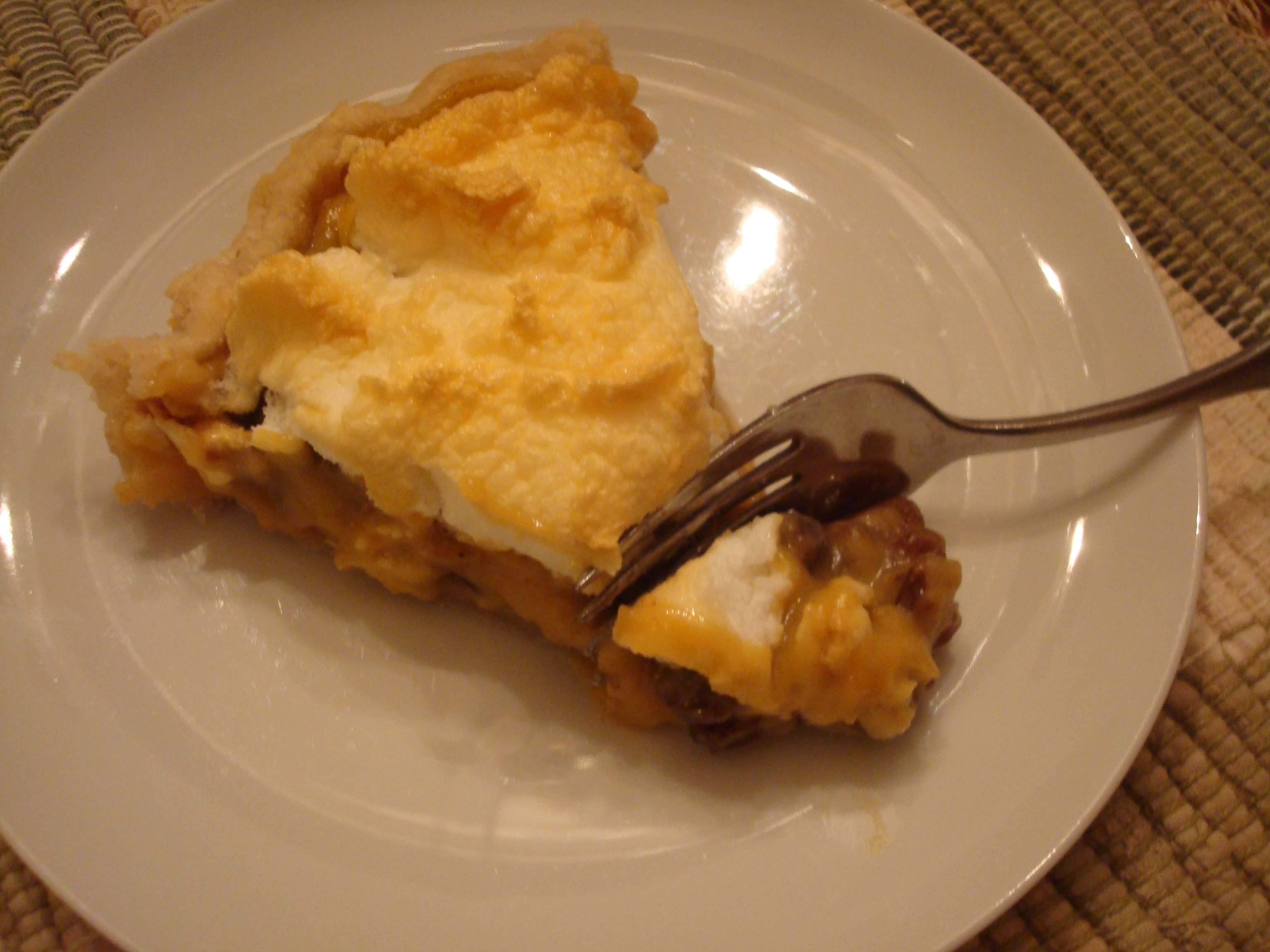
Were they making funeral pies? In the old days in Pennsylvania, raisin pies were often served at funerals and they were called funeral pie.
I’ve seen other blogs that give recipes for a funeral pie that is basically just a two-crust raisin pie. But my memory is that old-fashioned raisin pies in central Pennsylvania generally were raisin custard pies with a meringue topping, so I’ll give you that recipe.
Old Raisin Meringue Pie (Funeral Pie) Recipe
1 cup raisins
water
1 tablespoon flour
1 tablespoon corn starch
3/4 cup sugar
1 cup milk
2 egg yolks, slightly beaten
2 egg whites
1 9-inch pie shell, baked
Put raisins in small sauce pan, and just barely cover with water. Bring to a boil, then remove from heat and cool. Drain the cooled raisins. Stir the flour, corn starch, and sugar into the raisins; then add the milk and egg yolks. Stir and cook over medium heat until the mixture thickens (comes to a boil). Pour into a pie shell which was previously baked.
In a separate bowl make the meringue. Place egg whites in the bowl, and beat the egg whites until they form stiff peaks. Then spoon on top of the pie. Bake at 350° for 15 minutes or until the meringue is lightly browned.
This pie is different from the typical modern pie, but I really like it. I want to say that this pie will appeal to sophisticated palates—but somehow that doesn’t quite seem right when I’m talking about an old-fashioned food from rural Pennsylvania.
The delicate custard filling has a subtle and nuanced raisin flavor. And, the juicy plumped raisins provide a nice texture contrast to the smooth custard and the airy meringue.
I’m definitely going to make this pie again—and I don’t plan to wait until a funeral to serve it.
18-year-old Helena Muffly wrote exactly 100 years ago today:
Tuesday, November 18, 1913: Nothing much.
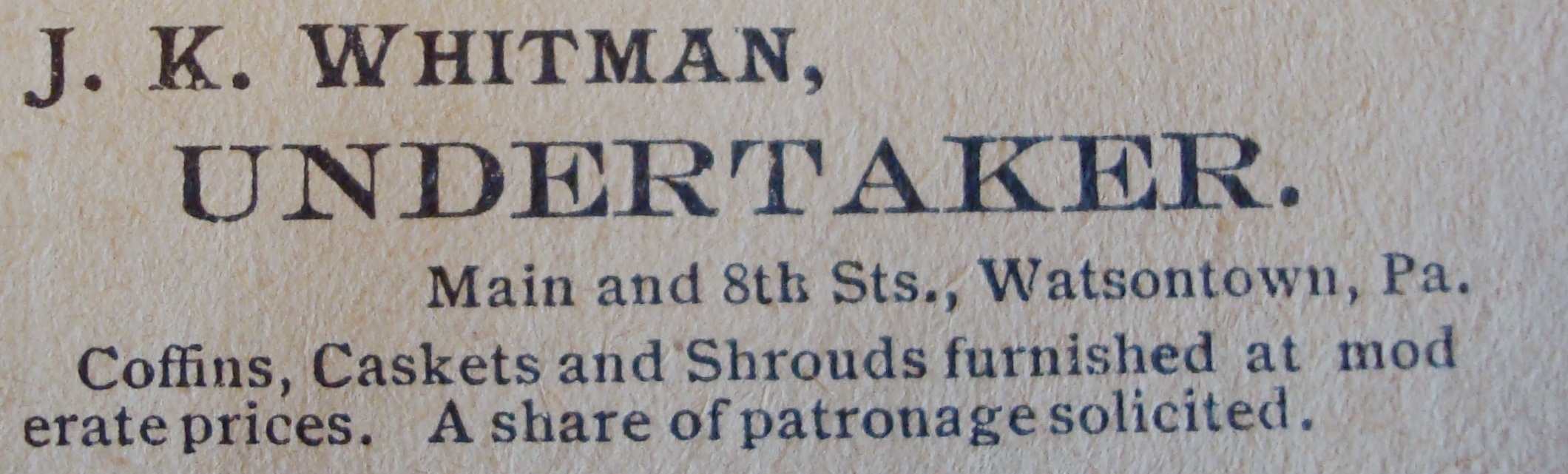
Source: Watsontown Star and Record and Star (April 3, 1914)
Her middle-aged granddaughter’s comments 100 years later:
Nothing much???? The previous day Grandma’s maternal grandfather died. What was Grandma thinking? Was her mother involved in the funeral preparations?
I found an advertisement by an undertaker in the nearby town of Watsontown. Her grandfather lived in another nearby town—Turbotville—so this probably was not the undertaker that the family used.
But, I don’t understand the ad. What does “a share of patronage is solicited” mean?
18-year-old Helena Muffly wrote exactly 100 years ago today:
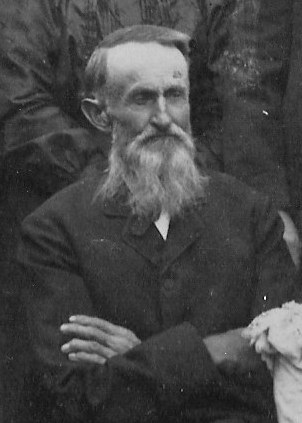
Monday, November 17, 1913: Mother went to Turbotville this morning. I kept house while she was gone. She returned with sad news. Grandpap died this morning.
Grandma’s Grandfather: John Derr (Photo taken: circa 1900)
Her middle-aged granddaughter’s comments 100 years later:
Grandma—
It’s hard to lose a grandparent.
Was your grandfather ill for a long time or was the death sudden? According to family records, he was born on July 16, 1823, so he was 90 years old.
You’re occasionally mentioned making trips to Turbotville to visit relatives, but never specifically mentioned your grandfather.
18-year-old Helena Muffly wrote exactly 100 years ago today:
Sunday, November 16, 1913: So disappointing, I wanted to wear my new hat to church this afternoon, but it was raining, and so I wore my old faithful brown hat that the water can’t hurt. I have a cold now for a change. I cough, sneeze, and pinch my nose.
Her middle-aged granddaughter’s comments 100 years later:
Grandma—
It’s too bad that you couldn’t wear your new black velvet hat that was trimmed with a rose ribbon and pink velvet flowers.
—-
It seems like there have been a lot of diary entries where Grandma wrote that it rained on a Sunday. Was it more likely to rain on Sundays than on other days of the week?
Grandma’s wrote that it rained on Sunday, September 21, 1913 and Sunday, October 19, 1913. So it rained about one Sunday a month during Fall, 1913. In other words, it rained one Sunday out of every four or five.
I then found some current climate data for the nearby town on Williamsport PA on the Climate Zone website—and was surprised to discover that in a typical year that there is 0.01 inch or more of precipitation on 10 days in September, 10 days in October, and 12 days in November.
(It really doesn’t seem like it rains on 1 out of every 3 days when I’m in Pennsylvania, but maybe I’d barely notice the rain on days when there was just a little bit and it fell in the middle of the night.)
Conclusion—Assuming the number of days with precipitation has been about the same across the last hundred years and that Grandma mentioned every Sunday when it rained, it looks like it was less likely to rain on Sundays than on other days of the week during Fall, 1913.