Baby Caps and Bonnets a Hundred Years Ago

18-year-old Helena Muffly wrote exactly 100 years ago today: 

Wednesday, December 10, 1913: Nothing of importance.

1913-12-44.c

Her middle-aged granddaughter’s comments 100 years later:

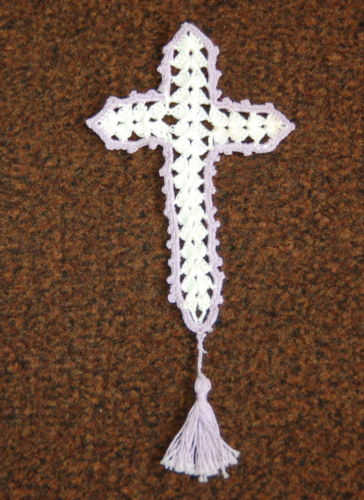
Since Grandma didn’t write much a hundred years ago today, I’m going to share some adorable pictures of baby caps and bonnets that were in the December, 1913 issue of Ladies Home Journal. According to the magazine:

Something pretty for the baby’s Christmas gift usually means a piece of dainty hand work.  Illustrated are two lovely crocheted caps lined with soft silk, and two others which are made of handkerchiefs.

1913-12-44.a

1913-12-44.b

1913-12-44.d

Fizzed Around, Then Went to Lecture

18-year-old Helena Muffly wrote exactly 100 years ago today: 

Tuesday, December 9, 1913:  Fizzed around this morning pretending to be doing something, but in reality doing nothing. Really it is wonderful the ways I manage to put the time in.

Went to a lecture with Ruth this evening in Watsontown. Fortunately we didn’t have to walk. We rode in a carriage. The lecture was real good and I enjoyed it quite a bit.

DSC03663
Recent picture of the main intersection in Watsontown. I bet that Grandma and Ruth felt proud of themselves as they rode through the intersection in a carriage.

Her middle-aged granddaughter’s comments 100 years later:

Grandma—

I love the word picture you created. I sometimes fizz around when really doing nothing—but won’t have been able to describe nearly as well as you did.

Who took Grandma and her sister Ruth to the lecture in Watsontown in a carriage?

In the early 1900s lectures presented by traveling speakers were very popular in small towns. The lectures brought culture to the towns, and often were inspirational and entertaining—though they sometimes addressed serious topics.

Somehow this diary entry makes me think of Main Street by Sinclair Lewis—though it was written a little after this time period. (Main Street was published in 1920.)

Grandma attended a single lecture, but this is how Main Street described a lecture series:

(The main character in the novel, Carol Kennicott, was from a city and struggled to fit into the small town of Gopher Prairie, so she had a somewhat negative view of the lectures.)

Nine lecturers, four of them ex-ministers, and one an ex-congressman, all of them delivering “inspirational addresses.” The only facts or opinions which Carol derived from them were: Lincoln was a celebrated president of the United States, but in his youth extremely poor. James J. Hill was the best-known railroad-man of the West, and in his youth was extremely poor. Honesty and courtesy in business are preferable to boorishness and exposed trickery, but this is not to be taken personally, since all persons in Gopher Prairie are known to be honest and courteous. London is a large city. A distinguished statesman also taught Sunday School.

Four “entertainers” who told Jewish stories, Irish stories, German stories, Chinese stories, and Tennessee mountaineer stories, most of which Carol had heard.

A “lady elocutionist” who recited Kipling and imitated children.

A lecturer with motion-pictures of an Andean exploration; excellent pictures and a halting narrative.

Three brass-bands, a company of six opera-singers, a Hawaiian sextette, and four youths who played saxophones and guitars disguised as wash-boards . . .

from Main Street by Lewis Sinclair

Daddy Has Sore Back

18-year-old Helena Muffly wrote exactly 100 years ago today: 

Monday, December 8, 1913:  Had to help Daddy with his work today. He has a sore back and can’t do much.

barn

Her middle-aged granddaughter’s comments 100 years later:

Grandma-

Oh dear, I hope your father isn’t in too much misery.  A backache can be so, so painful.

You must have a soft spot in your heart for your father when he’s ill. You generally refer to him as Pa, but I see that today you called him Daddy.

_____

Often when I start researching a post, I’m amazed by how much information I find. Today isn’t one of those days.

I thought that it would be easy to find information in hundred-year-old books about how treat backaches—but I found very little.

I got a 1913 book out of the library called When to Send for the Doctor and What to do Before the Doctor Comes. It had information about sore throats, fevers, sick stomachs, and bowel troubles—but nothing about backaches.

I then pulled out a 1911 book called Personal Hygiene and Physical Training for Women  –even though it was her father and not her mother with the backache—because it has lots of great health care information. And, I again came up short. Nothing about backaches–just some information about posture, rounded shoulders, and curvature of the spine.

Finally, I got out my copy of The Compendium of Every Day Wants (1908). It didn’t have detailed information, but I finally found some liniments and ointments for “lame back.” For example, here are directions for making a liniment that could be used to “bath” the sore area:

Mix 1/3 pound of cayenne pepper with 1 pint of pure alcohol.

Today, there are lots of books with detailed information about treating backaches. I can’t figure out why I couldn’t find much in the hundred-year-old books. I’ll have to dig around some more, and if I learn more about old-time backache treatments I’ll tell you about them in a future post.

Made a Call

18-year-old Helena Muffly wrote exactly 100 years ago today: 

Sunday, December 7, 1913:  Went to Sunday School this morning. It proved to be rather rainy. Made a call this afternoon. Ruth and I were going to church this evening, but it started to rain.

Telephone

Her middle-aged granddaughter’s comments 100 years later:

What does “made a call” mean? Did Grandma mean that she visited a friend? . . . .or did she mean that she made a telephone call?

Telephones were unusual enough a hundred years ago that a phone call may have merited a mention in the diary.

In the 1910s telephone lines were being strung from poles in the general area,  but I’m uncertain whether Grandma’s family had a phone. Some families who lived in town or along the main road between Watsontown and McEwensville definitely had one.

Back in 1911, Grandma wrote:

. . .This afternoon I went over to Stout’s. My first experience in telephoning. The voice at the other end of the wire sounded rather squeaky. I telephoned to Besse.

May 8, 1911

(Stout’s lived near the Muffly’s on a farm along the main road. Besse was Grandma’s married sister, and she also lived on the main road.)

Old-time Waffle Recipe

18-year-old Helena Muffly wrote exactly 100 years ago today: 

Saturday,  December 6, 1913: The whole family was invited out for dinner today. We all went except Pa. It was up at Tweet’s place. We had something that I always had a curiosity to know what they tasted like. It was waffles.

Her middle-aged granddaughter’s comments 100 years later:

mmm. . . Waffles sound good.

Until I read this I hadn’t realized that waffles were around a hundred years ago. I wonder how they were made back in the days before electric waffle makers.

Here’s an excellent old family recipe for waffles and it may be similar to the recipe that Tweet used.

Waffles

2 cups cake flour

3 teaspoons baking powder

1/4 teaspoon salt

2 eggs, separated

1 1/4  cup milk

6 tablespoons melted butter

Beat egg whites until stiff. In a separate bowl combine cake flour, baking powder, salt, egg yolks, milk, and butter. Add flour gradually, beating only until smooth. Gently fold in beaten egg whites. Bake in a hot waffle iron.

Yield: approximately 4 servings

This recipe old, but it’s not a recipe of Grandma’s. Let me tell you its story:

This recipe was in my mother’s recipe card box. I think that it is the waffle recipe that my maternal grandmother used. (The grandmother I write about in this blog is my paternal grandmother).

We often had waffles when I was a child—but we never used this recipe—instead we used the recipe on the Bisquick box.

A few years ago I compiled my recipes—including recipes of my mother’s  which were in my recipe box but that I’d never made—into a family cookbook. I gave the cookbook to my children and other relatives.

A couple of months ago my adult son said, “Mom, that’s a great waffle recipe in your cookbook.”

And, I responded, “What recipe?” since I’d never made the waffle recipe and had forgotten that I’d put it into the cookbook.

I recently actually made this recipe and it’s wonderful—and it’s even more wonderful that my children are discovering their food heritage.

Tweet was the nickname of Helen Wesner. She was a friend of Grandma’s and lived with her family on a farm at the edge of McEwensville.

12/7/13 Update

My readers are wonderful. I now know what an old-fashioned waffle iron looks like. RuthAnn at Labyrinth Living sent me a picture of an old-fashioned cast iron waffle iron that her great-grandmother used. She gave me permission to share it with you. Here is what she wrote:

waffle.iron.1890

It would have been used on a wood cook stove, but I know Grandma also used it later on her electric stove, just right on the elements.  If you can see on one piece, one end has a round socket and the other piece has a round ball that fits into the socket.  So those two halves fit together and are placed on the stove to heat.  One lifts the handle to open the halves, and puts the batter on the waffle grid, then closes it and holds it for about a minute and then lifts the two handles together and swivels it around (the ball in the socket is the swivel) and puts it down to cook the other side.  When it stops steaming, it should be ready to remove and serve.

1913 Christmas Cake Ideas

18-year-old Helena Muffly wrote exactly 100 years ago today: 

Thursday, December 5, 1913:  Ditto

1913 Christmas cake

Her middle-aged granddaughter’s comments 100 years later:

The diary entries for both December 4 and December 5 say “ditto.” The “ditto” refers to a diary entry on 3rd which said, “Nothing—That word I have good use for.”

I’m enjoying browsing through the December, 1913 issue of Ladies Home Journal. Since Grandma didn’t write much, I’ll share some Christmas cake ideas that were in the magazine.

Christmas Cake

1913-12-82.h

1913 Christmas cake

Muffly Magnetic Retriever Used to Remove Metal Objects from Cows’ Stomachs

18-year-old Helena Muffly wrote exactly 100 years ago today: 

Thursday, December 4, 1913:  Ditto.

muffly_retriever.2The New Improved Muffly  Magnetic Retriever

Is now available through your favorite supplier or direct from

Dr. John W. Vandeven, D.V. M. , Belleville, Pa. 17004

Her middle-aged granddaughter’s comments 100 years later:

The “ditto” refers to  a diary entry the previous day which said, “Nothing—That word I have good use for.”

One of the things that I really enjoy about blogging is how I occasionally get comments from wonderful people who knew my Grandma or other relatives. It is awesome to learn more about family members and what they were like.

I tingled with excitement when I read Pat Lukas’s recent comment, and  I’d like to thank Pat for sharing information that she had about Grandma’s little brother, Jim Muffly.  Jim did some amazing things.

Jim became a veterinarian with a practice in Lewisburg, Pennsylvania.  I learned from Pat that he was also an inventor.

This is what Pat wrote in her comment:

At this very moment I am looking at the “Program of the 101st Annual AVMA (American Veterinary Medical Association) Meeting” which took place in Chicago in July of 1964. James A. Muffly, V.M.D. exhibited his invention for charging magnets which were used to remove metal, such as nails and bailing wire, from the stomachs of cattle.

I remember Dr. Muffly. My father, John Vandeven, D.V.M., worked with him to develop the design for the Muffly Magnetic Retriever and helped him market it. I also remember seeing my father use the retriever on dairy cows.

Pat was kind enough to share the cover of the 1964 American Veterinary Medical Association Meeting program and the page that describes Jim Muffly’s invention in the program, as well as a copy of an advertising flyer for the invention.

Muffly.AVMA cover-1

Dr. Muffly-2

Pat shared information from an article that her father wrote about the Muffly Magnetic Retriever that appeared in the May 1965 issue of Modern Veterinary Practice which provides a sense of the economic importance that the invention had in helping small farmers who had sick cows. It said on page 65 of the article:

In a herd of 55 Holstein cows, 13 were vomiting. Although hardware might have been ruled out because so many animals were affected, 7 lbs. of electric fence wire pieces and various other metal objects up to 5 inches in length were retrieved from 53 of these cows.

Pat also wrote:

My father considered Dr. Muffly a very good friend. The impression I carry of Dr. Muffly is that of a kind and gentle person.

The information Pat gave me started a snowball that led to the discovery of Jim Muffly’s patent.   My son Nathan was recently home over Thanksgiving and I mentioned the Muffly Magnetic Retriever to him.

Nathan said, “I wonder if we could find the patent for Jim Muffly’s invention.”

And, within minutes he’d found Jim Muffly’s 1956 patent for the instrument that could be used to remove metal from cows stomachs.

The tool Jim Muffly developed was flexible and could be maneuvered into the cow’s stomach. Nathan also found where Jim Muffly’s invention had been cited in several more recent patent applications as a basis for those inventions—including several applications for inventions of human catheters.

Thank you Pat and Nathan for all of the wonderful information.  It’s fun to learn more about an awesome relative.

___

If you’d like to see pictures of Jim Muffly you might enjoy a previous post:

What Ever Happened to Jimmie Muffly?