1914 Buster Brown’s Darnless Socks Advertisement

19-year-old Helena Muffly wrote exactly 100 years ago today: 

Sunday, May 3, 1914: Was going to a sale this afternoon but changed my mind and went someplace else. Am waiting on my thimble (Ma has it). Want to mend some holes in my socks.

Source: Ladies Home Journal (August, 1914)

Her middle-aged granddaughter’s comments 100 years later:

Grandma- You need some Buster Brown Darnless Socks!

—-

Hmm . . . This is a really odd diary entry. May 3, 1914 was a Sunday.

The previous day (Saturday), Grandma wrote, “Ditto.”

Did she actually write both of entries at a later date—and get confused about which day was the Sunday? . . . though that doesn’t exactly make sense, since she seems to be writing in the moment.

Did Both Men and Women Garden a Hundred Years Ago?

19-year-old Helena Muffly wrote exactly 100 years ago today: 

Saturday, May 2, 1914: Ditto

Source: Vegetable Gardening (1914)

Her middle-aged granddaughter’s comments 100 years later:

Grandma probably was still doing the spring housecleaning. May is also a busy time for gardening. Did the Muffly women take any breaks from the cleaning to plant a few seeds?

Here’s some advice from a book published in 1914 by Samuel B. Green called Vegetable Gardening:

If one were to figure the actual value of vegetables that may be raised on a half-acre plot of garden, it would amount to at least $100—ten or fifteen times what any common field crop on the farm will produce in the same area.

Besides, there is the satisfaction of having vegetables fresh, and of much better quality than can be bought in town or from a neighbor, unless it be a very near neighbor. Vegetables lose their freshness and character when much time elapses between their harvesting and use.

Caring for the garden is a bugbear of many farmers. If properly laid out and managed, the labor required will not be much more than for corn.

The garden should be near the house. It may be that much of the labor of planting and care will fall upon the housewife and children; although this ought not be unless they desire it.

The garden pays well enough to be given proper attend from the men of the house. However, the women will probably prefer to harvest the crop, and perhaps plan the apportionment of the garden space.

May Poem–and STILL Doing Spring Housecleaning!

19-year-old Helena Muffly wrote exactly 100 years ago today: 

Sunday, May 3, 1914:

Brighter days are surely dawning,

Where the flowers peep from their places,

When the birds commence their buildings,

And all things are looking fairer,

Then comes the month of May.

Pandemonium reigned today in the sitting room, and it is going to stay that way for awhile I think. Wish house cleaning days were over.

Source: Wikimedia Commons

Her middle-aged granddaughter’s comments 100 years later:

Whew, what happened? Was Grandma’s mother angry that she wasn’t working hard enough?

The Muffly’s spring housecleaning seems way over the top. They started cleaning at least 10 days prior to this entry. On April 22, Grandma wrote:

Spent part of the day on my knees. Now I don’t mean I was trying to be good. I was cleaning house. . .

Grandma began the month with a poem—as she did on the 1st of every month. For more information about the poems see this previous post:

Monthly Poem in Diary

Picking Trailing Arbutus with Friends

19-year-old Helena Muffly wrote exactly 100 years ago today: 

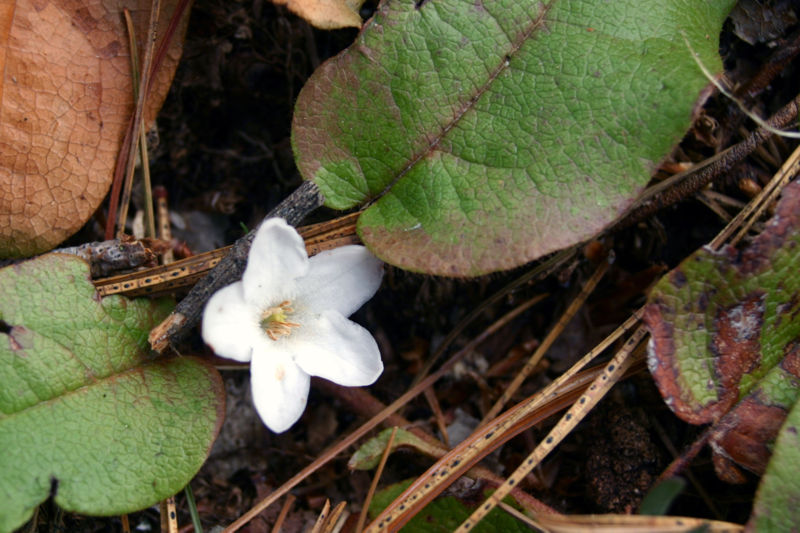
Thursday, April 30, 1914:  But we went today and got all we cared to carry home. It is quite a distance and my legs ache by this time.

Trailing Arbutus (Mayflower)

Her middle-aged granddaughter’s comments 100 years later:

I’m guessing that Grandma and some of her friends picked lots of training arbutus. Two days prior to this entry she wrote:

Was going for trailing arbutus this afternoon, but the other girls didn’t have time to go, so it’s postponed til tomorrow.

It apparently took two days to actually get the group together to pick arbutus.

Trailing arbutus are also called mayflowers. Several years ago when Grandma wrote about gathering trailing arbutus, I found a description at The Write Way about what it was like to pick them. It’s still the best description I’ve ever seen, so I’m going to repeat it here:

I have such crisp memories of picking wild mayflowers with my brother. Scrounging around on the sun-splashed forest floor, moving decaying leaves with our bare hands to find a delicately scented flower smaller than a dime.

Trailing arbutus are not easy to find; their flowers tend to hide under the leaves. It takes quite a few flowers to make even a small bunch, but they were worth it.

Brenda Visser

Hundred-Year-Old Newspaper Article: “Woman Masqueraded As Man” for 60 Years

19-year-old Helena Muffly wrote exactly 100 years ago today: 

Wednesday, April 29, 1914: <<no entry>>

Source; Milton Evening Standard (April 2, 1914)

Her middle-aged granddaughter’s comments 100 years later:

A hundred years ago today was one of the few days when Grandma didn’t write a diary entry. Since she didn’t write anything, I thought that I’d share a hundred-year-old article I recently came across when I was browsing through old microfilms of the Milton Evening Standard.

1914 Kodak Advertisement in Farm Magazine

19-year-old Helena Muffly wrote exactly 100 years ago today: 

Tuesday, April 28, 1914: Was going for trailing arbutus this afternoon, but the other girls didn’t have time to go, so it’s postponed til tomorrow. Developed my plates. The negatives are spotted some, where they got touched.

Source:  Kimball's Dairy Farmer Magazine (June 1, 1914)
Source: Kimball’s Dairy Farmer Magazine (June 1, 1914)

Her middle-aged granddaughter’s comments 100 years later:

Yeah Grandma! I’m glad that you’re still taking photos and developing them. This is the first time you’ve mentioned photography in months. What a fun hobby!—though it sounds difficult to get perfect photos.

What did you take photos of? . . . friends? . . . family? . . . or perhaps you convinced your parents to buy your film and supplies by saying that you’d take photos to help keep an accurate record of the farm operations.

What Does “Not Worth the Snap of Your Fingers” Mean?

19-year-old Helena Muffly wrote exactly 100 years ago today: 

Monday, April 27, 1914: Not worth the snap of your fingers.

Recent photo of house where Grandma grew up. I wonder if Grandma once planted seeds in the same flower beds.

Her middle-aged granddaughter’s comments 100 years later:

Hmm. . . I don’t think I’ve ever heard that phrase. What does “not worth the snap of your finger” mean? Was Grandma feeling ill?. . depressed? . . . Was she bored? . . . Overworked?