19-year-old Helena Muffly wrote exactly 100 years ago today:
Sunday, October 24, 1914: << no entry>>

Her middle-aged granddaughter’s comments 100 years later:
Sometimes I’m amazed how a hundred-year-old article can seem uncannily similar to current news stories. Since Grandma didn’t write anything a hundred years ago today, I’m going to go off on a tangent.
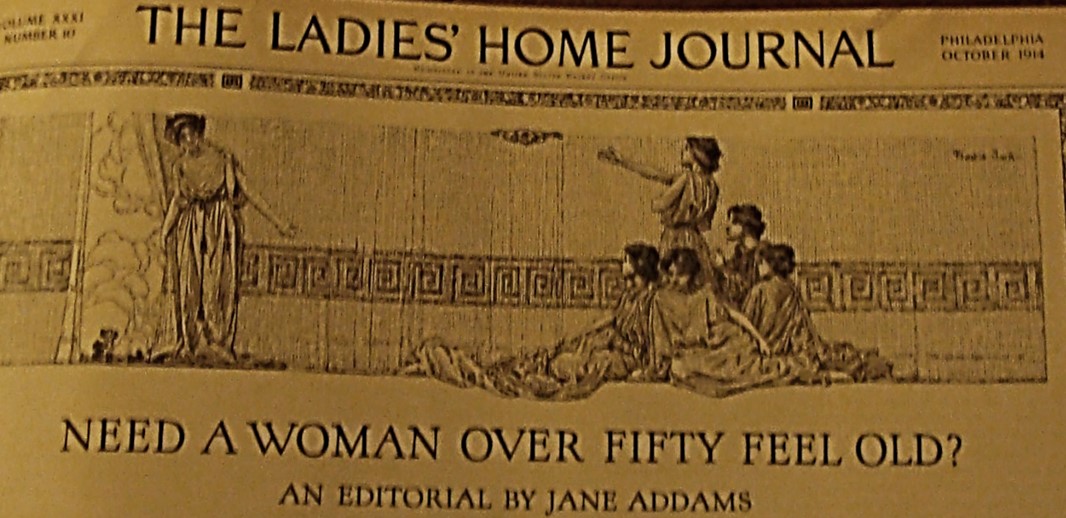
Texas had a meningitis epidemic in 1912—and the state was trying to figure out how to prevent future epidemics. Here’s some quotes from an article in the September, 1914 issue of Ladies Home Journal:
The Man Who is Cleaning Up Texas
Down in Dallas, Texas lives Doctor Manton M. Carrick, a man who studies medicine to learn to live. All about him in that great open country of the Southwest people were dying of tuberculosis, meningitis, and other equally preventable diseases.
Two years ago Texas was panic-stricken at the spread of a meningitis epidemic that for some time baffled the most frantic efforts of all the medical authorities. Dying out as it had begun, without any apparent cause or reason, the epidemic left the people aghast at the destruction wrought and anxious for a remedy for the future. “How shall we prevent the recurrence of this dread disease?” was the universal question.
Into this dubious crisis there came the suggestion that a cleaner Texas would mean a healthier Texas.
To the supervision of this war for sanitation was appointed Dr. Carrick. Dr. Carrick’s method of procedure was always simple and straightforward.
Arriving at a town, and depositing his baggage at the hotel, he wasted no time in preliminaries, but went straight out to his work. Parks, streets and alleys; water-supply and drainage systems; garbage disposal; general appearance of homes, condition of vacant lots; ventilation, sanitation and evidences of care taken of public buildings; toilet and lighting facilities in schools, prevalence of flies, mosquitoes and vermin; methods of storekeepers and butchers—none of these escaped his searching eye.
With his pad and pencil he tabulated the relative condition of every town that he visited, and when he could escape the importunities of the townspeople for a lecture on public health, was off to the next city. In every town he judged the points of the town—to use his own words—“as the points of a hog, a steer or a chicken would be judged.”
At first the visits of the Doctor were looked upon with some distrust and dismay by the town authorities. But as news of the campaign spread and the citizens of the towns learned that Doctor Carrick’s errand was on of helpfulness, the dormant spirit of civic pride became, thoroughly aroused and the towns set to work with a will.
Dr. Carrick and Texas have indeed “made good health contagious.”