For years I’ve walked past rutabagas at the local grocery store and barely noticed them (and definitely never bought one).
But, that all changed when I saw a hundred-year-old recipe for Mashed Rutabagas, and decided to give them a try.
I was pleasantly surprised. The Mashed Rutabagas had a sweet, earthy, nutty flavor; and they make a perfect winter side dish. Additionally, rutabagas are a good source of Vitamin C.
It took me many years to try rutabagas – but now that I’ve tried them, they’re sure to become one of the winter vegetables that I regularly serve.
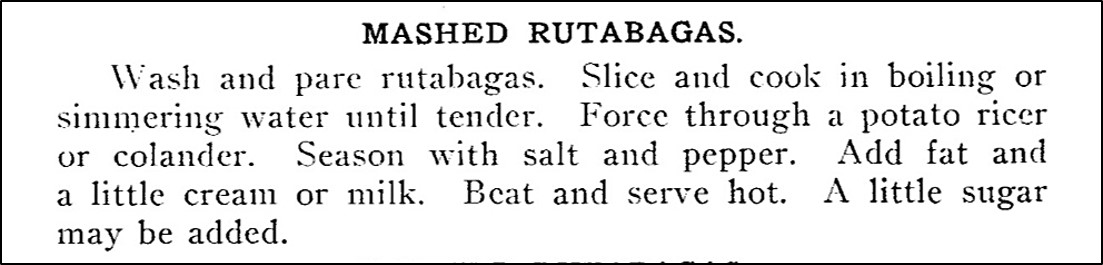
Here’s the original recipe:
Source: The Housewife’s Cook Book by Lilla Frich (1917)
Place cubed rutabaga in a saucepan and cover with water. Using high heat bring to a boil, then reduce heat, and simmer until the rutabaga is tender (approximately 1/2 hour). Remove from heat and drain. Mash the cooked rutabaga, then stir in salt, pepper, butter, and milk. If desired, also stir in sugar. Serve immediately.
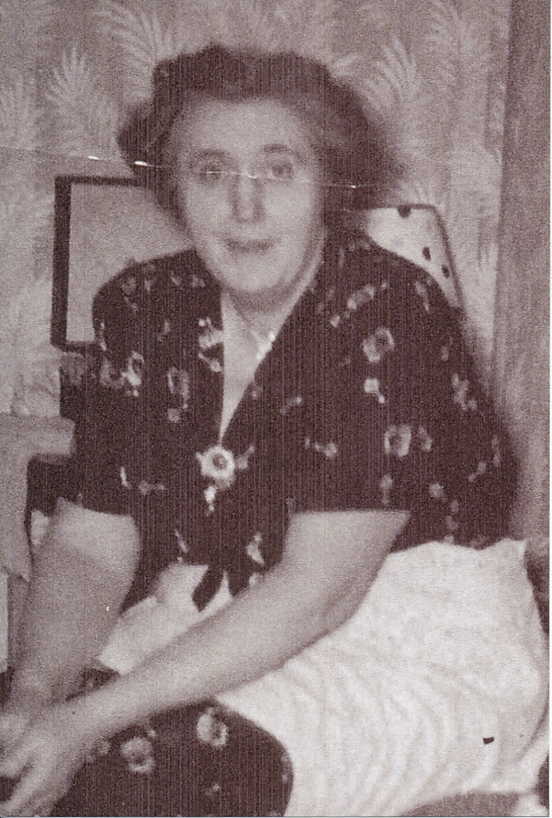
Carrie [Stout] Pressler (1897-1965)I began this blog in 2011 to post my grandmother’s diary entries a hundred years to the day after she wrote them. My grandmother, Helena Muffly [Swartz] kept the diary from 1911 to 1914 when she was a teen living on a farm near McEwensville in central Pennsylvania. After I posted all the diary entries, I reinvented A Hundred Years Ago to its current focus on food. Today I’m going to go back to the early days of this blog —
Helena’s best friend in the diary was Carrie Stout. During years when I was posting the diary, I never was able to find a photo of Carrie.
Imagine my surprise when I got a Christmas card from Carrie’s granddaughter, Barb Fry, a few weeks ago that contained photos of Carrie and her husband, John Pressler. It was a dream come true. I finally knew what Carrie looked like. In the photo she was older than what she would have been when Helena was writing about her in the diary, but it’s easy to picture the two teens giggling and chatting in their younger days.
Both Carrie and Helena married farmers and lived their entire lives within a few miles of each other.
John Pressler (1888 – 1944)
I went through my transcript of the diary and found that Carrie is mentioned more than 70 times in the diary. I thought you might enjoy reading (or re-reading) a few of those diary entries.
February 11, 1911: Got up about eight o’clock this morning. Did quite a lot of work this forenoon. Carrie Stout was over a while this afternoon. Nearly all my Saturdays are alike.
March 5, 1911: I went to Sunday school this morning. Carrie Stout and I walked to Turbotville this afternoon going up the railroad. We were rather weak in our feet by the time we got home.
March 20, 1911: Carrie Stout was over this evening. She brought me a birthday present. It was a dainty white apron. Mother said, “It was only a patch.” Well I’ll have to say good-by to fifteen years and pass on to the next. Wonder if I will get any more presents.
April 29, 1911: Ma kept me busy a chasing the chickens out of the garden this afternoon. I get so mad at them. Carrie Stout came over this evening. Wanted me to go along with her up to McEwensville. She is afraid of the dark. Of course I went, although I looked like a witch.
January 1, 1912: New Year’s day for me had a rather doleful beginning, but brightened up as the day passed on. Carrie came over this afternoon and we went a skating or rather she did the skating and I the tumbling. I was just experimenting, being the first time I really tried to skate. Maybe I’ll buy a pair of skates pretty soon, as I haven’t any of my own. But the learning, however, isn’t much fun.
December 22, 1913: Carrie was over this afternoon. We picked out nuts. Made taffy this evening, but it didn’t get good and the nuts were wasted.
June 2, 1914: Carrie was over. We had some gossip and some other rare tidbits.
July 21, 1914: Went to a party about three miles from here. Went with Carrie and her beau. There were lots there I didn’t know. Didn’t stay so very late.
Friendships are special and to be cherished – both a hundred years ago and now.
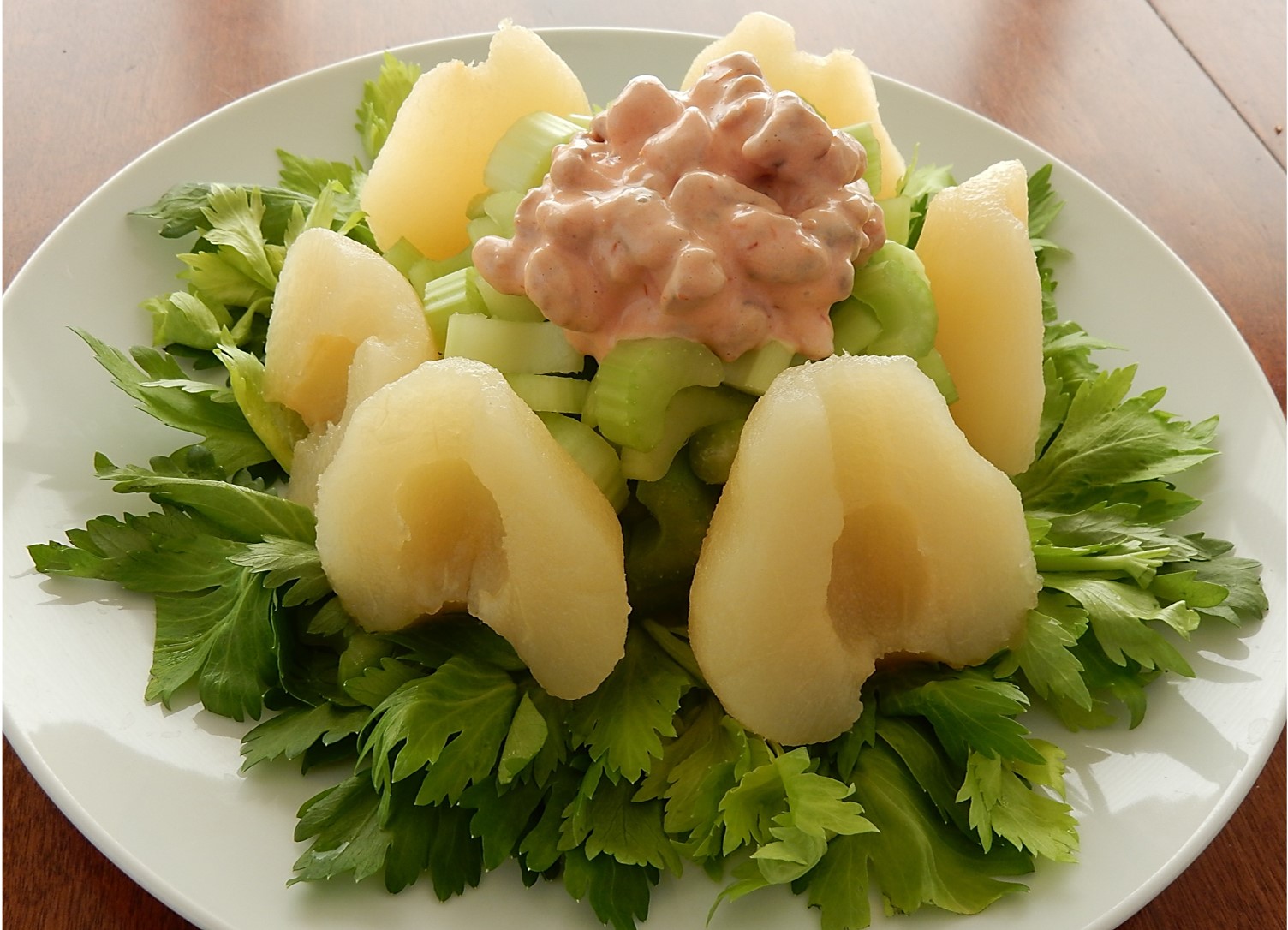
Food presentation is an art. I occasionally see lovely food designs in hundred-year-old magazines that may not quite work a century later. Then again, maybe they do. As food fads wax and wane over time, these old presentations sometimes almost seem refreshingly cutting edge. Pear and Celery Salad definitely is dramatic, and is sure to be a conversation item at any party; however,I have mixed feelings about whether it is a fun but quirky recipe, or just a bit odd.
Source: Libby’s Advertisement in Ladies Home Journal (February, 1918)
The Pear and Celery Salad is placed on a bed of celery leaves, which creates a beautiful foundation for the salad. Celery slices are heaped into a large mound in the center of the plate, and then surrounded by canned pear halves (poached fresh pear halves would also work well). The mounded celery is topped with a mayonnaise, chili sauce, and nut dressing.
This recipe definitely turned out better than I thought it might. The tender pears melted in my mouth and their delicate flavor was nicely balanced by the crunchy celery and nuts. The dressing reminded me a little of French salad dressing, except that it was nutty instead of smooth. The dressing worked well with the celery – and was intriguing with the pears.
approximately 2 1/2 cups celery, cut into 1/2 – inch slices
1 29-ounce can of pear halves, drained
To make the dressing, place the mayonnaise and chili sauce in a small bowl; stir until combined. Add nuts, and stir. Set aside.
Arrange celery leaves on serving plate, then place the sliced celery in a pile in the center of the plate. Surround the heaped celery with the pear halves which are stood on their edge. Gently spoon the dressing on top of the celery. There may be more dressing than needed. Reserve and extra dressing and serve separately.
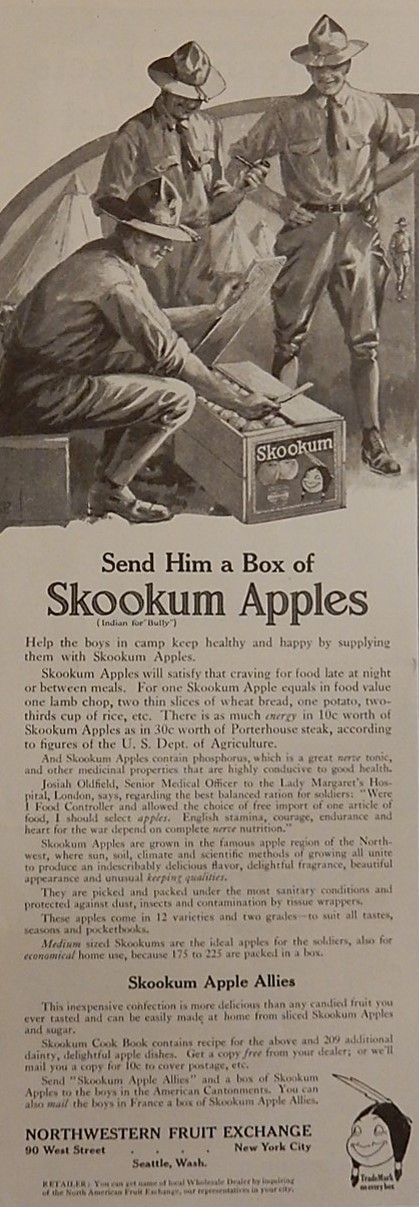
This 1918 advertisement for Skookum Apples intrigues me on many levels. I was awed at how good transportation systems must have been in 1918. Until I saw this ad, I had no clue that family and friends could ship boxes of apples to soldiers in France during WWI. Apples from Washington and other northwestern states apparently were transported across the U.S. on train, and then put of ships for Europe – and then somehow shipped to wherever the troops were.
At the same time, I was dismayed by some of the language and images in the ad.
And, I was surprised to see that “Skookum” meant “bully.” Who would have thought that the word “bully” apparently had positive connotations a hundred years ago?
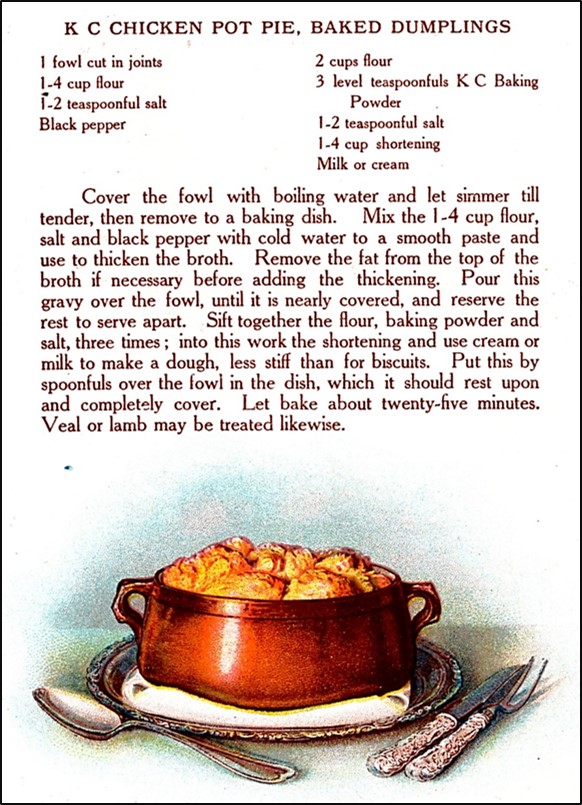
Homemade Chicken Pot Pie with Baked Dumplings is the perfect comfort food for a cold winter day. I found this delightful hundred-year-old recipe in a promotional cookbook for KC Baking Powder. Chicken pieces smothered in a rich gravy are topped with tender dumplings.
This authentic old-fashioned pot pie recipe calls for cutting a whole chicken into pieces (legs, thighs, breast, etc.), and putting the pieces- including bones and skin – into the pot pie. I had doubts about doing this, but it worked just fine. I also thought that it seemed unusual that the recipe didn’t call for any vegetables – but I really didn’t miss them. The chicken pieces made lovely presentation and for a nice surprise for guests when the crust is opened, and the chicken was very tender and almost fell off the bones.
Place chicken pieces in a dutch oven, cover with water, cover pan and bring to a boil using high heat. Reduce heat and simmer until the chicken is tender (about 45 minutes). Remove from heat and place chicken in a large casserole dish (2 1/2 – 3 quart dish).
Strain the liquid that the chicken was cooked in, and place in a saucepan. Add 1/2 teaspoon salt and the black pepper. Bring to a boil. In the meantime, put 1/4 -1/2 cup flour in a small bowl, and add enough water to make a thick paste. Stir the flour mixture into the boiling liquid while stirring constantly. Continue cooking until the liquid thickens into the gravy.
(The amount of flour needed is dependent upon how much liquid there is. I used 1/2 cup of flour, and then first stirred half of it into the boiling liquid. When it didn’t thicken it to a gravy-like consistency, I added more of the flour mixture.)
Add the hot gravy to the casserole dish that contains the cooked chicken until it is almost covers the chicken and is about 1 1/2 inches below the top of the dish. Don’t overfill the dish or it will boil over when heated in the oven.
In the meantime, preheat oven to 425° F. To make the dumplings, put 2 cups flour in a mixing bowl; then stir in the baking powder and 1/2 teaspoon salt. Cut the shortening into the flour mixture, then add 3/4 cup milk, and stir with a fork to combine. If the mixture is too dry, add additional milk to create a dough similar in consistency to what would be used to make biscuits. Drop by spoonsfuls on top of the chicken and gravy. The top should be completely covered with the dough. Place the casserole dish in the oven and bake for 25 – 35 minutes, or until the top is lightly browned. Remove from oven and serve.
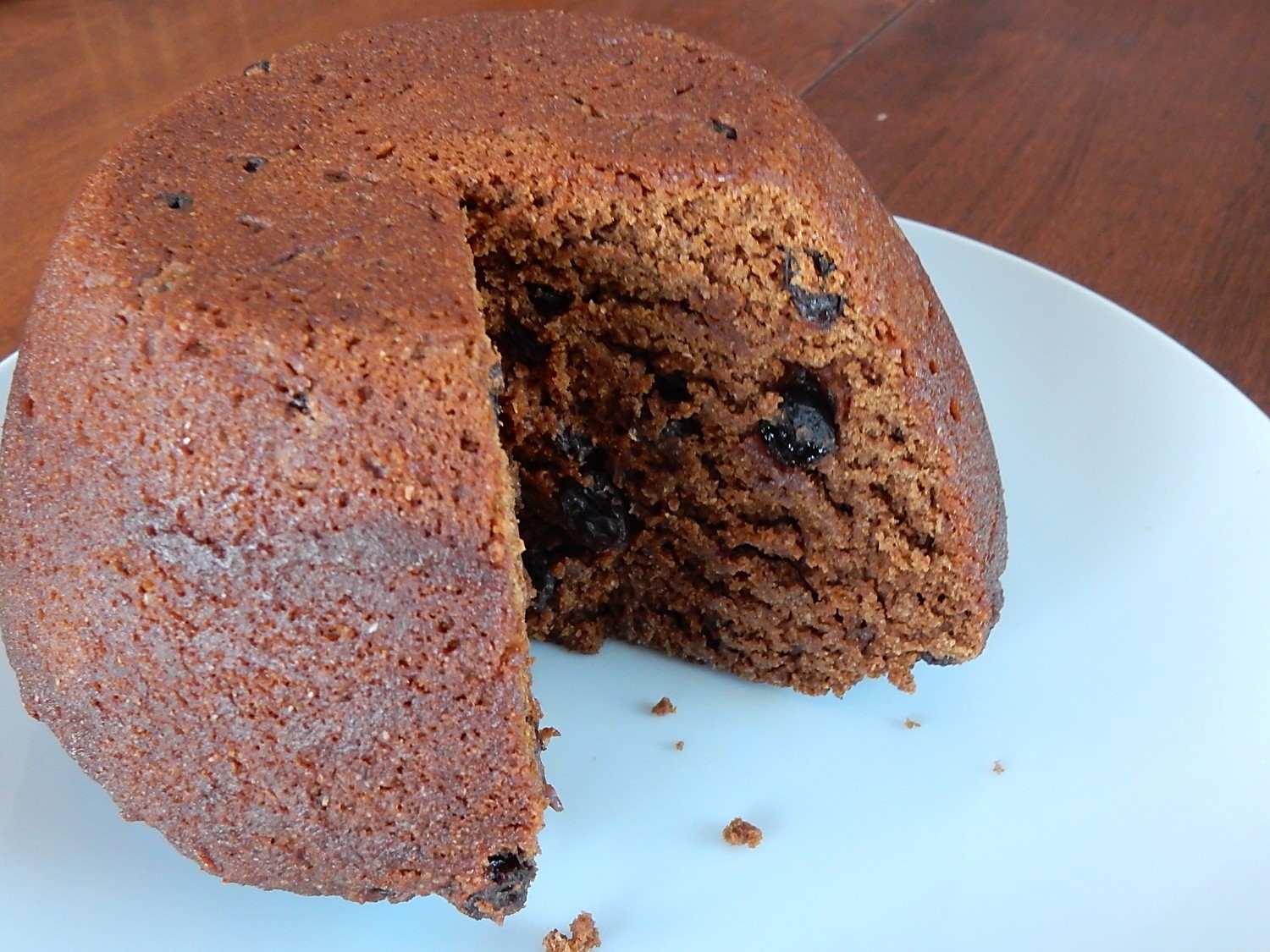
I’m stranded in the house by cold weather and snow, so I decided it was the perfect time to make a hundred-year-old recipe for Steamed Graham Pudding with Lemon Sauce. Since I had nowhere to go, it didn’t faze me that the recipe called for steaming the pudding for 2 hours.
It was worth the time and effort. The moist, rich Steamed Graham Pudding was embedded with raisins, and had sweet and sassy molasses undertones. When served with Lemon Sauce, the tartness of the sauce balances nicely with the heartiness of the pudding.
Judging by the number of steamed pudding recipes in hundred-year-old cookbooks, steamed puddings were very popular a century ago – yet it’s rare to see any steamed pudding recipes in modern cookbooks except for the occasional plum pudding recipe. Today steamed puddings are often considered difficult to make with a lengthy cooking time. However, back in the days of wood and coal stoves that had the fire going all day, they were an easy-to-make dessert that was often made using an old coffee can as a mold.
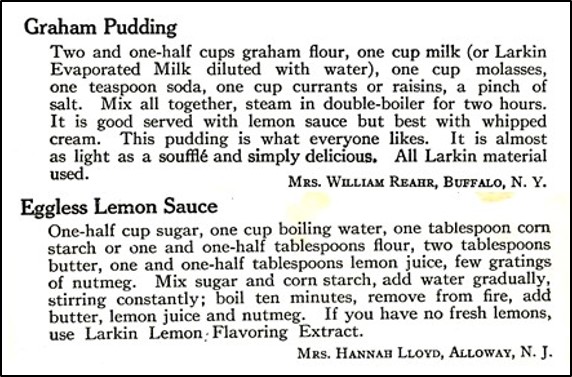
Here are the hundred-year-old recipes:
Source: Larkin Housewives Cook Book (1917)
I decided to go with “good” and served the pudding with lemon sauce, rather than topping with whipped cream to make it the “best.” It’s a bit of an overstatement to say that the pudding is “almost as light as a souffle,” but it is simply delicious.
I used a steamed pudding mold to make the pudding. The molds can be found in many (usually upscale) cooking equipment stores. It’s unfortunate that Target, JC Penney, and other more mainstream stores no longer sell these molds; however, casserole bowls can also be used as a mold. BBC Good Food has an excellent video that succinctly describes how use a bowl to make a steamed pudding as well as general information about making steamed puddings.
Combine the graham flour, milk, molasses, baking soda, and salt in a mixing bowl, then stir in the currants or raisins. Put the mixture in a greased mold, and put the mold on a rack in a deep kettle; add enough water to come half way up the mold. Cover kettle. Bring to a gentle boil and steam for 2 hours. Remove from mold and serve warm with Lemon Sauce or whipped cream.
*Cook’s Note: I used a 2-liter mold. A 2-quart mold would also work.
Eggless Lemon Sauce
1/2 cup sugar
1 tablespoon corn starch
1 cup hot water
2 tablespoons butter
1 1/2 tablespoons lemon juice
1/8 teaspoon nutmeg
Put the sugar and corn starch in a saucepan, and stir together. Add water and stir until smooth. Using medium heat bring to a boil, reduce heat and simmer while stirring constantly for 10 minutes. Remove from heat, and stir in butter, lemon juice, and nutmeg. Serve warm.