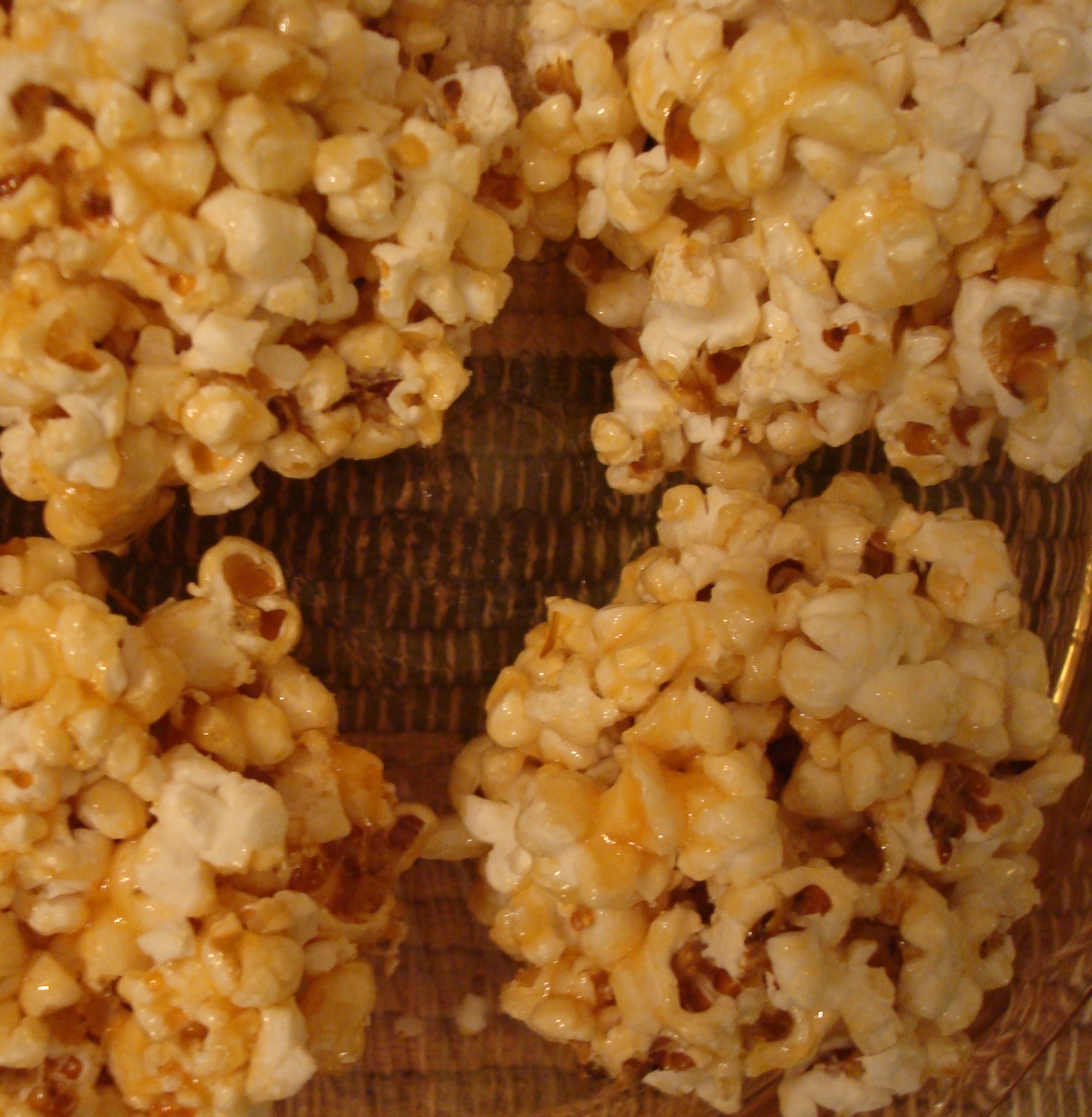
Old-fashioned Cherry Pie Recipe

17-year-old Helena Muffly wrote exactly 100 years ago today:

Thursday, June 13, 1912:  I guess I’ve forgotten.

Her middle-aged granddaughter’s comments 100 years later:

My sour cherries are getting ripe and I made an old-fashioned cherry pie. Grandma mentioned picking berries on June 10—but hasn’t mentioned cherries. I wonder if cherries ripened this early in 1912.

Here’s the recipe I used to make the pie:

Old-Fashioned Cherry Pie

Pastry for 9-inch two crust pie (see pie pastry recipe in previous post)

1 cup sugar

2/3 cup flour

4 cups fresh pitted sour cherries

1/4 teaspoon almond extract

Heat oven to 425 degrees. Stir the sugar, flour, and almond extract into the cherries.  If the mixture is very juicy add additional flour. Turn into pastry-lined pie pan. Make a lattice top crust and flute edges. Brush crust with a small amount of milk; sprinkle with sugar.  Bake in oven for 10 minutes; then reduce heat to 350 degrees. Bake an additional 20 to 30 minutes or until crust is lightly  browned and juice just begins to bubble.
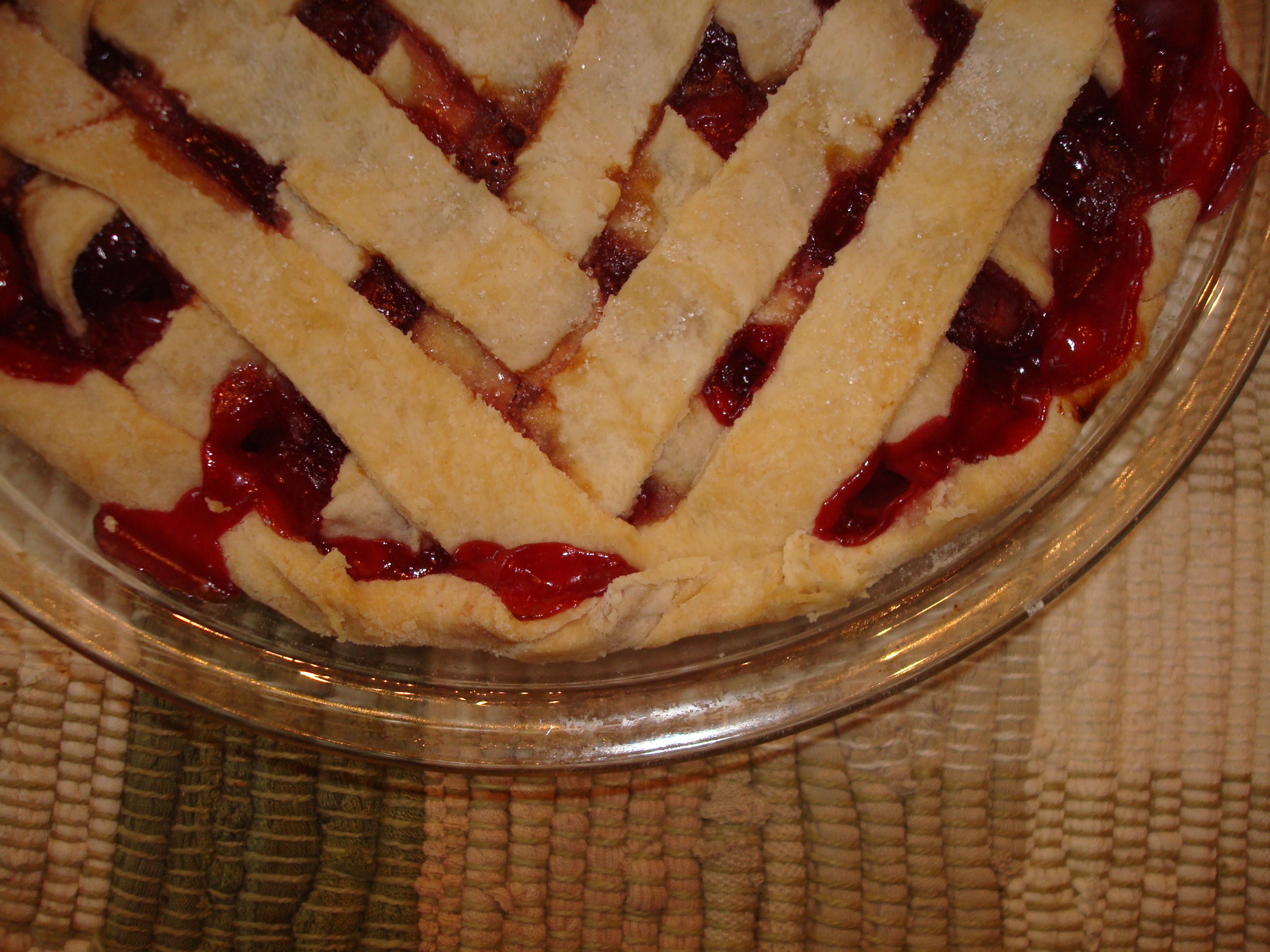
I made my own pie crust dough using the recipe that I previously included in the post for Rhubarb Sponge Pie.  I doubled that recipe since I basically needed two crusts for this pie.

For the lattice top crust, I cut the dough into strips about 3/4 inch wide and laid them on the top of the pie. I try to lay every other one perpendicular to the previous one—but the lattice never ends up being woven exactly right.  I never worry much about that because the pie tastes so awesome.

Old Lemon Water Ice Recipe

17-year-old Helena Muffly wrote exactly 100 years ago today: 

Saturday, May 25, 1912: Today was clean-up and get things ready for an expected guest who didn’t come after all. That seems to be the luck.

Her middle-aged granddaughter’s comments 100 years later:

Who might the anticipated guest have been?  . . . Relatives? . . . Friends of Grandma’s parents? No-shows with no explanation probably were much more common in the days before cell phones and text messages. (And, the Muffly’s didn’t even have a landline phone.)

I wonder if they made any desserts in anticipation of the guests. Old-fashioned Water Ice would have been good on a hot spring day. I’m going to share a recipe for Lemon Water Ice that  I found in a hundred-year-old cookbook.

Lemon Water Ice

2 cups water

1 cup sugar

4 egg whites

Grated rind of 1 lemon

Juice of 3 lemons

Boil sugar and water; cool. Add egg whites beaten until stiff, grated lemon rind, lemon juice. Freeze in ice cream freezer.

(Just to be safe, I used pasteurized egg whites.)

Adapted from Lowneys’ Cook Book, Revised (1912)

The Lemon Water Ice was refreshingly tart and wonderful on a hot day. I’ll make it again—though will double the recipe because it didn’t make very much.

Hand-cranked ice cream freezers were popular a hundred-years and there are lots of delicious-looking frozen dessert recipes in old cookbooks. I plan to try a few more this summer.

Old-fashioned Ginger Snap Recipe

17-year-old Helena Muffly wrote exactly 100 years ago today: 

Thursday, May 2, 1912: Exams began today. I am rather doubtful about what I made in Algebra.

Her middle-aged granddaughter’s comments 100 years later:

Sounds like the Algebra exam was tough. When my children were young, I used to bake cookies to cheer them up when they got home after a rough day at school. I now receive emails from the university my daughter attends asking if I want to buy a care package that will be delivered to her during finals week.  Did Grandma’s mother have warm, fresh-baked cookies when Grandma arrived home from school to show she cared?

Here’s a recipe for Ginger Snaps that appeared in the April 1912 issue of Ladies Home Journal.

Ginger Snaps

½ Cupful of Molasses

½ Cupful of Sugar

½ Cupful of Butter

Set on the fire and boil for five minutes. Cool, then add

1 egg

1 Teaspoonful of Ginger

1 Teaspoonful of Soda

1 Tablespoonful of Vinegar

Flour enough to roll

I used approximately 2 cups of flour. I rolled the dough out until it was thin and then baked in a 400 degree oven for about 8 minutes.

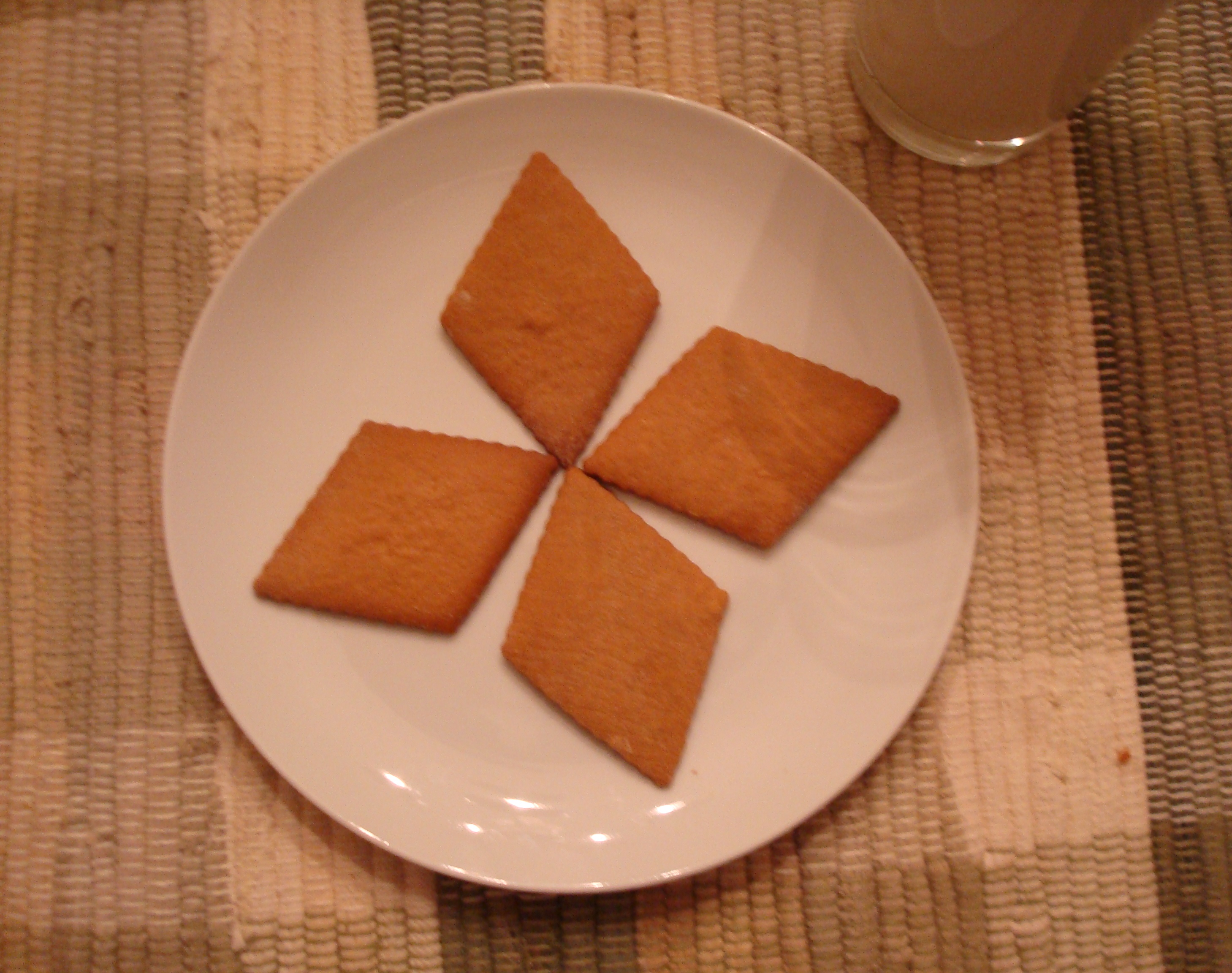
The ginger snaps were excellent and perfect with a glass of milk.

An aside—I love how old recipes call for a teaspoonful of this and a cupful of that instead of just using the terms teaspoon and cup. It’s so much more descriptive.

Rhubarb Pudding Recipe

17-year-old Helena Muffly wrote exactly 100 years ago today: 

Thursday, April 25, 1912: I am beginning to worry about final exams. I’m afraid that I may get left in some of my studies. But I hope that it won’t happen that way.

Her middle-aged granddaughter’s comments 100 years later:

It sounds like Grandma was at the procrastination stage—she knew that she needed to study, but hadn’t gotten beyond worrying.

When I procrastinate, I think of other things that MUST be done—like cooking.

Here’s an old Rhubarb Pudding recipe that I found in the April 1912 issue of Good Housekeeping magazine.

Rhubarb Pudding

Sift together two cupfuls of flour, a pinch of salt, spices as desired, two teaspoonfuls of baking powder and half a cupful of sugar. Stir in one egg beaten with half a cupful of milk and two tablespoonfuls of butter; add two cupfuls of rhubarb, cut into small pieces (use the pink part with the skin left on), bake twenty minutes and serve with a sauce.

The only spice that I used was 1/2 teaspoon of nutmeg. The batter was extremely thick. I baked the Rhubarb Pudding in a 375 degree oven. It took about 40 minutes for the top to brown lightly. (Maybe I should have used a higher temperature.)

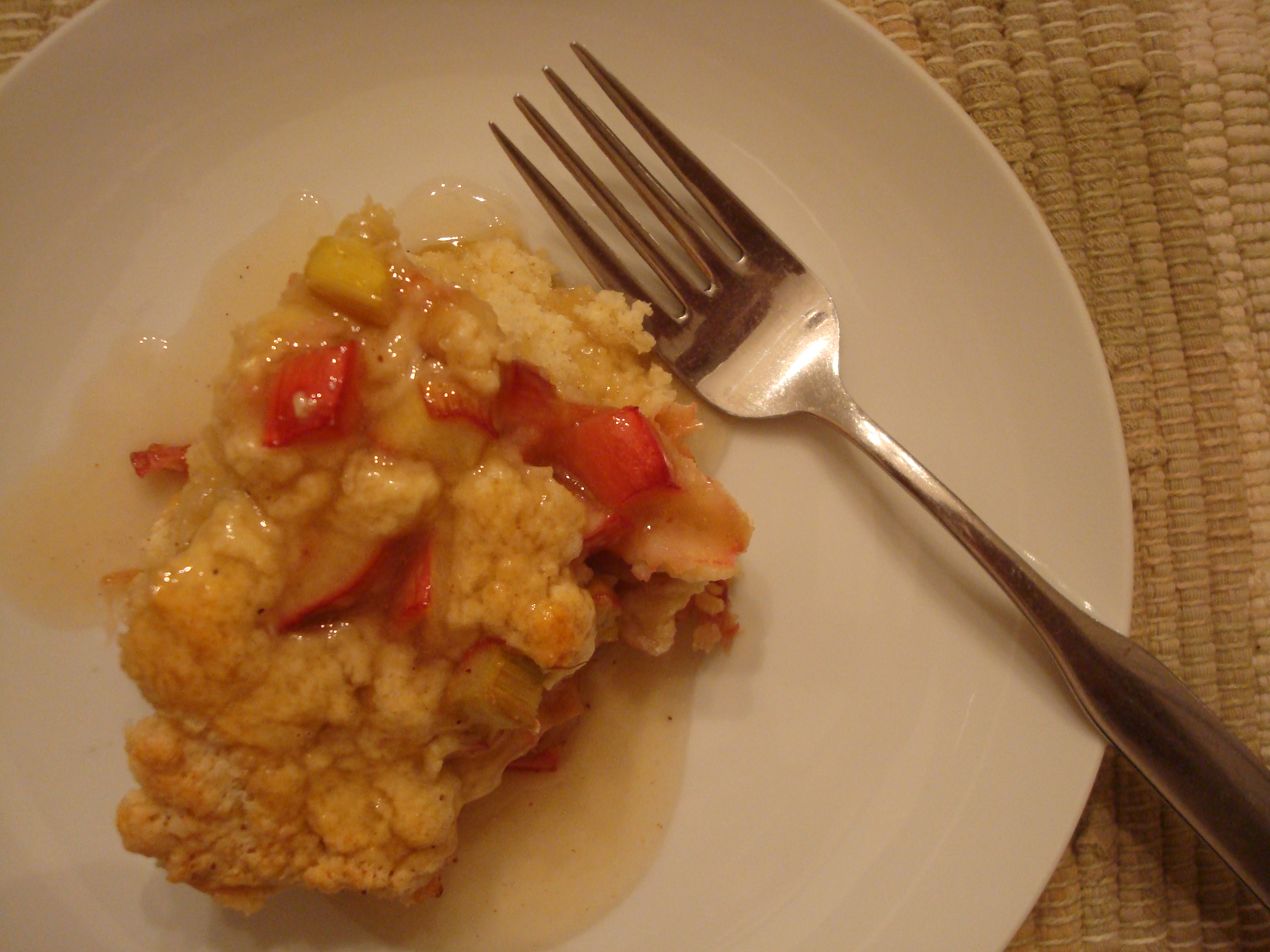
The Rhubarb Pudding was quite good. It was a pleasant mixture of sweet and tart tastes, and had the texture of shortcake.

I served the Rhubarb Pudding with Vanilla Sauce.

Vanilla Sauce

1/2 cup sugar

1 tablespoon cornstarch

dash salt

1 cup boiling water

2 tablespoons butter

1 teaspoon vanilla

dash nutmeg

Mix sugar, cornstarch, and salt in sauce pan. Add boiling water; and boil until thick and clear. Continue simmering over low heat, while stirring for 20 minutes. Stir in the butter, vanilla, and nutmeg. Can be refrigerated and reheated.

Rhubarb is one of my favorite Spring foods. Here are the links to past posts that included Rhubarb Recipes:

Stewed Rhubarb (Rhubarb Sauce)

Rhubarb Sponge Pie

Old-fashioned Potato Cakes

16-year-old Helena Muffly wrote exactly 100 years ago today: 

Wednesday, March 13, 1912:  Nothing of much account did I do today.

Her middle-aged granddaughter’s comments 100 years later:

Since Grandma didn’t write much a hundred years ago today, I’m going to give you another old recipe. This one is for Potato Cakes, and it’s a great way to use left-over mashed potatoes.

When I was a child we frequently ate Potato Cakes. My memory is that they were a very traditional Pennsylvania food—and I can picture Grandma eating them when she was a teen.

I hadn’t made Potato Cakes in years until I decided to make them for this post. I don’t have a written recipe—but this is how I made them.

Old-Fashioned Potato Cakes

left-over mashed potatoes

shortening or lard

After the meal where the mashed potatoes were served, take the left-over potatoes, shape into flat patties and press firmly. Put on a plate, cover and refrigerate. Will keep for several days.

When ready to make the Potato Cakes, melt enough shortening in a heavy frying pan to cover the pan to a depth of about 1/8 inch. Slip the patties into the hot shortening. Fry until golden brown; flip and fry on the other side. Remove from pan and drain on paper towels. Serve immediately.

The amounts are very flexible. When I made the mashed potatoes, I made more than I typically would—and then I just used all of the left-over potatoes to make the potato cakes.

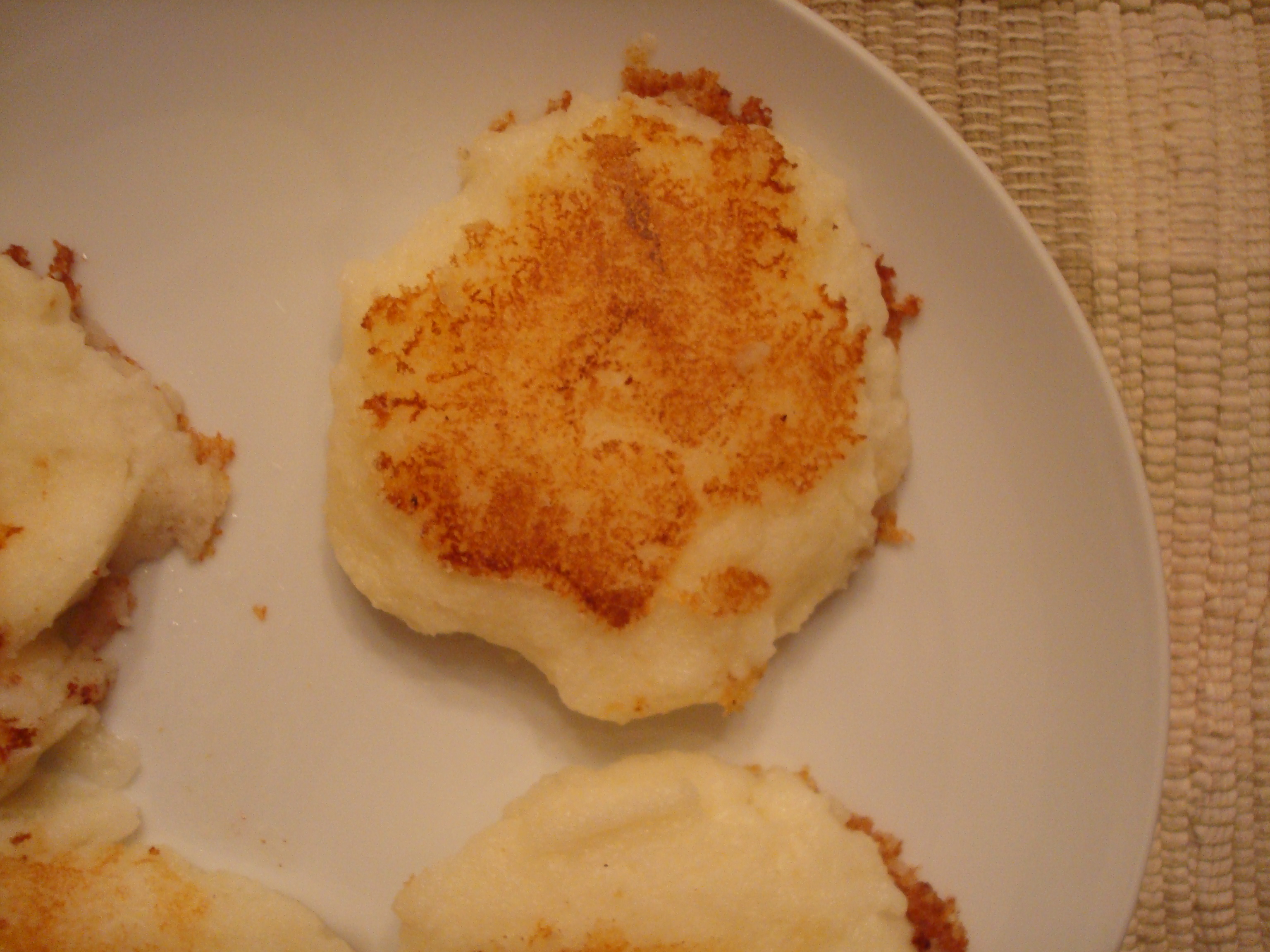
The Potato Cakes turned out great. My husband and I enjoyed eating them, and I’m planning to make them again in the near future.

Sour Cream Fudge

16-year-old Helena Muffly wrote exactly 100 years ago today: 

Thursday, February 15, 1912:  I believe I have forgotten what I did today. Nothing unusual any way.Her middle-aged granddaughter’s comments 100 years later:

Since Grandma didn’t write much today, I’ll give you an old-time candy recipe for Sour Cream Fudge.

Sour Cream Fudge

1 cup sugar

1 cup brown sugar

3/4 cup sour cream

1 1/4 cups butter

1 teaspoon vanilla

1 cup chopped walnuts

Combine sugar and sour cream.  Stir while heating over a low temperature until the sugar is dissolved.  Add butter and continue stirring until it is melted. Quit stirring and bring to a slow boil. Continue boiling until candy reaches the soft ball stage (235-240 degrees F.). Remove from heat, beating it while it cools. Add vanilla and nuts. Pour into greased pan.

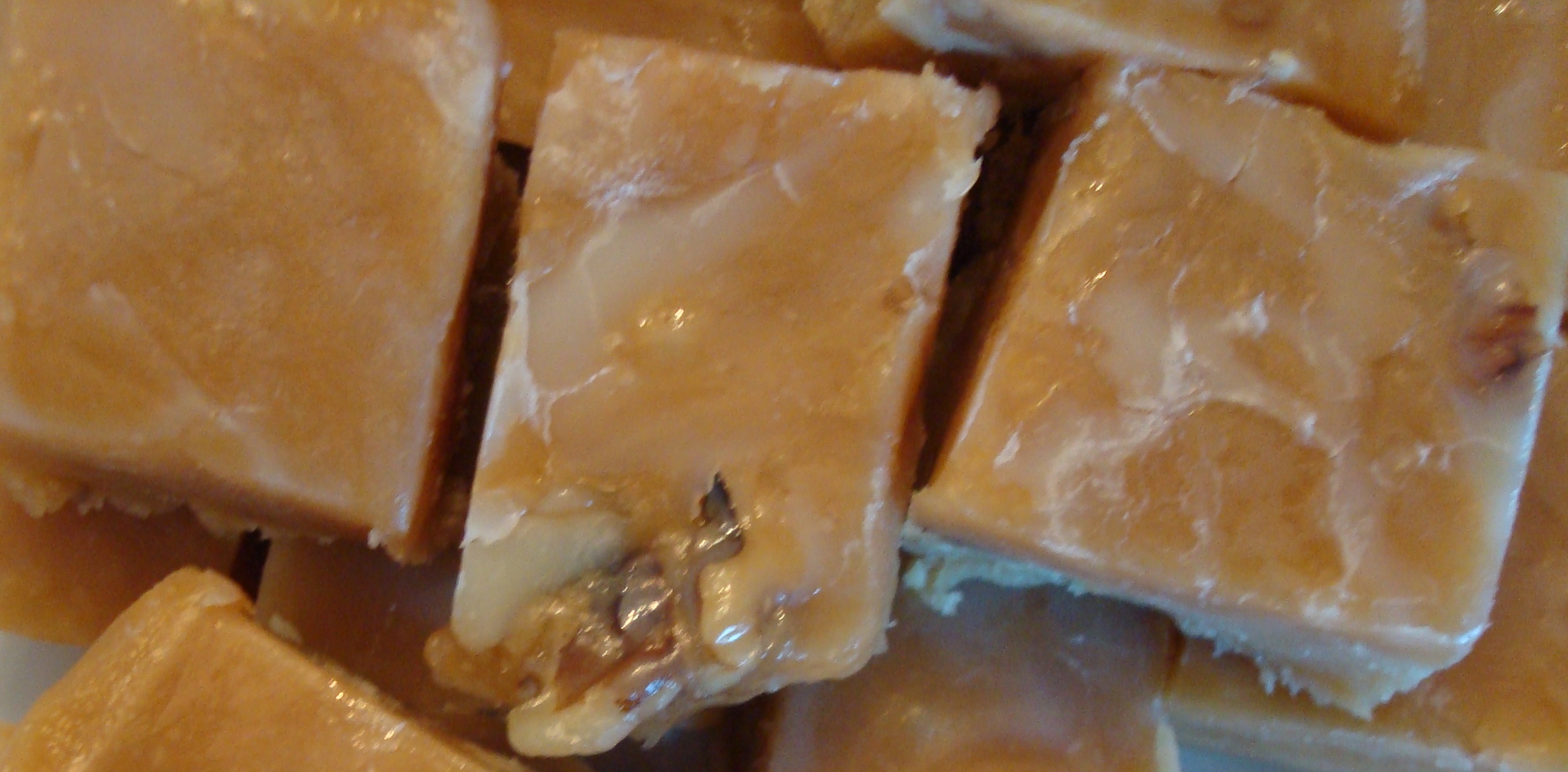
Sour Cream Fudge has a rich, buttery flavor.

Patience is key to successfully making Sour Cream Fudge. I was surprised how long I needed to cook this candy.  It takes a long time to reach the soft ball stage—I think that it took more than an hour.

Honey Popcorn Balls Recipe

16-year-old Helena Muffly wrote exactly 100 years ago today: 

Monday, January 29, 1912:  It is hard to study when you don’t feel like it. Don’t know what will become of myself if I don’t get aroused pretty soon.

Her middle-aged granddaughter’s comments 100 years later:

Perhaps Grandma made a snack while she was trying to motivate herself to study.

Popcorn was a very popular winter snack a hundred years ago. A few weeks ago I made old-fashioned Caramel Popcorn.  I enjoyed it so much, that I decided to make another old-time popcorn snack—Honey Popcorn Balls.

Honey Popcorn Balls

approximately 1 1/2 quarts popped popcorn

1/2 cup honey

1/2 cup sugar

1/3 cup water

2 tablespoons butter

1/4 teaspoon salt

Put popped corn in a large bowl and set aside. Cook honey, sugar, water, and butter to a medium-crack stage (280 degrees).  Remove from heat and stir in salt; pour over the corn and stir with a spoon to coat the kernels.

Grease hands with butter. Firmly press coated popcorn into balls.  Lay balls on waxed paper until cool. If the balls will be stored, wrap in waxed paper.

These popcorn balls have an awesome rich honey flavor. (They are nothing like the horrid, stale popcorn balls that I occasionally see in stores.)

I used some alfalfa honey that I got at an Amish market to make these balls—but any honey will work.  I love the flavor of the light alfalfa honey, but think it would also be fun to experiment and make them again with a darker honey.  Maybe next week. . . .