Pictures Too Pale

18-year-old Helena Muffly wrote exactly 100 years ago today: 

Friday, August 29, 1913:  Five of my pictures are finished. They are most too pale to be good but better than what I expected.

Pictures of the Tower at Madison School Garden (New York City). Here's an illustration from a hundred-year-old book called Practical Suggestions Regarding the Selection and Use of a Photographic Equipment that shows how F stops on a camera should be set for different magnification levels.
Here’s an illustration from a hundred-year-old book called Practical Suggestions Regarding the Selection and Use of a Photographic Equipment. It shows how F stops on a camera should be set for different magnification levels. Pictures are of the Tower at Madison School Garden (New York City).

Her middle-aged granddaughter’s comments 100 years later:

Yeah! Grandma got some more pictures finished. She got the camera earlier in the summer, took a roll of pictures, and was now developing them.

Grandma began developing the pictures on August 26 when she and her sister Ruth made a negative. On the 27th she printed three of them, and made another negative. . . now she had five finished.

I’m sure that Grandma was having lots of fun using “modern technology,” but by today’s standards it sure seems like a long drawn-out process.

Why were the pictures too pale?  . . Were they overexposed?

Here’s what a 1910 book said about how to get the correct exposure:

We cannot impress upon you the all-importance of exposing for the shadow or dense portions. For general all-round out-of-door work, in the open, street scenes, etc., with very good light between 10:30 A.M. and 2 P.M. from 1/100 to 1/200 second at F. 8. Reasonably earlier or later in the day than the time specified, full aperture, F. 6.3, 1/50 to 1/100 second. As a general rule, 1/100 second is sufficient speed, but there are occasions when it is necessary to give 1/150 to 1/200 seconds, but these highest speeds should only be given when required.

On gray or clouded days or during November, December and January, when the actinic quality of the light is at its weakest, then invariably use full open lens (F. 6.3) and from 1/25 to 1/100 sec. exposure . . .

The telephoto attachment is neither difficult to use or to compute the correct exposure.  To make an exposure with the telephoto we first calculate or rather determine the correct exposure for the subject at hand, with the positive lens along at a given stop, and then simply multiply that exposure by the magnification which we desire, using the same stop in the positive lens. . .

Practical Suggestions Regarding the Selection and Use of a Photographic Equipment by by Austin K. Hanks

(I’m a “point and shoot” photographer. . .and am clueless what half of the recommendations in the book mean. )

How Close Was Grandma to her Grandparents?

18-year-old Helena Muffly wrote exactly 100 years ago today: 

Thursday, August 28, 1913: Nothing doing.

Grandma's grandfather, John Derr (circa, 1900)
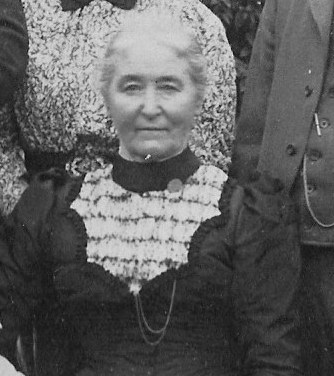
Grandma’s grandfather, John Derr (circa, 1900)
Grandma's Grandmother, Sarah Derr (circa, 1900)
Grandma’s Grandmother, Sarah Derr (circa, 1900)

Her middle-aged granddaughter’s comments 100 years later:

Since Grandma didn’t write much a hundred years ago today, I’m going to share a 1913 poem that resonated with me. I noticed it in the August, 1913 issue of Farm Journal when I was working on yesterday’s post.

Homely Wrinkles

Don’t neglect the old folks,

Love them more and more,

As they turn their weary eyes

Toward the other shore;

Let your words be tender,

Loving, soft and low;

Let their last days be the best

They have ever known.

This poem made me wonder about Grandma’s relationship with her elderly grandparents. Her maternal grandparents, John and Sarah Derr, lived in Turbotville which was about 5 miles from the Muffly farm. Her grandfather (John Derr) was 90 years old and her grandmother (Sarah Derr) was 79. Were they healthy? . . . ill? . . .fun to be around? . . . crochety? . . .

I may have forgotten, but I can’t remember her grandparents ever being specifically mentioned in the diary —though there were a few general references to events that they may have attended. For example, on January 19, 1913 Grandma wrote:

A bright and beautiful dawn welcomed the approach of day. Ruth and I walked to Turbotville this morning to attend a family reunion. All of ‘em weren’t there. Had quite a pleasant time, but it would have been nicer if some more of the cousins had been there. We had our pictures taken out on the lawn. . . .

Printed Three Photos

18-year-old Helena Muffly wrote exactly 100 years ago today: 

Wednesday, August 27, 1913:  I believe the pictures will be a success after all. Printed three this afternoon and we made another negative.

Her middle-aged granddaughter’s comments 100 years later:

1913 pictureThis photo was in the August, 1913 issue of Farm Journal. The caption says: “An Outing—Having a Merry Time.”

The slightly fuzzy posed photo probably was sent in by a reader because it was on a page of reader tips, letters, and poems.

Grandma took pictures at the Sunday School picnic earlier in August. Did she gather her friends together for a similar photo?

—-

Whew, taking and developing pictures sure was a long-drawn out process a hundred years ago.

Grandma got a camera earlier in the summer— and she was now developing her first roll of film. The previous day she and her sister Ruth made some negatives, and now she was printing them. . . .though it sounds like the process was so time-consuming that the task was not yet completed.

Jack and Jill Illustrations from a Hundred Years Ago

18-year-old Helena Muffly wrote exactly 100 years ago today: 

Monday, August 25, 1913:  Nothing much doing.

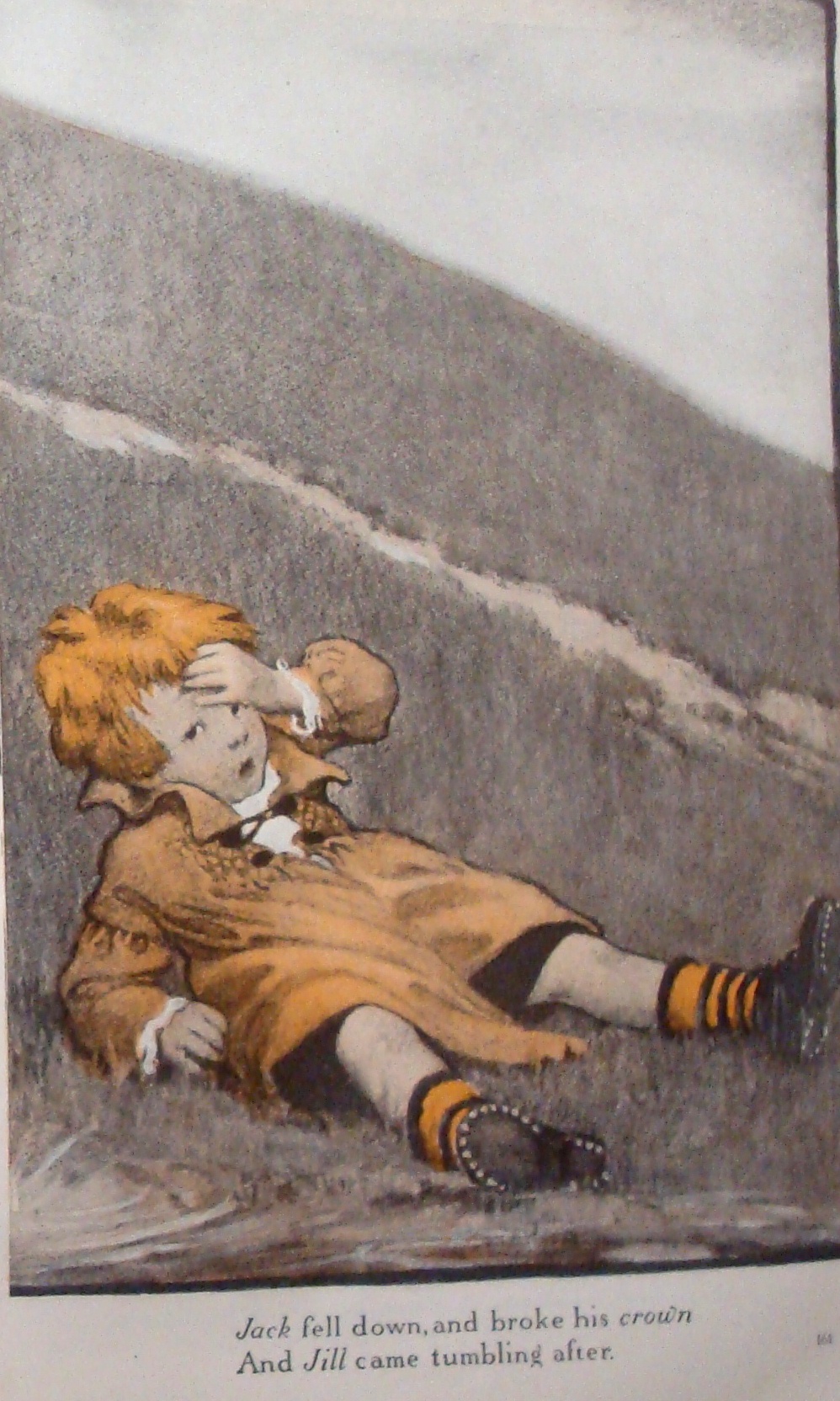
Jill

Her middle-aged granddaughter’s comments 100 years later:

Since Grandma didn’t write much a hundred years ago today, I decided to share this illustrated version of Jack and Jill that appeared in the August, 1913 issue of Good Housekeeping.

Jack

Today most middle class family have oodles of picture books, and can easily access lots more at a nearby library (and kids with tech savvy parents may be reading electronic versions of books rather than hard copies—but I’m not going there).

A hundred years ago, children’s books were relatively expensive, kids often had few books, and many people did not have access to libraries.

Women’s magazines back then often had features aimed at children like this one. Many parents probably saved them so that their children could read it again and again.

Which Friend Does This Diary Entry Refer to?

18-year-old Helena Muffly wrote exactly 100 years ago today: 

 Sunday, August 24, 1913:  Went to Sunday School this morning. This afternoon I walked out to Margaret’s. We had a dandy time together and spent it to advantage.

Margaret Bryson (Photo source: Jane Shuman)

Her middle-aged granddaughter’s comments 100 years later:

Some mysteries periodically recur throughout the diary. This is one of those times. Grandma only mentioned a couple friends in the diary—yet two of those few friends were named Margaret, so I’m not sure who this entry refers to.

Both Margaret G. (I’m not sure of the last name) and Margaret Bryson are mentioned.

Grandma lived about a mile and a half west of McEwensville. Margaret Bryson lived about two miles north of town (near the Warrior Run Church), so it would have taken close to an hour to walk to her home.

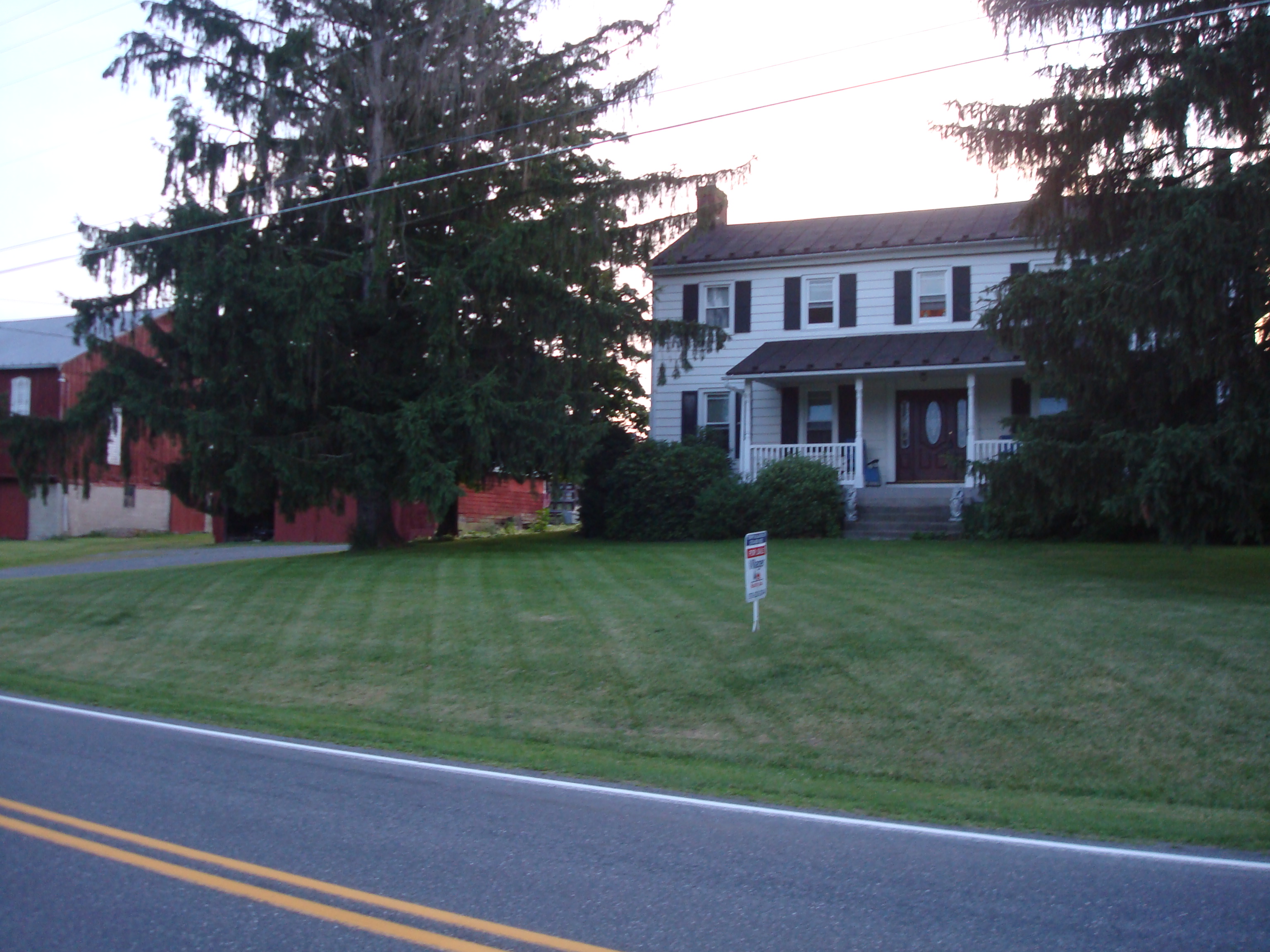
The farm where the Bryson family lived a hundred years ago.

For more on Margaret Bryson see this previous post:

Blanche and Margaret Bryson

Cakewalk Games at Festivals

18-year-old Helena Muffly wrote exactly 100 years ago today: 

Saturday, August 23, 1913:  Ruth and I went to a festival up at McEwensville this evening.

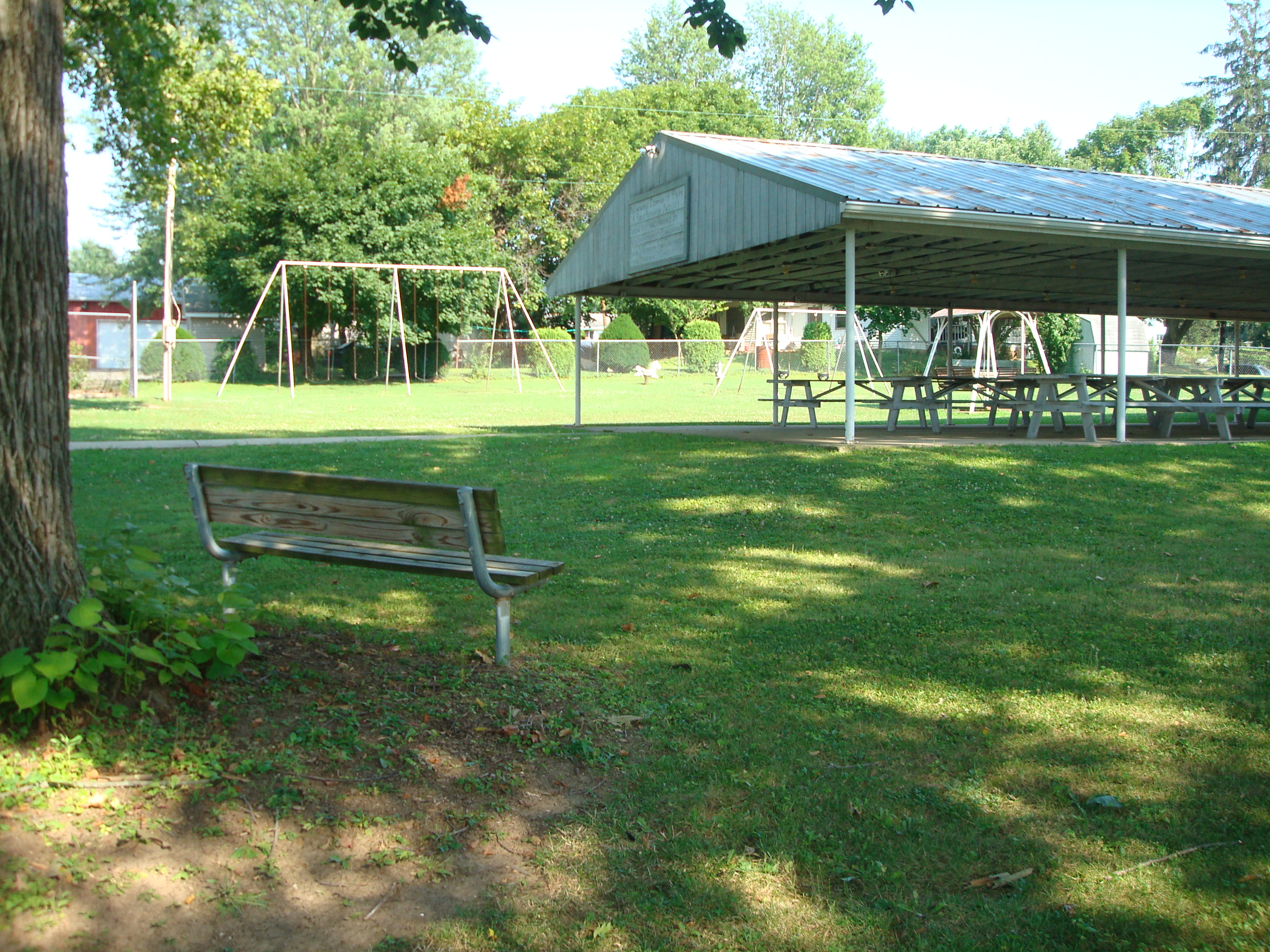
DSC04287The festival probably was held in the small park next to the McEwensville Community Hall.

Her middle-aged granddaughter’s comments 100 years later:

What fun! I love small town festivals. There’s so much excitement and energy—good friends, great food, fun exhibits, and fun games.

I bet that Grandma and her sister Ruth played the Cakewalk game.  It used to be a popular fund-raiser game at festivals, but I haven’t seen it in years.

People would donate homemade cakes to be used as game prizes.

The game is kind of like musical chairs. Numbered squares are laid out on a circular path. Music is played while the participants walk around the path. The music then stops, and a number is called out. The individual standing on the square with that number wins a cake.

Tickets are sold to participants. The number of squares in the path equals to the number of tickets sold. For example there might be 20 squares. The game is run multiple times until all the cakes are gone—with 20 people participating in each game.

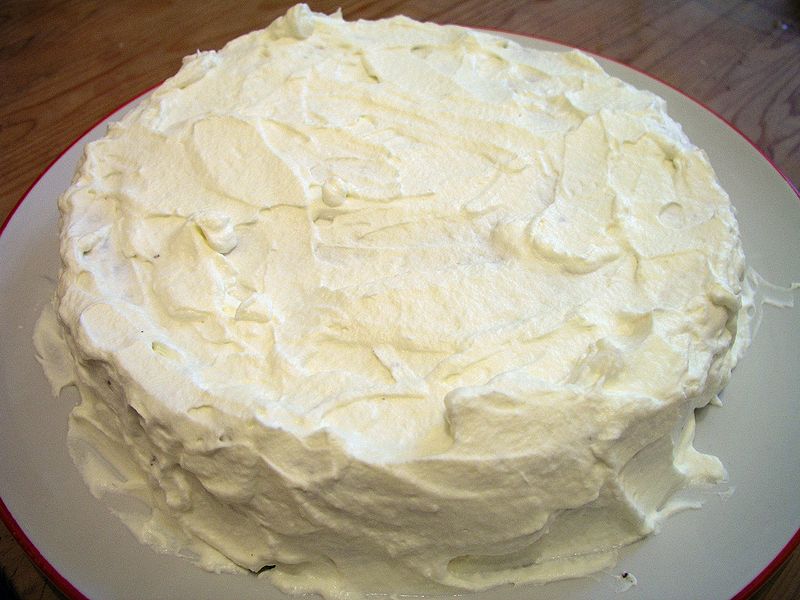
Layered_cake_with_cream
Source: Wikimedia Commons

An aside–when I was preparing this post I googled the term cakewalk  and was surprised to discover that the game that I remember isn’t what the word generally means.  Cakewalk had it originals on slave  plantations in the South in the 1800s. According to The Free Dictionary cakewalk is “A 19th-century public entertainment among African Americans in which walkers performing the most accomplished or amusing steps won cakes as prizes.”

Hope Chest and Crocheted Items

18-year-old Helena Muffly wrote exactly 100 years ago today: 

Thursday, August 21, 1913:  Am trying to learn to crochet. I’d like to be able to do that ever so very much.

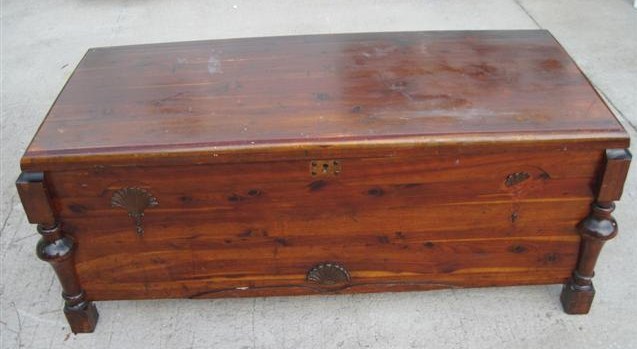
hope.chest

Her middle-aged granddaughter’s comments 100 years later:

The diary provides no indication that Grandma had a boyfriend—but did she dream of a boyfriend and eventual marriage?

Many young women a hundred years ago had hope chests that they filled with items they made in anticipation of a future marriage.Did Grandma want to make crocheted items for her hope chest?

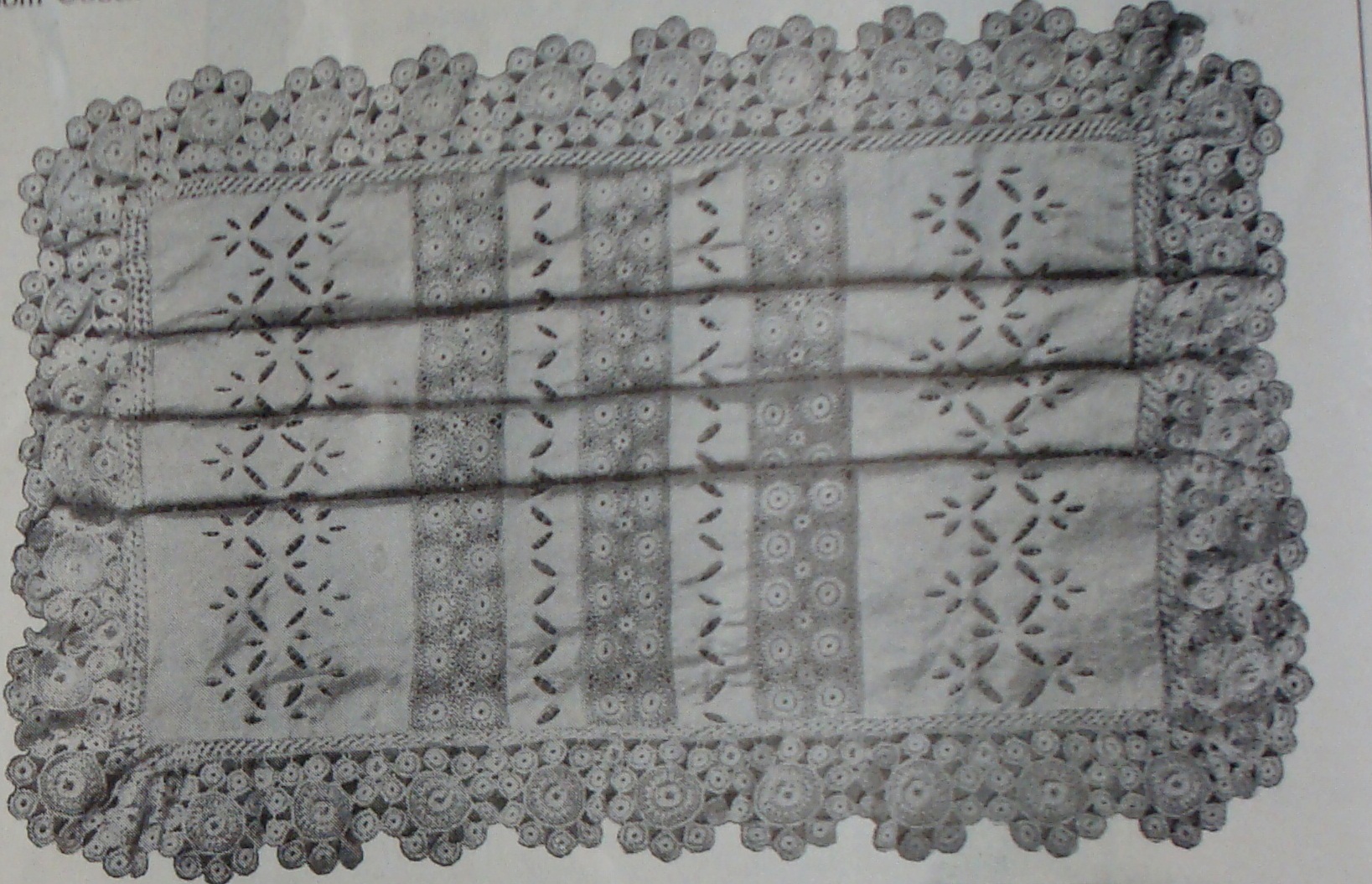
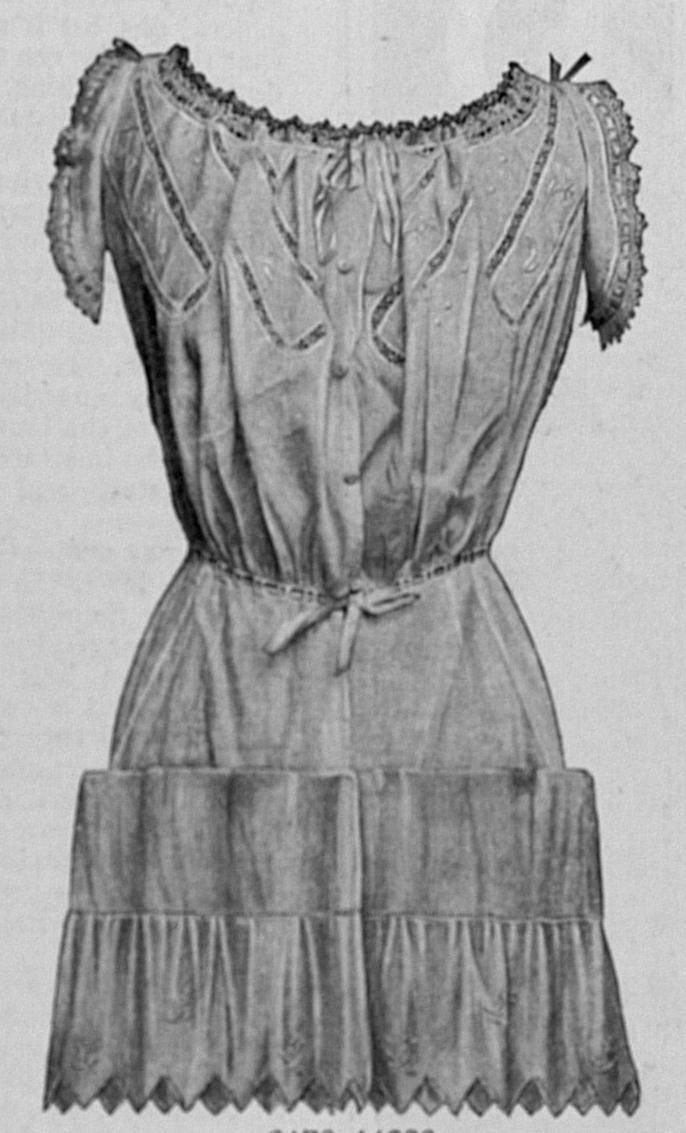
1913-08-33.bLinens and nightgown with crocheted trim (Source: Ladies Home Journal, 1912-1913)