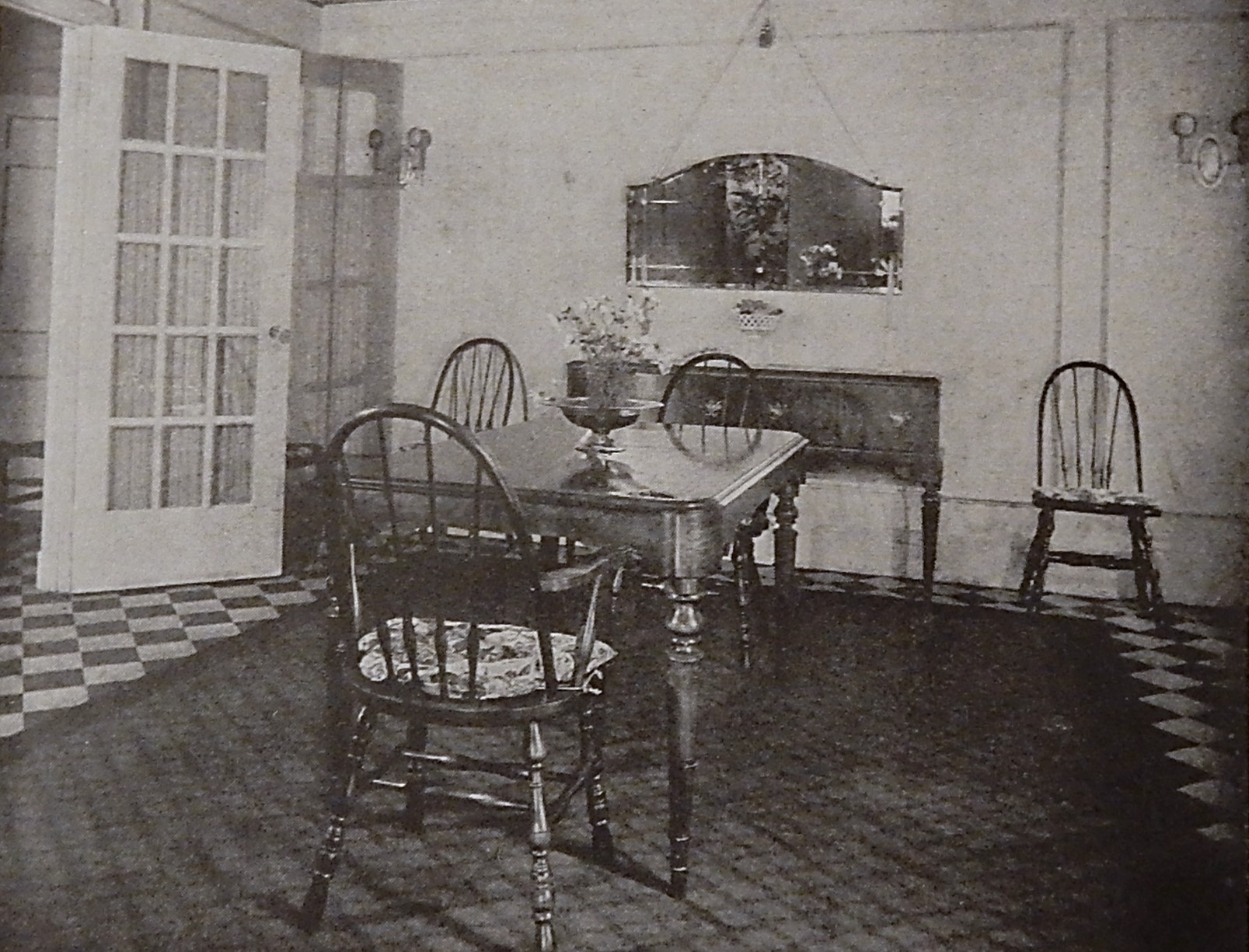
 Today it’s generally considered impolite to show up at a friend or relative’s home without texting first. And, I’m often uncertain about whether friends prefer me to make a home-cooked meal or for us to go out for dinner. I’ve always assumed that it was very different a hundred years ago, and that people just dropped by with no advance notice and that home-cooked meals were the norm when it came to entertaining, so I was surprised to learn that it was much more nuanced back then. Here are few excerpts from an articletitled “When We Entertain Our Friends” that was in a 1924 issue of American Cookery
In the old days, such a thing as taking our friends out to eat would have been considered inhospitable in the extreme. Our mothers and grandmothers considered that relatives and social acquaintances came for the joy of sharing the intimate association of the family life whether it was humble or elaborate.
The visitors often came unannounced, and for a stay of considerable length. It was nothing to have a “load” drive up just a meal time, and the well-stocked cellar and pantry always responded nobly to such emergency demands.
—
[The homemaker] reasons that, everything considered, it is easier and no more expensive to take her friends out to a hotel or restaurant, than to go through the nervous strain of trying to play the gracious hostess under more or fewer handicaps.
And so, this hotel, and that well-known eating place, and some noisy restaurant, where an orchestra discourses sweet (?) and very loud jazz music, all are enriched by our money. Quite as likely as not, the meal is followed by an evening of paid entertainment, and anything in the nature of a comforting exchange of confidences or inspiring discussions, or brilliant conversations is crowded out entirely.
—
We are just learning in how many ways we follow a cycle in our lives today. We do not go backward in doing this. We keep moving ahead. And one of the progressive signs of the times is the increasing interest in having our friends share with us as good as we have, right where we live.
American Cookery (October, 1924)
The article’s advice is a hundred-years old, but it reinforces what I intuitively knew – entertaining at home is special. It builds memories, supports the development of strong relationships, and is just plain fun.