Simply Recipes Adapts This Blog’s Feather Cake Recipe

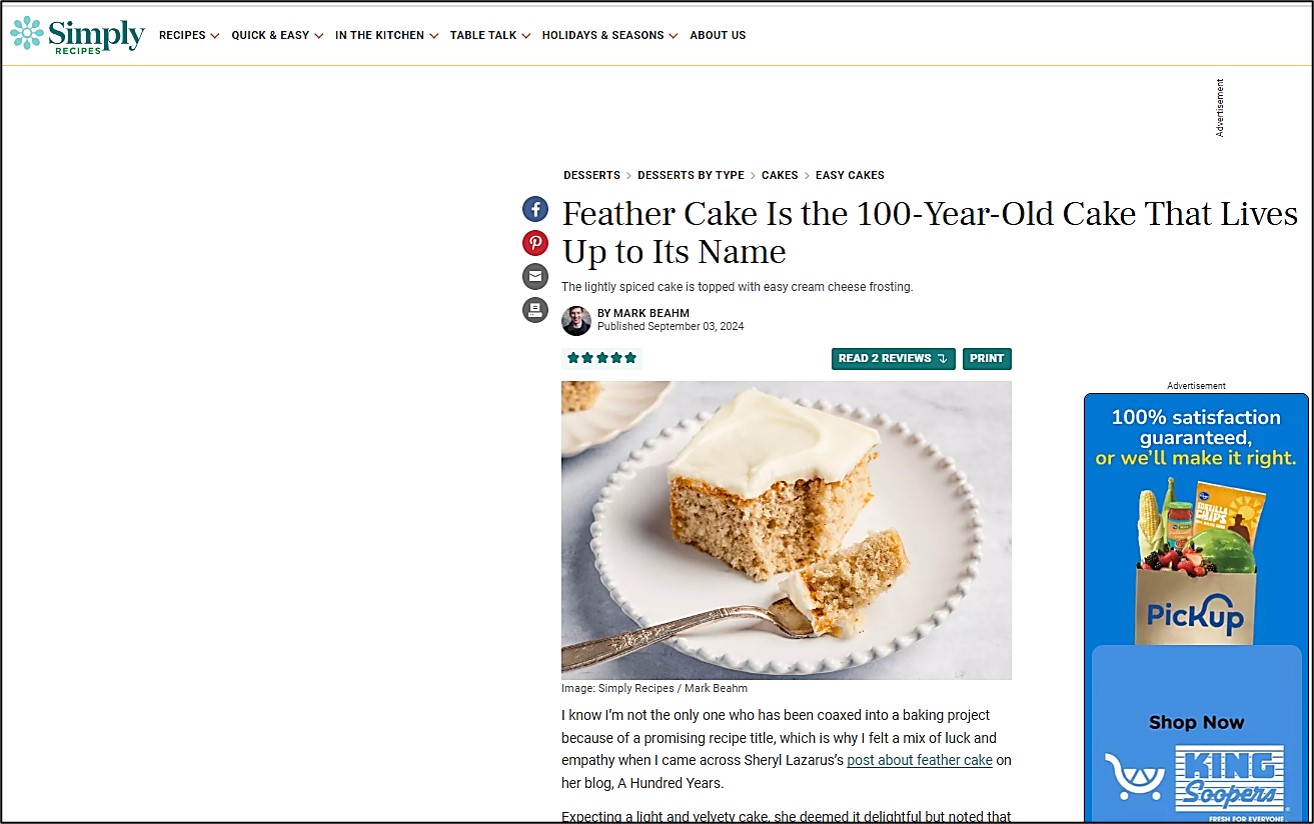
Image of Simplify Recipes post

Years ago I did a post on a hundred-year-old recipe for a spice cake called Feather Cake. I was anticipating a cake that was as light as a feather. But when I made the recipe, it had a nice taste – but was rather heavy. After I did the post, I promptly forgot the recipe. I had no desire to make it again, and it never was a popular post and got very few hits. So I was amazed last week when I suddenly started lots and lots and lots of hits on my Feather Cake post. I started researching the reason for the sudden bump in hits, and discovered that Simply Recipes had done a post on my hundred-year-old recipe for Feather Cake.

The Simply Recipes post was done by a baker at a Danish cafe in London. He made the Feather Cake recipe posted on my blog, and like me, concluded that it was not as light as a feather. He then adapted the recipe by adding additional fat and an additional egg. He also adapted how the ingredients were mixed together. Instead of putting all of the ingredients in a bowl and mixing, he first beat together the eggs and sugar, then beat in the fat and vanilla extract, and finally gently folded in the dry ingredients. He concluded that the “result is a fluffy, lightly spiced cake that lives up to its name.”

It’s amazing how a mediocre recipe was adapted to make an awesome cake. I think that I need to revisit some of the other “just okay” recipes that I’ve made over the years, and consider about how I might adapt them to turn them into amazing recipes.

Hundred-Year-Old Suggestions for a Friendly Dining Room

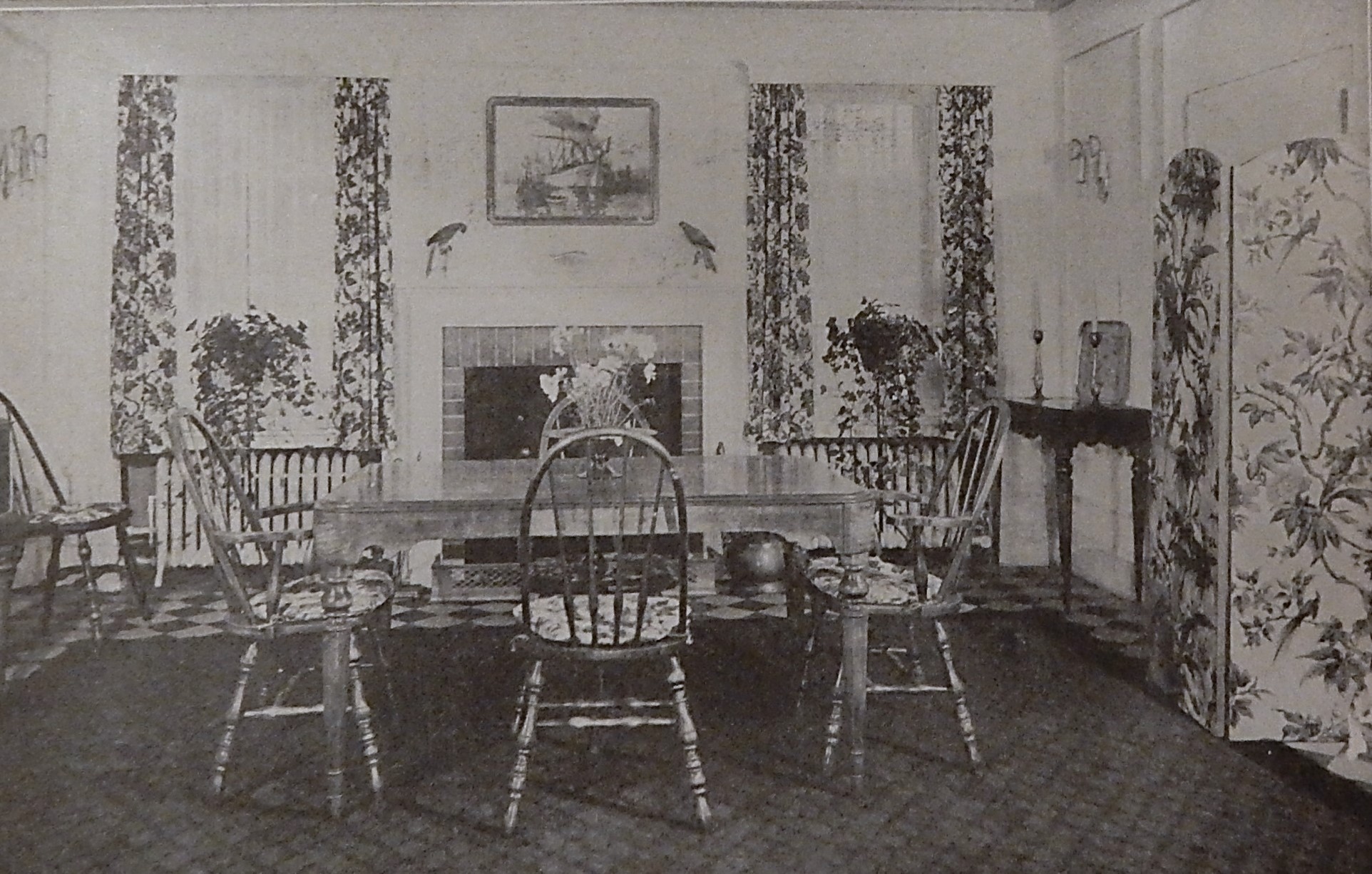
Dining Room
Source: Good Housekeeping (December, 1924)

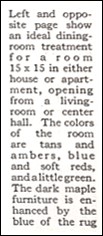
Caption about dining rooms

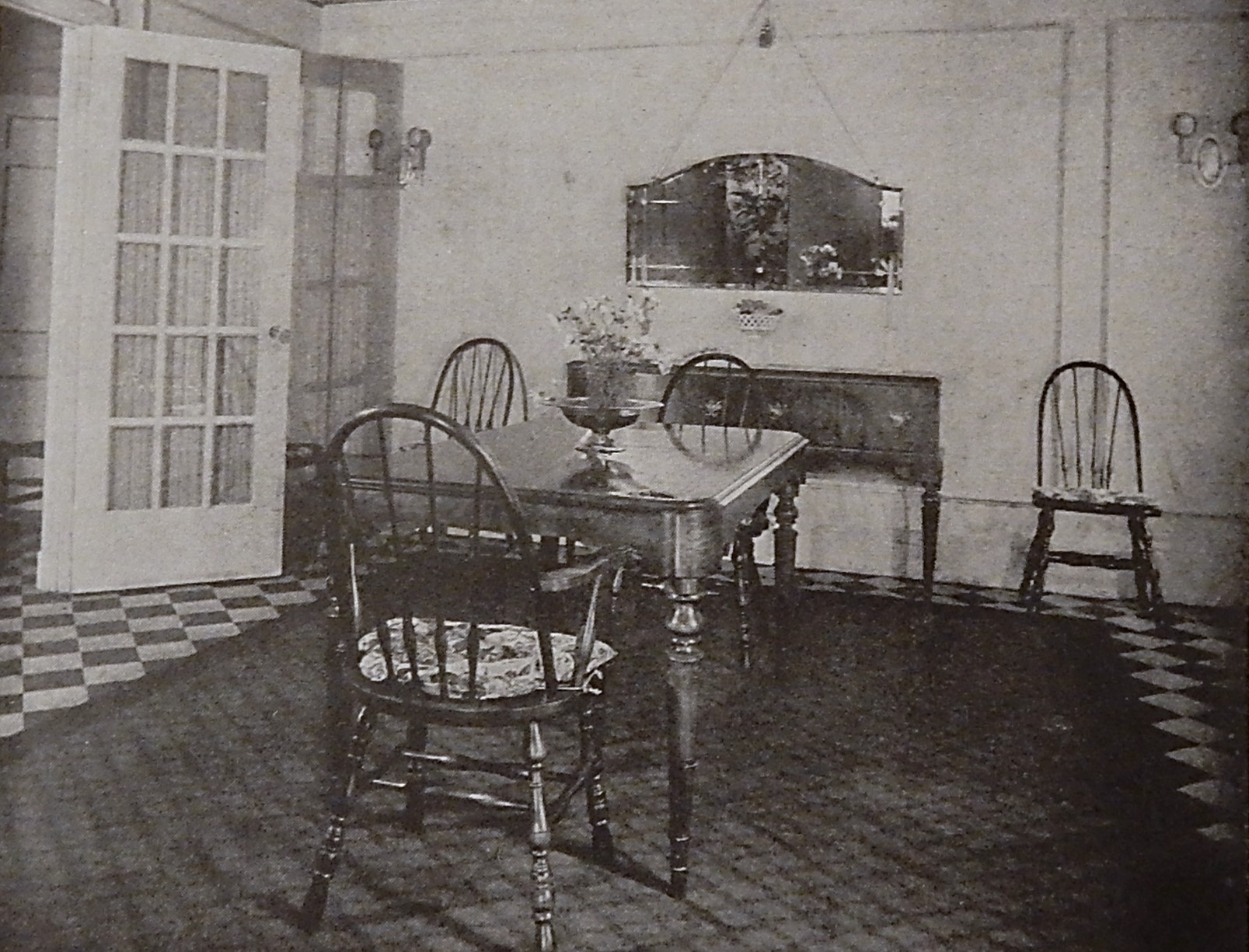
Dining Room
Source: Good Housekeeping (December, 1924)

A 1924 issue of Good Housekeeping had the following suggestions for ensuring that a dining room is friendly and welcoming:

The dining room of all rooms in the house, should have a sprit of friendliness. It may be dignified or it may be gay, but it should be a room which is conducive to the brighter, more sparkling side of life. Here the family meets three times a day. A sunny room in the morning will do much to make breakfast a pleasanter meal. A room prettily lighted at night, with a colorful background, may make dinner a happy as well as a necessary function. Just as a living room should be a place of comfort – somewhere to write, somewhere to read – so the dining room should be a place of cheer. The happiest families are those who taboo all the serious, annoying topics and reserve meal times for the lighter, gayer sort of conversation.

By reason of its definitely prescribed use, the dining room and the arrangement of the furniture can be varied but little, but this does not limit the choice of interesting background, in floor covering or wall color. The dining room is in many homes, the “step-child” room of the house, where color and design have been forgotten in an altogether utilitarian arrangement, whereas in the rooms we show, everything has been chosen to give color, ease, and charm.

Source: Good Housekeeping (December, 1924)

Hundred-Year-Old Packed Lunch Suggestions

Drawing to two children at school desks
Source: Ladies Home Journal (September, 1924)

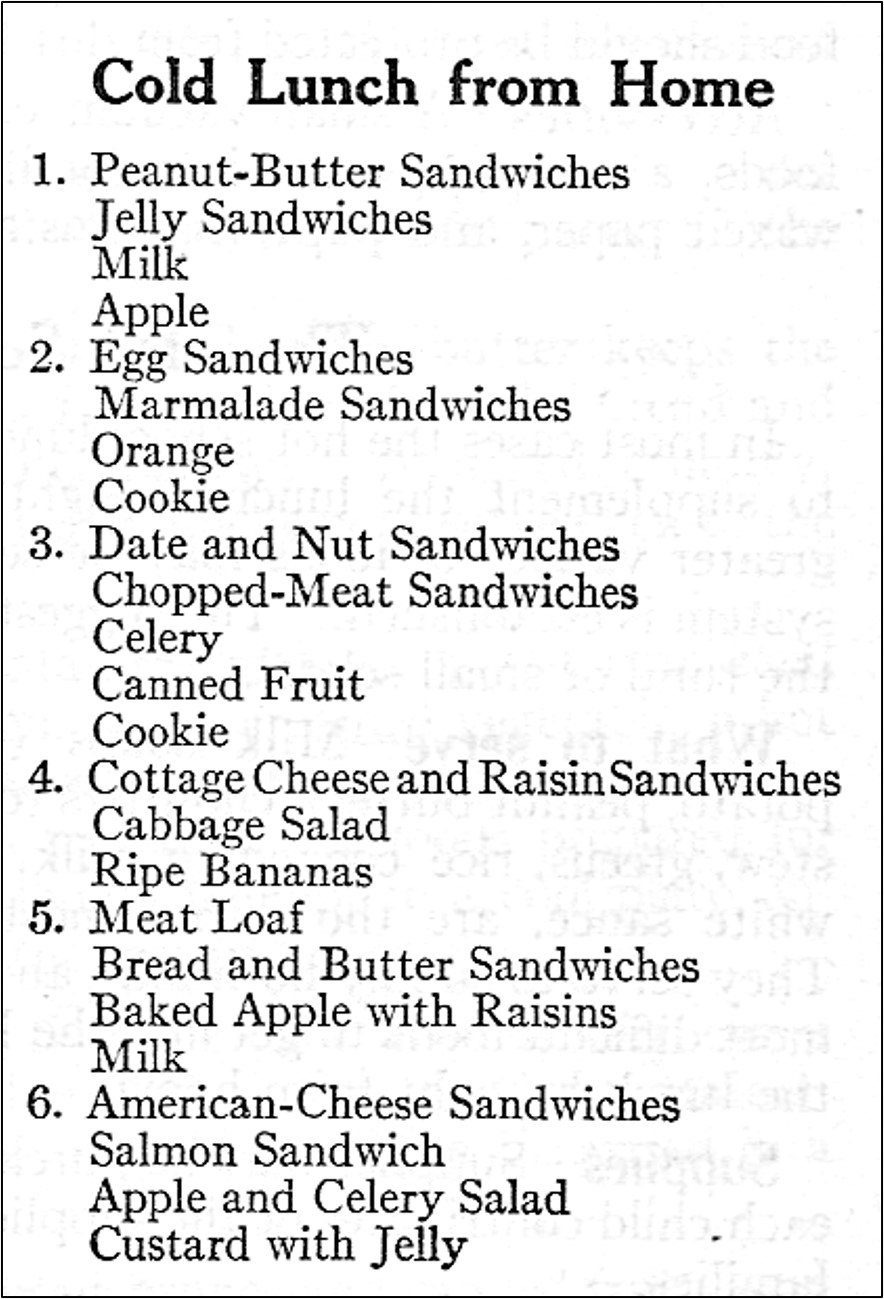
As students return to school, it’s time to think about how to make packed lunches that are fun and healthy. Families have been packing school lunches for a long time. Here are some menus for cold packed lunches in a hundred-year-old cookbook:

cold packed lunch menus
Source: The New Butterick Cook Book (1924)

A hundred years ago many children went to one-room school houses, and had to always take their lunch to school. These schools were typically for students in grades 1- 8. Children in larger towns attended larger elementary schools and may have had the option of getting a hot lunch. Those students who continued their education by attending a high school may have been able to get a school lunch made by students in home economics classes. Back then it was considered good training for students to plan, prepare, and serve school lunches.

Pork Facts in 1924 Cookbook

Chart showing where different pork cuts and pieces are located in a pig's body
Source: Modern Priscilla Cook Book (1924)

There’s an old saying that when a hog is butchered you can “eat everything but the squeal.” An image in a hundred-year-old cookbook suggests that this is an accurate statement. According to the cookbook, even the tail can be eaten. It says that the tail is an economical cut that can be boiled or sautéed. . . .  Who knew?

Here’s some more pork facts that were in the old cookbook:

Facts to Remember about Pork

When pork is in proper condition the skin and fat are white and clear, except the kidney or leaf lard which is slightly pinkish in hue. The flesh is composed of fine-grained tissues and is pink in color.

The thicker the skin of pork the older the animal from which it was cut.

Pork contains a larger proportion of fat than any other meat. Consequently its food value is higher and special care should be taken in selecting other foods to combine with it.

Pork should always be thoroughly cooked. It is not only distasteful but even dangerous to health when underdone.

Ham that is very salty should be freshened before cooking. A slice is freshened by being covered with cold water and brought slowly to the simmering point. A whole ham should stand in cold water over night or at least for several hours.

Modern Priscilla Cook Book (1924)

Hundred-Year-Old Canning Yield Table for Fruits and Vegetables

Putting food in jars for canning
Source: The New Butterick Cook Book (1924)

Venders at the farmers market often have bushel baskets filled with fruits and vegetables, but I’m never sure how many quarts of canned goods they’ll yield, so I was pleased to find a canning guide in a hundred-year-old cookbook. Many things change over time, but I assume that yield ratios stay the same.

Table with canning yields for fruits and vegetables
Source: The New Butterick Cook Book (1924)

1924 Menu for Motor Party Refreshments

Menu for motor party refreshments
Source: American Cookery (August/September, 1924)

I recently came across a menu for basket refreshments for a motor party in a hundred-year-old magazine. A motor party picnic sounds like so much fun. If I could only get in a time machine, and go back to the early days of automobiles, dirt roads, and adventures. I’d wear a short dress that only came to my knees (this was the flapper era) and a huge bonnet with ribbons that tied under my chin. I’d put the refreshments in a wicker basket; and, I’d spend all morning cooking and packing refreshments for the trip. We’d drive out into the country and spread out a blanket in a grassy field, and then lay out the spread of food.

Things start to get blurry – Is this motor party a date? An event with friends? A family trip?

Then I come back to reality, and 2024. Sigh. . . maybe I should pack a picnic lunch and take it a nearby park. Somehow it just doesn’t seem the same.