Source: The Daily Argus-Leader Home Economics and Cook Book, Sioux Falls, South Dakota (1925)
Old cookbooks have lots of hints and tips. A 1925 cookbook supplement in the Sioux Falls, South Dakota newspaper tells readers to wait to form an opinion of an egg until something happens with the lid. But the old newsprint is blurry and I’m not sure what the last word says. Is it “off”? . . . or “on”? . . or perhaps “of”? (which makes no sense). It may be trying to say that you can’t tell how well fried eggs are going to turn out until the pan lid is removed (assuming that a lid was put on the pan as part of the process of frying the eggs). Or maybe the egg’s lid” is the shell, and cooks can’t really judge the quality of an egg until the egg is cracked.
Bottom line, I have no idea what this tip means, but I’ve spent much more time than I should have trying to decipher it.
A hundred-years-ago croquettes were considered a great way to use up left-overs. The texture and taste of croquette was very different from the original food, and “the crisp crust make these little bits acceptable.”
Here are some tips in a 1925 cookbook for making croquettes:
The shape of a croquette adds to its attractiveness or takes away from it. It should never look like a meat cake. If they are meant to be balls, they should be perfectly shaped, or if they are meant to be cone shaped, they should be so carefully handled that they will hold up. It takes considerable practice to make really good looking croquettes.
To make good croquettes, the meat or fish must be minced quite fine and all the ingredients so well combined that the flavors are thoroughly blended. The mixture must be as moist as it is possible to handle without spoiling the shape of the croquette. The cork shaped ones are the easiest to handle. The mixture should be dipped in egg and breaded carefully and then chilled. They are easier to handle in the frying basket if taken out of the refrigerator and will hold together in the fat better.
The sweet croquette is often served as a dessert. After a luncheon of a simple salad, the sweet croquette is just heavy enough to round out the meal.
Home Makers’ Cooking School Cook Book (1925)
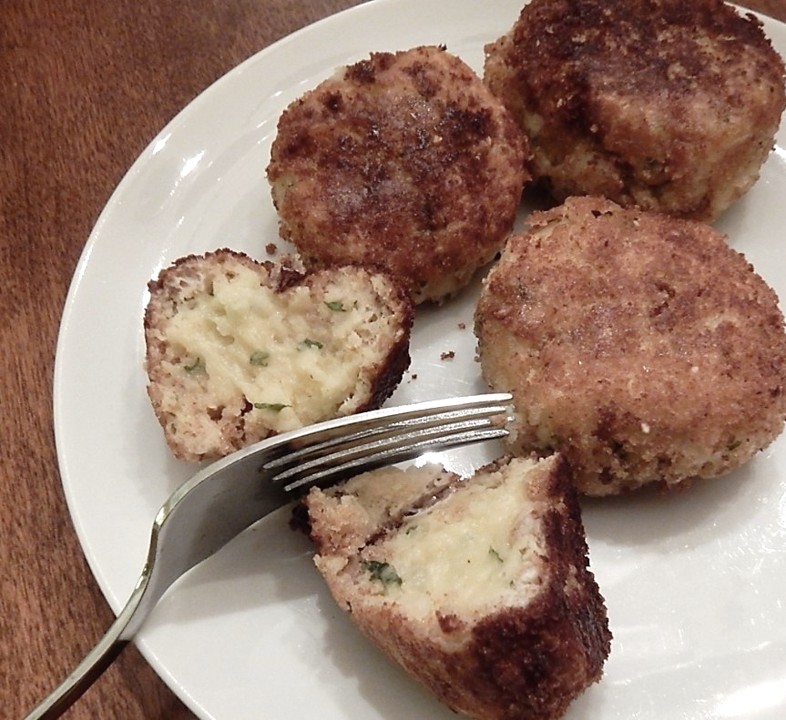
I looked through my old croquette posts to find a photo for this post, and realized that none of the croquettes in my pictures are perfectly shaped. Sigh . . .I have only made croquette recipes a few times for this blog because I think that they might not be very healthy since they generally are fried in fat, and because I worry that they will fall apart while cooking. Maybe I’ll have to try making a croquette recipe again sometime and follow the tips in the old cookbook.
In case you are interested, here are the croquette recipes that I have previously made:
I have way too many kitchen utensils with a disorganized drawer filled with soup ladles, spatulas, a pizza cutter, a can opener, plastic and wooden mixing spoons, knives, vegetables peelers, a nutcracker with nut picks, a meat thermometer, and much more. And, that’s just the beginning. I also have a plastic container on a shelf in a bottom cupboard filled with less used kitchen utensils, while my least used utensils are stashed in a box in the basement. A hundred-year-old cookbook stressed the importance of having a few good utensils (and not having a plethora of seldom used ones):
Adequate equipment does not mean having a large number of utensils for every process; it does mean, however, having enough so that the business of cooking does not become too irksome. Beating egg whites with a fork is a long process. It takes so long that as a rule the woman usually becomes tired long before the eggs are beaten enough and the result is an inferior product. An egg beater should be among her kitchen utensils. Hundreds of examples could be given to illustrate just that one point. The other extreme of course is just as bad, and burdening yourself with useless utensils is something to be guarded against. Good housekeeping does not consist of a well-stocked utensil closet. It is better to have a few good utensils and then make each one do as many tasks as possible. It isn’t the number of utensils that counts, but the number of uses to which each can be put that determines the wise choice.
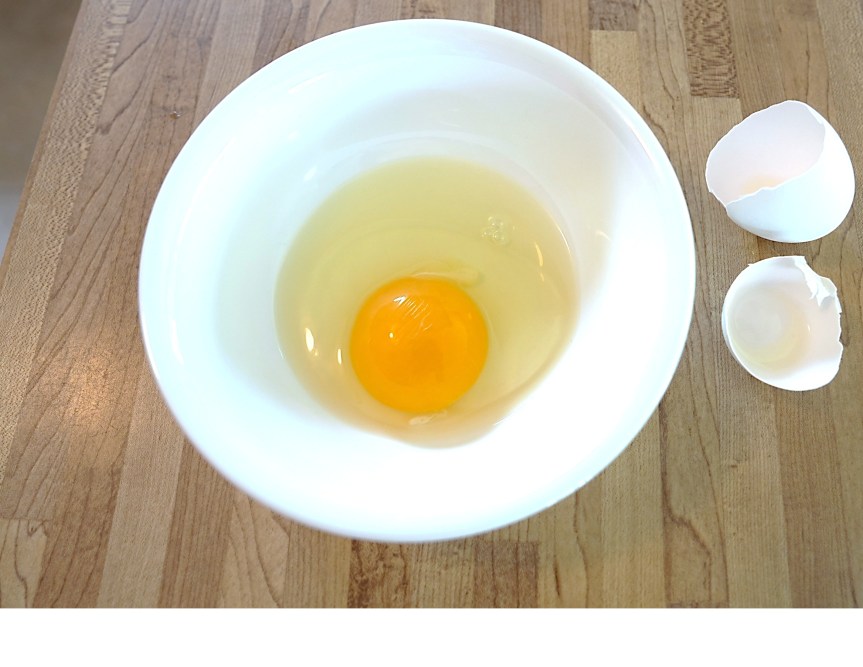
Today, there is wide variation across countries in whether eggs are washed. Eggs naturally have a coating on them called a cuticle that seals pores in the shell and keeps bacteria out. When eggs are washed, the eggs are very clean, but the cuticle coating is removed and the eggs must be refrigerated to prevent spoilage. In the United States, federal regulations require that eggs be washed and sanitized; therefore, they need to be refrigerated. In many other countries, including much of Europe and Asia, as well as much of Africa and South America, eggs are not washed or refrigerated.
Practices have changed in the U.S. over the last century. A hundred years ago, eggs were not washed until just before using. According to a 1925 home economics textbook that was published in the U.S.:
Washing removes a coating on eggs-shells. This coating prevents the entrance of microorganisms. Hence eggs should not be washed until they are to be used.
School and Home Cooking (1925) by Carlotta C. Greer
When I think of the 4th of July, I think of friends gathering, cookouts, and backyard barbeques, so I was excited when I saw an article in a 1925 issue of American Cookery magazine titled “Mixed Grill.” I can’t quite tell if the author is only discussing broiling food in the house or if it is inclusive of outdoor grills. (I picture outdoor grilling becoming popular in the mid-20th century, but maybe some people had an outdoor grill a hundred-years-ago). Here are a few excerpts from the article:
Is a “Mixed Grill” as new to other housewives as it is to me, I wonder?
A “Mixed Grill” is, in short, only a mixed grill. It works out as a combination of almost endless variety, all cooked on the same broiler and leaving only that broiler to be washed – an excellent quality anywhere, and invaluable where time is short and space is limited. As for possible variations, anything edible, not too thick, too small, or too soft may be used. There is no limit, except the taste of the family, and the wit of the cook- also, it must be granted the size of the broiler.
Take, for example, a foundation of chop and potato. My husband has sausage, tomato, and mushroom with his. I have banana (which he detests) with mine, and a shirred egg is slipped in for a guest who is forbidden meat. Except for the chops, all these things are odds and ends, found in the pantry.
The process is simple, but requires more watchfulness and judgment than broiling one thing alone.
A gas broiler is more convenient than coal, as there is no smoke. A broiler with wires closer together than usual is a conveniences, but not a necessity.
Almost everything used in a grill, except tomato, needs to be dipped in oil, and a brush, kept for the purpose, with a cup of oil, is a great help. As a general rule, dry things should be oiled and moist ones egged and crumbed.
Lay the prepared articles on the broiler, putting the thicker ones where they will come directly under the flame. Finish cooking on one side, then pull the pan well out and turn quickly with a broad spatula or two knives, to avoid piercing.
Since, however, the special quality of a mixed grill is the perfection of each individual flavor, simple butter, salt, and pepper are better than a more elaborate sauce.
The grilled articles are necessarily thin, and cool fast, so special care must be taken to have service quick.
American Cookery (May, 1925)
On the 4th, I’m planning to make steaks, roasted asparagus, and roasted green, yellow, and orange peppers. Hmm. . . I guess that is a mixed grill.
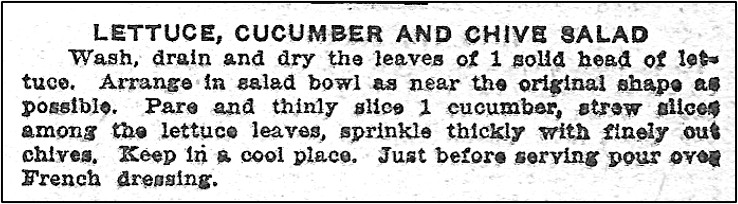
I’m enjoying making various summer salads, so when I saw a recipe in a hundred-year-old cookbook for Lettuce, Cucumber, and Chive salad, I decided to give it a try. The salad had a light vinaigrette-style dressing on it and was lovely.
Here’s the original recipe:
Source: The Daily Argus-Leader Home Economics and Cook Book, Sioux Falls, South Dakota (1925)
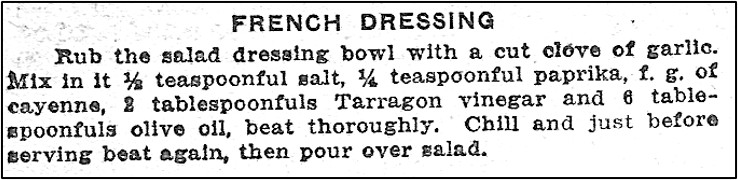
And, here is the original recipe for French Dressing:
Source: The Daily Argus-Leader Home Economics and Cook Book, Sioux Falls, South Dakota (1925)
I had a lovely bunch of leaf lettuce that I used to make this recipe. I’m not sure what type of lettuce the recipe author anticipated cooks using, but I did not try very hard to arrange the leaves as near as possible to the original shape. I thought that it was more important to have the lettuce in bite-size pieces than to worry about the shape.
The recipe called for serving this salad with French Dressing. I used a French Dressing recipe that was in the same cookbook as the salad recipe. It is a vinaigrette-style recipe and is quite different from the modern commercially-produced, orange-colored French Dressing. I’ve seen many French Dressing recipes in various hundred-year-old cookbooks over the years, and they have all have been vinaigrettes. I’m not sure when the shift occurred to the orange-colored type of French Dressing.
The French Dressing recipe called for a f.g. of cayenne (red pepper). I have no idea what unit of measure an “f.g.” is, but assumed that it wasn’t calling for much, so I interpreted it to mean a dash.
Wash and dry the lettuce, then tear into pieces and arrange on plates or in a bowl. Put the chopped chives on top of the cucumber slices. Just before serving, top with the dressing.
To make dressing, cut the garlic clove in half, then rub a small bowl with the cut garlic. Put the salt, paprika, cayenne pepper, tarragon vinegar and olive oil in bowl and stir vigorously to combine.
Whew, prices have gone up a lot recently. Every time I go to the supermarket, I’m shocked how high my grocery bill is. But cooks a hundred years ago had some expenses that I don’t have, such as the purchase of ice. Here’s what it said in the April, 1925 issue of American Cookery magazine:
Keeping the Ice Bill Down
Exit the coalman; enter the iceman! That is how a well-known cartoonist typifies the coming of summer and the end of winter. And he means, of course, that no sooner is the item of fuel expense cancelled than the cost of ice begins boring a hole in the budget. Truly, a philosophical way of expressing a common truth.
The lengthy article contained advice for both icebox and refrigerator owners. Tips for icebox owners included:
Keep your ice chamber filled. It saves the ice and preserves the food.
A small piece of ice may seem more economical, but is it? When it melts, the food spoils and the walls of the ice chamber grow warm.
Remove or place all the food at one time, as quickly as possible, opening and shutting the door but once.
The article also addressed electric refrigerators:
With the rapid development of electricity, ice machines are being installed in the most modern refrigerators. . . Mechanical ice refrigeration has come and is here to stay.


 I have way too many kitchen utensils with a disorganized drawer filled with soup ladles, spatulas, a pizza cutter, a can opener, plastic and wooden mixing spoons, knives, vegetables peelers, a nutcracker with nut picks, a meat thermometer, and much more. And, that’s just the beginning. I also have a plastic container on a shelf in a bottom cupboard filled with less used kitchen utensils, while my least used utensils are stashed in a box in the basement. A hundred-year-old cookbook stressed the importance of having a few good utensils (and not having a plethora of seldom used ones):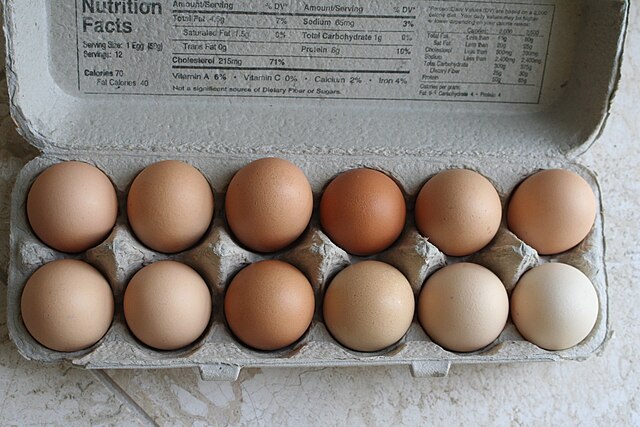


 Whew, prices have gone up a lot recently. Every time I go to the supermarket, I’m shocked how high my grocery bill is. But cooks a hundred years ago had some expenses that I don’t have, such as the purchase of ice. Here’s what it said in the April, 1925 issue of American Cookery magazine: