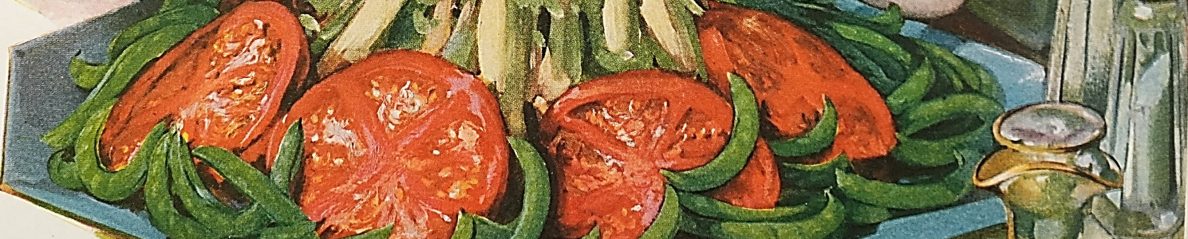
The weather is delightful. It’s time for a picnic. Here are some hundred-year-old tips for an automobile picnic.
For picnics the beverages and hot dishes may be prepared at home and carried in thermos food jars. The cold dishes may be packed in a small portable refrigerator. The biscuits, sandwiches, cakes, and cookies should be carefully wrapped in wax paper and packed in boxes. Ice creams may be taken in the freezer. Hot sandwiches and bacon may be cooked over the coals or on a portable oil or alcohol stove. In some menus it may be desirable to omit or modify a few of the dishes, if the food is to be carried several miles.
For Luncheon and Supper Guests (1922) by Alice Bradley
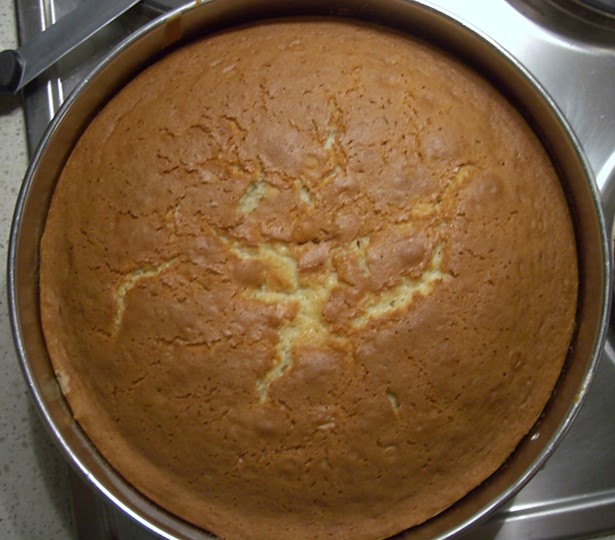
Sometimes when I make a cake it rises very unevenly. A hundred-year-old cookbook gave me a clue about what might cause the problem:
A moderate oven will give the best results for nearly all cakes.
If the batter rises in a cone in the center you are using too hot an oven, and a crust has formed before the mixture has had time to rise; or too much flour has been used.
Source: Eddy Engineering Co. advertisement (Cement City Cook Book publsihed by First Baptist Church, Alpena. Michign (1922)
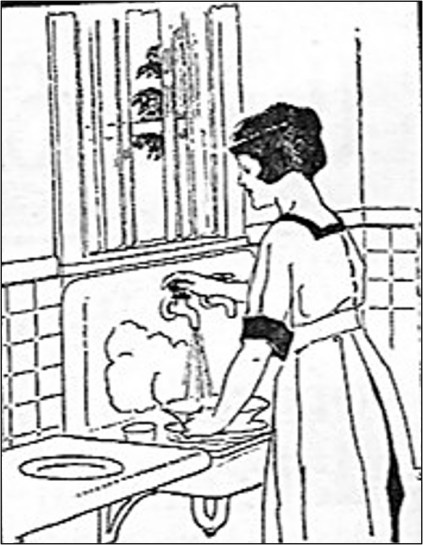
Decorating styles seem like they are constantly changing and evolving. Here is some 1922 advice for how to decorate your kitchen:
We come to realize what a big part color has to play in the attractiveness of the kitchen. Anyone who has both practical and theoretical knowledge of color, as well as of kitchens, knows that the pure white kitchen is a long way from perfection in either looks or cleanliness. The whiteness, no matter how clean it really is, takes on, after a time, a darkening and stained appearance, as though it got tired of being dazzling, with nothing for contrast. So if we want a kitchen to look as clean as it should be, let us give it contrasts of both color and tone. This will need to be done with the advice of someone who really know the technical properties of color combinations, but most of us can make a pretty satisfactory effect, if we use our eyes and copy the tones in nature, which seem to give a particularly clean and clear-cut impression – the beach against blue water, for instance, or a wet tree trunk against green leaves. Is it sensible to try to bring nature into the kitchen? Why not if it is to make life in the kitchen more worth living?
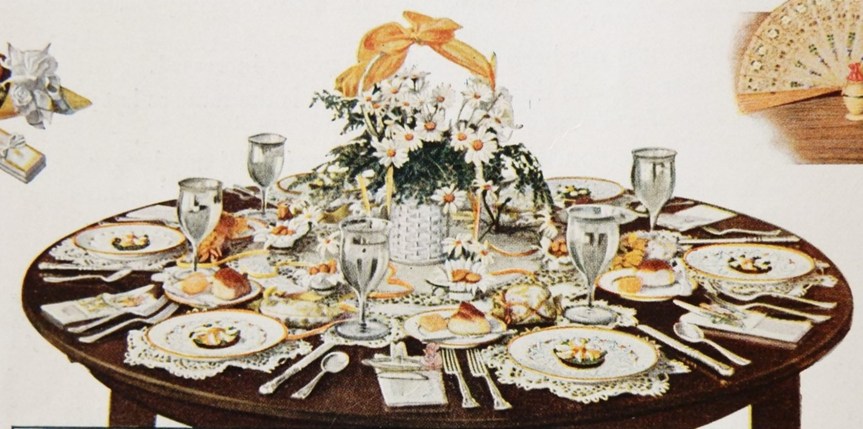
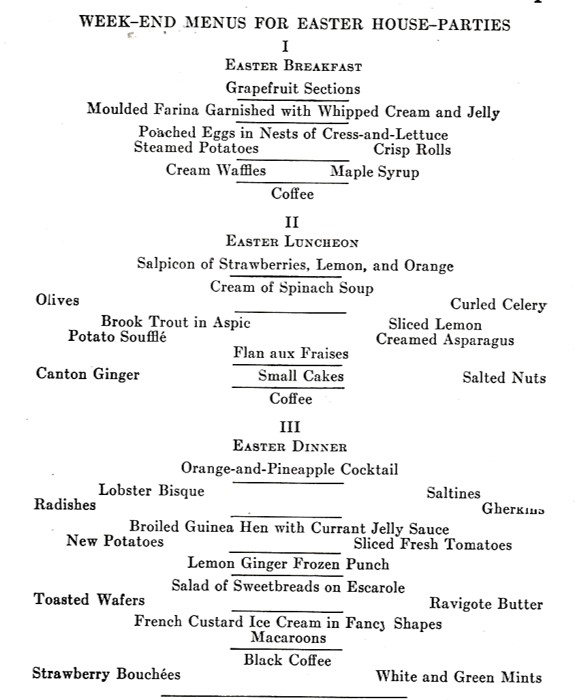
Here’s some hundred-year-old advice for where to serve the first course of a dinner:
Before answering this question specifically let us first say that there is no special course which is invariably the “first course of a dinner.” The first course may be shell fish; it may be soup; it may be the chief meat dish –according to the number of courses served and formality of the dinner. But whatever may be the first course, there is only one place where it should be eaten, and this is at the dining-room table in the dining-room.
During recent years, however, the custom has arisen of serving a small portion of some sapid and well-relished food, whose function of to stimulate appetite, as a beginning to the dinner. This beginning is not thought of as one of the courses, it is too unsubstantial, and the frilly little morsels used for this purpose are listed under the headings: “Some Beginnings,” “Appetizers,” “avani-diners,” or other similar phrase. A salpicon, which, correctly, is a very small portion, no more than a good tablespoonful, is an example of such a beginning. So is a canape. So used to be the original cocktail. At a gentlemen’s dinner it used to be customary to have canapes and coctails passed in the library soon after the guests assembled. Canapes were, then the crisp and crusty morels which could be eaten from the fingers; and cocktails were composed of ingredients now under legal ban.
At present our cocktails are of two kinds: the semi-solid kind, calling for the use of a fork, such as the oyster cocktail, which is really one of the courses, since it is only a new fashion of serving the shellfish. The place to eat this is in the dining-room. The other kind of cocktail is made of fruit juice or a mixture of fruit juices, etc., and this, according to a late fashion, is brought to the drawing-room, or wherever the guests are assembled–and now that guests are not expected to arrive on the stroke of the minute-hand, it helps the pleasant passing of a period of waiting for some belated one, to sip the cocktail during the quarter of an hour allowed after the time named for the dinner.
The June/July, 1922 issue of American Cookery magazine had a book review for a book called Nutrition and Growth in Children by William R.P. Emerson that piqued my interest, so I googled it. I was please to discover that the book is available online:
Here’s the hundred-year-old book review that was in American Cookery:
One-third of all the children in the United States are underweight or under-nourished or malnourished. This condition is limited to no locality, and to no social class. It is as prevalent in the North, as in the South, in the country as in the city, in the homes of the rich as in the slums. It is a condition baneful of the well-being of our children and dangerous to the health of our future men and women. Malnutrition in children is now recognized as the greatest single problem affecting our national health.
Dr. Emerson, nationally known as a pioneer in nutrition work, and the first to lay proper emphasis on the other important factors because besides diet, here offers to parents, teachers, social workers, and physicians the results of his rich and successful experience. In simple, practical terms he describes the causes of malnutrition in growing children and shows how the condition may be detected. He describes fully the methods of cure, which involve problems of physical defects, fatigue, home control and health habit, as well as diet and good habits. Finally, he outlines a complete and practical nutrition program for the home, the school, and the community.
This is a thoroughly practical and scientific treatment of a subject of far reaching importance.
American Cookery (June/July, 1922)
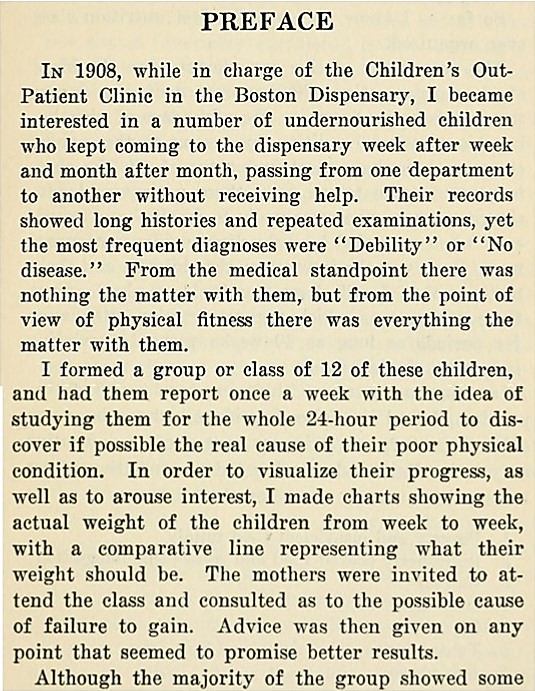
Here is part of the book’s preface:
Source: Nutrition and Growth in Children (1922)
And, here is a chart in the book showing why one girl’s growth was off-track for a short time: