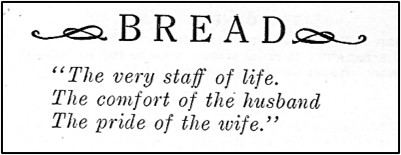
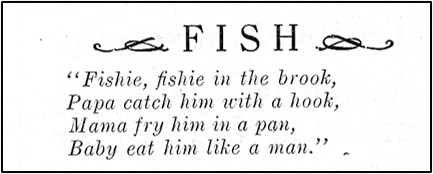
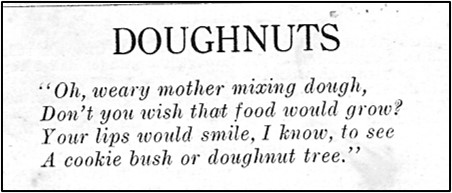
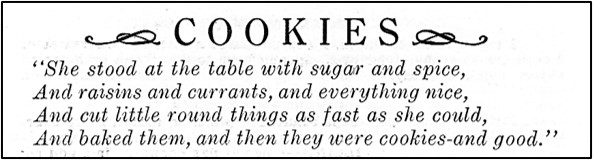
Every church and community cookbook is unique, and contains many clues about the characteristics of those who compiled the cookbook. I recently came across a hundred-year-old cookbook called the Cement City Cook Book that included fun poems in chapter headings. It was compiled by the First Baptish Church, Alpena, Michigan.
Source: Cement City Cook Book (1922)Source: Cement City Cook Book (1922)Source: Cement City Cook Book (1922)
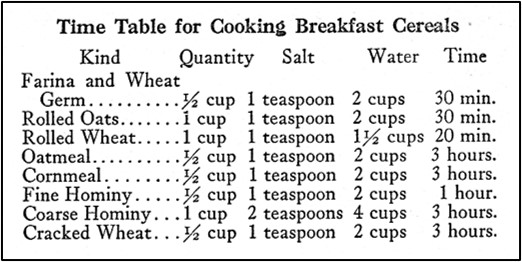
Here is a table that I found in a 1922 cookbook that contains directions for making hot cereals. The cooking times look really long to me, but maybe the cereal grains were more coarsely cut or otherwise different a hundred years ago.
There are very few pictures in hundred-year-old cookbooks and magazines. As a result, the few photos suggest which recipes the authors or editors considered the most enticing. So when I saw a photo with a pitcher of Grape Punch in a 1922 magazine that looked awesome, I decided to give it a try.
Source: American Cookery (August/September, 1922)
The Grape Punch contains grape juice, lemon juice, and orange juice with cucumber peel (rind). I’ve previously had cucumber infused water which I associate with spas and hotel lobbies (and healthy eating), so was intrigued by the inclusion of cucumber in this recipe – though it called for the use of the peel rather than slices of cucumber which seemed a bit odd.
The verdict: The Grape Punch was tasty with lovely citrus undertones and the added smoothness of cucumber.
Here’s the original recipe:
Source: American Cookery (August/September, 1922)
I thought that 1 cup of sugar seemed like a lot, so used less. And, I was surprised how attractive thin slices of cucumber peel looked in the punch.
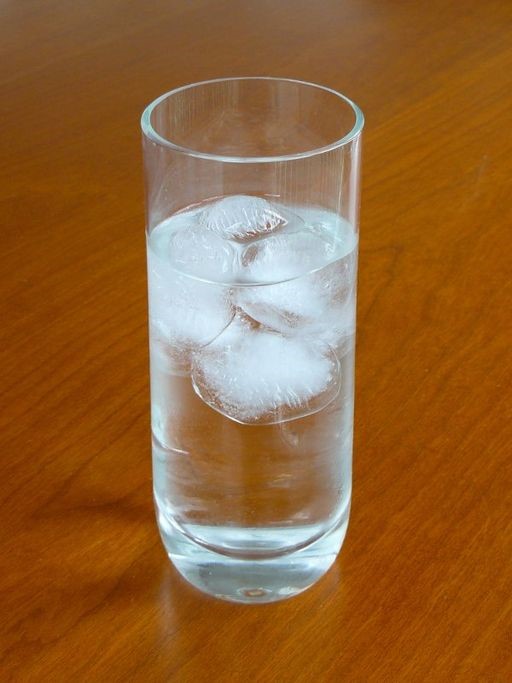
I like very cold water with lots of ice on hot summer days, but I’ve heard others say that water at room temperature is healthier. The debate over water temperature has been going on for a least a hundred years. Here’s what it says in a 1922 magazine:
A word about drinking water is not amiss just here. Iced water may seem very desirable when one is thirsty, but water without ice is far better for drinking purposes, as it does not so suddenly reduce the temperature of the stomach.
When I was young, I learned how to “cut” (or “chop”) shortening into the flour when making a pie crust, and I still use the old-fashioned technique -so enjoyed reading advice in a hundred-year-old cookbook about how to make crisp and flaky pie crusts. Here are a few excerpts:
Contrary to the general opinion, pastry is not hard to make. In fact, once the fundamental principles are understood, pastry is much easier and more quickly made than cake. When making pastry, keep these rules in mind. Fat makes a pie crust crisp, therefore, to economize on shortening will produce poor pastry.
The amount of air which is incorporated in the dough makes the crust flaky, so the dough requires careful handling. Water makes pastry tough and only enough should be used to hold the dough together.
Pastry flour is recommended because if absorbs less moisture; however, the regular family flour will give good results.
If all the ingredients are cold, the dough will be much easier to handle. Chopping the fat into the flour is recommended. Do not chop the fat into the flour too thoroughly; mix until the consistency of coarse meal.
Add only enough water to hold the mixture together. If too much water is used it will be necessary to use more flour when the dough is rolled out, and if that is the case, the pastry will be tough from handling, and the fat and flour will not be in the right proportion.
Handle the dough as quickly and lightly as possible.
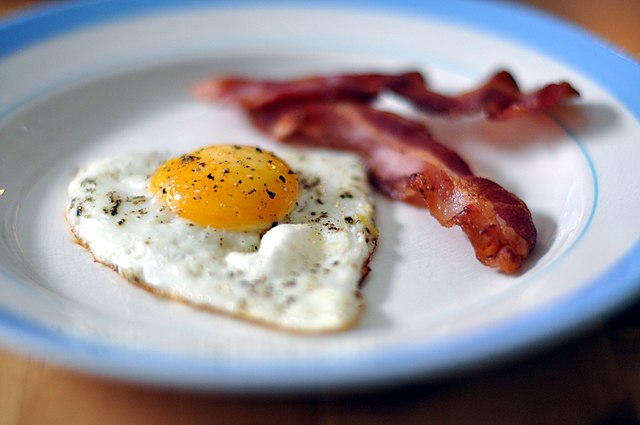
A hundred-year-old cookbook emphasized the importance of breakfast. Here are a few excerpts:
Breakfast – One of the Important Events of the Day
Breakfast in most homes is, without doubt, the simplest meal of the day and the one requiring the least thought and effort in preparation. But when we consider the fact that breakfast is also the first meal of the day and is the one that should furnish the necessary food principles to the body to aid it in starting and carrying on the work for the day, we can readily understand the importance of this meal and why it is necessary to begin the day with proper food.
The right kind of food, properly prepared, keeps the body in a healthful condition. And a healthy body is able to resist and throw off disease; an undernourished body is very susceptible to germs and will not recover from a severe illness so readily as one that is properly nourished and kept in a resistant condition.
Many persons consider breakfast of so little importance that they omit this meal entirely. This seems a mistake, for in the morning the stomach is practically empty and, in order “to start the day right,” some food should be taken unless for some good reason a physician has advised otherwise.
Again, breakfasts are often eaten very hurriedly, which is wrong. In order to receive the greatest benefit from the food, it should be thoroughly broken up in the mouth so that the digestive juices may begin their action. If food is not broken up before entering the stomach it must done there and this means a strain on that organ. Overwork will gradually cause it to weaken; so in time the stomach will not be able to perform its functions properly.
It may seem difficult to get the variety in our breakfast menus that the large number of luncheon and dinner dishes afford, because there is a limited number of so-called typical breakfast dishes. But there is an endless variety of methods of preparing these different foods, so that there is really no need of monotony at this meal.
Source: Good Housekeeping’s Book of Menus, Recipes, and Household Discoveries (1922)
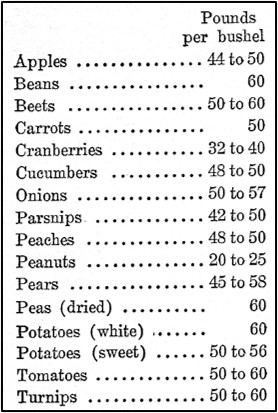
Ever wonder how many pounds of various fruits and vegetables are in a bushel? Apparently this was considered important for cooks to know a hundred years ago because it was on page 10 of the 1922 edition of the Good Housekeeping cookbook.
Now that I think about it, when was the last time I bought a bushel of anything? . . . . hmm, maybe I bought a bushel of apples 3 or 4 years ago.


 When I was young, I learned how to “cut” (or “chop”) shortening into the flour when making a pie crust, and I still use the old-fashioned technique -so enjoyed reading advice in a hundred-year-old cookbook about how to make crisp and flaky pie crusts. Here are a few excerpts: