Hundred-year-old Tip for Removing Ink Stains

ink stainHundred-year-old cookbooks are filled with lots of household tips. Some tips stand the test of time better than others. Here’s one that leaves me scratching my head.

Warm some mutton tallow and put on the ink stain; place in hot sun or over the hot register for half an hour. Apply soap and rub on washboard with warm water. If white material, put in the boiler; if colored, apply the tallow, etc., until stain disappears.

Order of the Easter Star Relief Fund Cookbook (Michigan Grand Chapter, 1923)

Where do I find mutton tallow? And, for that matter, where do I find a washboard? And, I don’t have a boiler. (What is a boiler?)

Is It Rude to Tell a Host about Food Dislikes or Other Dietary Restrictions?: 1923 and 2023

Women eating lunch
Larkin Housewives’ Cook Book (1923)

Some things that were considered polite a hundred years ago, are no longer considered polite and vice versa. Whether a guest should tell a host about food dislikes or dietary restrictions has changed across the years. In 1923, it was considered polite to eat what was served, whether or not the guest liked it. Allergies were not generally considered. Here’s what it said in the introduction to a 1923 cookbook:

Personal culinary dislikes are not assets to boast of, though most people seem to think they are. They are liabilities to be got rid of as quickly as possible. Learn to like the things that are good for you. Can’t. Bosh! Nonsense! And again, tut, tut! I guess I know. I did it.

Up to my twenties I ate only bread, meat, potatoes, and sweets. I got sick – very sick- and suffered more than I should have suffered had I eaten properly. That was one reason for waking up and behaving. There were two others though.

First – if other people ate and relished all these things I despised, they must be good, and I was missing something. I wished to miss nothing.

Second- I discovered my limited diet made me a terror to hostesses. People dreaded to invite me, as I since have dreaded to invite people with limited tastes. No one likes to have to keep a card index system of the intricate dislikes of one’s friends. It’s a nuisance. I realized this as I saw harassed glances at things I wasn’t eating. I was unhappy. I didn’t want the particular hostess of the moment to worry about me, but she did, of course, and I do not like to be a worry and a bother to other folks, and I do like to be invited out. I was afraid if I didn’t reform I’d be an unwelcome guest. So I set to work. Seafoods, salads, vegetables – I can eat ’em all, though I freely acknowledge there are some I like better than others, and coconut and caraway seeds still do go down very, very hard, and only when I’m being polite. I am hoping to like them eventually.

The Calorie Cook Book (Mary Dickerson Donahey, 1923)

Proper etiquette has changed across the years. Here is what it said in Reader’s Digest in a 2023 article:

Not Telling Your Host about your Dietary Restrictions

If you have food allergies or other dietary restrictions, you’re probably well aware that talking about what gluten does to your tummy doesn’t make for the most artful dinner party conversation starter. If you’re a vegetarian, you might also not want to force them to cater to you. (After all, there’s always a salad or a side dish, right?) Accordingly, you may be under the impression that when invited to a dinner party, the politest course of action is to keep your dietary concerns to yourself and hope there will be something you can eat.

But if you don’t talk to your host about this in advance, it could be awkward for both you (you’ll go hungry) and them (they’ll definitely notice if you’re not eating the food they’ve put on the table and wonder why). Remember: They’ve taken a lot of time to prepare the meal and want you, as their guest, to be happy.

Do this instead: If you have dietary issues, mention them to your host in advance. Then you can decide, together, what works best for both of you and for the sake of the party’s flow.

Reader’s Digest (June 6, 2023)

“We Eat What We Can. . . “

Quote about canning
General Welfare Guild Cook Book (Compiled by The Beaver Valley General Hospital, New Brighton, Pennsylvania, 1923)

I have an early apple tree that is just loaded with apples this year. There’s no way my husband and I can eat all the apples, so last week-end I canned 14 quarts of apples. When I was flipping through a hundred-year-old cookbook for ideas for this post, this quote at the beginning of the chapter with jelly and preserves recipes really resonated with me. Maybe I’m the exception, but when it comes to canning for me, some things haven’t changed over the last hundred years.

Hundred-Year-Old Tips on the Care of Vegetables

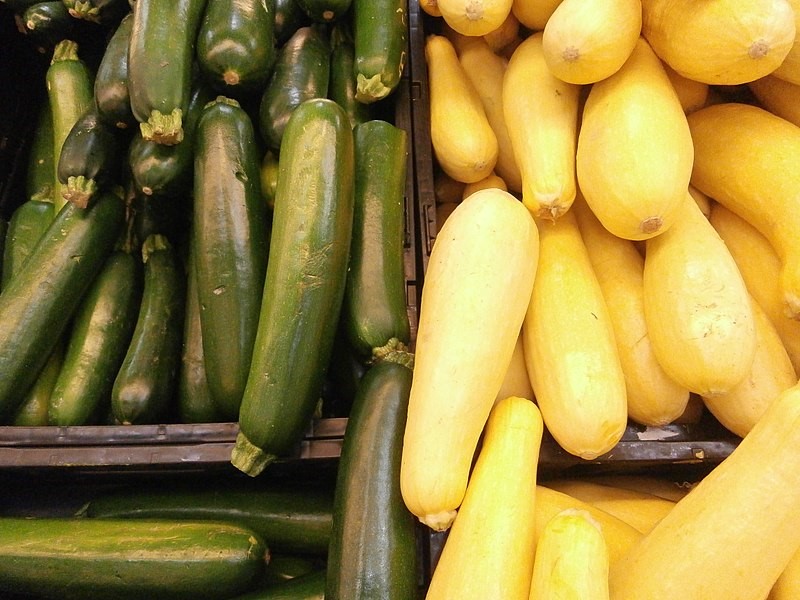
summer squashHere’s advice in a hundred-year-old cookbook on the care of vegetables:

Care of Vegetables

Summer vegetables should be cooked as soon after gathering as possible; in case they must be kept, spread on bottom of cool, dry, well-ventilated cellar, or place in ice-box. Lettuce may be best kept by sprinkling with cold water and placing in a tin pan closely covered. Wilted vegetables may be freshened by allowing to stand in cold water. Vegetables which contain sugar lose some of their sweetness by standing; corn and peas are more quickly affected than others.

Winter vegetables should be kept in a cold, dry place. Beets, carrots, turnips, potatoes, etc., should be put in barrels or piled in bins, to exclude as much air as possible. Squash should be spread, and needs careful watching; when dark spots appear, cook at once. . .

A few years ago native vegetables were alone sold; but now our markets are largely supplied from the Southern States and California, thus allowing us fresh vegetables throughout the year.

The Boston Cooking-School Cook Book (1923)

Wow – it’s amazing that already a hundred years ago that the transportation system in the U.S. was good enough to allow vegetables to routinely be shipped across the country.

If You Have No Scales in the Kitchen

Conversions - cooking ingredients
Source: Order of the Eastern Star Relief Fund Cook Book compiled by Michigan Grand Chapter (1923)

Here’s some hundred-year-old advice about the weight equivalents of various common ingredients. It’s interesting how a given volume of some foods weighs less than other foods. For example, 2 cups of granulated sugar equals a pound, but a pint (2 cups) of brown sugar equals 13 ounces.

I found this list in a cookbook compiled by an organization. It made me smile to see how the one item on the list that spilled over to a second line was out of alignment with the other items in the list. I’d probably do something like that – though maybe that’s how it’s supposed formatted.  Not sure.

Hundred-Year-Old Timeline for Canning Fruits and Vegetables

canning timeline
Source: Order of the Eastern Star Relief Fund Cook Book compiled by Michigan Grand Chapter (1923)

I don’t think that the timeline for canning fruits and vegetables has changed much across the years – though I’m guessing that this timeline is most appropriate for the northern parts of the U.S. since it is from a cookbook compiled in Michigan. The dates probably would be shifted earlier in more southern locales.


1923 Directions for Calculating Number of Calories Needed Daily

Calorie calculation chart
Source: Boston Cooking-School Cook Book (1923)

A 1923 cookbook contained directions for calculating the number of calories needed daily. It also provided an example of how to use the chart:

calorie calculation example
Source: Boston Cooking-School Cook Book (1923)

To see if the number of recommended calories has changed across the years, I used an online calorie calculator to estimate the number of calories needed by a 35 year old woman who weighs 125 pounds. The online calculator asked for height. I used 5′ 4″. I also indicated that the woman did moderate exercise 4-5 times per week. The online calculator said that she needed 1827 calories per day to maintain weight which is 423 calories less than the hundred-year-old estimate that 2250 calories were needed per day – but perhaps doing two hours per day of general housework back then required more calories than moderate exercise 4-5 times per week does today.