Did Grandma Write December Poem?

17-year-old Helena Muffly wrote exactly 100 years ago today: 

Saturday, November 30, 1912:  

It often seems the best comes last,

And so it must be with December.

As the end of the year recedes into the Past,

We see her last holiday, Remember.

Wanted to go to McEwensville tonight but Ruth won’t, so I didn’t. Made me feel sore for awhile.

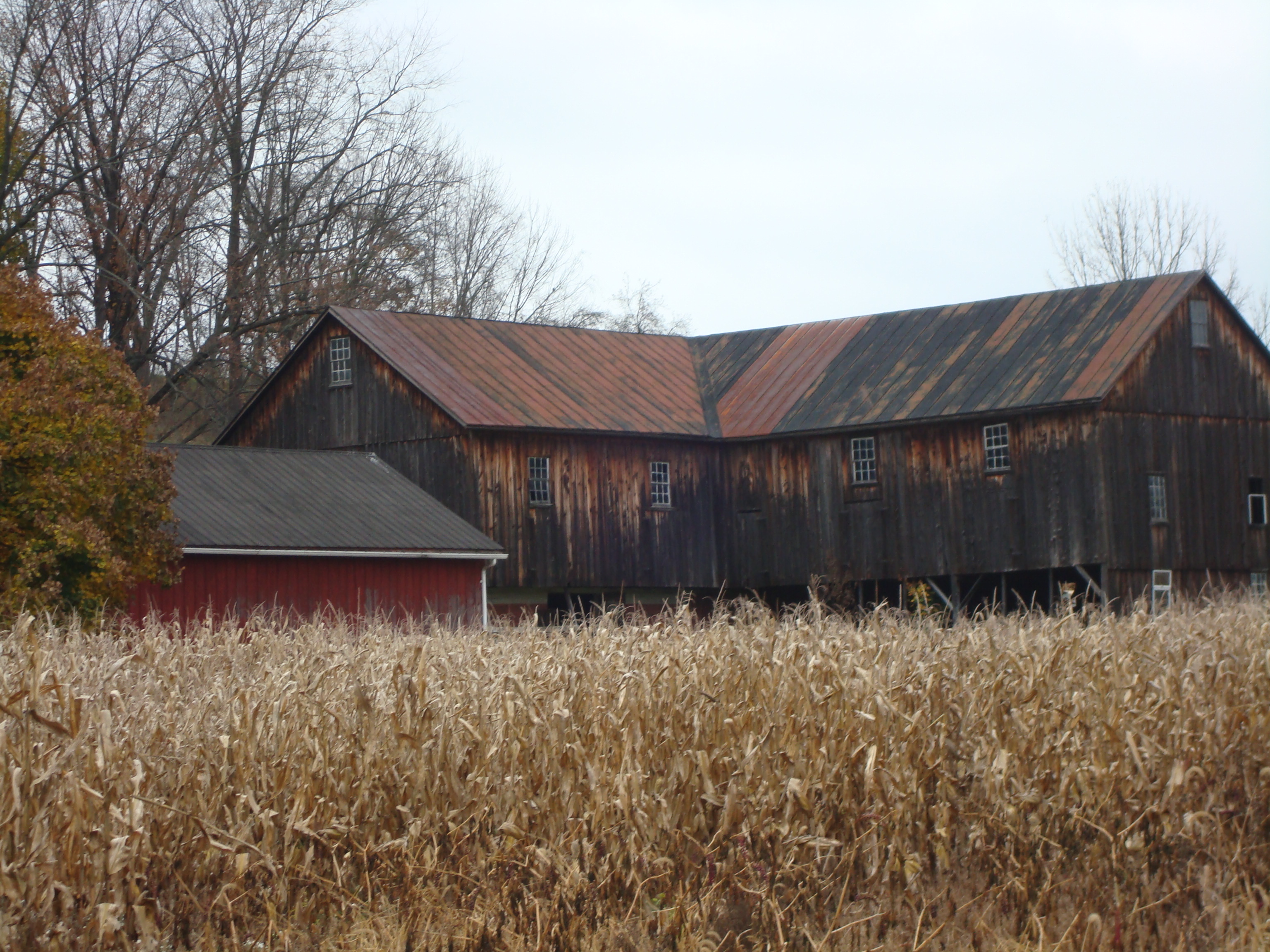
McEwensville at dusk on a December evening

Her middle-aged granddaughter’s comments 100 years later:

The first day of each month, Grandma began the diary entry with a poem.  I’m still trying to figure out if she wrote them herself or copied them from somewhere. This month it almost seems like Grandma struggled to find a word to rhyme with December—so I’m leaning towards her writing the poems herself.

Why did Grandma want to do in McEwensville on a Sunday evening? . .  to visit friends? . . .  to attend an evening church service ? (Though, based on the diary, I don’t think that there generally were evening church services.)

And, (I guess I have more questions than answers) why did Grandma  feel like she couldn’t go if her sister Ruth won’t go with her?

Angry! Lost the Debate

17-year-old Helena Muffly wrote exactly 100 years ago today: 

Friday, November 29, 1912:  Came out a licked dog in the debate. Did feel so mad at first. Felt crosser than the dickens this evening.

Helena Muffly

Her middle-aged granddaughter’s comments 100 years later:

GRANDMA, WHY DIDN’T YOU WRITE MORE?!?! Your frustration and anger are so clear, and you’ve been preparing for a week, yet you never told us what the debate was about.

Okay, that’s unfair.  I know that you were writing for yourself and couldn’t have possibly known that we’d read this a hundred years later. . .  And, I know that I can’t talk to a dead person. . . .

But, one thing that I do know is that your future husband, Raymond Swartz, was one of the other students in your small senior class. Did you debate against him?

I’m going to imagine that the debate was about women’s suffrage—and that the debate was the guys against the gals. Did the guys make “obvious” points during that debate that would horrify us today, but that you were unable to rebut to the satisfaction of the teacher and other students?

I sympathize—Sometimes I also can’t adequately explain things that are really important to me in ways that others understand.

Notes to my readers—

1. For more about Raymond and Helana’s marriage, see a previous post about their 40th wedding anniversary.

2. I don’t usually  “talk” directly to my Grandmother in these posts, but I had so many questions and it seemed like the best way to write what I was thinking.  Does it work when I talk to her? . . .or are my usual more straight-forward descriptions better?

Don’t Want to Miss School

17-year-old Helena Muffly wrote exactly 100 years ago today: 

Tuesday, November 26, 1912:  Ma’s so sick. Hope I don’t have to miss school. That would spite me something dreadful.

Her mother probably needed help with both housework and barn work

Her middle-aged granddaughter’s comments 100 years later:

I wonder what’s wrong with Grandma’s mother.  Maybe she caught whatever ailment her little brother Jimmie had the previous week. On November 19 Grandma wrote:

Poor little Jimmie got sick last night and had to miss his first day of school.

It seems like Grandma’s parents were quicker to consider having their children miss school when extra help was needed than parents today. For example, on November 18, 1912 Grandma also was concerned that she might need to miss school:

I’m half way out of something I’m worrying about since before school started and that was that I was afraid I’d have to miss school when Pa had his threshing done. They started today and well I went to school today too. So glad I don’t have to miss, that would be too bad for me.

(A positive note about Grandma’s parents–Even though Grandma periodically worried that her parents would make her miss school for one reason or another, I don’t think that she ever actually missed school because they needed her at home.)

Cork the Barbs

17-year-old Helena Muffly wrote exactly 100 years ago today: 

Saturday, November 23, 1912:  Was pretty busy today. That’s usually the way on Saturdays.

Source: Wikimedia Commons

Her middle-aged granddaughter’s comments 100 years later:

Since not much happened  a hundred y ears ago today, I’m going to go back to a post from two weeks ago—

Sometimes I post an entry—and then find additional information and think—I could have written a better post if I’d known that.

Well, that’s what happened after I posted the November 10, 1912 diary entry. Grandma had written:

. . . This afternoon I went over to see Margaret. Such a time as I had getting there a crawling under fences and so on.

I thought it seemed really odd that she crawled under fences rather than walking on  the road. But it apparently it was common a hundred years ago to take short-cuts through under fences and through fields. I recently was browsing through the December 1912 issue of Good Housekeeping, and it contained this tip to make it easier to traverse fields with barbed wire fences.

Cork the Barbs

In taking cross-country walks, provide yourself with a couple of dozen, medium-sized corks. When coming to the inevitable barbed-wire fence, protect each barb with a cork until you are safely under the fence. The corks may be returned to your pocket and used a good many times. The cork-safety device may be used to good effect on the barbed-wire fence between country neighbors. We have found it a most grateful saving of torn garments.

Whew, it sure is easier today to just hop in the car when we want to visit friends.. .

Old Women’s Suffrage Cartoon

17-year-old Helena Muffly wrote exactly 100 years ago today: 

Friday, November 22, 1912:  Am trying to get some points for a debate which comes off next Friday.

Source: Wikipedia

Her middle-aged granddaughter’s comments 100 years later:

Did Grandma enjoy debating or did she dread it?

What was the debate about? Here are a few of my guesses about possible topics:

  • Should women have the right to vote?
  • Should the sale of alcohol be prohibited?
  • Should drugs be regulated?
  • Should factories be unionized?

There’s probably lot of other things that were controversial a hundred years ago that would have made great debate topics.  Other ideas?

What is History? A Hundred Year Old Definition

17-year-old Helena Muffly wrote exactly 100 years ago today: 

Thursday, November 21, 1912: Nothing doing for today except that I got rather sad.

Her middle-aged granddaughter’s comments 100 years later:

Maybe Grandma was sad because she got her General History test back and was unhappy about the grade. The previous day, she’d written:

Had an exam in General History and although I looked over it some last evening, I got some questions that I was unable to answer correctly.

I’m still browsing through the hundred-year-old history book that I quoted yesterday.  Here’s how the book defines history:

What History Is—History is an ordered account of the growth of human societies. It treats principally of political events, and must  tell also about many other things which have influenced the progress of nations. Religion, science, art, literature, education and commerce are important in the history of every country.

Outlines of General History (1909) by V.A. Renouf

I wonder how a historian today would define history. . . and how the modern definition would differ (or not differ) from the hundred-year-old definition.

Little Brother Sick

17-year-old Helena Muffly wrote exactly 100 years ago today: 

Tuesday, November 19, 1912:  Poor little Jimmie got sick last night and had to miss his first day of school.

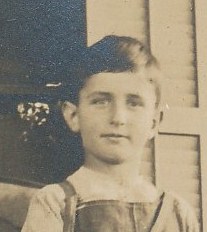
Jimmie Muffly

Her middle-aged granddaughter’s comments 100 years later:

Poor Jimmie— He was Grandma’s 7-year-old brother. It’s no fun to be sick—especially when you’re little. I wonder what was wrong. It sounds like whatever it was came on suddenly.  I’m leaning towards him having the stomach flu.

And, poor Grandma’s mother—

Grandma had written in her diary the previous day:

. . . I was afraid I’d have to miss school when Pa had his threshing done. They started today . . .

November 18, 1912

This suggest that the threshers were still there. Grandma’s mother was probably trying to prepare food and serve it to a threshing crew—while also taking care of a sick (vomiting?)  child.