18-year-old Helena Muffly wrote exactly 100 years ago today:
Tuesday, April 29, 1913: Ruth and I went up to Oakes this evening. Made a trip up to McEwensville this afternoon.
Her middle-aged granddaughter’s comments 100 years later:
Grandma and her sister Ruth probably had a fun evening with friends. The Oakes family lived on a nearby farm and had several children close in age to Grandma and her sister Ruth. Rachel Oakes is often mentioned in the diary. Rachel had a least two brothers—James and Alvin.
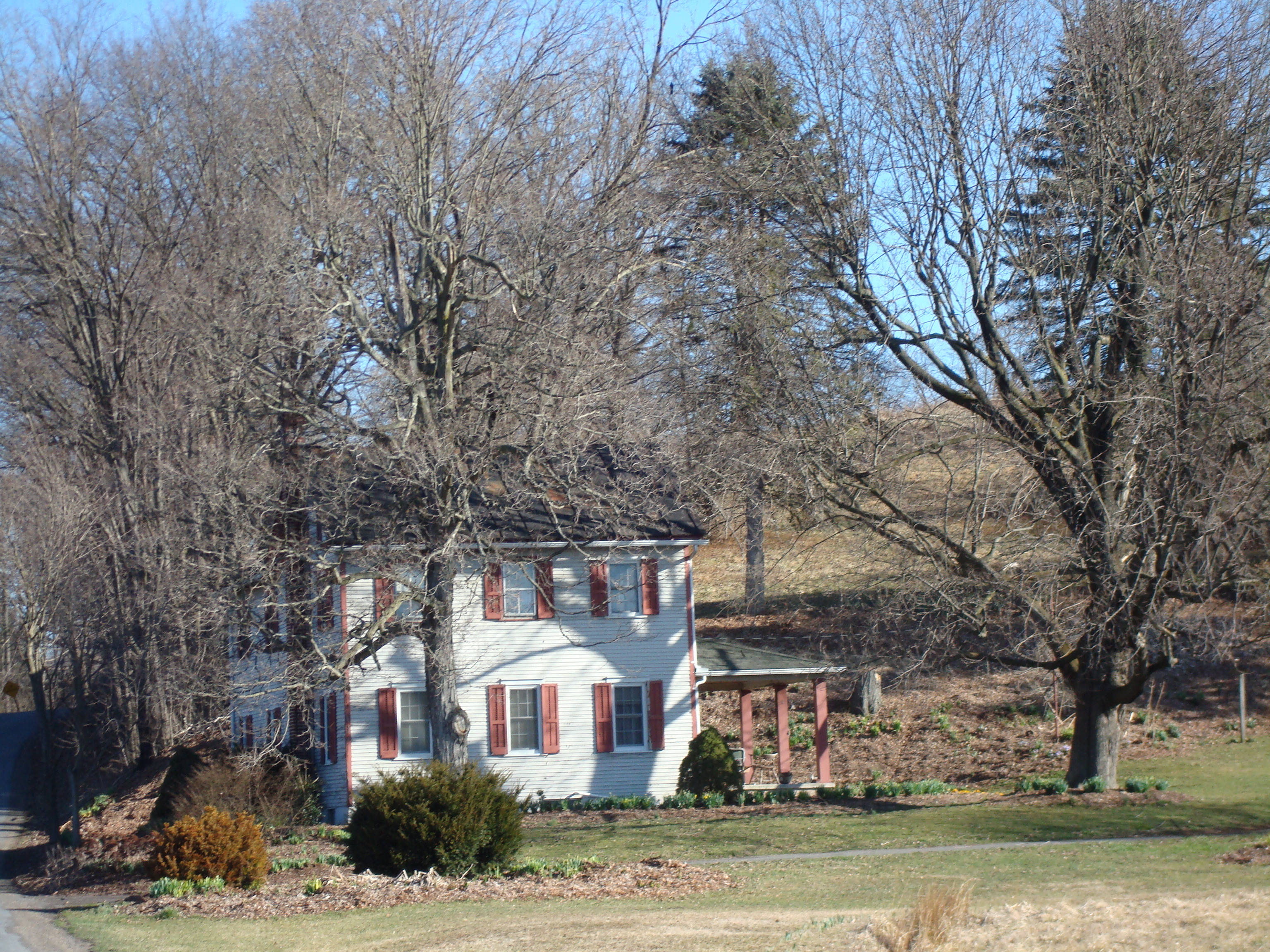
To visit the Oakes, Grandma and her sister would have taken the road that went past their home–and gone up the hill in the opposite direction from the way they’d go if heading into McEwensville.They would have continued down the road past this farm.And, then they would have turned down a lane to this farm where Rachel Oakes and her siblings lived.
18-year-old Helena Muffly wrote exactly 100 years ago today:
Monday, April 28, 1913: I hardly knew what to do today. I guess I’ll have to blame it on the rain.
For the complete data sheet for Williamsport click on April 1913.
Her middle-aged granddaughter’s comments 100 years later:
April showers bring May flowers, but Grandma makes the weather sound dreadful. This was the second day in the row that she mentioned rain.
The previous day, she wrote,
Today is a very rainy day.
I decided to check the April, 1913 weather station report for the nearby town of Williamsport. Williamsport is about 20 miles from McEwensville and on the other side of a mountain—so I’m sure that the weather was somewhat different—but it still provides a sense of what it was like.
On both the 27th and 28th there were thunderstorms—with 0.24 inch of rain on the 27th and 0.47 inch of rain on the 28th. It looks like the rainy weather continued into the following day (and got worse)—with 0.66 inches of rain.
The temperature also fell like a rock across the three days—with a high of 80° on the 27th, a high of 67° on the 28th, and 54° on the 29th.
For details about how to find original weather station data on the National Climatic Data Center website, see a previous post:
18-year-old Helena Muffly wrote exactly 100 years ago today:
Sunday, April 27, 1913: Went to Sunday School this morning. Tweet came along home with me. Today was a very rainy day.
Her middle-aged granddaughter’s comments 100 years later:
I know the old saying that April showers bring May flowers, but rainy days can be so dreary. Spending the day with a friend can turn a bleak day into a bright one.
Tweet was the nickname of Helen Wesner. She was a friend of Grandma’s. Anyone called Tweet had to have been a bundle of fun ideas and energy; and I can picture them chatting and making lots of plans for upcoming sunnier days.
—–
One thing I love about this blog is how readers’ comments help me see things that I totally missed. For example, Grandma wrote three days prior to this entry that, “This morning I got a dress by parcel post.”
When I wrote that post I focused on the dress—the graduation gift. But, Boodeeadda wondered how much it cost to mail a package back them.
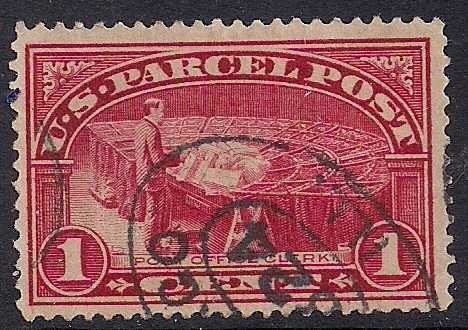
I did a little research and I’m still not sure how much it cost to send a package, but I discovered that parcel post was brand new in the US in 1913.
Parcel post service began on January 1, 1913 and was an instant success. During the first five days of service, 1,594 post offices reported handling over 4 million parcel post packages. The effect on the national economy was electric. Marketing through parcel post gave rise to great mail-order businesses. . . .
Rural Americans were able to purchase foodstuffs, medicines, dry goods and other commodities not readily available to them previously. Even more conveniently, the goods were mailed directly to their homes. In addition, farmers were able to ship eggs and other produce directly to the consumer, saving both time and money.. . .
Private express companies and rural retail merchants fought tenaciously against parcel post but rural residents comprised 54 percent of the country’s population and they were equally vociferous. . . .
18-year-old Helena Muffly wrote exactly 100 years ago today:
Saturday, April 26, 1913: Nothing much doing.
Source: Wikipedia
Her middle-aged granddaughter’s comments 100 years later:
Nothing much going on in McEwensville. . .
I know that Grandma will live her entire life within a 5 mile radius of the house she lived in when she wrote this diary.
But did she ever dream of living in a city? . . .the excitement. . . the energy. . . the skyscrapers!
A hundred-years-ago, the Woolworth Building in New York City had its grand opening ceremony. According to history.com:
As part of a lavish opening ceremony on April 24, 1913, President Woodrow Wilson pressed a button in the White House that lit up the interior floors and exterior floodlights (a new innovation at the tine) of the Woolworth Building, so that the entire façade was illuminated.
It was the tallest building in the world (The Eiffel Tower was higher—but it was considered a free standing structure), and would remain the tallest until 1930 when the Empire State Building was completed.
An aside—Whatever happened to Woolworth’s stores? I used to love to shop at the Woolworth’s Store in Williamsport when I was a kid—but that’s another story.
18-year-old Helena Muffly wrote exactly 100 years ago today:
Thursday, April 24, 1913: I had no idea that I would be so tired. I guess last night was not too much for me. Went up to McEwensville this morning, but not to go to school, for that indeed is past for me. I got home just in time to see the girls off on the train. My presents still seem to be pouring in. This morning I got a dress by parcel post.
18-year-old Helena Muffly wrote exactly 100 years ago today:
Tuesday, April 22, 1913: Just one more day and then my school days will be ended. I believe I’ll feel rather sorry when they are all past. I hope it will be nice tomorrow and everything goes off all right in the evening.
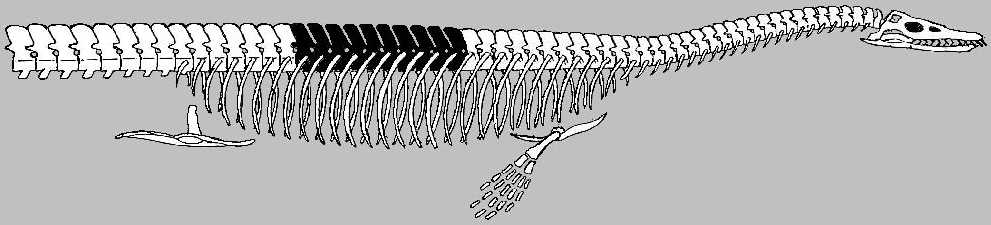
Cope’s dinosaur which March claimed had the head on the wrong end. (Source: Wikipedia)
Her middle-aged granddaughter’s comments 100 years later:
One more day until graduation! The exhilaration Grandma felt the previous week about the end of school now seems tempered with the realization that those days were behind her and that there were things about school that she’d miss.
Grandma sounded a bit nervous about the graduation ceremony. She probably hoped that her speech on The Relics of the Earth’s Past would go well.
Yesterday’s post explored her speech topic. Vanbraman wrote a comment, and suggested that it might have been about the Bone Wars or been inspired by a book published in 1912 by Sir Arthur Conan Doyle called The Lost World.
I had never heard of either the Bone Wars or the book, so I did a little research.
A hundred years ago there was an incredible amount of interest in dinosaurs and dinosaur bones.
The Bone Wars refer to a period in the late 1800s when there were several major expeditions that searched for dinosaur bones. There was a rivalry between two paleontologists, Orthniel Charles Marsh and Edward Drinker Cope, to discover additional bones. They both were very secretive, and accused the other of stealing bones and exploration sites. Each claimed that the other was not a credible scientist. For example, Marsh claimed that Cope put the head on the wrong end of a dinosaur. However, the field as a whole benefited from their many discoveries and the feud increased the interest of the public in dinosaurs.
According to Wikipedia, The Lost World by Sir Arthur Conan Doyle is a superb piece of science fiction about an expedition to the rain forests of Brazil in search of living dinosaurs. The book was republished in 2012 in honor of the hundredth anniversary of its original publication.
As happens so often, I’m ending up with more questions than answers. Was Grandma’s graduation speech about evolution (pro? . . or . . con?) like I thought yesterday. . . or was it about paleontology and dinosaurs? . . .. or something else?
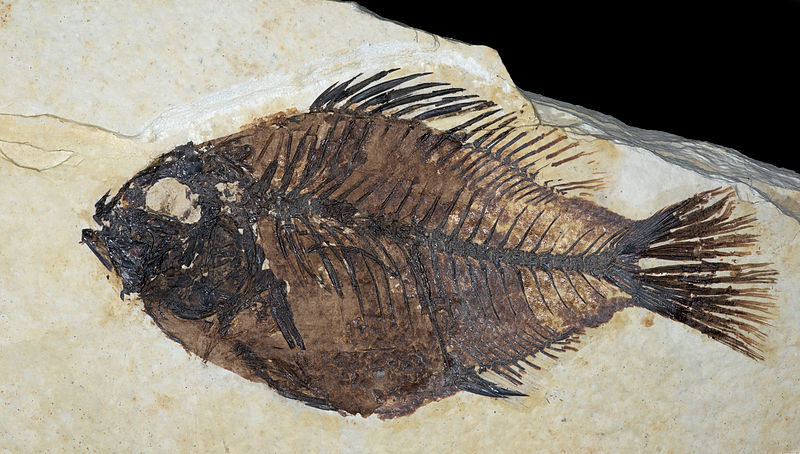
Was the speech about fossils? . . . dinosaurs? . . . evolution? Was it controversial?
Grandma graduated well after the publication of the Origin of the Species (1859), but well before the Scopes Trial (1925). If the speech was about evolution, how did she frame it?