17-year-old Helena Muffly wrote exactly 100 years ago today:
Monday, November 25, 1912: Today, don’t remember.
Her middle-aged granddaughter’s comments 100 years later:
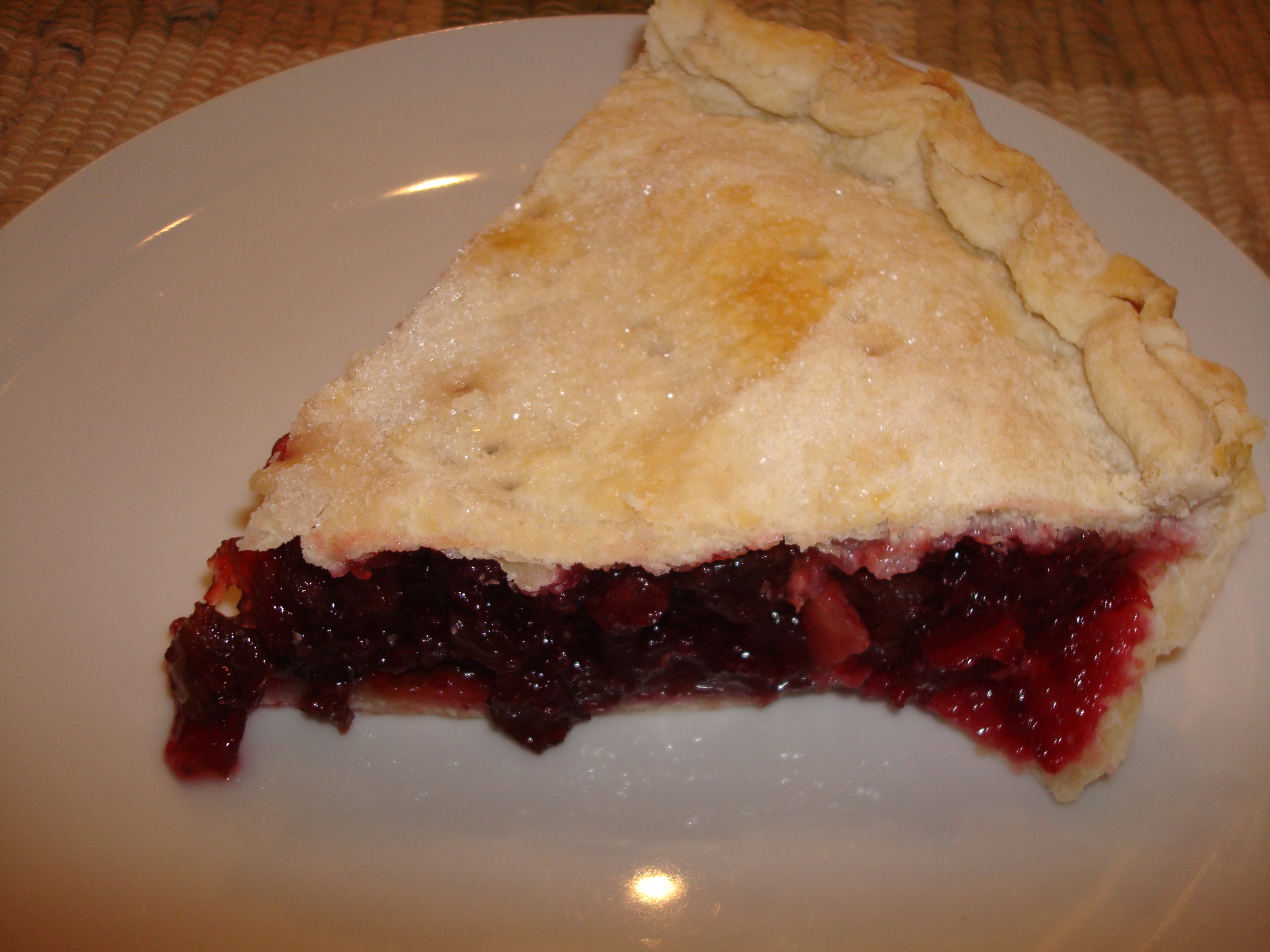
Sounds like a slow day for Grandma. Since she didn’t write much I’ll share a hundred-old-recipe for Mock Cherry Pie that I made for Thanksgiving.
The pie is made with cranberries and raisins. It’s enticingly tart–yet sweet–and a nice addition to my repertoire of Thanksgiving pies; but it tastes (surprise, surprise) more like a cranberry raisin pie than a cherry pie.
Mock Cherry Pie
Pick over and wash three cupfuls of cranberries, and cook in half a cupful of water until broken. Add one cupful of sugar and one cupful of raisins. Bake between crusts in 9-inch pan.
Adapted from recipe in Good Housekeeping (November, 1912)
17-year-old Helena Muffly wrote exactly 100 years ago today:
Wednesday, November 13, 1912: Nothing of any account seems to be happening around here, so I can’t write much.
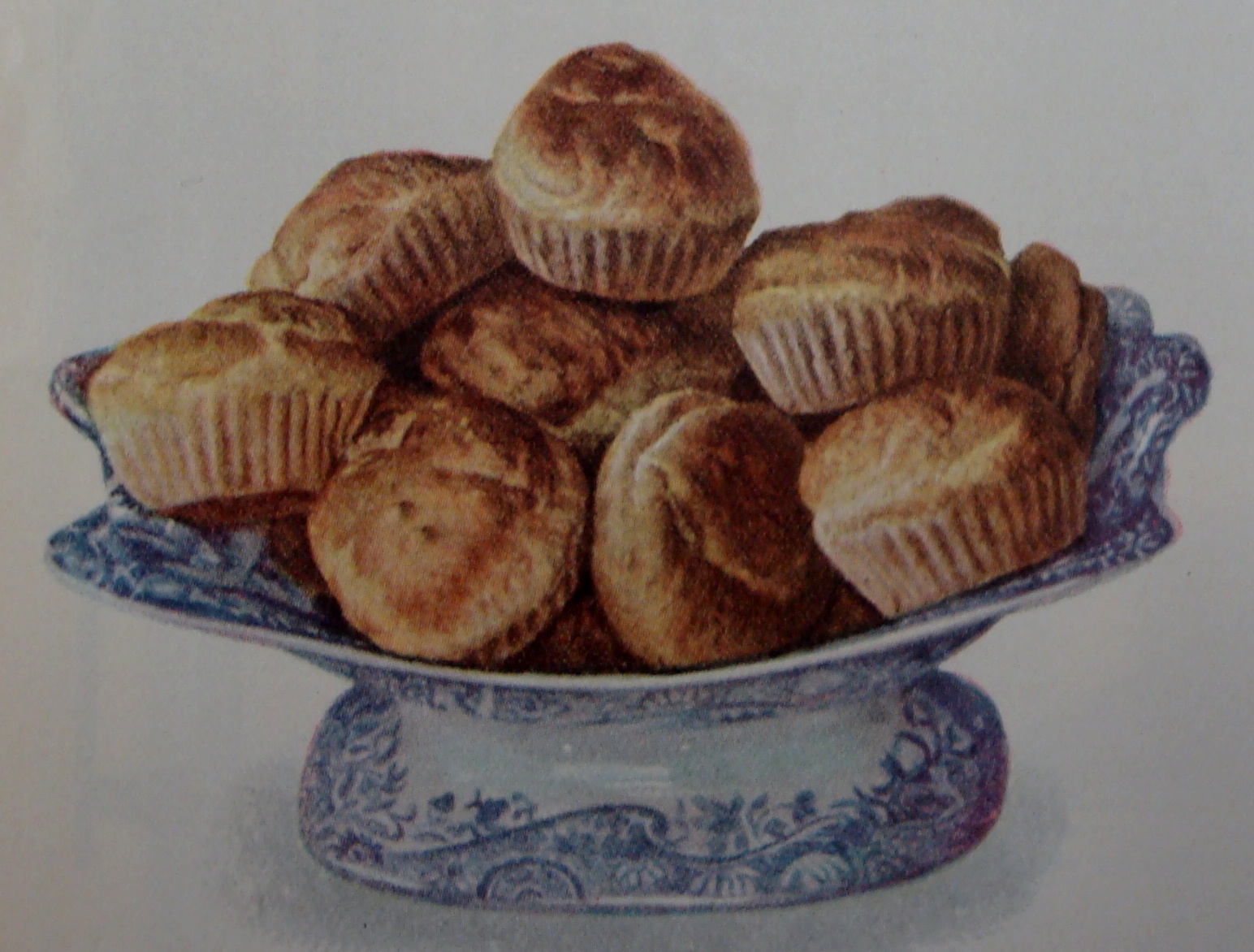
Here are the squash muffins I made.
Her middle-aged granddaughter’s comments 100 years later:
Another slow day for Grandma—the total opposite from my life.
I’m bustling around getting ready for Thanksgiving—cleaning the house and planning the menu for the big day.
I recently flipped through the November, 1912 issue of Ladies Home Journal looking for recipes that might be good this Thanksgiving.
Here’s a keeper I found for Squash Muffins. I tested them yesterday—and plan to make them again for Thanksgiving.
They’re delicious served warm with butter—and have a lovely, delicate taste. However, they are less sweet and heavier than many modern muffins, so I had to set aside my preconceived notions and just enjoy their old-fashioned goodness.
And, here is the picture of Squash Muffins in the November, 1912 issue of Ladies Home Journal.
Here’s the recipe—slightly adapted for modern stoves and ingredients.
Squash Muffins
Preheat oven to 400 degrees. Put two-thirds of a cupful of cooked squash into a bowl, then add a quarter of a cupful of sugar, two well-beaten eggs, two cupfuls of flour, half a teaspoonful of salt, three teaspoonfuls of baking powder and three tablespoonsfuls of melted butter. Mix well and bake in well-greased muffin pans for approximately twenty minutes. If these muffins are intended for a luncheon or a tea, a quarter of a teaspoonful of powdered ginger may be added.
Makes approximately 18 muffins
I added ginger—even though we ate the muffins at dinner.
I used hubbard squash, but butternut or other winter squash (or canned/frozen squash) would also work. I peeled and cubed about 1 1/2 cups of squash and boiled in water in a pan on the stove for about 15 minutes. I then drained the squash, mashed and measured out two-thirds of a cup to use in the recipe.
17-year-old Helena Muffly wrote exactly 100 years ago today:
Sunday, November 11, 1912: Am at a loss at what to write.
Her middle-aged granddaughter’s comments 100 years later:
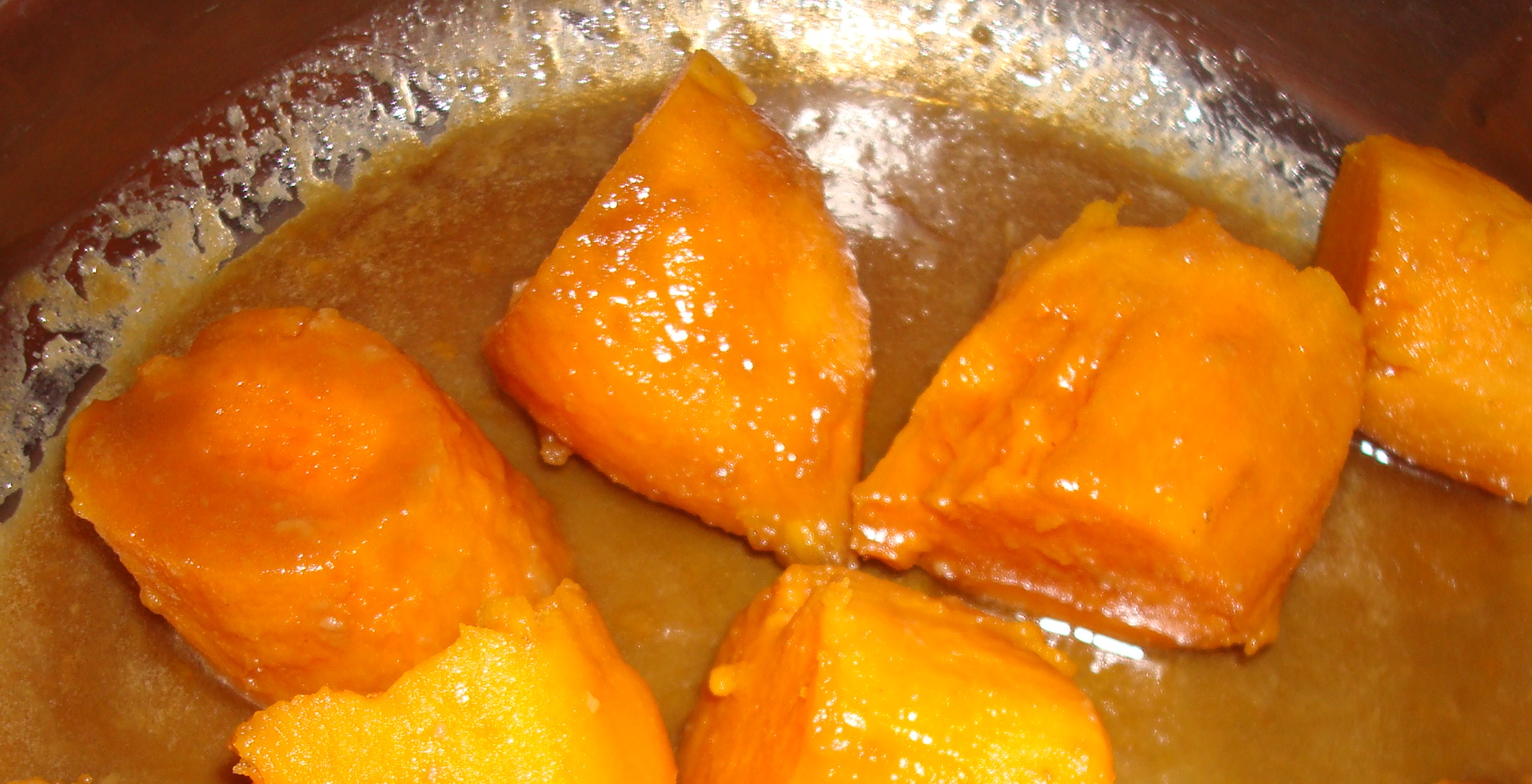
Since Grandma was at a loss as to what to write, I’ll share a favorite old recipe for Candied Sweet Potatoes. I always make this recipe for Thanksgiving. It’s easy and delicious.
Candied Sweet Potatoes
1 pound sweet potatoes (about 3 medium)
2 tablespoons butter
1/4 cup brown sugar (packed)
1 tablespoon milk
Put potatoes in large sauce pan. Add enough water to cover potatoes. Cover and heat to boiling; cook 30 to 35 minutes or until tender (i.e., can be easily poked with a fork). Drain. Slip off skins. Leave potatoes whole or cut into pieces.*
In a skillet, melt butter. Add brown sugar and milk; cook over medium heat; stirring constantly, until smooth and bubbly. Reduce heat to low. Add sweet potatoes, roll gently in syrup until glazed and heated through. Can let sit in pan on low heat for a few minutes while glaze thickens to desired consistency.
*Alternate directions to cook the sweet potatoes: Peel potatoes and cut into serving-sized pieces prior to cook cooking. Bring water to boiling; cook for 20 to 25 minutes or until tender.
17-year-old Helena Muffly wrote exactly 100 years ago today:
Saturday, November 2, 1912: They made apple butter this morning. I had to get the dinner and then had to be teased about it in the bargain. Went to Watsontown this afternoon and stayed longer than I meant to.
Her middle-aged granddaughter’s comments 100 years later:
Apple butter sounds delicious—even if Grandma’s dinner wasn’t.
How did the Muffly’s eat the apple butter?. . .on bread? . . . or with smearcase?
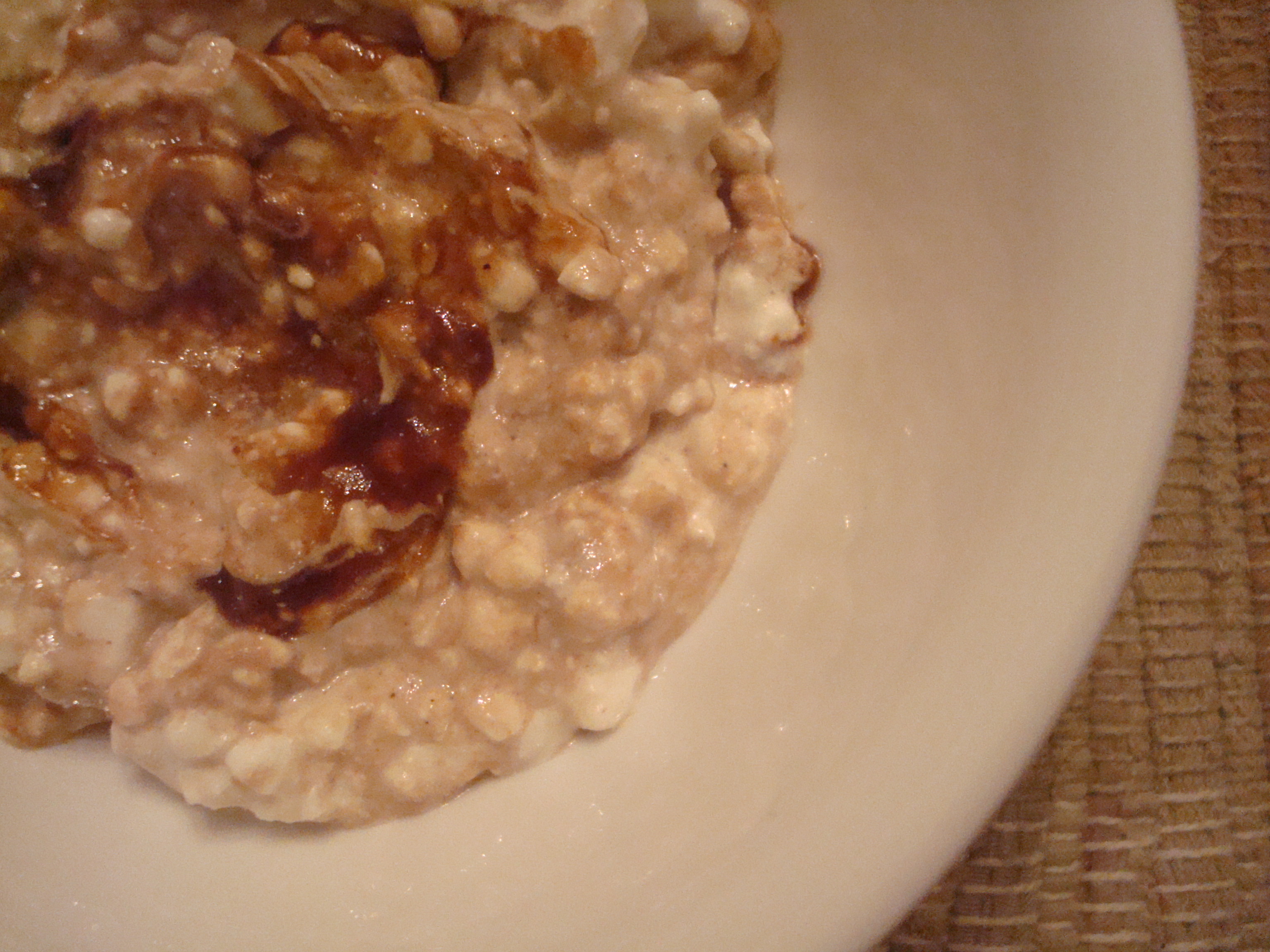
In Pennsylvania, cottage cheese is often called by its Pennsylvania Dutch name—smearcase. And, the best way to eat smearcase is with a little apple butter stirred into it. It might sound (and look) odd—but it’s really, really good. The rich, slightly sweet taste of the apple butter nicely complements the cottage cheese.
17-year-old Helena Muffly wrote exactly 100 years ago today:
Tuesday, October 15, 1912: Ditto.
Her middle-aged granddaughter’s comments 100 years later:
Another slow day a hundred years ago. . . .
This Fall, I’ve enjoyed making old-time apple recipes. Here’s another one that I really like.
Open-faced Apple Pie
Pastry for a 1-crust pie
3/4 cup sugar
1/4 cup flour
1 teaspoon cinnamon
Approximately 5-6 medium Macintosh apples*
1 tablespoon milk
Preheat oven to 425 degrees F. Line 9-inch pie pan with the pastry.
Put the sugar, flour, and cinnamon into a medium bowl; stir together. Peel, core, and quarter the apples. Put the quartered apples into the bowl with the sugar mixture; stir gently to coat apples. Arrange the apples in the pie pan by placing the apples closely together on their sides. Small pieces of apples can be used to fill any gaps between the apple quarters. Add the milk to the pie by pouring it between any two of the apples.
Cook the pie at 425 for 10 minutes. Then reduce the heat to 350. Cook approximately 25 additional minutes or until the apples are tender when poked with a fork.
*Other apple varieties that keep their shape when cooked can be substituted for the Macintosh apples.
In case you have lots of apples like I do, here are links to some previously posted apple recipes.
17-year-old Helena Muffly wrote exactly 100 years ago today:
Tuesday, October 8, 1912: Don’t have anything to write.
Her middle-aged granddaughter’s comments 100 years later:
Since Grandma didn’t have much to write a hundred years ago today, I’ll share an old recipe for stewed apples with you. There easy to make, and I make this recipe several times each fall.
Like many old recipes, it doesn’t have exact amounts for ingredients—but it always seems to turn out just fine.
Stewed Apples
Peel apples, remove cores, and cut into quarters. Place them in a saucepan with a very little water. Add sugar and cinnamon to taste. If desired, a few raisins can also be added. Bring to a boil and then reduce heat. Continue to simmer gently until the apples are soft (approximately 10-15 minutes). May be served either hot or cold.
17-year-old Helena Muffly wrote exactly 100 years ago today:
Friday, September 20, 1912: Don’t have much for today.
Her middle-aged granddaughter’s comments 100 years later:
I continue to enjoy making foods that were popular in central Pennsylvania in the early 20th century. Since Grandma didn’t write much I’ll tell you about my latest cooking endeavor.
Pickled foods were incredibly popular a hundred years ago.
I decided to make old-fashioned watermelon pickles—and they looked lovely and tasted great.
It was a three-day process, but well worth the effort.
Old Fashioned Watermelon Pickles
4-5 quarts watermelon rind
Water
Salt
2 cups apple cider vinegar
7 cups sugar
1 tablespoon whole cloves
3 sticks cinnamon
1 inch cube of fresh ginger
Select watermelon with a thick, firm rind. Cut off the outer green skin, and remove the red watermelon flesh, leaving a very thin layer of pink. Cut into 1-inch squares. Place in a 2 gallon glass bowl or crock. (I used 2 smaller bowls).
Cover with a salt water solution (2 tablespoons salt to 4 quarts water). Cover and let stand for 24 hours at room temperature.
After 24 hours, drain and rinse with cold water. Cover with ice water. Let stand for 1 hour, then drain.
Place the rind in a large pan, and cover with boiling water. Bring to a boil; then reduce heat and simmer for 10 minutes. Drain.
Put spices in a cheesecloth bag. Combine vinegar, sugar, and spices in large pan. Bring to a boil. Add rind. Simmer until rind is translucent.
Put rind and syrup into large glass bowl or crock. Cover; and let stand for 24 hours at room temperature.
Remove spice bag. Drain off syrup, put into a pan, and heat to boiling.
Pack the rind into hot pint jars; cover with the hot syrup, fill to 1/4 inch of top. Wipe jar rim and put lid on.