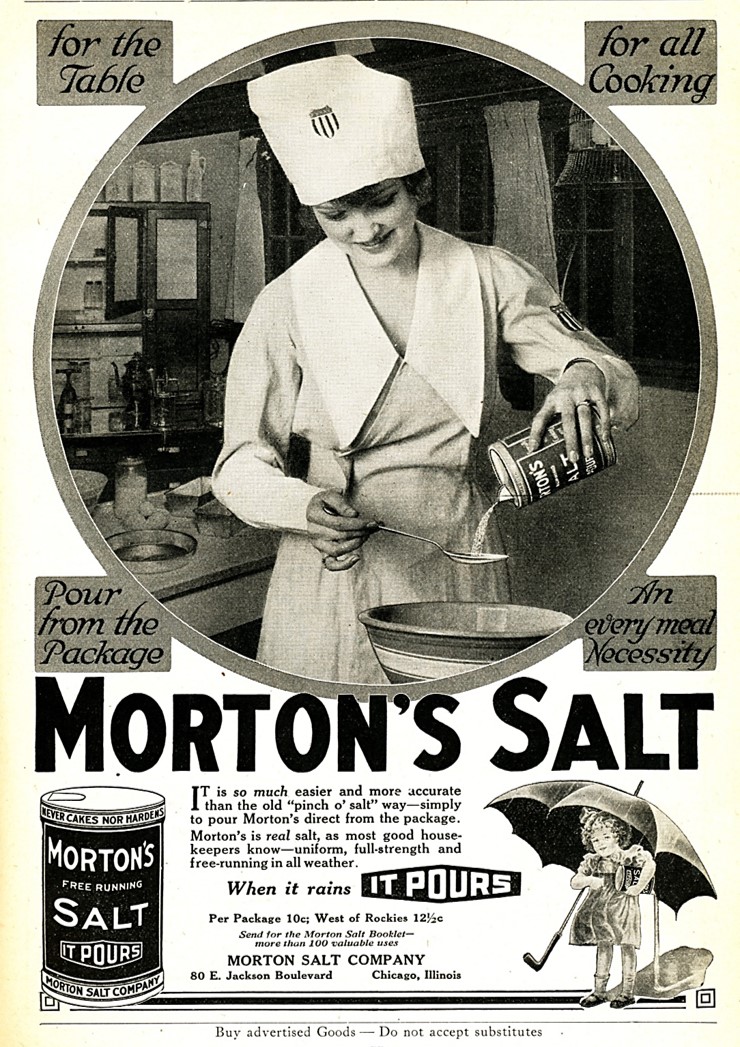
The advertising slogan “When it rains it pours” has been around for a least 100 years.
The advertising slogan “When it rains it pours” has been around for a least 100 years.

I always find it challenging to interpret hundred-year-old bread recipes. The old recipes generally call for cakes of yeast, and I’m never quite sure how that translates when using modern dry yeasts.
So I was amazed when I saw a hundred-year-old advertisement for Fleischmann’s Yeast in the back of a 1917 cookbook. Was Fleischmann’s Yeast a cake back then? Perhaps the product has been refined and modernized across the years, but the same company has been around for at least a century.
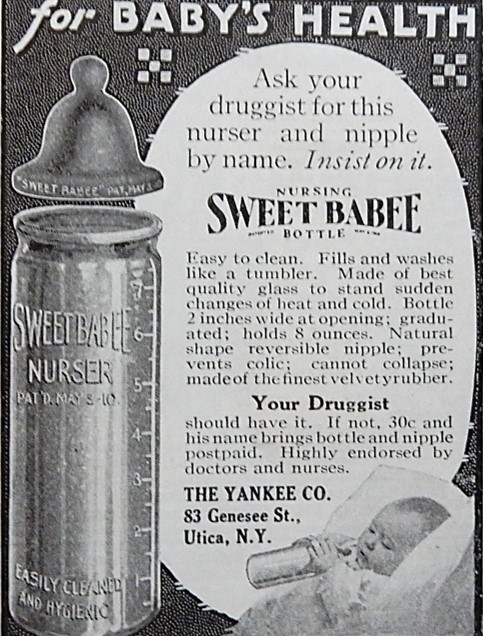
I learn so much from old advertisements. For example, commercially produced baby bottles have been around for more than a hundred years.
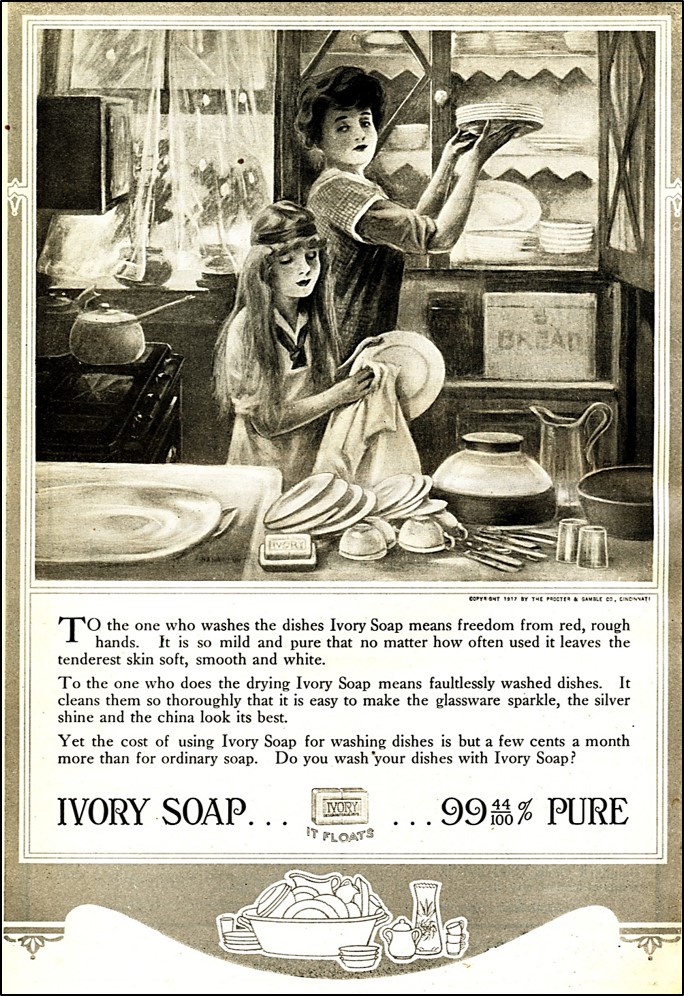
Based on this hundred-year-old advertisement, it looks like people used bar soap to wash dishes. According to Hunker, dishwashing detergents were invented during World War I and only came into common use during the mid-1900’s:
Soap was used for cleaning until 1916, when there was a shortage of fats needed to produce it during World War I. Because there was still a need for a cleaning product, synthetic versions were invented, which are now known as detergents.
There was also a movement towards using detergents because there was a need for a cleaning agent that did not leave behind a residue as soap did, especially on fabric. Upon their appearance, detergents became common products for cleaning dishes and clothing. While many people still used regular soap, by 1953 most households were using detergents.
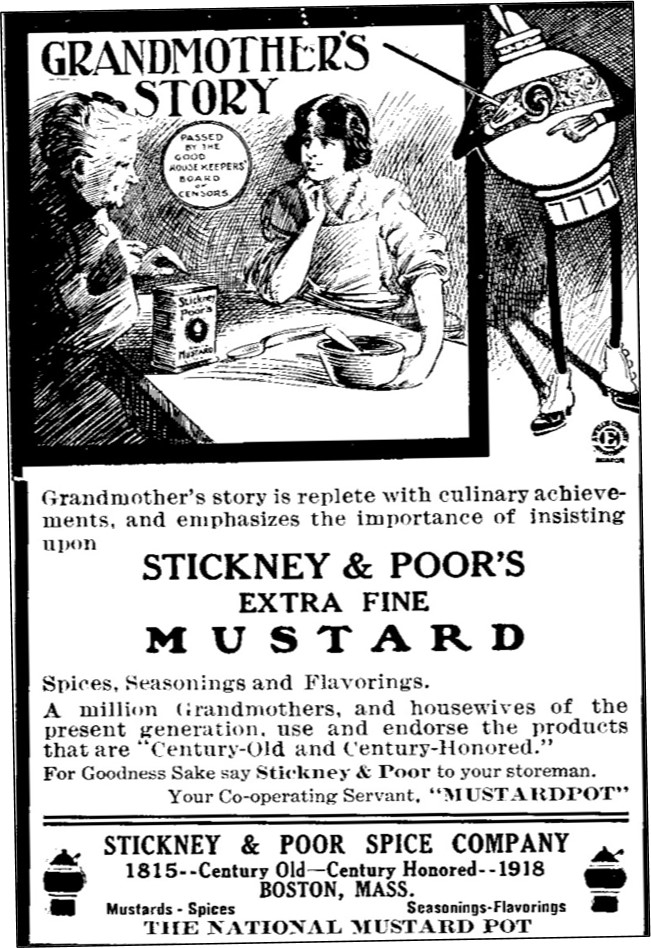
Did you know that branded dry mustard has existed for at least two centuries? I didn’t until I saw this advertisement for Stickney & Poor’s Mustard in an 1918 issue of American Cookery which said that the brand had already been around for a century. Who would have guessed?
I’m befuddled by ad’s graphics and text. What the heck is the thing that looks like a Christmas ornament on ice skates?
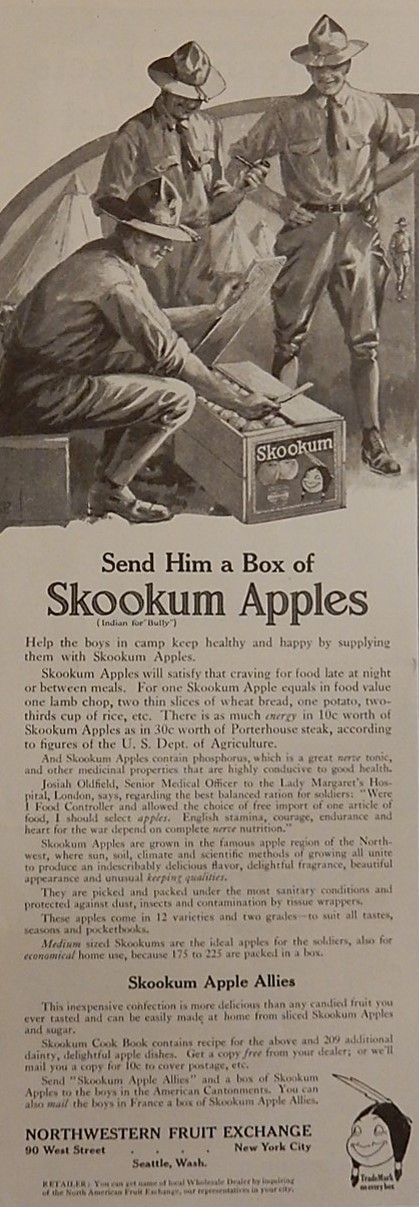
This 1918 advertisement for Skookum Apples intrigues me on many levels. I was awed at how good transportation systems must have been in 1918. Until I saw this ad, I had no clue that family and friends could ship boxes of apples to soldiers in France during WWI. Apples from Washington and other northwestern states apparently were transported across the U.S. on train, and then put of ships for Europe – and then somehow shipped to wherever the troops were.
At the same time, I was dismayed by some of the language and images in the ad.
And, I was surprised to see that “Skookum” meant “bully.” Who would have thought that the word “bully” apparently had positive connotations a hundred years ago?

MERRY CHRISTMAS!
This is the third year that I’ve posted Baker’s Cocoa advertisements that were on the back cover of the hundred-year-old December issue of Good Housekeeping magazine. The 1915 and 1916 advertisements were much warmer and fuzzier than the 1917 one. By 1917, World War I was raging, and the advertisement reflected the nation’s focus on the soldiers who were fighting in the war.
