A hundred years ago (and throughout much of the 20th century) promotional cookbooks distributed by food companies were very popular. Pre-internet and social media, companies frequently used them to publicize their products.
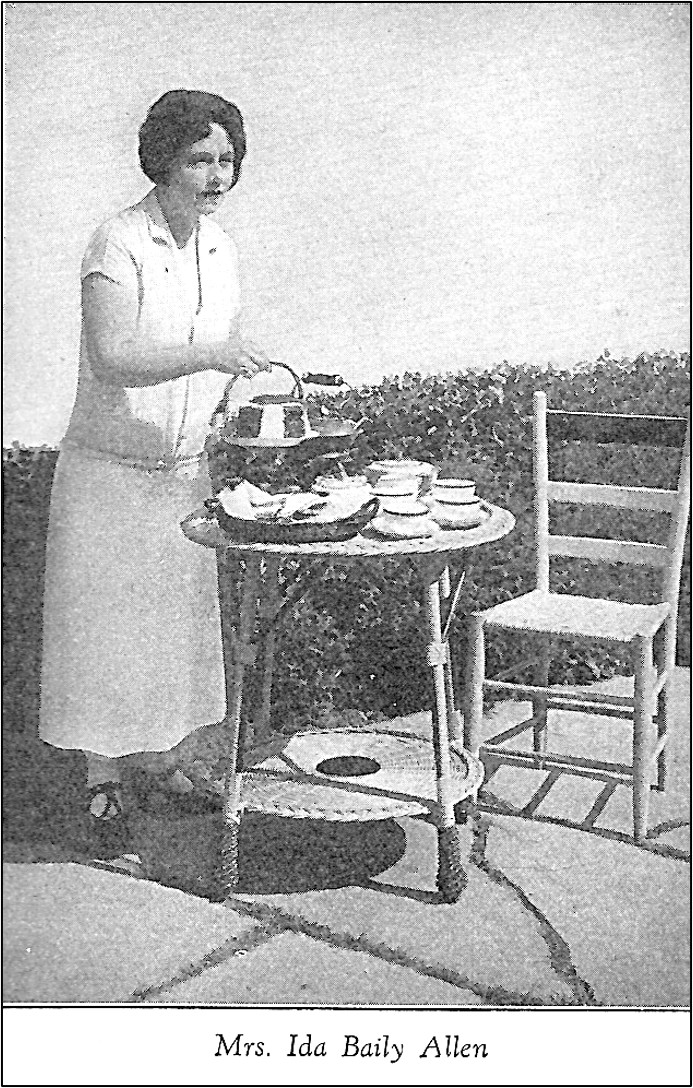
In 1926, the Corn Products Refining Company published a cookbook by Ida Bailey Allen called The Modern Method of Preparing Delightful Foods. The cookbook contained recipes that used Karo Corn Syrup, Mazola Corn Oil, Argo Cornstarch and other products made by the company. At the time, Mrs. Allen was a popular cookbook author. She later became a radio cooking celebrity, as well as an editor of Good Housekeeping magazine.
I wanted to make some bar cookies for a pot luck picnic, so decided to try a recipe in the book for Butterscotch Squares.
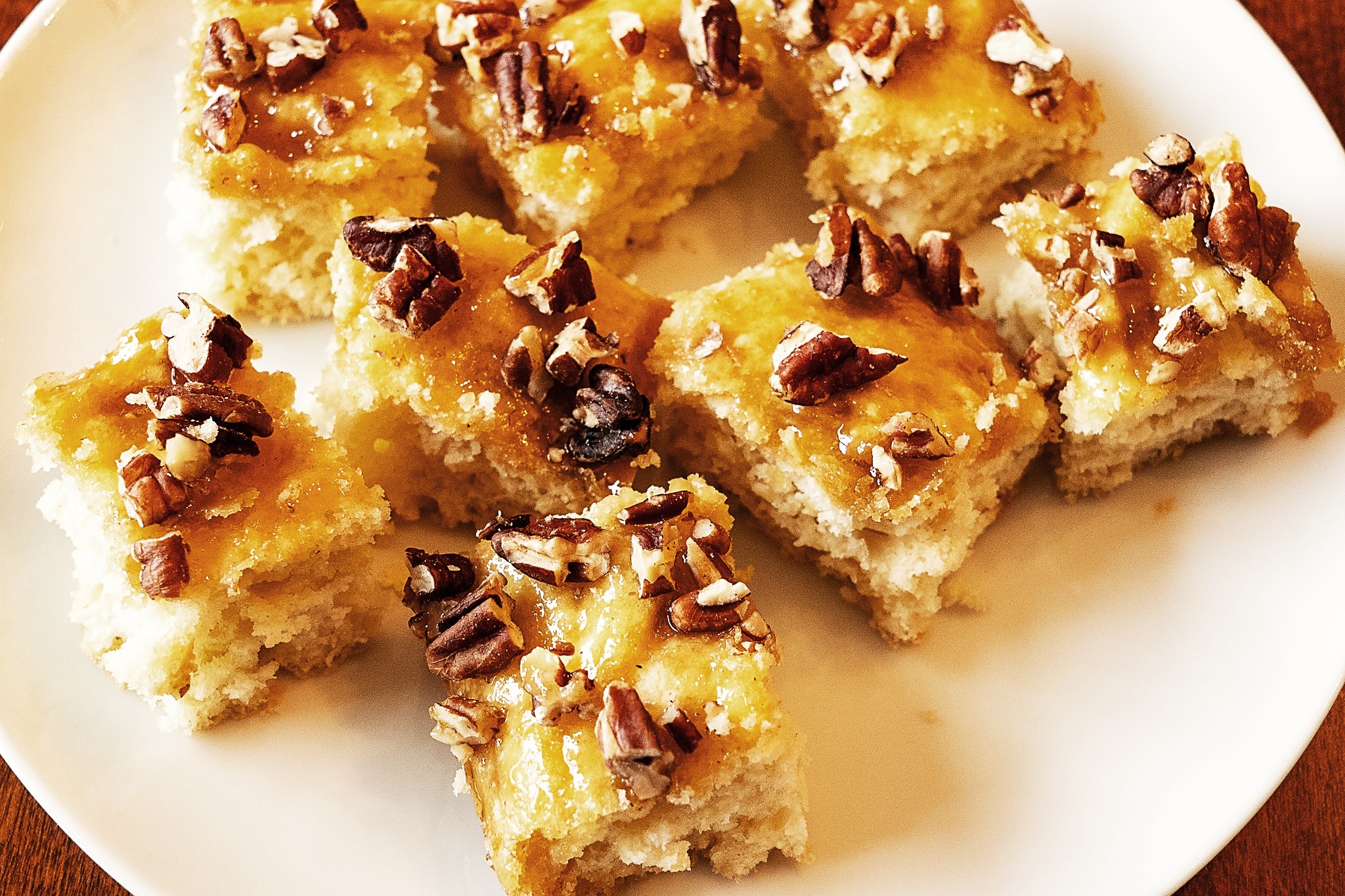
I have mixed opinions about this recipe. If I set aside my preconceived notions about what these squares would be like (dense bars with a rich butterscotch flavor), and just enjoyed the squares I ended up with, I’d say that the Butterscotch Squares were tasty.
However, I couldn’t detect any hint of butterscotch when I nibbled on the squares, so I feel like I need to lower my rating of them. Also, the base of the Butterscotch Squares had a cake-like texture, rather than the typical more substantive, dense, moist texture of bar cookies. This base was topped with a thin layer of corn syrup and chopped nuts. (I used pecans.) The only sweetener that the recipe called for was the corn syrup in the topping, which resulted in the squares not being very sweet.
Here is the original recipe:
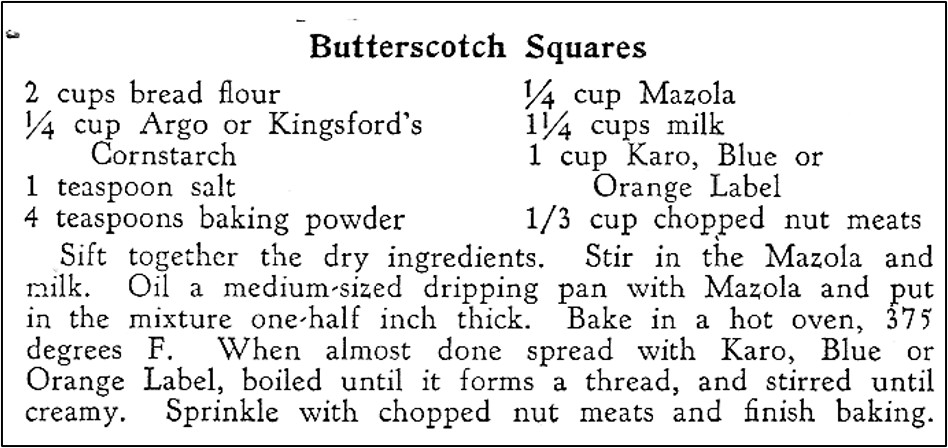
The recipe says that the dough should be put in a “medium-sized dripping pan.” I’m not sure what that is or how large it is, so I used a 9″ X 13″ rectangular baking pan. I didn’t measure the thickness of the dough, and it may have been slightly thicker than 1/2 inch. If I had used a pan which was a little larger, the texture may have been a little less cake-like.
The recipe calls for 4 teaspoons baking powder. This seems like a lot of baking powder, so I used 2 teaspoons baking powder.
I used olive oil instead of the Mazola Corn Oil, but any vegetable oil would work in this recipe.
Here’s the recipe updated for modern cooks:
Butterscotch Squares
2 cups bread flour
1/4 cup cornstarch
1 teaspoon salt
2 teaspoons baking powder
1/4 cup olive oil or other vegetable oil
1 1/4 cups milk
1 cup dark or light corn syrup (Karo, etc.) (I used dark corn syrup.)
1/3 cup chopped nuts (I used pecans.)
Step 1. Preheat oven to 375° F.
Step 2. Sift together flour, cornstarch, salt, and baking powder.
Step 3. Add olive/vegetable oil and milk; stir until combined.
Step 4. Grease a rectangular 9″ X 13″ baking pan, and put the mixture in the pan. (A pan that is a little larger could be substituted for the baking pan, if a less fluffy bar is desired.)
Step 5. Place in oven and bake.
Step 6. In the meantime, put the corn syrup in a sauce pan, and bring to a boil using medium heat. Reduce heat and cook until the syrup reaches the thread stage (230 – 235° F).
Step 7. When the bars are lightly browned, remove from oven and spread hot syrup on top, then sprinkle with the chopped nuts Press lightly to help ensure that the nuts stick to the top of the bars. (Depending upon the size of the pan, there may be a little more syrup than needed. It should be thinly spread and not gloppy.)
Step 8. Return to pan to oven and bake for an additional 5 minutes. Remove from oven and allow to cool, then cut into squares approximately 1 1/4″ X 1 1/4.”

I don’t think corn syrup is available here (it generally gets a bad press) but I imagine golden syrup would do the same job?
Corn syrup also gets a bad press here, though it is commonly used to make Pecan Pie, some candies, and other desserts.
This sounds like a super sweet dessert! I love anything butterscotch!
Since the base of bars do not contain any sweeteners, they are less sweet than might be anticipated.
👍👍👍
Those look yummy! 😋
They were tasty, though didn’t have much of a butterscotch flavor. .
They found a way to use lots of corn products.
Exactly – It’s fun to see how the cookbook author was able to come up with so many ways to use corn products.
Butterscotch without butter? that’s quite weird! 🙂
Well, as long as they’re tasty… 🙂
I agree – this recipe was weird. it makes no sense to have a recipe for Butterscotch Squares that contains no butter. I’m actually really surprised that a recipe in a promotional cookbook published by a food manufacturer (and written by a well-known cookbook writer), seemed so “far out in left field.” Usually the recipes in these types of books are very carefully tested and edited.
This was a weird one all right! Agree with Ronit–can’t have butterscotch without butter and brown sugar! I presume the dark Karo which has molasses, might have been the intended “butterscotch” flavor. I did look up Ida Bailey Allen in the newspaper archives, and she was constantly in the 1926 news on the women’s page. She had other dessert recipes that called for the 4 tsp. of baking powder, and to be cooked in a dripping pan. Apparently during that time, a dripping pan was considered a necessary kitchen item. Most common in the newspapers were “shallow dripping pan” and these were similar to a sheet pan or jelly roll pan. That would have made a layer about 1/2 inch, which also could have influenced the fluffiness or density. I would think pouring syrup over the other ingredients in the shallow pan would have made for a denser square.
It’s a weird recipe! I had anticipated that the Karo would somehow provide a “butterscotch” flavor, but it didn’t work. Maybe if the bars had been less thick, they would have had a richer flavor. Thanks for researching what dripping pans were like. It’s sounds like I made bars that were too thick.
Ida Bailey Allen apparently was very popular in the 1920’s. The Corn Products Refining Company probably paid her a lot to write this cookbook. It’s strange that she commonly developed recipes that called for 4 teaspoons of baking powder. I think that desserts with excessive baking powder tend to have a bitter taste.
I agree with bitter taste with that much–and that is what the research showed. Perhaps the “medium dripping pan” was not consistent in manufacturing. The only recipe I found that showed an actual dimension was for a 12×12 dripping pan. I think you are correct that she was probably paid a lot for working out recipes that used their products. I suppose it is also possible that altering ingredients (i.e. butter for shortening or lard, olive oil for corn oil, for example) might change the taste or texture also. And, for all we know, 1926 dark Karo syrup tasted different than the current recipe…or do they even make dark Karo any more? The only thing white Karo was used for in our house growing up was making pecan pie!
I thought the dripping pan reference was odd, but after looking it up, it was common. I wonder if it was “multitasking” in that you used the pan when roasting meats, and as a sheath pan for cakes? Either way, I love the recipes you find, and the lively conversations it generates!
It’s always wonderful to hear when you enjoy a post. I think that you may have once said that the comments on this blog are like having a conversation with friends over coffee. I often think of that, and enjoy having those conversations with you and other virtual friends.
If dripping pans were 12″ by 12″, they would have been a little larger than today’s 9″ by 13″ baking pans. The dripping pans would have contained 144 square inches of space, whereas today’s baking pans would have 117 square inches.
They still sell dark Karo. That is what I used when I made this recipe -though you are probably right that it may have tasted different a hundred years ago. My sense is that most commercial food products which have been around that long have changed over the years to meet changing tastes, ingredient availability, etc.
It sounds like Mrs. Ida Allen was the precursor to Martha Stewart.
A dripping pan? It is very interesting how pots and pans names change. I am often amused by how common terms become uncommon terms.
I was surprised that “Good Housekeeping” magazine has been around since 1885.
There were apparently two types of dripping pans. Typically, the ones used for catching meat drippings, and the shallow ones that were used to bake thin layers of cakes or jelly rolls. Particularly, they were popular in France, and I think the French chefs did a lot of fancy baking.
Thanks for explaining. I never would have guessed that there were two types of dripping pans. I wonder why the shallow ones were called dripping pans. It doesn’t seem like a very accurate name for a pan used primarily for baking. .
Perhaps if you were roasting a bird or small hen? Who knows for sure.
The shallow one sounds like what is now called a jelly roll pan.
Yes, it does sound similar to a jelly roll pan.
That’s a good comparison. She does sound a lot like Martha Stewart. Good Housekeeping, Ladies Home Journal, and some of the other women’s magazines have been around for a really long time.
That sounds delicious. The other day, I made fried tofu, and used corn starch and the air fryer. Not many recipes call for corn starch anymore and it was delicious! I did have to buy the corn starch as there was none on hand.
The fried tofu sounds lovely. I never would have thought of using cornstarch when making a coating for fried foods. I think that you’re right that modern recipes and cookbooks underutilize cornstarch as an ingredient.
Yes, I had to research it as I wanted to make my own. It was good and the left over was good.
I don’t know what a “dripping pan” is either. I would have thought it’s a pan you put under something else to catch drips but that doesn’t match the context here! Your first commenter noted that golden syrup might be a choice for this recipe and that seems like a possibility to me. And as someone else noted, I find it odd that there’s no butter. As you say though, if you drop your expectations (and maybe change the name 🙂) you might enjoy the results more. Thanks for sharing your updated recipe.
It is a pan meant to catch the drippings of roasting meats, which was then used in the sauce, gravy, or puddings, since English and French puddings were different from what pudding is now, and was firmer, often savory. However, whether it was intentional, or just an accidental discovery, many cake recipes in the 1926 archives called for using a shallow dripping pan.
Thanks very much, Suzassippi. Yes, that’s what I was thinking too – a pan for meat drippings so that they don’t go to waste. So yes, I see; essentially it was just being used as a name as opposed to suggesting that there might be drippings from the cake.
I got a chuckle out of that last comment!
Glad you enjoyed it. 😊
They apparently were “multi-purposing” the pans. There’s something to be said for that. I have way too many specialized pots and pans in my house. 🙂
I definitely agree!
Such a fascinating culinary mystery, Sheryl! It really is hilarious that a recipe called ‘Butterscotch Squares’ contains zero butter—corporate promotional cookbooks back then were definitely creative in finding ways to showcase corn syrup! Thanks for tweaking the recipe and saving us the trial-and-error. 🧈🥮✨
It’s amazing how many corn products the recipe author managed to include in this recipe – and, it’s equally amazing how she decided not to include any butter or brown sugar in the list of ingredients.
Right?! Calling it ‘Butterscotch Squares’ when it’s practically a tribute to corn processing and missing the actual butter is peak vintage recipe logic! 😅 Keeps us guessing, at least!
You put that well – this recipe is practically a tribute to corn processing.
Yes, to another sweet timeless tradition in every square!
It’s fun to see how old-time recipe authors approached making sweets.